

In recent years, the landscape of metabolic and weight-loss medicine has been fundamentally reshaped by the advent of glucagon-like peptide-1 (GLP-1) receptor agonists. Medications such as Ozempic, Wegovy, Mounjaro, Zepbound, Victoza, and Trulicity have achieved blockbuster status, hailed globally for their remarkable efficacy in managing type 2 diabetes and supporting substantial weight loss. By mimicking natural hormones that regulate insulin secretion, blood sugar, and appetite, these therapies have improved the metabolic health of millions.
However, as millions of patients incorporate these drugs into their daily or weekly routines, the medical community is casting a wider lens on systemic side effects. Beyond the well-documented gastrointestinal symptoms—such as nausea, delayed gastric emptying, and fatigue—clinicians are beginning to chart a less expected frontier of adverse events: dermatological changes affecting the nails, hair, and scalp.
A groundbreaking, multinational controlled study presented at the European Academy of Dermatology and Venereology (EADV) Congress has brought these dermatological manifestations into sharp focus. The research reveals a striking statistical correlation between GLP-1 receptor agonist use and a suite of unexpected physical changes, most notably onycholysis (nail detachment), nail discoloration, hair thinning, and scalp inflammation.
While the findings establish a clear, quantifiable association between these medications and heightened rates of nail and hair disorders, they also inject nuance into an ongoing scientific debate. The data suggests that rapid weight loss alone—long assumed to be the primary culprit behind post-dietary hair shedding and nail brittleness—cannot fully account for the patterns observed in GLP-1 users. Instead, researchers are pointing toward potential underlying inflammatory mechanisms, signaling that the intersection of metabolic therapies and dermatology requires urgent, rigorous clinical attention.
Despite these surprising revelations, study authors and dermatologists emphasize that the findings should prompt clinical awareness rather than patient panic. The reported symptoms are generally benign and manageable, and experts strongly advise patients against abruptly discontinuing vital metabolic treatments without professional medical consultation.
Detailed Chronology
From Anecdotal Reports to Empirical Science
For years, the medical dialogue surrounding GLP-1 medications and dermatological side effects was dominated by isolated anecdotes. Patients participating in clinical trials or taking the drugs post-approval frequently took to online forums, dermatology clinics, and patient advocacy groups to report brittle nails, unusual nail splitting, and sudden hair shedding. However, these accounts were largely dismissed as secondary downstream effects of caloric restriction and rapid weight loss—phenomena well-documented in the medical literature following bariatric surgery or severe crash dieting.
Before this landmark multinational investigation, no controlled, comparative studies had rigorously examined whether GLP-1 receptor agonists exerted a unique physiological influence on nail and hair health independent of weight reduction. Recognizing this critical gap in the clinical literature, a team of international researchers set out to transform anecdotal observations into empirical data.
Recruiting 575 active users of GLP-1 medications alongside a robust control group of 1,329 individuals diagnosed with type 2 diabetes, obesity, or both who had never used GLP-1 drugs, the research team established a multinational cohort spanning four countries: France, the United States, Brazil, and Mexico. This diverse demographic allowed scientists to analyze patterns across varied populations, paving the way for the presentation of their findings at the prestigious EADV Congress.
Uncovering the Nail and Scalp Anomalies
When the data from the cross-sectional study was analyzed, the results exposed a series of statistically significant disparities between GLP-1 users and the control cohort. The investigation was split into two primary companion studies: one focusing on nail health and another examining hair and scalp conditions.
In the nail health evaluation, the numbers were unmistakable. Overall, 66% of individuals utilizing GLP-1 therapies reported experiencing at least one distinct nail disorder, compared to 53% of the control group. Nail discoloration stood out as a massive differentiator, impacting 46% of medication users versus just 17% of non-users.
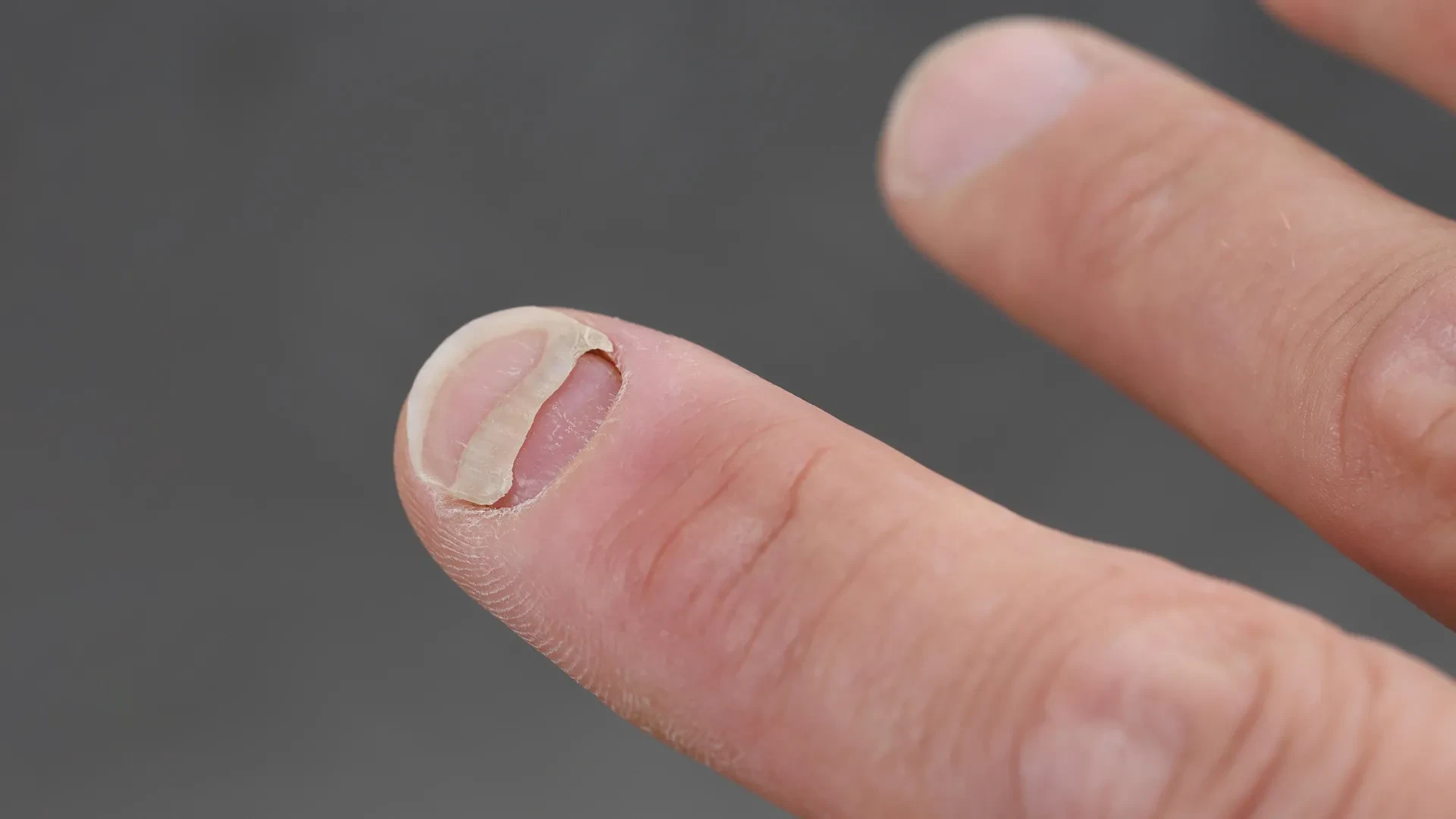
Most startling, however, was the incidence of onycholysis—the medical term for nail detachment, wherein the nail plate separates painlessly from the underlying nail bed. Participants taking GLP-1 medications were more than four times as likely to report this condition compared to the control group.
Simultaneously, the companion study investigating hair and scalp health uncovered parallel disruptions. Half (50%) of all GLP-1 users reported experiencing unusual hair loss, contrasted with 34% of the control participants. Furthermore, reduced hair volume and overall density affected 42% of the medication group, compared to 19% of non-users. When isolating hair loss that specifically commenced after the initiation of GLP-1 therapy, the metric remained compelling: 26% of users reported post-treatment shedding, more than double the 12% observed in the control group. Additionally, scalp redness presented at a frequency roughly three times higher among those taking the medications.
Supporting Context & Metrics
Dissecting the Data: Is Weight Loss the Real Culprit?
To properly contextualize these findings, researchers had to grapple with a formidable confounding variable: weight loss itself. Rapid and substantial reduction in body mass triggers profound physiological stress. Historically, conditions such as telogen effluvium (a form of temporary hair loss characterized by excessive shedding following physical or psychological stress) and nutrient malabsorption are widely recognized consequences of drastic dietary shifts. It was entirely plausible that the hair and nail issues reported by GLP-1 users were simply the price of rapid weight reduction.
To test this hypothesis, the research team performed sub-analyses, isolating participants within the study who had successfully lost weight through means other than GLP-1 medications and comparing them directly to the GLP-1 cohort. The results challenged the conventional narrative. Even when controlling for the magnitude of weight loss, GLP-1 users continued to report significantly elevated rates of nail disorders, discoloration, and detachment.
Furthermore, researchers factored in preexisting skin conditions and baseline nutritional deficiencies. While adjusting for these variables did narrow the statistical gap between the groups in certain categories, nail detachment and discoloration remained approximately two to three times more prevalent among GLP-1 users. This statistical persistence strongly implies that the medications themselves—or the specific biochemical pathways they alter—may play an active role in modifying nail and integumentary health.
The Inflammation Hypothesis
Perhaps the most revealing discovery in the hair and scalp study was the interconnected nature of the symptoms reported by patients. Hair loss rarely presented as an isolated event. Instead, the vast majority of participants who experienced hair shedding also reported concurrent scalp symptoms, including persistent itching, localized redness, and flaking skin.
This clustering of symptoms provided a critical clinical clue. While classical post-weight-loss shedding is typically a non-inflammatory process, the high prevalence of scalp redness, irritation, and inflammation among GLP-1 users suggests an inflammatory component at play.
+-----------------------------------------------------------------+
|                   COMPARING KEY METRICS                         |
+-----------------------------------+--------------+--------------+
| Metric / Condition                | GLP-1 Users  | Control Group|
+-----------------------------------+--------------+--------------+
| Any Nail Disorder                 |     66%      |     53%      |
| Nail Discoloration                |     46%      |     17%      |
| Nail Detachment (Onycholysis)     | > 4x higher  |   Baseline   |
| Unusual Hair Loss                 |     50%      |     34%      |
| Reduced Hair Volume / Density     |     42%      |     19%      |
| Post-Treatment Hair Shedding      |     26%      |     12%      |
| Scalp Redness                     | ~ 3x higher  |   Baseline   |
+-----------------------------------+--------------+--------------+
Official Statements and Expert Perspectives
The release of these findings has prompted cautious, measured commentary from the dermatological and endocrinological communities. Experts are eager to ensure that patients do not overreact to the data while simultaneously encouraging clinicians to look beyond standard metabolic markers.
Dr. Charles Taïeb, a lead author of the study, highlighted the importance of moving past anecdotal observation while maintaining perspective on the root causes of these symptoms.
"Until now, nail changes associated with GLP-1 therapies had essentially been anecdotal," Dr. Taïeb stated. "Our findings show a clear association, but they also underline an important point: not everything that happens during GLP-1 treatment is necessarily caused by the treatment itself."
Dr. Taïeb noted that approximately half of the medication users surveyed admitted to experiencing minor nail issues prior to initiating GLP-1 therapy. This baseline vulnerability, combined with the physiological shifts of metabolic disease management, creates a complex clinical picture.
Dr. Bruno Halioua, co-author of the companion hair and scalp study, expanded on the implications of the inflammatory symptoms observed on the scalp, pointing out a potential blind spot in current medical practice.
"This suggests that what is happening on the scalp may go beyond the classical shedding seen after rapid weight loss and involve an inflammatory component," Dr. Halioua explained. "Scalp inflammation was the rule rather than the exception, which clinicians do not currently look for and which may be treatable. Taken together, our findings suggest that factors beyond weight loss alone may contribute to the hair, scalp and nail changes observed among GLP-1 users."
Crucially, both researchers issued a unified warning regarding patient compliance. They stressed that despite the high statistical frequency of these dermatological changes, the conditions are overwhelmingly benign. They are not clinical indicators that warrant the abrupt cessation of life-altering metabolic medications.
"These changes are frequent, usually benign, and are not a reason to stop an effective treatment on one’s own initiative," Dr. Taïeb emphasized. "Anyone who notices hair shedding, an itchy or red scalp or nail changes should mention it to their doctor rather than discontinue therapy."
Future Outlook and Methodological Limitations
While the multinational study represents a vital milestone in understanding the broader systemic footprint of GLP-1 receptor agonists, the authors are the first to acknowledge several inherent methodological limitations.
Because the research was conducted via cross-sectional surveys, it relied heavily on retrospective, self-reported symptoms from participants rather than standardized, longitudinal clinical examinations performed by dermatologists. Consequently, while the data establishes a definitive statistical association and illuminates clear patterns of comorbidity, it cannot definitively prove a direct causal relationship between the chemical action of GLP-1 drugs and the onset of nail detachment or hair loss. Furthermore, the cross-sectional design prevents researchers from tracking the temporal evolution of these symptoms—specifically, whether they peak and resolve over time or persist for the duration of therapy.
To bridge these scientific gaps, the research team is already laying the groundwork for subsequent investigations. The next phase of research will transition into prospective, longitudinal studies designed to follow patients from the exact moment they initiate GLP-1 therapy. These upcoming trials will incorporate rigorous, standardized dermatological examinations of the skin, hair, and nails, paired with comprehensive biological and nutritional monitoring.
The primary objectives of these future studies will be:
- Determining Timeline of Onset: Establishing precisely when nail and scalp changes first manifest following the commencement of GLP-1 treatment.
- Uncovering Biological Mechanisms: Investigating whether GLP-1 receptor activation directly influences keratin production, localized vascular flow, or cutaneous inflammatory pathways.
- Evaluating Long-Term Trajectory: Assessing whether these dermatological symptoms are transient—fading as the body adjusts to the medication—or whether they require targeted dermatological intervention.
Significantly, the ongoing research initiative has received institutional support from DUCRAY Laboratories, a division of the Pierre Fabre Group specializing in dermatological and hair-care therapeutics designed to manage scalp conditions and improve patient quality of life. This industry partnership underscores a growing commercial and clinical recognition that as metabolic therapies evolve, supportive dermatological care must evolve alongside them.
For the millions of patients currently navigating type 2 diabetes or obesity management with the aid of GLP-1 medications, the message from the scientific community is clear: metabolic success should not come at the expense of patient comfort, but neither should it be derailed by unfounded panic. By maintaining open lines of communication with healthcare providers, patients can address these unexpected dermatological developments safely, ensuring that their journey toward long-term metabolic health remains both comprehensive and uncompromised.