

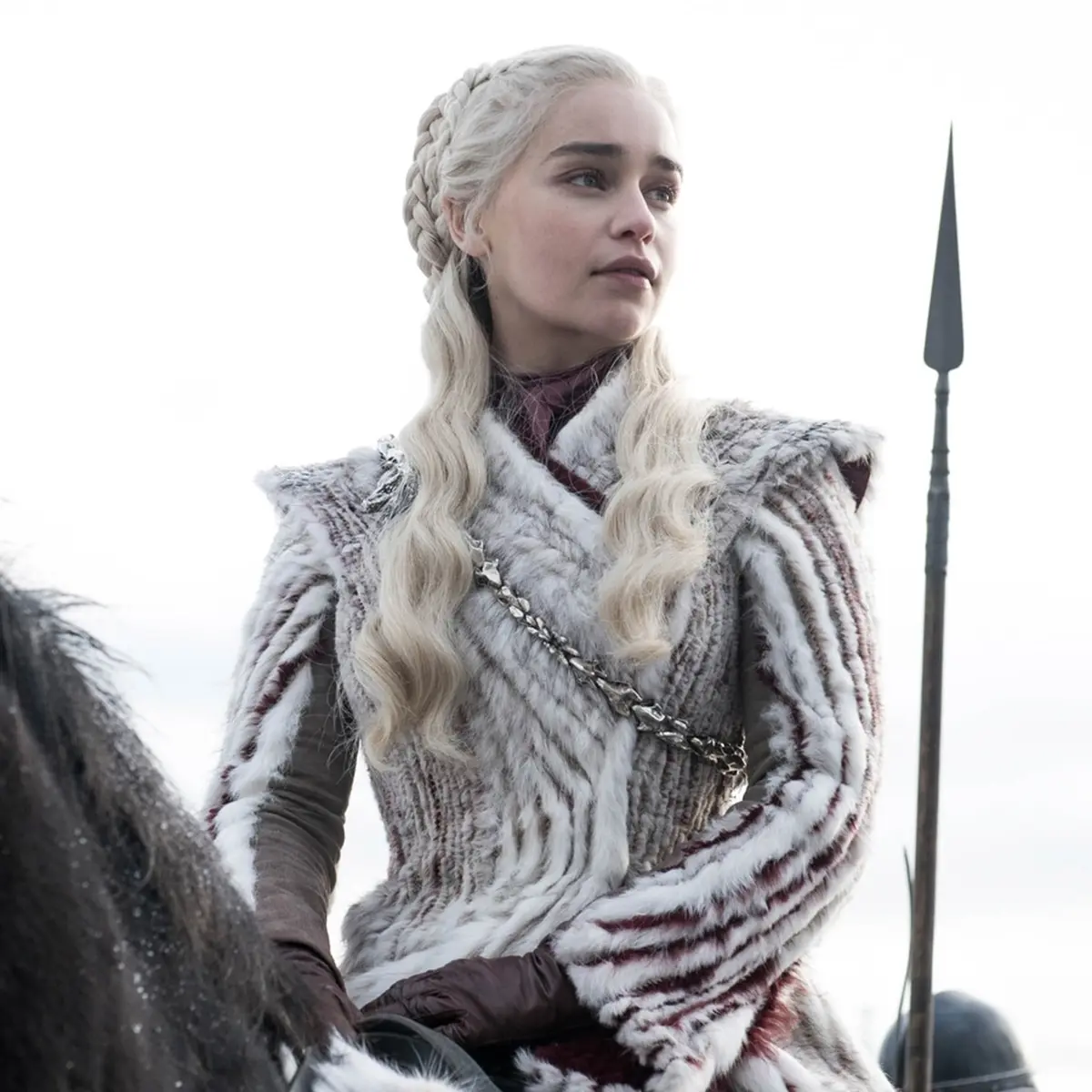
The cultural footprint of Game of Thrones remains one of the defining television phenomena of the 21st century. Running for eight monumental seasons from 2011 to 2019, HBO’s adaptation of George R.R. Martin’s A Song of Ice and Fire universe fundamentally reshaped the economics, scale, and prestige of modern television. Garnering an astonishing 59 Emmy Awards over its lifecycle, the fantasy epic did more than just capture global audiences; it proved that high-concept fantasy could command mainstream, high-brow critical acclaim.
Yet, the path from page to screen was fraught with near-disaster, legendary casting near-misses, logistical nightmares, and a famously scrapped pilot that nearly killed the franchise before it began. As the franchise expands outward with prequel projects such as House of the Dragon and the upcoming A Knight of the Seven Kingdoms, the behind-the-scenes history of Westeros reveals an intricate dance of creative intuition, high-stakes gambles, and sheer Hollywood luck. This report explores the comprehensive chronology, production metrics, creative milestones, and future outlook of the television empire that built the modern HBO.
Detailed Chronology: From Page to Screen and Beyond
1. The Genesis and the Rights Acquisition (Mid-2000s)
Before Game of Thrones became a household name, George R.R. Martin was skeptical of Hollywood’s ability to condense his massive, sprawling narrative texts—which routinely clocked in at nearly 700 pages per volume—into traditional feature-length films. The critical and commercial success of Peter Jackson’s The Lord of the Rings trilogy (2001–2003) proved that audiences had an appetite for high fantasy, but Martin resisted standard cinematic adaptations.
Fate intervened in the mid-2000s when Martin’s literary agent forwarded the books to writer-producer David Benioff. Benioff immediately enlisted his writing partner, Dan Weiss, to read the series. Recognizing that the narrative density and character complexity required an episodic television format rather than a feature film, the duo secured a meeting with Martin. During this pitch, Martin famously tested their dedication by asking them to identify Jon Snow’s true maternal lineage based on subtle textual clues. Benioff and Weiss answered correctly, cementing a partnership that would take the project to HBO.
2. The $10 Million Pilot Disaster (2009–2010)
Securing HBO’s backing was only the first hurdle. Executive Producer Carolyn Strauss championed the project, but following her departure from HBO in 2008, Benioff and Weiss had to re-pitch the concept to incoming programming president Michael Lombardo. The green light was given in November 2008, leading to a disastrous first pilot directed by Tom McCarthy.
Costing approximately $10 million, the initial pilot suffered from a severe lack of epic scope and crucial narrative clarity. Most notably, the incestuous relationship between twins Jaime and Cersei Lannister—a foundational plot point—was entirely missed by test audiences. HBO executives privately remarked that the episode felt so small and contained that it "could have been shot in Burbank."
Recognizing a catastrophic failure, then-HBO co-president Richard Plepler looked past the deeply flawed footage and ordered a 10-episode series order, contingent on a complete creative overhaul. Directors were swapped, key roles were recast, and production restarted in July 2010, resulting in what industry insiders later dubbed "the biggest rescue in Hollywood history."
3. The Premiere and Cultural Ascendancy (2011–2015)
On April 17, 2011, the reworked pilot finally aired, introducing millions to the brutal realities of Westeros. Driven by shocking narrative twists—most notably the execution of Ned Stark in Season 1 and the infamous Red Wedding in Season 3—Game of Thrones evolved from a niche genre show into a global cultural phenomenon.
During this era, the production machine expanded massively. The show relied heavily on practical locations in Northern Ireland, Croatia, Iceland, and Malta, pushing the limits of television production design, costume creation, and stunt coordination. As the series progressed through Seasons 1 to 5, showrunners faithfully adapted Martin’s published texts while cultivating an ensemble cast that catapulted relatively unknown actors into global superstardom.
4. Venturing Beyond the Books and Endgame (2016–2019)
By Season 6, Game of Thrones reached a critical juncture: the showrunners officially outpaced George R.R. Martin’s published source material, as The Winds of Winter remained unreleased. Operating on high-level structural notes provided by Martin (including major plot revelations like Hodor’s tragic origin), Benioff and Weiss steered the narrative toward its pre-determined conclusion.
Rather than dragging out the series indefinitely to maximize network revenue, the creators deliberately capped the show at eight seasons. This era was defined by monumental cinematic set-pieces, including "Battle of the Bastards" and "The Long Night," which required weeks of grueling night shoots and unprecedented stunt coordination. The series finale in May 2019 brought a polarizing, highly scrutinized end to the core saga, cementing its legacy as one of the most-watched and heavily debated programs in television history.
Supporting Context & Metrics
The monumental scale of Game of Thrones is reflected in its production budgets, casting trivia, and critical reception metrics:
- Budget Escalation: The series began with an average budget of roughly $6 million per episode in Season 1, scaling up to an astonishing $15 million per episode by the final season. Total production costs averaged approximately $100 million per season over its 73-episode run.
- Award Dominance: Across its eight-season lifespan, the HBO flagship secured 59 Emmy victories out of numerous nominations, setting a high-water mark for dramatic television.
- The Casting Revolving Door: The show’s exhaustive audition process altered the trajectory of modern casting. Kit Harington beat out future co-stars Alfie Allen, Joe Dempsie, and Iwan Rheon, as well as actors like Nicholas Hoult and Sam Claflin, for the role of Jon Snow. Similarly, Emilia Clarke stepped in to replace Tamzin Merchant as Daenerys Targaryen after an extensive re-casting following the scrapped pilot.
- The Prequel Expansion: The intellectual property successfully transitioned into a shared universe with House of the Dragon, which set new viewership records, followed by the development of the critically praised adaptation A Knight of the Seven Kingdoms, based on Martin’s Tales of Dunk and Egg novellas.
Official Statements and Industry Insights
Reflecting on the legacy of the franchise, current creative leaders and original architects have frequently highlighted the unique pressures of adapting Martin’s world.
Discussing the transition from the sprawling, multi-continental complexity of Game of Thrones to the more intimate storytelling of A Knight of the Seven Kingdoms, showrunner Ira Parker noted the distinct creative challenges:
"Production-wise, it’s still hard… When you’re cutting from Dunk to Dunk, so you better make sure you have all your s–t straight."
Reflecting on the network’s initial gamble, former HBO executive Michael Lombardo admitted that the original pitch of a "contained" character-driven drama was viewed internally as a massive risk:
"We knew it was a gamble. There are many ways a fantasy series can go south."
Meanwhile, reflecting on the definitive conclusion of the original series, co-creator Dan Weiss emphasized the desire to exit at the narrative peak rather than overstaying their welcome:
"We wanted it to be one giant story, without padding it out to add an extra 10 hours, or because people are still watching it. We wanted to do something where, if people watched it end to end, it would make sense as one continuous story."
Future Outlook
As the Game of Thrones universe continues to expand under Warner Bros. Discovery and HBO, the immediate future of the franchise relies on balancing intimate narrative focus with grand-scale fantasy spectacle.
With A Knight of the Seven Kingdoms earning significant critical acclaim and securing early multi-season renewals, HBO has demonstrated that audiences remain deeply engaged with Westeros, provided the storytelling remains anchored in rigorous character development. Showrunners and network executives are currently navigating the fine line between satisfying fan demand for sprawling, dragon-filled epics and delivering quieter, character-driven narratives akin to the early days of the franchise.
Ultimately, the blueprint established by Benioff, Weiss, and Martin has permanently altered the television landscape. Whether through ongoing prequels, unproduced spin-offs, or future adaptations of Martin’s extensive lore, the shadow of the Iron Throne will continue to dominate the premium television landscape for the foreseeable future.