

WASHINGTON — Six months after the Trump administration launched a joint military campaign alongside Israel against Iran—a conflict repeatedly pitched to the American public as a swift, four-to-six-week engagement—the White House is facing mounting scrutiny over the lack of a definitive exit strategy.
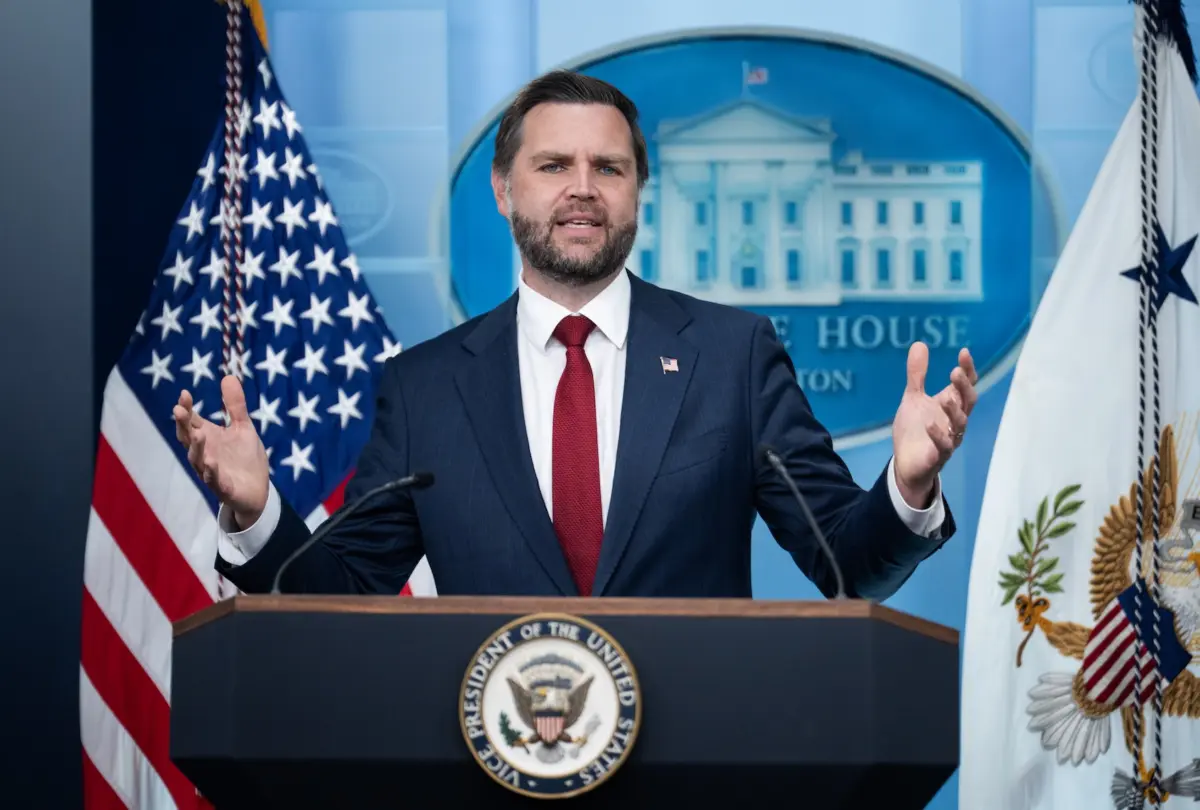
During a high-stakes White House press briefing on Thursday, September 3, 2026—the first led by Vice President JD Vance following the departure of former Press Secretary Karoline Leavitt—the administration struggled to provide a coherent timeline for the conflict’s conclusion. When pressed by CNN’s Kaitlan Collins on whether the hostilities might abate before the critical November midterm elections, Vance declined to offer a deadline, placing the onus entirely on Tehran.
Remarkably, the vice president also rejected the semantic label of "war," asserting that major combat operations had concluded months prior.
"I wouldn’t call it a war," Vance told reporters, maintaining that the initial six-week campaign successfully dismantled Iran’s nuclear infrastructure. "Right now, there is no active shooting… When you ask when will this end, you’re asking me a question like, when will the Iranians stop shooting at ships? I think the reality is I don’t know the answer to that question. You would have to ask the Iranians."
This linguistic sidestep stands in stark contrast to the human and economic toll of the past half-year. With American military casualties mounting, billions of dollars spent, and regional stability hanging in the balance, the administration’s shifting narrative is threatening to become a defining liability as voters prepare to head to the polls.
Detailed Chronology: From Swift Promises to a Protracted Quagmire
The trajectory of the current U.S.-Iran conflict has defied virtually every early projection offered by the executive branch.
- February 2026: The Trump administration, acting in close coordination with Israeli defense forces, initiated a series of aggressive military strikes targeting strategic assets within Iran. At the time, President Donald Trump assured the American public that the operation would be a limited, short-term affair lasting roughly four to six weeks.
- Late February 2026: Echoing the president’s optimism, Vice President JD Vance publicly declared that there was "no chance" the United States would be drawn into a protracted, quagmire-style war in the Middle East.
- Spring 2026: Despite initial claims of a swift victory, retaliatory dynamics took hold. Iranian forces and affiliated regional proxies began targeting commercial shipping lanes and regional nodes, prompting a continuous defensive and offensive posture from the U.S. Navy and allied forces. Human rights organizations and the United Nations began raising alarms over rising civilian casualties as the scope of operations expanded beyond initial nuclear facility targets.
- August 2026: Marking the six-month threshold, independent defense analysts and major media outlets highlighted the stark divergence between administration rhetoric and ground reality. Concurrently, domestic pressures mounted regarding inflation, soaring energy costs, and the economic strain of data centers and defense spending.
- September 3, 2026: Vice President Vance steps up to the White House podium. Beyond defending domestic energy and tech policies, Vance attempts to redefine the conflict, claiming that major combat operations have ceased, even as recent days have witnessed escalating exchanges of fire in the Persian Gulf and surrounding waters.
Supporting Context & Metrics: The Human and Financial Cost
While the White House characterizes the current phase of operations as intermittent flare-ups rather than an active war, independent tracking paint a far more severe picture. The discrepancy between official framing and empirical data has fueled intense criticism from geopolitical analysts and opposition lawmakers alike.
Casualties and Regional Toll
According to official reports and defense tallies, the six-month engagement has claimed the lives of 18 U.S. military personnel, with more than 750 service members wounded, many suffering severe, life-altering injuries.
The toll on the civilian population in the Middle East has been exponentially higher. Independent defense research portal MilitarySpend estimates that 1,700 to 3,700 civilians have been killed across the region since February, the vast majority of them Iranian nationals caught in the crossfire of strikes and counter-strikes. International bodies, including the United Nations and Human Rights Watch, have repeatedly documented the heavy civilian cost, classifying the situation unequivocally as an active, high-intensity war—a designation the White House continues to dispute.
Economic Fallout: Inflation, Gas Prices, and Energy Strains
The briefing also laid bare the administration’s domestic vulnerabilities regarding the economy. Treasury Secretary Scott Bessent had previously assured the public that national gas prices would tumble to $3 per gallon by Labor Day—a benchmark that has failed to materialize.
Vance used the briefing to deflect blame for stubbornly high energy costs, pointing directly at the disruption in the Persian Gulf caused by Iranian actions. However, economists note that the broader economic strain is multi-layered, driven not only by maritime shipping disruptions and oil market volatility in the Strait of Hormuz, but also by ballooning federal expenditures.
Estimates place the total cost of the Iran campaign somewhere between $71 billion and $118 billion, diverting critical capital from domestic priorities and intensifying inflationary pressures ahead of the midterms.
Official Statements and Rhetorical Contradictions
The core tension of Thursday’s briefing centered on semantics and accountability. When asked by reporters to reconcile the administration’s previous promises with the current reality on the ground, Vance insisted that the U.S. military achieved its primary objectives early in the year.
"When you talk about a war, you’re talking about major, sustained combat operations designed to overthrow a government or occupy a territory," administration defenders might argue, though Vance focused specifically on the destruction of Iran’s nuclear facilities during the initial six-week window.
"Right now, there is no active shooting," Vance claimed, a statement immediately challenged by foreign policy reporters pointing to naval skirmishes and drone interceptions in the Strait of Hormuz over the preceding week. Earlier in the briefing, Vance asserted that Iran’s strategic leverage over the Strait of Hormuz is "effectively gone" and described the regime’s military capacity as a "diminishing asset."
On the issue of civilian casualties, Vance maintained a strict defense, stating categorically that the United States military never intentionally targets civilians in combat. This assertion stands in stark opposition to findings published by human rights monitors, who argue that the intensity and urban proximity of the initial and ongoing bombing campaigns have inevitably caused devastating non-combatant loss of life.
When pressed on a timeline for complete disengagement, Vance demurred, stating that the end of the conflict is entirely contingent upon Tehran’s willingness to halt its maritime harassment. "You would have to ask the Iranians," he repeated, effectively washing the administration’s hands of setting any domestic milestone for peace.
Future Outlook: The Shadow Over the Midterms
As the calendar turns toward the November midterms, the unresolved conflict with Iran has transformed from a foreign policy gamble into a domestic political flashpoint.
For the White House, the strategy appears to be a dual track: downplay the severity of the ongoing military commitments by rebranding them as localized maritime security operations, while deflecting economic blame onto foreign adversaries and global supply chain shocks.
However, this messaging strategy carries profound risks. Voters casting their ballots in November will weigh tangible realities against administration talking points:
- Will gas prices finally stabilize?
- Will the steady drip of wounded service members returning home dominate the news cycle?
- Can the administration convince a skeptical electorate that an open-ended naval standoff does not constitute a "war"?
With no clear diplomatic channel currently yielding results, and with regional actors continuing to trade fire across vital trade corridors, the White House’s inability to provide an exit strategy ensures that the ghost of the Iran campaign will loom large over voting booths nationwide.