

Executive Overview
In an era defined by hyper-personalized digital algorithms, dating applications, and frictionless online matchmaking, the modern consumer journey has become intensely predictable. Yet, human nostalgia continues to yearn for the serendipity of a chance encounter—the cinematic moment where two strangers collide over a shared mundane experience. According to recent data from prominent wedding industry publications, while 43 percent of contemporary couples report meeting via digital applications or mutual social circles, a remarkably resilient 9 percent still attribute their romantic origins to pure serendipity.
Enter, of all places, 7-Eleven.
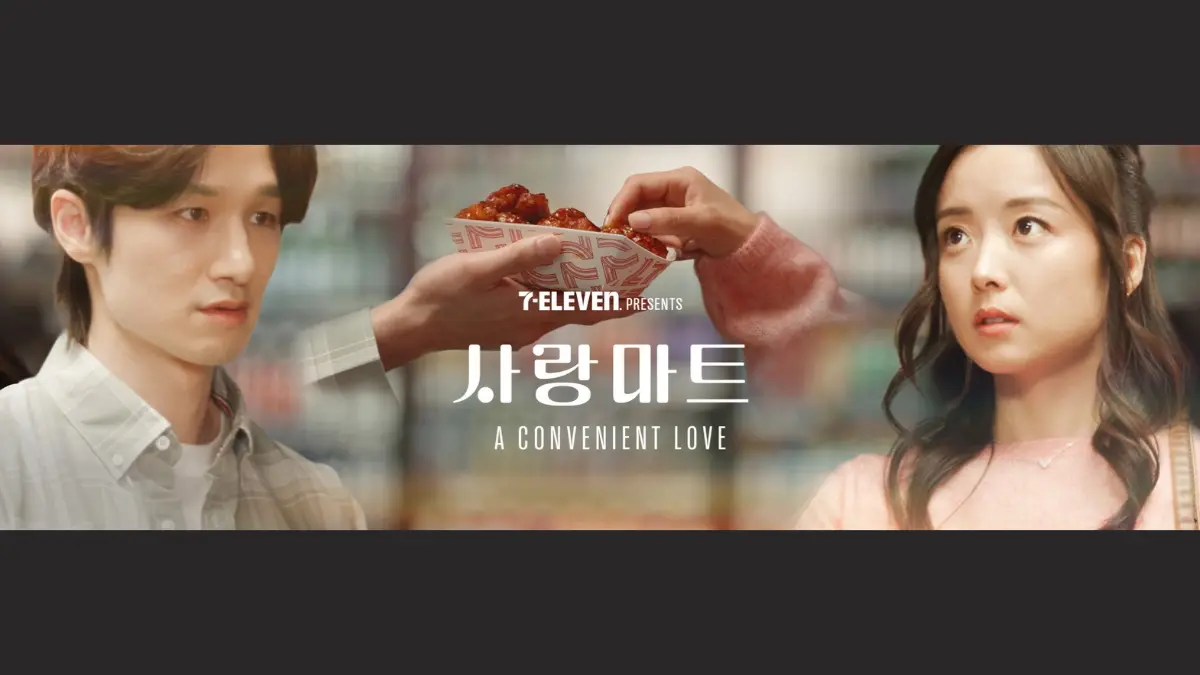
The global convenience retail titan has boldly stepped into the realm of scripted narrative entertainment with an ambitious, culturally resonant marketing initiative titled A Convenient Love. Launching on November 2, this pioneering Instagram-based miniseries marks a radical departure from traditional retail advertising. Rather than relying on static product placements, banner ads, or conventional influencer partnerships, 7-Eleven has produced a seven-episode, K-drama-inspired romantic comedy specifically designed to promote its limited-time "Flavors of Korea" menu.
Featuring craveable items such as Bibigo Spicy Chicken Dumplings and Gochujang Boneless Wings, the campaign bridges the gap between digital content consumption and brick-and-mortar retail foot traffic. By weaving its culinary offerings into the fabric of a heartfelt, serialized narrative centered around late-night convenience store runs, 7-Eleven is not merely selling fast-casual comfort food; it is engineering a cultural moment. This investigative report explores the strategic imperatives, narrative architecture, industry context, and future implications of 7-Eleven’s foray into branded entertainment, offering an authoritative look at how convenience retail is evolving to capture the hearts, minds, and wallets of modern digital natives.
Detailed Chronology of the Campaign
The genesis of A Convenient Love represents a convergence of shifting consumer habits, the explosive global ascendancy of Korean popular culture, and the aggressive evolution of retail media networks. To understand how a convenience store chain greenlit a romantic miniseries, one must trace the deliberate steps that brought this unprecedented marketing vehicle to life.
Phase 1: Identifying the Culinary and Cultural White Space
Months prior to the official campaign announcement, 7-Eleven’s category management and marketing teams recognized a profound structural shift in American consumer palates. Driven by the relentless popularity of Korean dramas, K-pop music, and mukbang food content across platforms like TikTok and YouTube, demand for authentic Korean flavors had crossed over from niche ethnic supermarkets into the mainstream consciousness.
Concurrently, the brand observed a measurable surge in late-night foot traffic among Gen Z and millennial consumers—demographics that view the convenience store not merely as a utilitarian pit stop for fuel or emergency items, but as a lifestyle destination for late-night socializing, comfort food indulgence, and spontaneous discovery.
By partnering with recognized culinary leaders like Bibigo, 7-Eleven curated the "Flavors of Korea" menu. However, traditional promotional channels—such as circulars, in-store signage, or standard promotional pricing—felt insufficient to capture the emotional resonance of these products. The marketing leadership realized that to sell the experience of Korean street food and late-night cravings, they needed an emotional narrative anchor.
Phase 2: Conceptualizing the K-Drama Vehicle
The decision to model the campaign after a Korean drama (K-drama) was both calculated and timely. K-dramas are renowned for their heightened emotional stakes, romantic tension, meticulous visual aesthetics, and central motifs centered around food, late-night convenience stores (pocha tents and convenience store tables), and chance meetings.
The creative agency and 7-Eleven marketing teams conceptualized a simple yet compelling premise: two young university students whose paths continuously cross during late-night snack runs at their neighborhood 7-Eleven. The convenience store transforms from a brightly lit commercial box into a neutral, comforting sanctuary where narrative tension builds, friendships deepen, and romantic chemistry simmers over steaming cups of noodles and spicy wings.
Phase 3: Production and Platform Optimization
Unlike traditional television commercials designed for 30-second broadcast blocks, A Convenient Love was built from the ground up for the vertical, mobile-first ecosystem of Instagram. Comprising seven tightly paced episodes, the miniseries was shot with the cinematic polish characteristic of streaming-service productions, defying the low-fi expectations typically associated with corporate social media content.
Crucially, the production integrated the menu items not as jarring, heavy-handed advertisements, but as organic plot devices. A box of Bibigo Spicy Chicken Dumplings becomes the catalyst for an apology; a shared order of Gochujang Boneless Wings sparks a playful debate. Each episode was engineered to drop on a structured release schedule, creating episodic anticipation and habit-forming engagement among followers.
Phase 4: Activating the Retail Loop
Content without commerce is merely entertainment. To close the loop between viewing and purchasing, 7-Eleven engineered a direct-response mechanism into the campaign’s architecture. Each of the seven episodes directly spotlights a specific menu item, which is immediately paired with a limited-time digital discount accessible via the 7Rewards loyalty app or third-party delivery integrations like 7NOW.
When a viewer watches the protagonists bond over a specific dish on Instagram, they are simultaneously incentivized with a geo-targeted promotion to walk into their nearest 7-Eleven—or open their delivery app—to experience the exact same product that night. This seamless transition from emotional engagement to transactional conversion represents a masterclass in modern retail marketing.
Supporting Context & Metrics: The Intersection of Retail, Content, and Culture
To fully appreciate the weight of 7-Eleven’s strategic gamble, one must examine the broader macroeconomic and media consumption trends shaping the retail landscape in the mid-2020s.
The Rise of Branded Entertainment and "Ad-Fatigue"
Consumers today—particularly younger cohorts like Gen Z and Gen Alpha—exhibit profound skepticism toward traditional advertising. Ad-blockers, premium streaming subscription tiers, and a general cultural aversion to hard-sell commercials have forced brands to rethink how they earn consumer attention.
Branded entertainment has emerged as the antidote to ad-fatigue. By funding narratives that consumers actively choose to watch, brands trade interruption for value. Research consistently shows that long-form, narrative-driven content fosters significantly higher brand recall, emotional affinity, and customer lifetime value compared to static or disruptive ad units. 7-Eleven’s entry into scripted miniseries production places it shoulder-to-shoulder with progressive global brands that have successfully blurred the lines between retailer and media company.
The K-Wave (Hallyu) and Convenience Retail Synergy
The global cultural phenomenon known as Hallyu (the Korean Wave) has permanently altered global culinary and entertainment preferences. Convenience stores (pyeon-uijeom) hold a legendary status in South Korea, serving as ubiquitous cultural hubs where characters in dramas routinely gather to eat instant ramen, drink banana milk, and hash out life’s dilemmas.
By transplanting this specific cultural trope into an American retail context, 7-Eleven is tapping into an existing visual and narrative language already deeply understood by millions of Western consumers. Fans of K-dramas instantly recognize the aesthetic cues: the hum of the open-air refrigeration units, the glow of fluorescent lighting, the intimate late-night conversations held over cheap seating outside sliding glass doors. This cultural authenticity validates the brand in the eyes of younger consumers who demand nuance and respect for global traditions rather than shallow cultural appropriation.
Quantifying the Convenience Store Economy
Beyond the cultural cachet, the financial stakes for 7-Eleven are substantial. As the undisputed global leader in convenience retailing—operating, franchising, or licensing tens of thousands of stores worldwide—the brand faces constant pressure to drive high-margin proprietary fresh food and hot food sales.
Historically, convenience store margins were dominated by tobacco, lottery, and packaged beverages. However, as public health trends shift away from traditional tobacco products, convenience retailers have aggressively pivoted toward fresh food, proprietary bakery lines, and international flavor profiles to drive basket sizes. Premium, trend-forward offerings like Gochujang Boneless Wings command higher price points and attract demographic profiles—such as urban millennials and suburban Gen Zers—who might otherwise bypass a convenience store in favor of fast-casual restaurants or delivery apps.
+-------------------------------------------------------------------+
|               THE 7-ELEVEN ENGAGEMENT FUNNEL                      |
+-------------------------------------------------------------------+
|                                                                   |
|   1. CULTURAL CAPTURE   ---> Tap into Hallyu (K-Wave) & Gen Z     |
|   2. NARRATIVE IMMERSION---> Instagram Miniseries (7 Episodes)    |
|   3. EMOTIONAL HOOK     ---> Late-night romance & serendipity     |
|   4. INSTANT INCENTIVE  ---> App-based Limited-Time Discounts     |
|   5. TRANSACTIONAL LOOP ---> In-Store Purchase / 7NOW Delivery    |
|                                                                   |
+-------------------------------------------------------------------+
Official Statements and Industry Perspective
While 7-Eleven has maintained a tightly controlled release schedule regarding the finer financial investments behind A Convenient Love, corporate communications and retail industry analysts have provided significant insight into the philosophy driving the campaign.
In promotional materials detailing the launch, company representatives emphasized the emotional resonance of the brand’s physical footprint. "While digital apps dominate modern matchmaking, millions of real-life stories begin in the most unexpected places—including the bright, welcoming aisles of a neighborhood convenience store," noted a 7-Eleven marketing spokesperson. "With A Convenient Love, we wanted to lean into that magic. We are not just serving food; we are creating a backdrop for human connection, packaged in a format our customers already love to consume."
Food service analysts have been similarly vocal, praising the agility of the campaign. Industry observers note that convenience chains are increasingly forced to compete not just with each other, but with quick-service restaurants (QSRs) and food delivery aggregators.
"What 7-Eleven is doing here is brilliant brand positioning," comments retail marketing strategist Dr. Elena Vance. "They recognize that younger consumers don’t view buying food as a purely functional transaction—it’s an emotional and social experience. By creating a K-drama, they are inserting their proprietary menu items directly into the cultural zeitgeist. When a consumer watches characters bond over Bibigo dumplings in a late-night setting, 7-Eleven stops being a corporate pit stop and starts becoming a character in the consumer’s own social life."
Furthermore, partners involved in the supply and culinary development have expressed enthusiasm for the cross-promotional power of serialized video. Representatives from food brands featured in the "Flavors of Korea" lineup highlight that traditional point-of-sale marketing lacks the storytelling capacity required to explain complex, trend-forward flavor profiles like gochujang to mainstream consumers. A narrative miniseries allows viewers to see the food being enjoyed, steaming and fresh, thereby lowering trial barriers for unfamiliar items.
Future Outlook: What A Convenient Love Signals for Retail Marketing
As the media landscape continues to fracture and consumer attention spans grow increasingly volatile, campaigns like A Convenient Love serve as a predictive case study for the future of retail marketing. The initiative’s performance over its seven-episode run will undoubtedly be parsed by brand strategists across industries, yielding several key takeaways that will shape the retail sector in the years ahead.
1. The Death of the Traditional Commercial in Retail
We are entering an era where interruptive advertising is yielding diminishing returns. Retailers with massive physical footprints and robust digital ecosystems are uniquely positioned to become entertainment studios in their own right. By leveraging proprietary customer data, mobile apps, and social media platforms, brands can bypass traditional broadcast gatekeepers and deliver serialized, episodic content directly to targeted consumer segments. Expect to see more supermarkets, quick-service chains, and big-box retailers experimenting with original scripted narratives, reality formats, and interactive storytelling.
2. Hyper-Localized and Niche Cultural Marketing
The success of A Convenient Love relies heavily on its embrace of a specific subculture—K-dramas. Rather than watering down messaging to appeal to the broadest possible demographic, modern successful campaigns lean into passionate subcultures with authenticity and depth. Whether targeting anime fans, gaming communities, or wellness enthusiasts, brands that speak the precise cultural language of their most profitable consumers will consistently outperform those relying on broad, homogenous messaging.
3. The Seamless Fusion of Content and Commerce (Shoppable Entertainment)
The friction between seeing something desirable on a screen and purchasing it in the physical world is rapidly disappearing. While Instagram serves as the theatrical stage for A Convenient Love, the underlying infrastructure—tied directly to loyalty apps and on-demand delivery services like 7NOW—ensures that the consumer journey is frictionless. Future iterations of shoppable entertainment will likely incorporate real-time augmented reality (AR) try-ons, in-video instant checkout buttons, and hyper-localized inventory checks that tell a viewer precisely which nearby store has the featured item in stock.
4. Reimagining the Convenience Store as a Cultural Hub
Ultimately, campaigns like this signal a fundamental repositioning of the physical retail store. As e-commerce swallows up routine, transactional shopping (such as household goods and shelf-stable dry groceries), brick-and-mortar locations must survive by offering experiences, immediate gratification, and cultural community. If a 7-Eleven can successfully convince consumers that its aisles are a romantic theater of serendipity and late-night culinary adventure, it secures something far more valuable than a one-time transaction: it secures cultural relevance.
Conclusion
Whether A Convenient Love results in a measurable spike in Bibigo dumpling sales or simply burnishes 7-Eleven’s cultural footprint among Gen Z, its ambition cannot be overstated. In an age where love is frequently reduced to a right swipe on a glowing screen, 7-Eleven has reminded the public that magic can still happen offline—ideally under the humming fluorescent lights of the snack aisle, with a box of spicy chicken dumplings warming in hand.