

Executive Overview
The fragile quiet that briefly settled over the Israel-Gaza border has disintegrated, plunging the region back into a cycle of tit-for-tat violence. Early Wednesday morning, Israeli fighter jets launched precision airstrikes targeting two designated "terror activity sites" in the northern Gaza Strip, according to the Israel Defense Forces (IDF). The military wing of the Israeli state reported that direct hits were achieved, framing the assault as an unavoidable retaliatory measure against ongoing cross-border rocket fire that persisted despite a heavily publicized Egyptian-brokered cease-fire.
The sudden renewal of hostilities threatens to undo days of intense diplomatic scrambling by regional mediators, most notably Egyptian intelligence officials who had worked around the clock to broker a cessation of hostilities. This latest escalation follows four days of some of the most intense cross-border violence witnessed in the region this year—a bloody conflagration that left 25 Palestinians dead, scores injured, and hundreds of rockets raining down on civilian population centers across southern Israel.
Compounding the security crisis on the ground is a tense diplomatic landscape. Even as Egyptian mediators were successfully negotiating the terms of the truce, Egypt’s newly empowered, Islamist-dominated parliament voted unanimously in a dramatic, symbolic gesture to suspend diplomatic ties with Israel and halt natural gas exports. Although the vote carries no immediate legal weight—as foreign policy decisions remain under the exclusive purview of Egypt’s ruling military junta—it underscores the shifting political sands in Cairo following the ouster of former President Hosni Mubarak.
As military leaders on both sides signal readiness for prolonged conflict, international actors, including the United Nations Security Council, face mounting pressure to intervene before localized skirmishes spiral into a broader regional war.
Detailed Chronology of Events
The latest cycle of violence erupted late last week, shattering a precarious baseline of containment and thrusting the Gaza Strip back into the global spotlight at a time when international attention has been largely monopolized by crises in Syria and Iran.
Friday: The Assassination of Zuhair al-Qaisy
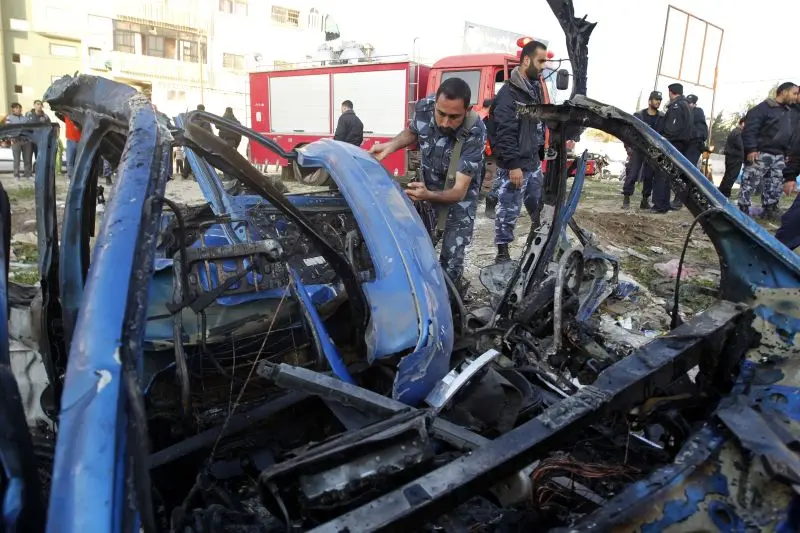
The fuse was lit on Friday when an Israeli targeted airstrike successfully hit a vehicle carrying Zuhair al-Qaisy, a high-ranking leader of the Popular Resistance Committees (PRC), a Gaza-based militant faction. The IDF justified the lethal operation by asserting that al-Qaisy was actively planning an imminent, large-scale terrorist attack against Israeli targets. Israeli defense officials defended the practice of targeted killings as an indispensable, preemptive tool to protect civilian lives. Senior defense official Amos Gilad remarked, "Targeting such mega-terrorists is the best way to save lives."
Saturday through Monday: Four Days of Conflagration
The assassination of al-Qaisy immediately triggered massive retaliatory actions from Gaza-based militant groups. Over the subsequent four days, the region witnessed a relentless barrage of violence. Militants fired hundreds of rockets and mortar shells indiscriminately into southern Israeli population centers, testing the limits of Israel’s civil defense systems and causing widespread disruption.
In response, the Israeli military intensified its campaign of aerial bombardments across the Gaza Strip. The human toll was severe: Palestinian health officials confirmed that 25 Palestinians lost their lives during the four-day flare-up. Among the dead were 14 members of the Iran-backed Islamic Jihad, a militant group that openly boasted of launching dozens of projectiles into Israel. At least 80 other individuals sustained injuries ranging from moderate to critical.
Tuesday: The Fragile Cease-Fire and Competing Interpretations
By Tuesday, mediation efforts spearheaded by Egyptian intelligence began to bear fruit, leading to widespread reports that a truce had been achieved.
Israeli Defense Minister Ehud Barak acknowledged the apparent cooling of tensions, stating early Tuesday, "It appears that we have reached the end of this round of violence." He added a stern warning: "The IDF demonstrated once again that we will take out anyone who tries to act against us."
Similarly, IDF Chief of the General Staff Lt. Gen. Benny Gantz outlined Israel’s operational posture moving forward: "We must appreciate the public’s endurance and cooperation while following the ongoing situation. Calm will be reciprocated with calm, and fire will be reciprocated with fire."
However, the durability of the truce was immediately compromised by fundamentally divergent interpretations of the agreement between the warring parties.
- The Militant Perspective: Khaled al-Batsh, a prominent Gaza-based leader of Islamic Jihad, asserted that the militant factions agreed to a reciprocal cease-fire only after receiving firm Egyptian assurances and mediation that Israel had agreed to two core conditions: ending its campaign of airstrikes and halting the targeted assassinations of militant leaders.
- The Israeli Perspective: Israel flatly rejected the notion that it had made any concessions regarding its security policy. Jerusalem insisted that targeted killings remain a completely legitimate and non-negotiable tool in its ongoing counterterrorism strategy.
Tuesday Afternoon and Wednesday Morning: The Truce Collapses
Despite the diplomatic breakthroughs claimed by Egyptian mediators, the cease-fire proved exceptionally fragile. On Tuesday afternoon, Palestinian news agency WAFA reported that the Israeli army had opened fire at a funeral procession east of Jabaliya in northern Gaza, wounding three people. According to witnesses cited by WAFA, troops fired as the mourners approached the Jabaliya cemetery, located in close proximity to the border security fence.
The IDF offered a contrasting account of the incident. An anonymous IDF spokeswoman explained that soldiers operating along the security fence identified approximately 50 Palestinians gathering suspiciously near the barrier. In strict accordance with standard rules of engagement, troops fired warning shots to disperse the crowd. Initial military reports indicated that no injuries were sustained by the individuals involved.
By early Wednesday morning, the veneer of a truce was completely stripped away. Suspected militants in Gaza fired three additional rockets and mortars into southern Israel. In swift retaliation, Israeli aircraft launched airstrikes against two designated "terror activity sites" in northern Gaza, prompting confirmation from the IDF that direct hits were scored.
Supporting Context & Metrics
To fully understand the gravity of the recent escalation, one must examine the operational metrics and geopolitical backdrop that defined the conflict:
- Casualty Imbalance: The four-day escalation resulted in the deaths of 25 Palestinians, the vast majority identified as combatants or members of militant organizations such as Islamic Jihad and the Popular Resistance Committees. Concurrently, hundreds of rockets targeted Israeli civilian infrastructure, though advanced early-warning systems and shelter protocols minimized Israeli fatalities during this specific round.
- Militant Arsenal and Coordination: The conflict highlighted the growing sophistication of Gaza-based militant groups. Islamic Jihad, heavily funded and supported by Iran, coordinated closely with other factions, launching scores of rockets deep into Israeli territory and demonstrating an ability to sustain combat operations over multiple days.
- The Egyptian Mediation Dynamic: Egypt’s pivotal role as an intermediary showcased its enduring strategic importance in the Gaza Strip. Historically, Cairo has acted as the indispensable broker between Israel and Palestinian factions, leveraging its intelligence apparatus to negotiate cease-fires. However, the domestic political landscape in Egypt—marked by a vocal, Islamist-dominated parliament—creates dangerous friction between popular anti-Israel sentiment and the pragmatic security cooperation maintained by Egypt’s ruling military council.
- International Diplomatic Frustration: Frustrated by the lack of decisive international condemnation regarding cross-border rocket fire, Israel’s Ambassador to the United Nations, Ron Prosor, submitted an urgent formal letter to the U.N. Secretary-General on Tuesday. Prosor criticized the Security Council’s inaction, writing: "It is time for the Security Council to speak with one voice against the terrorism that continues to flow from Gaza. The situation is grave. If one rocket lands in the wrong place at the wrong time, Israel will be forced to respond in a completely different manner."
Official Statements & Diplomatic Positions
The rhetoric emanating from all sides of the conflict highlights the deep-seated mistrust and irreconcilable strategic objectives that continue to fuel hostilities:
- The Israeli Defense Forces (IDF): In their official statement regarding the Wednesday morning airstrikes, the military was unequivocal: "The IDF will not tolerate any attempt to harm Israeli civilians or IDF soldiers, and will continue to operate with determination at any given time against anyone who uses terror against the State of Israel. The Hamas terror organization is solely responsible for any terrorist activity emanating from the Gaza Strip." (Note: While Hamas did not actively spearhead the rocket barrage—leaving much of the fighting to Islamic Jihad—Israel maintains its policy that the de facto governing authority in Gaza bears ultimate responsibility for all security breaches originating from the territory).
- Islamic Jihad: Khaled al-Batsh emphasized that the resistance factions entered the cease-fire under the explicit understanding that Israel’s assassination policy was off the table. The immediate resumption of airstrikes by Israel is viewed by militant factions as a direct betrayal of the Egyptian-brokered terms, virtually guaranteeing further retaliation.
- The Egyptian Parliament: In a stunning populist move, Egypt’s parliament voted unanimously by a show of hands to suspend diplomatic relations with Israel and cut off natural gas supplies. While legal experts were quick to point out that the Supreme Council of the Armed Forces (SCAF) holds exclusive authority over foreign policy and international treaties following the fall of Hosni Mubarak, the vote serves as a glaring indicator of how profoundly the Arab Spring has altered the regional diplomatic ecosystem.
Future Outlook
The immediate future of the Israel-Gaza border remains perilously volatile. With the Egyptian-brokered cease-fire effectively dead in the water, both sides are locked into a cycle of action and reaction that defies easy diplomatic resolution.
For Israel, the political and military establishment faces mounting domestic pressure from southern residents who demand absolute security from the persistent threat of indiscriminate rocket fire. The government has made it clear that it will not tolerate a "new normal" where militant groups dictate the rules of engagement through sporadic rocket launches. Consequently, targeted killings and preemptive airstrikes are likely to remain central pillars of Israeli counterterrorism doctrine, regardless of temporary truces.
For Palestinian militant factions in Gaza, backed logistically and financially by external patrons like Iran, the incentive structure heavily favors continued defiance. Groups like Islamic Jihad view armed resistance as a core legitimizing ideology, and any perceived infringement on their leadership—such as the targeted assassination of Zuhair al-Qaisy—demands a visible, kinetic response.
Externally, the broader geopolitical environment offers little hope for de-escalation. As long as Egypt’s domestic politics drift toward populist anti-Israel rhetoric, Cairo’s ability to act as a neutral, trusted mediator may be severely compromised. Furthermore, with global powers consumed by the civil war in Syria and the ongoing standoff over Iran’s nuclear program, the localized conflict in the Gaza Strip risks being marginalized until a catastrophic miscalculation forces international intervention.
As Ambassador Prosor warned the United Nations, the margin for error is razor-thin: if a rogue rocket strikes a populated area with devastating consequences, Israel’s response will inevitably scale upward, dragging the entire region into a far more destructive military confrontation.