

Executive Overview
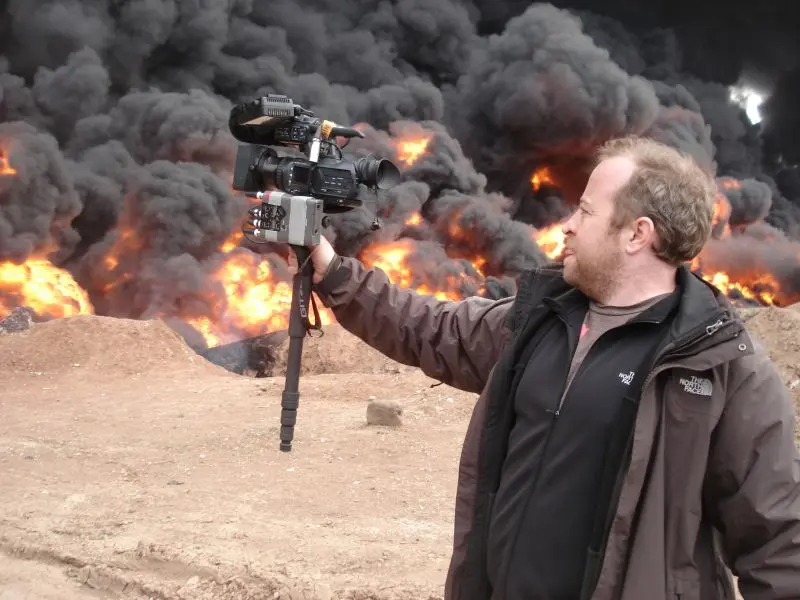
Intense, toxic black smoke billowed into the afternoon sky, blocking out the sun as burning oil fields cast an apocalyptic shadow over the landscape. Deep within a dimly lit, damp basement, a teenage mother cradled her one-day-old baby girl, desperately seeking shelter from an unceasing barrage of artillery shells and missiles. Just blocks away, incoming fire violently smashed through the reinforced walls of a residential home repurposed as an unofficial media center. This was Homs, Syria—a city transformed into a primary battleground where President Bashar al-Assad’s regime sought to forcefully silence a year-long democratic uprising.
The sheer horror of the all-out military assault by the Syrian regime is brought vividly and unflinchingly to life in a harrowing CNN documentary. Utilizing a covert network of local anti-regime activists, a high-risk CNN news crew was successfully smuggled into the besieged city of Homs. Moving ghost-like from house to house under the cover of darkness while the Syrian Arab Army rained down rockets, mortars, and tank shells, the team bore witness to a humanitarian catastrophe unfolding in real-time.
For over a year, the government of Bashar al-Assad had deployed the full might of its military apparatus to quash popular demonstrations. While protests erupted nationwide with citizens chanting "down with the regime," Homs—and specifically the pulverized working-class neighborhood of Baba Amr—became the undisputed epicenter of the revolution, and consequently, the primary target of a brutal government pacification campaign.
Detailed Chronology: The Journey In and Out of Baba Amr
The Perilous Infiltration
Embarking on the assignment required a calculated acceptance of extreme danger. Even seasoned war correspondents experienced profound trepidation. CNN senior international correspondent Arwa Damon, whose extensive resume includes frontline reporting from the world’s most volatile conflict zones, admitted to the gravity of the mission before crossing into Syrian territory.
"I actually wrote a letter home the first time, to my family," Damon recalled. "And I went to see some very close friends as well, just in case."
Damon was accompanied by veteran cameraman Neil Hallsworth—whose extensive credentials span Iraq, Afghanistan, and the West Bank—and Tim Crockett, a former British special forces officer tasked with executive security who also functioned as an unofficial stills photographer documenting the destruction.
The operation to enter Homs was an arduous, five-day ordeal for what would typically constitute a standard two-hour drive under normal conditions. The team had to navigate an intricate, high-stakes clandestine network.
"It involves a fairly elaborate process of being moved through farmlands, back roads, trying to avoid the government, ending up in various safe houses," Damon explained. "And at every single leg, every single stop, you have a different person who’s responsible to move you on to the next one, someone who knows the details of the lay of the land around you to ensure that they can actually get you through from one point to another."
For thousands of civilians trapped inside the suffocating siege of Baba Amr, this clandestine transit route served as their singular, fragile lifeline. Out of respect for operational security and the lives depending on it, CNN agreed to keep the exact mechanics of the route strictly confidential.
Life in the Crosshairs: The Absence of a Frontline
Upon arrival, the team discovered that Homs possessed no traditional military frontline. Consequently, there was nowhere within the urban landscape that could remotely be considered safe.
"It [seems] mostly deserted; most of the buildings have sustained some sort of damage," Damon observed while detailing the eerie, post-apocalyptic atmosphere. "And then you’ll see a kid peek their head out from a doorway, or you’ll see a man walking in the street carrying an AK-47."
Baba Amr absorbed the most relentless and unyielding bombardment. Daily shelling left a continuous stream of dead and wounded civilians in its wake. In this vacuum of formal medical infrastructure, two extraordinarily resilient doctors—one of whom was a practicing dentist—worked around the clock under impossible conditions to treat the flood of casualties.
Operating out of a makeshift clinic, the medical team treated severe trauma cases: a man suffering from catastrophic head injuries caused by jagged shrapnel, and another whose mangled leg necessitated immediate, field-expedient amputation. Recognizing that the regime deliberately targeted medical facilities, the doctors abandoned central hospitals, establishing multiple clandestine trauma posts scattered across residential homes in Baba Amr. They rotated continuously between these safe houses, treating patients while dodging lethal hazards.
To compound the danger, military snipers occupied advantageous positions on high-rise rooftops overlooking the pulverized streets, rendering even the shortest dash between buildings a fatal gamble. Mosques throughout the neighborhood broadcasted desperate warnings over loudspeakers prior to heavy bombardments, urging residents to vacate upper floors, stay away from glass windows, and cluster into interior rooms deemed structurally sounder.
Humanity Amid the Ruins
In deep basement bunkers hastily converted into bomb shelters, hundreds of civilians lived in perpetual fear, praying that incoming ordnance would miss their temporary sanctuary. It was in one such subterranean shelter that the CNN crew encountered a teenager who had given birth just twenty-four hours prior.
Her newborn daughter, Fatimah, stood as a poignant symbol of pure innocence trapped amid the manufactured hell of Homs. Tragically, Fatimah’s father remained completely unaware of her birth; he had ventured out of the shelter a month earlier to forage for essential supplies and had never made it back. Nearby, an elderly grandmother trembled uncontrollably as she recounted how two other members of her immediate family had been killed by shrapnel weeks prior.
Virtually every civilian sheltering within the bunker—numbering approximately 300 souls—harbored identical accounts of sudden, violent loss. Survival in Homs had devolved into a matter of pure, unadulterated luck, where death struck arbitrarily and without warning.
The volatility of the environment was underscored when a live rocket slammed directly into the upper floors of the residential building being utilized as an unofficial media center by visiting Western journalists. Among those sheltering in Baba Amr at the time was esteemed Sunday Times war correspondent Marie Colvin, who, alongside talented French photographer Rémi Ochlik, would tragically be killed by targeted artillery fire just days later.
As rumors of an impending, large-scale ground invasion by the Syrian military swept through Baba Amr, the situation deteriorated beyond acceptable security thresholds. CNN management ordered the extraction of Damon, Hallsworth, and Crockett. Evacuating proved emotionally agonizing for the journalists.
"It is fundamentally unfair that we live in a world where we can go film this, report on it, and leave, knowing that the people we’ve left behind’s suffering is going to continue," Damon reflected somberly. "Feeling as if we should’ve done more, we could’ve done more."
Supporting Context & Metrics
The siege of Homs, and Baba Amr specifically, stands as a defining chapter in the Syrian Civil War, marking the transition from civil unrest to a brutal, industrialized military conflict.
- Duration of the Siege: The brutal military encirclement and continuous bombardment of Baba Amr lasted for nearly 27 agonizing days in early 2012, following months of prior military pressure.
- Casualty Estimates: Human rights organizations and local opposition networks estimate that hundreds of civilians perished during the siege of Baba Amr alone, with thousands more injured due to indiscriminate shelling of densely populated residential zones.
- Targeting of the Press and Medics: The conflict saw unprecedented hostility toward information gatherers. Dozens of local citizen journalists, media activists, and high-profile international correspondents—including Marie Colvin and Rémi Ochlik—were systematically targeted or killed by regime fire to suppress the flow of independent documentation.
- Infrastructure Destruction: Independent satellite analysis conducted during and after the offensive indicated that over 70% of buildings in Baba Amr sustained heavy structural damage or complete obliteration due to sustained artillery and rocket fire.
Official Statements
The events in Homs triggered global condemnation, though official responses from the Syrian government and international bodies starkly contrasted:
- The Syrian Government: The regime of President Bashar al-Assad consistently defended its military operations in Homs, characterizing the crackdown not as an assault on civilian protesters, but as a legitimate counter-terrorism operation aimed at eradicating "armed terrorist groups" and foreign-backed insurgents attempting to destabilize the sovereign state.
- International Community and Human Rights Organizations: Western governments, the United Nations, and organizations such as Amnesty International and Human Rights Watch strongly condemned the military tactics employed in Homs. Statements frequently highlighted the indiscriminate use of heavy weaponry against civilian populations, the deliberate targeting of improvised medical facilities, and the denial of humanitarian aid access as violations of international humanitarian law.
Future Outlook
The brutal pacification of Homs and the eventual fall of Baba Amr at the end of February 2012—marred by widespread allegations of summary executions and house-to-house purges by regime forces—served as a grim harbinger for the rest of the Syrian conflict.
While the Syrian military successfully broke the organized armed resistance within Homs, the underlying grievances that sparked the 2011 uprising—demands for political freedom, economic reform, and an end to authoritarian governance—remained profoundly unresolved. The blueprint tested and perfected in Homs—total urban siege, starvation tactics, indiscriminate bombardment, and the systematic elimination of medical and media infrastructure—subsequently became the regime’s standard playbook for subduing other opposition strongholds across the war-torn nation, setting the stage for a protracted, decade-long humanitarian catastrophe of global proportions.