


Executive Overview
In an era dominated by algorithmic feed shifts and escalating customer acquisition costs (CAC), the digital marketing landscape has undergone a profound paradigm shift. Once viewed as an artistic pursuit characterized by literary eloquence, copywriting has transitioned into a highly calculated, data-driven discipline. Today, the industry’s most successful operators evaluate written material not by its aesthetic sophistication, but by its direct mathematical correlation to revenue generation, pipeline velocity, and conversion rate optimization (CRO).
This investigative report examines the operational strategies utilized by elite direct-response copywriters and digital marketing agencies to construct high-yielding customer acquisition engines. Drawing on operational frameworks from leading industry institutions—including the seven-figure educational platform Copyblogger—this analysis deconstructs the systematic methodologies required to transform written content into a scalable corporate growth asset. By moving away from vanity metrics such as social media engagement and raw web traffic, modern practitioners are leveraging a potent mix of empirical audience research, competitive intelligence, structured workflows, and human-in-the-loop artificial intelligence to drive predictable financial returns.

Detailed Chronology: The Lifecycle of a High-Conversion Copywriting Campaign
To understand how modern copywriters systematically convert attention into cash, it is essential to analyze the developmental lifecycle of a campaign. High-performing copy is rarely the product of isolated creative inspiration; rather, it is the result of a highly structured, multi-phase operational process.
+------------------------------------------------------------+
|            PHASE I: Empirical Audience Research            |
|  - Sales call transcript analysis via AI NLP engines       |
|  - Ethnographic scraping of organic forums (Reddit, etc.)   |
|  - Identification of acute pain points and objections       |
+------------------------------------------------------------+
                             |
                             v
+------------------------------------------------------------+
|           PHASE II: Competitive Intelligence & Curative    |
|  - Analysis of competitor ad duration (FB/LI Ad Libraries) |
|  - Extraction of proven hooks and structural frameworks    |
|  - Curation of high-performing assets in active swipe files|
+------------------------------------------------------------+
                             |
                             v
+------------------------------------------------------------+
|          PHASE III: Structured Execution & Testing         |
|  - Outlining via conversion-focused heuristic templates    |
|  - Rapid iterative drafting (isolating hooks from body)    |
|  - Human-in-the-loop AI optimization for clarity & tone    |
+------------------------------------------------------------+
                             |
                             v
+------------------------------------------------------------+
|          PHASE IV: Attribution, Scaling & Iteration        |
|  - GA4 conversion tracking & pipeline attribution analysis |
|  - Quantitative assessment of lead quality vs. volume      |
|  - Continuous optimization of high-ROI distribution channels|
+------------------------------------------------------------+
Phase I: Empirical Audience Research and Qualitative Sentiment Analysis
The genesis of any high-conversion copy begins far from the text editor. Before a single sentence is drafted, operators must conduct exhaustive qualitative research to map the psychological profile of the target demographic. This phase focuses on isolating three critical variables:
- Acute Pain Points: The immediate, visceral challenges currently disrupting the prospect’s personal or professional workflow.
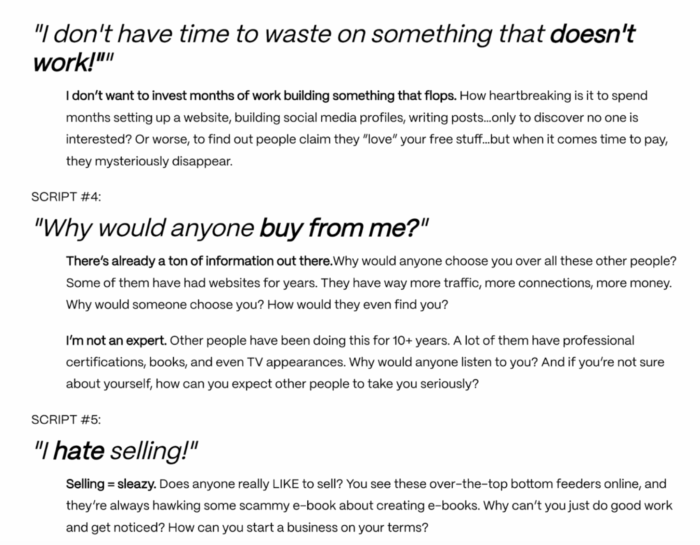
- Active Objections: The psychological barriers, skepticism, and financial friction preventing the prospect from purchasing a solution.
- Internal Vocabulary: The exact syntax, jargon, and phrasing the target audience uses when describing their challenges in unmonitored environments.
To scale this research without incurring prohibitive costs, modern agencies utilize Natural Language Processing (NLP) tools. By downloading sales call recordings, extracting transcripts, and processing them through advanced large language models (LLMs), copywriters can instantly isolate recurring patterns of friction and hesitation. Furthermore, scraping organic discussion networks such as Reddit or industry-specific Facebook groups allows writers to capture the unvarnished, authentic voice of the customer, ensuring the resulting copy mirrors the reader’s reality with absolute precision.
Phase II: Competitive Intelligence and Asset Swiping
Rather than inventing marketing angles ex nihilo, elite practitioners operate on the principle of validated market demand. By auditing the active marketing campaigns of primary and secondary competitors, copywriters can identify which positioning strategies have already received capital validation.
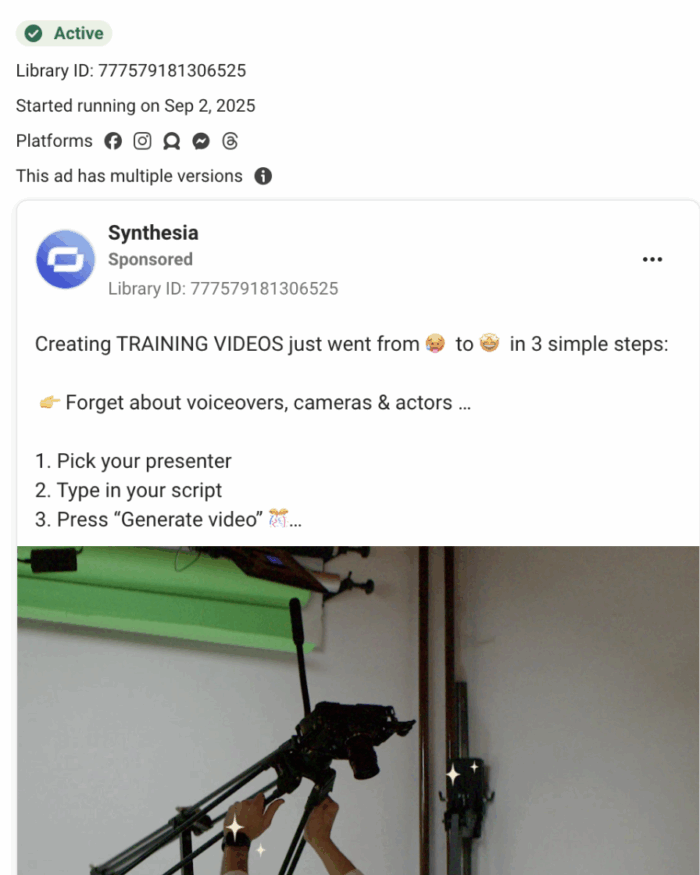
A key operational tactic involves auditing the Meta (Facebook) and LinkedIn Ad Libraries. By filtering for ads that have run continuously for more than 30 to 45 days, researchers can reliably deduce which creative concepts and hooks are driving a positive return on ad spend (ROAS). If an ad is unprofitable, a competitor will typically terminate it within days; conversely, long-running ads signal a winning psychological hook. These successful frameworks are systematically archived in centralized "swipe files"—curated repositories of high-performing headlines, transition sequences, and call-to-action (CTA) mechanics that serve as structural blueprints for future campaigns.
Phase III: Structured Execution and Heuristic Frameworks
To mitigate the operational risks of writer’s block and erratic copy quality, professional copywriters utilize rigid, step-by-step writing workflows. The process is broken down into discrete micro-tasks:

- Structural Outlining: Defining the structural flow of the asset based on proven persuasive models (such as Attention, Interest, Desire, Action or Problem, Agitate, Solve).
- Rapid Drafting: Writing the body copy without editing, focusing entirely on momentum and emotional resonance.
- Clarity and Brevity Optimization: Stripping away superfluous adjectives, passive voice, and complex sentence structures to maximize readability and cognitive processing speed.
Phase IV: Practical Validation Through Micro-Assets
The final phase of a copywriter’s developmental cycle involves practical market testing. High-income copywriters frequently validate their methodologies by building and managing self-owned digital assets. Whether launching a niche affiliate marketing website, building a drop-shipping storefront, or utilizing low-code software development platforms (such as Lovable) to launch a micro-SaaS tool, managing a live business forces the copywriter to understand the direct relationship between written words and financial survival.
This hands-on experience teaches a vital lesson: optimizing copy for "purchase intent" invariably yields higher enterprise value than optimizing for raw, non-commercial search volume.

Supporting Context & Metrics: Deconstructing High-Performing Assets
To fully comprehend the mechanics of high-ROI copywriting, we must analyze the specific design patterns and quantitative performance metrics that distinguish elite copy from mediocre prose.
Case Study Analysis: Psychological Mirroring in Direct-Response Sales Pages
A premier example of audience-centric copywriting can be observed in the promotional materials for Earnable, a premium business creation course designed by personal finance author Ramit Sethi.

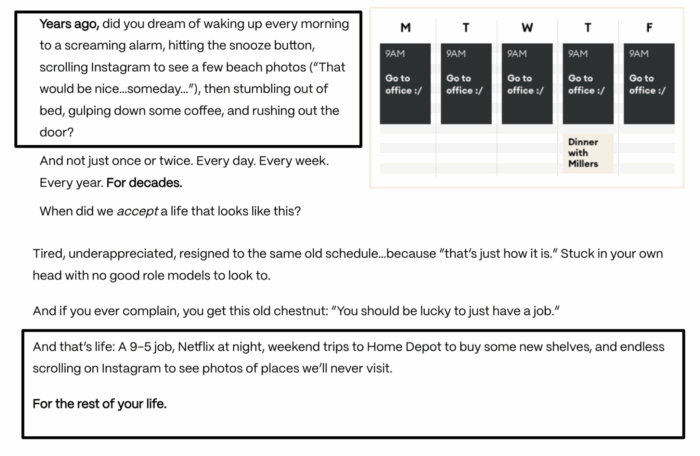
Instead of leading with abstract promises of wealth or generic product features, the landing page utilizes precise, descriptive scenarios that mirror the exact daily routine of his target demographic:
| Generic Feature-Led Copy | High-Conversion Psychological Copy (Sethi Model) |
|---|---|
| "Our course teaches you how to start a side hustle so you can earn extra income on weekends." | "You sit on the couch, scroll through Instagram, watch Netflix, and dread the upcoming Monday morning commute… all while knowing you have skills that could be generating cash." |
By reflecting the prospect’s exact physical reality (endless social media scrolling, Sunday evening anxiety, mundane weekend routines), the copy establishes immediate psychological alignment. The reader concludes that because the author so thoroughly understands their current reality, he must possess the definitive solution to their desired reality.

                  THE PERSUASION BRIDGE
+--------------------------------------------------------+
|                   Current Reality                      |
|  - Dreaded 9-to-5 commute                              |
|  - Passive scrolling on Instagram                      |
|  - Sunday night anxiety                                |
+--------------------------------------------------------+
                           |
                           | [Bridge of Empathy & Proof]
                           v
+--------------------------------------------------------+
|                    Desired Reality                     |
|  - Autonomy over daily schedule                        |
|  - Scalable, high-margin revenue streams               |
|  - Elimination of financial anxiety                    |
+--------------------------------------------------------+
Channel-Specific ROI Metrics and Attribution Frameworks
Evaluating copy requires matching the performance metrics to the specific distribution channel. The following table outlines the key performance indicators (KPIs) and tracking methodologies employed by high-performing marketing teams:
| Channel | Vanity Metrics (Low Value) | High-ROI Performance Metrics (High Value) | Technical Tracking & Attribution Methodology |
|---|---|---|---|
| B2B Social (LinkedIn / X) | Likes, Impressions, Reposts | Direct Messages (DMs) Received, Inbound Demo Requests, Pipeline Influence | Implement self-reported attribution forms on demo sign-ups (e.g., "How did you hear about us? [Founder’s LinkedIn Posts]"). |
| SEO / Blog Content | Pageviews, Average Time on Page, Bounce Rate | Marketing Qualified Leads (MQLs), Product Sign-ups, Customer Acquisition Cost (CAC) | Establish custom event tracking in Google Analytics 4 (GA4) to measure downstream conversions originating from specific blog URLs. |
| Direct Response Sales Pages | Unique Visitors, Scroll Depth | Conversion Rate (CR), Average Order Value (AOV), Customer Lifetime Value (LTV) | Deploy A/B testing platforms (e.g., VWO, Optimizely) to run split-tests on headlines, offer structures, and CTA buttons. |
Official Statements and Industry Insights
The integration of artificial intelligence and community-driven learning has fundamentally altered the career trajectories of modern copywriters. Industry leaders emphasize that the profession is undergoing a consolidation, where low-skill writers are being replaced by AI, while high-skill "strategic copywriters" are commanding unprecedented premiums.
The Role of Human-in-the-Loop AI
While early fears suggested artificial intelligence would completely replace human writers, the reality has proven far more nuanced. Elite copywriters view LLMs not as autonomous content generators, but as highly efficient research and developmental partners.
In an official statement regarding the strategic integration of AI in modern workflows, the leadership of Copyblogger highlighted three core use cases that preserve human-led editorial standards:

"We do not use artificial intelligence to write our articles. However, ChatGPT and similar models have become indispensable partners for accelerating our research. By prompting AI to analyze dense forum threads, summarize complex consumer pain points, provide alternative sentence structures, and locate highly specific expert quotes across social media networks, we can drastically reduce our time-to-publish while actually increasing the factual density and persuasive power of our copy."
The Institutional Value of Professional Peer Networks
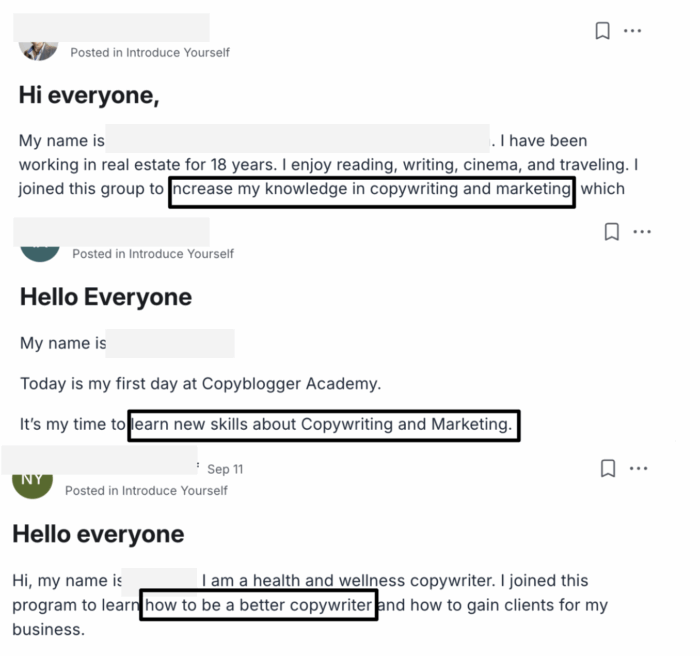
Because copywriting is often executed in isolation, up-and-coming practitioners frequently struggle with subjective bias—evaluating their own copy based on personal preference rather than objective market standards. To counteract this, modern educational ecosystems like the Copyblogger Academy have structured formal feedback loops where experienced marketers review, stress-test, and refine member submissions.

By connecting emerging writers directly with seven-figure agency owners and personal branding experts, these academies accelerate the learning curve. Instead of waiting months to gather statistically significant market data, writers receive immediate, heuristic feedback on hook strength, emotional resonance, and conversion architecture. This collaborative environment also functions as a high-value referral network, enabling copywriters to exchange warm client leads and share real-time insights on algorithmic updates across platforms like Google and LinkedIn.
Future Outlook: The Evolution of Persuasion in an Automated Era
As the digital ecosystem enters a new phase of maturity, several macroeconomic trends are poised to redefine the copywriting profession over the next decade.
                          FUTURE TRENDS
+--------------------------------------------------------------+
| 1. Rise of Algorithmic Arbitrage & Platform Mastery          |
|    - Copywriters must dual-hat as SEO and algorithm experts.  |
+--------------------------------------------------------------+
                               |
                               v
+--------------------------------------------------------------+
| 2. Shift from High-Volume Traffic to High-Intent Conversion  |
|    - Focus shifts from generic pageviews to direct pipeline. |
+--------------------------------------------------------------+
                               |
                               v
+--------------------------------------------------------------+
| 3. Hyper-Personalization & Interactive Dynamic Copy          |
|    - Real-time page adaptation based on visitor firmographics.|
+--------------------------------------------------------------+
1. Algorithmic Arbitrage and Platform Mastery
The distinction between "writing copy" and "distributing copy" has completely dissolved. In the current market, a copywriter who does not understand the technical distribution mechanics of their chosen platform is at a severe disadvantage.
For search engine optimization (SEO) writers, this requires a deep understanding of Google’s search algorithms, user intent classification, and semantic search optimization. For social media ghostwriters, it necessitates an intimate knowledge of platform engagement algorithms, click-through rate (CTR) optimization on visual assets, and the strategic deployment of personal branding elements.

2. The Premium on Human Authenticity and Original Data
As generative AI tools flood the internet with high-volume, low-cost content, audiences are developing a heightened cognitive resistance to generic marketing copy. The future of high-value copywriting lies in the strategic deployment of original data, proprietary case studies, and authentic human narratives.
Brands will increasingly invest in copywriters who can conduct primary interviews, extract unique insights from raw data, and weave those elements into highly compelling brand stories that cannot be replicated by automated software.

3. Hyper-Personalization and Dynamic Copywriting
Advancements in marketing technology are paving the way for hyper-personalized, real-time copywriting. Rather than directing all traffic to a single static landing page, future conversion funnels will dynamically adapt their copy based on the visitor’s firmographic data, referral source, and historical browsing behavior.
Copywriters will transition from writing singular, linear narratives to designing complex, multi-variable conversational matrices. Those who can construct these adaptive frameworks will become highly sought-after architects of corporate growth, commanding premium fees and securing their positions at the absolute forefront of the global digital economy.