

Executive Overview
For decades, the sartorial reality of attending a National Football League (NFL) game or cheering from a living room was defined by a distinct aesthetic: oversized, boxy, screen-printed men’s t-shirts, heavy hoodies featuring stiff cotton blends, and stiff replica jerseys that required considerable layering to look intentional. Women, in particular, were often underserved by a market that treated female sports fans as an afterthought, relying on the "shrink it and pink it" strategy—drenching standard-issue men’s cuts in pastel pinks and rhinestones without rethinking fit, silhouette, or fabric quality.
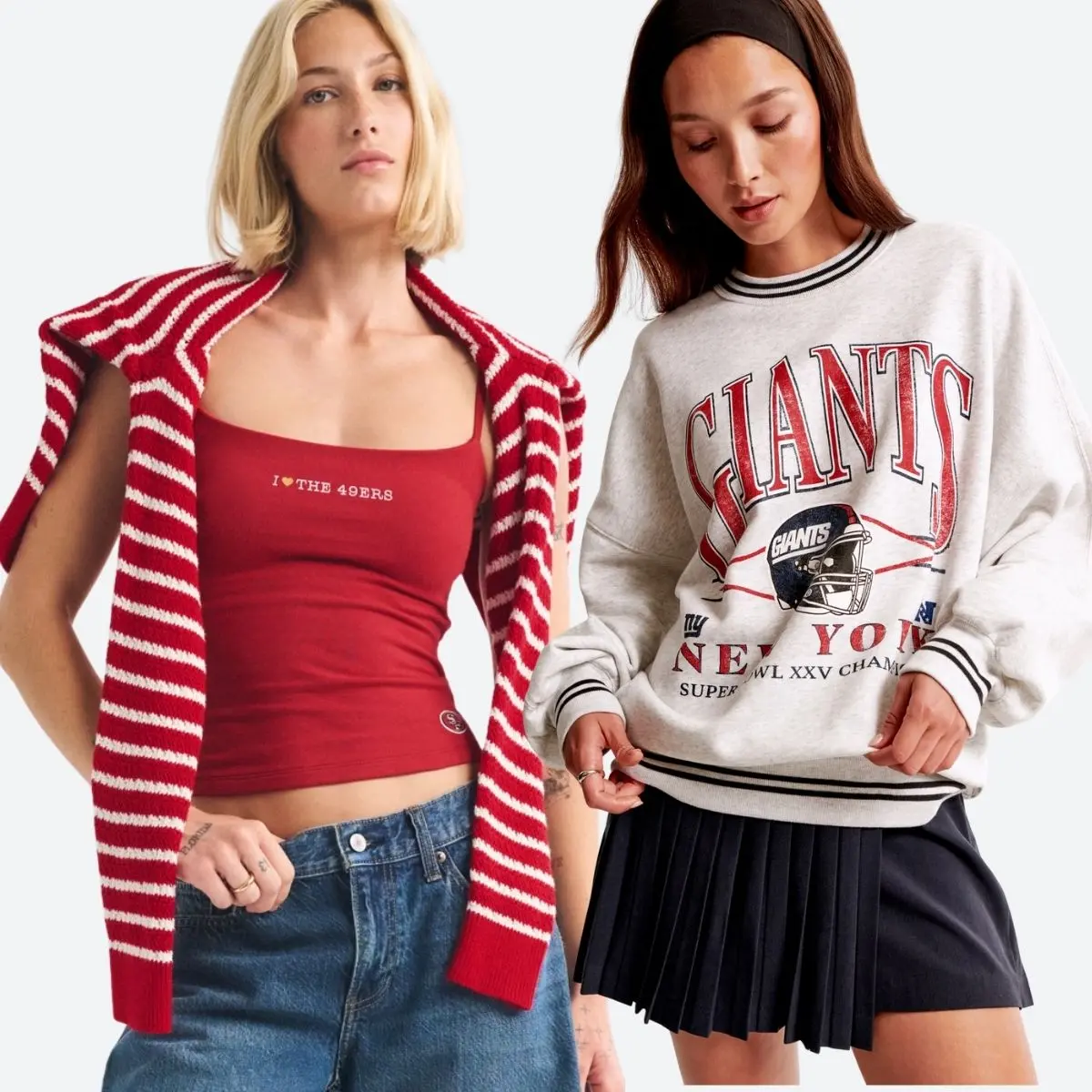
Today, that paradigm has fundamentally shattered. The intersection of professional sports, high-street retail, and pop culture has birthed a new era of sports apparel: sporty-chic, trend-forward, and unapologetically stylish. Fueled by the immense cultural phenomenon often dubbed the "WAG effect"—popularized by high-profile figures like Taylor Swift and a broader movement of fashion-conscious sports spectators—the NFL has aggressively pivoted toward high-profile collaborations with some of the most recognizable lifestyle and apparel brands in retail.
From Old Navy and Abercrombie & Fitch to Disney, Victoria’s Secret PINK, Baublebar, and Anthropologie, the league’s licensing strategy has evolved into a lucrative nexus of couture-adjacent street style and die-hard fandom. This comprehensive report investigates the commercial expansion of NFL lifestyle merchandise, analyzing the strategic shift from basic sports memorabilia to coveted, trend-driven capsule collections. We explore the design philosophies driving these partnerships, consumer demographic shifts, the economic impact on retail partners, and what this booming crossover means for the future of sports entertainment and fashion retail.
Detailed Chronology: The Evolution of NFL Fashion
To understand how the NFL became a major player in the global fashion ecosystem, it is vital to examine the historical trajectory of sports merchandising and how leagues transitioned from functional logo-stamping to curated, seasonal capsule drops.
Phase One: The Era of Functional Utility (1960s–1990s)
In the formative decades of modern professional football, merchandise was viewed strictly through the lens of utility and team identification. Jerseys were built for durability on the field and subsequently scaled down for fans in the stands. Stadium apparel consisted almost entirely of heavyweight cotton hoodies, canvas jackets, and basic cotton tees bearing standard team insignias. Fashion considerations were secondary to brand authenticity; the goal was simply to signal loyalty to a franchise.
Phase Two: The "Shrink It and Pink It" Revolution (2000s–2010s)
As market research began to reveal that women constituted nearly 45% of the NFL’s fan base, leagues and merchandisers recognized a distinct retail vacuum. Unfortunately, the initial corporate response lacked nuance. The early 2000s were dominated by the "pink-washing" of sports gear—taking standard-issue men’s merchandise, reducing the scale, and recoloring them in bright pink or magenta. While these items generated initial revenue, they faced growing criticism from female consumers who craved authentic team representation that aligned with contemporary streetwear trends rather than patronizingly gendered alterations.
Phase Three: The Athleisure Boom and Streetwear Crossovers (2010s–2020)
The global rise of athleisure fundamentally altered how consumers viewed casual wear. As yoga pants, hoodies, and running shoes transitioned from the gym to the runway, sports leagues began partnering with contemporary sportswear brands to capture a share of the burgeoning lifestyle market. Companies like ’47 Brand and Mitchell & Ness introduced vintage-washed aesthetics, bringing a sense of heritage and distressed cool to caps and jerseys. However, these offerings remained largely confined to traditional sports retailers.
Phase Four: The High-Street & Lifestyle Takeover (2020–Present)
The current era is characterized by cross-industry collaborations with mainstream fashion powerhouses that rarely venture into sports retail. By partnering with trend-driven brands like Abercrombie & Fitch, Anthropologie, and Baublebar, the NFL has successfully integrated game-day attire into the broader seasonal wardrobe. Today’s collections do not look like traditional sports merchandise; instead, they mirror contemporary runway trends—embracing Y2K nostalgia, collegiate prep, and sophisticated loungewear—allowing fans to seamlessly transition from an autumn tailgate to a brunch reservation without sacrificing personal style.
Supporting Context & Metrics: The Anatomy of a Fashion-Forward Partnership
The economic and cultural drivers behind these collaborations are multi-faceted, anchored by shifting consumer demographics, social media amplification, and an increasing desire for personalized expression within traditional spaces like sports stadiums.
The Demographic Shift: Women Driving the Market
According to recent demographic studies released by major sports leagues and media agencies, women now account for roughly 47% of the total NFL consumer base. More importantly, female consumers drive a significant portion of non-ticket retail purchases, including apparel, accessories, and home goods. By shifting away from generic merchandise toward elevated, design-conscious pieces—such as Abercrombie’s bra-free 90s camis and Victoria’s Secret PINK’s foldover flare leggings—brands are capturing a demographic that demands both team loyalty and high sartorial standards.

[Traditional Sports Merchandising]
       │
       ├── Focus: Utility, Logos, Unisex/Men's Cuts
       └── Result: High functional loyalty, low lifestyle integration

[Modern High-Street Collabs]
       │
       ├── Focus: Silhouette, Trend Alignment (Y2K, Collegiate, Athleisure)
       └── Result: Cross-market appeal, high sell-out rates, daily wearability
Strategic Brand Partnerships and Their Design Philosophies
The modern NFL licensing portfolio spans a wide spectrum of retail price points and aesthetics, ensuring that every consumer touchpoint is covered:
- Old Navy & Aeropostale: Focusing on accessible, family-friendly comfort and retro collegiate aesthetics. Pieces like high-waisted wide-leg sweatpants and 90s-inspired trainer jackets cater to the desire for relaxed, vintage-washed streetwear.
- Abercrombie & Fitch & Anthropologie: Targeting the elevated millennial and Gen Z consumer. Anthropologie’s corduroy rope-script baseball caps and Abercrombie’s tailored layering pieces bring sophistication and tactile richness (corduroy, ribbed knits, structured canvas) to game-day styling.
- Victoria’s Secret PINK & Mitchell & Ness: Leaning heavily into Y2K nostalgia and athletic heritage. Rhinestone-crusted foldover flare leggings and mid-weight retro V-neck sweaters tap into cyclical fashion revivals that resonate deeply with younger demographics.
- Baublebar & Disney: Providing playful, accessory-driven personalization. Beaded bag charms and character-infused crossover pullovers allow fans to inject niche personality into their game-day looks.
Official Industry Insights & Expert Perspectives
The transformation of sports merchandise into high-fashion commodities has not gone unnoticed by retail executives and fashion analysts, who view these partnerships as a masterclass in modern brand synergy.
Industry analysts emphasize that consumers no longer want to buy clothes that serve only a single, highly specific function. "The modern sports fan wants their wardrobe to be versatile," notes retail strategist Elena Vance. "If a consumer is spending money on a piece of team merchandise, they want to be able to wear it to a Saturday morning coffee run, a casual Friday at the office, or a Sunday afternoon game watch party. The brands succeeding in this space are those that prioritize garment construction, modern silhouettes, and subtle branding over giant, billboard-style logos."
Furthermore, marketing directors within the NFL licensing divisions point to the phenomenon of "stadium-ready" aesthetics. With strict clear-bag policies and heightened security measures at professional sports venues, accessories have had to evolve. Items like beaded bag charms and structured corduroy caps serve a dual purpose: they elevate an outfit visually while remaining entirely practical for navigating stadium entry checkpoints.
Future Outlook: What Lies Ahead for Sports Apparel?
As we look toward the future of sports marketing and retail, several key trends indicate that the intersection of fashion and football will only deepen.
1. Hyper-Localized and Sustainable Capsule Drops
As consumers increasingly demand sustainability and ethical production, future NFL collaborations are expected to lean toward small-batch, limited-edition drops utilizing eco-friendly textiles and deadstock fabrics. This model not only reduces waste but artificially generates scarcity, driving higher demand and viral social media engagement.
2. Integration with Digital and Virtual Fashion
With the rise of augmented reality (AR) and digital wardrobes, brands are beginning to explore how physical game-day apparel translates into virtual spaces. Fans may soon be able to purchase physical items that unlock exclusive digital wearables for gaming avatars, social media filters, and virtual stadium experiences.
3. Year-Round Wardrobe Integration
The boundary between "football season" and the rest of the calendar year is blurring. Because modern NFL merchandise is designed to align with broader seasonal trends—such as autumn collegiate core or summer athleisure—fans are wearing their team colors year-round, transforming sports licensing into a continuous, 365-day fashion category rather than a four-month seasonal spike.
In conclusion, the evolution of NFL merchandise from boxy novelty items to chic, runway-inspired apparel represents a permanent shift in sports culture. By collaborating with brands that understand contemporary fashion sensibilities, the NFL has successfully transformed its fan base into a walking runway—proving that supporting your favorite team and looking impeccably stylish are no longer mutually exclusive.