

Executive Overview
The aerospace industry has long stood as a pinnacle of human engineering, demanding a culture of unyielding precision, meticulous oversight, and an uncompromising commitment to safety. For decades, the Boeing Company was universally regarded as the gold standard of this ethos. However, a profound cultural erosion has transformed one of America’s most revered manufacturing institutions into the subject of intense global scrutiny.
Directed by acclaimed filmmaker Rory Kennedy and now streaming on Netflix, Freefall: A Reckoning for Boeing delivers an unflinching, deeply reported investigation into the aerospace giant. The documentary exposes the systemic manufacturing shortcuts, aggressive corporate cost-cutting, and internal negligence that former employees argue have compromised the structural integrity of modern commercial aircraft.
Centered around the harrowing experiences of corporate whistleblowers—most notably the late quality engineer John “Swampy” Barnett—Freefall traces the company’s decline from a quality-obsessed engineering powerhouse to a profit-driven corporate machine. Featuring never-before-seen deposition footage, undercover recordings, and testimony from industry insiders, the documentary paints a troubling portrait of an organization where institutional pressures routinely subordinated human safety to financial expediency. As regulatory bodies step up their oversight and pending lawsuits wind their way through the courts, Freefall forces a reckoning over what happens when corporate governance prioritizes share prices over the lives of the flying public.
Detailed Chronology: From Engineering Crown Jewel to Corporate Turmoil
To understand how Boeing arrived at its current crossroads, industry insiders and investigators look back to a pivotal leadership transition in the mid-2000s—a shift that fundamentally altered the company’s corporate DNA.
The Golden Age of Quality Control
At the dawn of the 21st century, Boeing enjoyed an immaculate global reputation. Workers and managers alike took immense pride in producing aircraft that set the benchmark for reliability. A cornerstone of this success was an internal culture that empowered quality-control managers with absolute authority. If a technician identified a flaw, a structural defect, or a deviation from engineering specifications, the quality department held the unilateral power to halt production immediately.
As Merle Meyers, a former Boeing quality manager, explains in the documentary:
“[The] Boeing Company was unique in that if there was ever a dispute, the quality department made the final decision as to whether or not to sign off on the work.”
The McNerney Era and the GE Playbook
That protective framework began to fracture in 2005 with the appointment of Jim McNerney as chief executive officer. McNerney, a protégé of legendary General Electric CEO Jack Welch, brought a radically different philosophy to the aerospace sector—one centered heavily on aggressive cost reduction, shareholder value maximization, and rapid manufacturing turnover.
Under McNerney’s leadership, Boeing began outsourcing major components of its commercial aircraft production to external suppliers around the globe. When these outsourced parts arrived at domestic facilities for final assembly, workers frequently discovered that components were corroded, out-of-tolerance, or structurally compromised.
Sam Mohawk, a former Boeing quality investigator, notes in the film:
“You automatically knew that was going to have a direct effect on safety and quality. We just have to accept what is given to us and put it on the airplane.”
Rather than addressing the root causes of these manufacturing defects, production schedules were accelerated to compete directly with European rival Airbus. When McNerney stepped down in 2015—walking away with a staggering $244 million compensation and retirement package—veteran employees hoped the company would pivot back to its legacy safety standards. Instead, the cost-cutting momentum persisted, setting the stage for subsequent crises, including the devastating 737 MAX tragedies of 2018 and 2019, and the 2024 Alaska Airlines door-plug blowout.
Supporting Context & Metrics: The Human and Systemic Toll
The cultural shift engineered during the 2000s manifested in tangible, terrifying ways on the factory floor, particularly at Boeing’s newer production facilities.
The Charleston Facility and the 787 Dreamliner
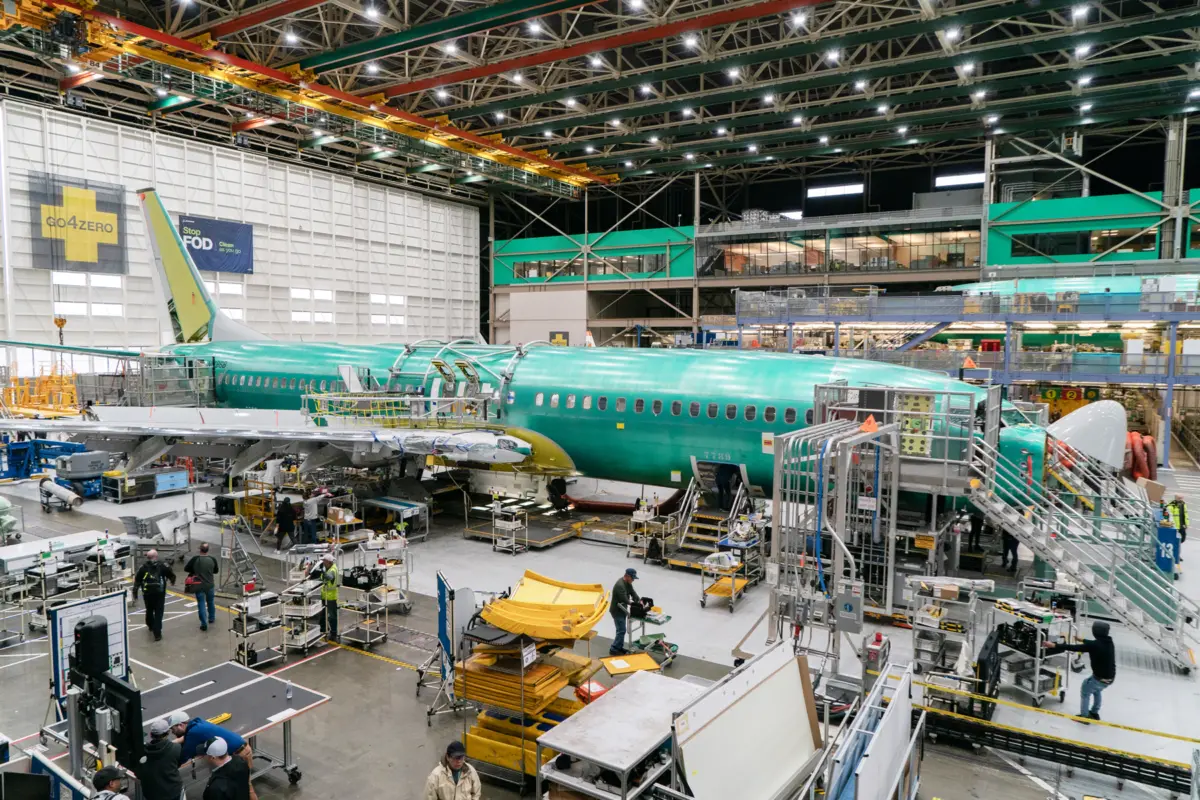
When Boeing’s original plan to outsource the entire production of its flagship 787 Dreamliner faltered, the company established a sprawling manufacturing plant in Charleston, South Carolina. Strategically positioned far away from the historically unionized strongholds of the International Association of Machinists and Aerospace Workers in the Pacific Northwest, the Charleston facility hired heavily from outside the aerospace sector, bringing on recent college graduates and workers with zero aviation manufacturing experience.
The operational friction was immediate. In shocking undercover footage featured in Freefall, multiple anonymous Boeing employees at the South Carolina plant candidly admitted on camera that they would refuse to fly on the aircraft they were building.
- “I wouldn’t fly on one of these planes,” one worker stated. “Because I see the quality of the fucking shit going down around here.”
- When asked directly if they or their families would ever board a 787, another employee answered simply and decisively: “No.”
The "Scrap" Parts Controversy
Merle Meyers brought further alarming revelations to light regarding the reintroduction of rejected components back into the production pipeline. Quality managers routinely marked severely damaged, out-of-spec parts with the label “scrap” to prevent them from ever reaching an aircraft. However, Meyers discovered instances where these discarded parts were quietly pulled out of scrap bins and installed in active 787 Dreamliners.
Despite internal investigations launched by the company, Meyers notes that accountability was virtually nonexistent:
“Not one manager was fired, or went to jail, or got time off. It’s like it was just part of the business.”
Today, this global fleet comprises approximately 1,200 aircraft operating across 85 countries and serving an estimated one billion passengers annually. As Meyers somberly points out in the documentary, the true scope of how many compromised or rotted parts made it onto flying aircraft may never be fully known.
John Barnett and the Cost of Truth
No individual embodied the lonely, high-stakes battle of corporate whistleblowing quite like John “Swampy” Barnett. A veteran quality engineer with decades of experience, Barnett became deeply alarmed by the proliferation of manufacturing shortcuts, including the presence of dangerous metal shavings left near sensitive electrical wiring. In his depositions, Barnett warned that unchecked metal slivers could easily vibrate, short-circuit wiring systems, and potentially bring down an entire aircraft.
When Barnett raised these concerns internally, he was allegedly rebuffed, sidelined, and transferred to different departments. His sustained advocacy culminated in a prolonged legal battle against his former employer.
Tragically, on March 9, 2024, while in the middle of a multi-day deposition in Charleston alongside his attorneys Rob Turkewitz and Brian Knowles, Barnett was found dead in his truck from a self-inflicted gunshot wound. While local law enforcement and coroners officially ruled his death a suicide, the emotional and psychological toll of his crusade against a corporate giant was undeniable. His final written words left a haunting indictment:
“I can’t do it any longer. Enough. Fuck Boeing. I pray the motherfuckers that destroyed my life pay.”
Reflecting on his client’s passing, attorney Rob Turkewitz remarks in the film:
“Boeing may not have pulled the trigger, but Boeing was responsible for John’s death.”
Official Statements and Corporate Response
True to form in high-profile corporate accountability narratives, Boeing declined to participate directly in Rory Kennedy’s documentary. However, the aerospace manufacturer issued a comprehensive, defensive statement to the filmmakers, asserting that its institutional standards have undergone significant reinforcement in the wake of intense congressional scrutiny, regulatory penalties, and whistleblower disclosures.
“The allegations in this film have been widely reported over the years,” the official statement reads. “Some remain unfounded claims to this day, while others are issues that Boeing thoroughly addressed or continues to improve upon.”
Furthermore, the company highlighted the rollout of its newly instituted Values and Behaviors program, an internal initiative designed to recalibrate corporate culture, encourage open employee feedback, and dismantle historical barriers to reporting safety concerns.
Despite these public relations efforts, legal pressure remains immense. In August 2025, Boeing formally settled John Barnett’s retaliatory lawsuit for an undisclosed sum. Shortly thereafter, in November 2025, the United States Department of Justice finalized an agreement ordering the company to pay a $1.1 billion penalty while dropping broader criminal investigations tied to past compliance failures. Crucially, separate wrongful-death litigation initiated by Barnett’s estate remains actively pending in the courts.
Future Outlook: A Turning Point for Aviation Oversight
Freefall: A Reckoning for Boeing arrives at a critical juncture for commercial aviation. While director Rory Kennedy was initially galvanized to helm the project following the tragic death of John Barnett and the alarming January 2024 Alaska Airlines Flight 1282 door-plug incident, the documentary transcends a single company’s missteps. It serves as a broader cautionary tale regarding the dangers of unchecked deregulation, financial engineering, and executive over-centralization in safety-critical industries.
The collective courage displayed by Barnett, Sam Mohawk, Merle Meyers, and the numerous other whistleblowers featured in the film has permanently altered the landscape of accountability within aerospace manufacturing. By refusing to stay silent in the face of institutional retaliation, these individuals have forced federal regulators, airline executives, and the traveling public to confront uncomfortable truths about how commercial airliners are manufactured.
As Boeing attempts to rehabilitate its damaged brand, navigate billion-dollar federal penalties, and implement its new cultural guidelines, the central question raised by Freefall remains unanswered: Can a corporate entity fundamentally realign its priorities from short-term shareholder enrichment back to absolute engineering excellence?
For the millions of passengers who step onto a commercial aircraft every day, the answer to that question is not just a matter of corporate survival—it is a matter of life and death.