

Executive Overview
The thick, oily black smoke of burning fuel billowed into the stratosphere, choking out the midday sun and casting an eerie, apocalyptic twilight over the battered landscape. Deep inside a dimly lit, damp basement, a teenage mother cradled her newborn—a baby just one day old—desperately seeking sanctuary from a relentless, earth-shattering barrage of artillery missiles and tank shells. Outside, the streets of Homs bore the scars of an unsparing military campaign.
For over a year, the popular uprising against the regime of Syrian President Bashar al-Assad had reverberated across the country. Chants of "down with the regime" echoed from Daraa to Damascus, but it was Homs—and specifically the besieged, working-class neighborhood of Baba Amr—that quickly transformed into the epicenter of both the revolution and the state’s ferocious efforts to extinguish it.
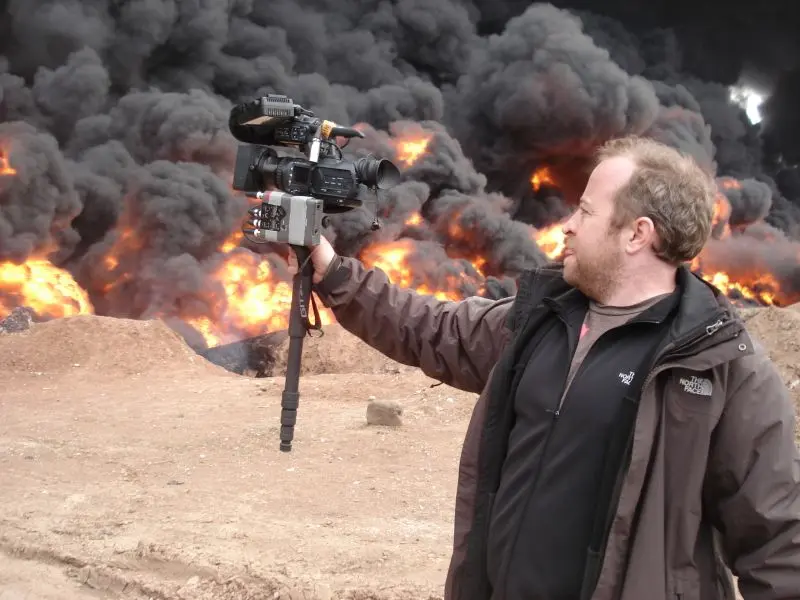
This grim reality forms the core of a harrowing CNN documentary that exposes the unvarnished brutality of the Syrian military’s all-out assault on its own citizenry. Utilizing a clandestine network of local opposition activists, a seasoned CNN reporting crew managed to bypass military blockades, sneaking into Homs to bear witness to a human rights catastrophe. Moving stealthily from house to house under the constant threat of sniper fire and incoming ordnance, the team documented a landscape devoid of traditional frontlines, where every building was a potential target, and survival was dictated less by strategy and more by sheer luck.
The operation to enter Homs was as perilous as the assignment within it. For veteran war correspondents and security specialists alike, the journey required confronting mortal danger before even reaching the city limits. What followed was a week of witnessing unimaginable human endurance: makeshift medical clinics operating without adequate supplies or anesthesia, families huddled in subterranean bunkers praying for deliverance, and the agonizing realization that international journalism could capture the suffering of a trapped populace but ultimately leave them to their fate.
Detailed Chronology: The Journey In and Out of Baba Amr
The Infiltration: A Five-Day Odyssey
For a typical motorist, the drive from the surrounding countryside into the heart of Homs takes roughly two hours. For the CNN crew—comprising veteran international correspondent Arwa Damon, seasoned cameraman Neil Hallsworth, and former special forces operative-turned-security specialist Tim Crockett—the journey consumed five grueling, hyper-vigilant days.
The endeavor demanded an elaborate, high-stakes shell game designed to outwit government checkpoints and intelligence surveillance. The team was funneled through remote farmlands and labyrinthine back roads, moving from one safe house to another under the cover of night or deceptive lulls in shelling.
"It involves a fairly elaborate process of being moved through farmlands, back roads, trying to avoid the government, ending up in various safe houses," Arwa Damon reflected on the operation. "And at every single leg, every single stop, you have a different person who’s responsible to move you on to the next one, someone who knows the details of the lay of the land around you to ensure that they can actually get you through from one point to another."
For the thousands of civilians trapped inside Baba Amr, this exact underground network served as their sole remaining lifeline for food, medicine, and communication with the outside world. Out of respect for the fragile security of the corridor, the CNN crew committed to maintaining strict secrecy regarding the route. Even for Damon, whose resume includes extensive reporting from the world’s most volatile war zones—from Iraq to Afghanistan—the psychological toll of entering Homs was profound. Before embarking, she took the precautionary step of writing a farewell letter to her family and visiting close friends, bracing herself for the grim statistical reality of modern siege warfare.
Life Inside the Concrete Labyrinth: No Frontlines, No Safety
Upon arriving in Homs, the reporting team encountered a ghost town of skeletal architecture. The city lacked any conventional military frontline; instead, the theater of war enveloped every square inch of urban terrain. Most buildings bore catastrophic structural damage, their facades shredded by shrapnel and heavy caliber rounds.
Amid the destruction, surreal vignettes of daily life persisted. Children would momentarily peek their heads out from shattered doorways before darting back into the shadows, while armed opposition fighters patrolled the rubble-strewn streets carrying AK-47 rifles.
As the Syrian military ratcheted up its bombardment, local mosques broadcasted emergency warnings ahead of impending shelling waves. Residents were instructed to abandon upper floors, stay clear of exterior windows, and huddle in the innermost rooms of their homes. For the thousands who heeded these warnings, basements and underground cellars became permanent residences.
In one such subterranean bunker, sheltering roughly 300 people, the CNN crew encountered profound human tragedy. Among the displaced was a young teenager who had given birth to her daughter, Fatimah, just twenty-four hours earlier. The infant symbolized pure innocence trapped in the machinery of war. Fatimah’s father remained entirely unaware of her birth; he had ventured out of the shelter a month prior in search of basic provisions and had never returned—a casualty of the pervasive sniper fire or arbitrary shelling that defined daily life. Elsewhere in the shelter, an elderly grandmother trembled as she recounted the deaths of two other relatives, a narrative echoed by nearly every occupant in the room.
The Make-Shift Medical Front
Healthcare in Baba Amr was an exercise in improvisation and desperate triage. With the primary hospitals under government control or rendered non-functional, a small collective of remaining medical professionals—including just two doctors, one of whom was a dentist—worked around the clock under harrowing conditions.
Recognizing that the regime systematically targeted medical facilities, the doctors abandoned fixed clinics. Instead, they dispersed their operations across multiple temporary residential safe houses throughout Baba Amr. Medical practitioners continuously rotated between these clandestine sites, carrying wounded patients with them.
The makeshift clinics were overwhelmed by catastrophic trauma. The CNN team witnessed patients arriving with severe head injuries inflicted by flying shrapnel, and compound fractures that left doctors with no clinical option other than immediate, unsanitized field amputations. Every short transit between these medical safe houses required navigating streets dominated by regime snipers positioned on elevated rubble perimeters, turning routine medical transfers into lethal gambles.
The Climax and Departure
The peril culminated while the crew was working inside a residential building serving as an unofficial media center for the handful of Western journalists embedded in the district. Without warning, a heavy artillery rocket slammed into the structure just two floors above them, showering the workspace with concrete dust and jagged metal.
Among those operating out of Baba Amr during this period was renowned Sunday Times war correspondent Marie Colvin. Just days after the CNN crew’s departure, Colvin and veteran French freelance photographer Rémi Ochlik would be killed in a targeted artillery strike on a makeshift media center in the same neighborhood—a tragedy that underscored the supreme vulnerability of independent journalism in Syria.
As rumors of an imminent, large-scale ground offensive by the Syrian military circulated through Baba Amr, the risks to the CNN crew escalated past the threshold of viability. The decision was made to evacuate the team through the clandestine network.
Leaving the beleaguered city inflicted a heavy psychological burden on the journalists. Reflecting on the exit, Damon captured the moral injury shared by many foreign correspondents reporting from humanitarian catastrophes:
"It is fundamentally unfair that we world-wide can go film this, report on it, and leave, knowing that the people we’ve left behind’s suffering is going to continue," Damon said, her voice heavy with grief. "Feeling as if we should’ve done more, we could’ve done more."
Supporting Context & Metrics
The siege of Baba Amr and the broader military pacification of Homs represent a watershed moment in the Syrian civil war, setting a brutal tactical precedent that the Assad regime would replicate across multiple opposition-held enclaves over the subsequent decade.
- Duration and Intensity: The siege of Baba Amr lasted for nearly a month of intense, uninterrupted bombardment in early 2012, preceded by months of civil disobedience and localized skirmishes.
- Casualty Estimates: Human rights monitors and local coordination committees estimated that hundreds of civilians were killed during the bombardment of Baba Amr alone, with thousands more injured due to a complete lack of medical supplies, clean water, and food.
- Targeting of the Press: The conflict in Homs proved to be one of the deadliest for working journalists in modern history. Beyond the deaths of Marie Colvin and Rémi Ochlik, numerous local citizen journalists and media activists who smuggled footage out of the city were systematically hunted down and killed by security forces.
- Destruction of Infrastructure: Post-conflict satellite analysis and on-the-ground reports indicated that entire neighborhoods in Homs, particularly Baba Amr, suffered near-total structural devastation, rendering them uninhabitable even after active combat ceased.
Official Statements and International Response
The military campaign in Homs drew swift, unequivocal condemnation from the international community, though diplomatic divisions at the United Nations severely hampered coordinated intervention.
- The Syrian Government: Official state media and representatives of the Assad regime consistently maintained that military operations in Homs were directed not at civilian populations, but at "armed terrorist groups" and foreign-backed insurgents attempting to destabilize the sovereign state. Damascus repeatedly asserted its right to restore public order and enforce the rule of law against violent extremists.
- United Nations and Western Governments: Western powers, including the United States, the United Kingdom, and France, condemned the indiscriminate shelling of civilian centers. UN human rights officials repeatedly warned that the tactics employed in Homs—including siege warfare, denial of medical access, and targeted attacks on infrastructure—constituted severe violations of international humanitarian law and potential war crimes.
- Human Rights Organizations: Organizations such as Amnesty International and Human Rights Watch documented extensive evidence of war crimes during the Homs offensive, highlighting reports of summary executions carried out by regime forces as they secured the neighborhood at the end of February 2012.
Future Outlook
The brutal pacification of Homs served as a grim testing ground for the military doctrine that would eventually dominate the entirety of the Syrian conflict: the "surrender or starve" strategy. By demonstrating that overwhelming artillery power and complete civic isolation could break even the most deeply entrenched civilian and militant resistance, the Syrian regime established a blueprint for reclaiming other rebellious territories, including the Ghouta region, Aleppo, and Daraa.
In the years following the siege, the physical architecture of Homs has undergone selective reconstruction, heavily managed by security apparatuses designed to ensure demographic and political compliance. However, the psychological and generational trauma inflicted during the 2012 siege remains an indelible scar on the national consciousness.
For the international press corps, the harrowing documentation captured by crews in Homs permanently altered the calculus of conflict reporting. It underscored both the vital necessity of bearing witness to state-sponsored atrocities against civilian populations and the agonizing impotence of the international community when confronted with systemic, industrialized violence. The legacy of Homs stands as a stark reminder of the cost of indifference in the face of modern urban warfare.