In the modern digital landscape, visibility is the ultimate currency. For businesses seeking sustainable growth, organic search traffic remains one of the most reliable and high-converting channels available. However, capturing top rankings on search engine results pages (SERPs) is no longer a matter of guesswork or stuffing web pages with random phrases. It requires a meticulous, data-driven approach known as keyword research.
At the center of enterprise-grade search engine optimization (SEO) strategies is Semrush, a powerhouse analytics suite equipped with robust functionalities designed to decode search intent, analyze competitor maneuvers, and streamline content planning. This comprehensive guide explores how digital marketers, e-commerce brands, and local service providers can leverage tools like the Keyword Manager, Keyword Magic Tool, and Keyword Gap analyzer to build high-converting content ecosystems. Whether you are looking to extract quick wins from existing web pages, spy on competitor subfolders, or construct intricate topical clusters, mastering these workflows will fundamentally transform your organic growth trajectory.
Detailed Chronology and Operational Frameworks
To fully grasp the capabilities of Semrush, one must understand the chronological sequence of a modern SEO campaign. Effective keyword research does not happen in a vacuum; it follows a deliberate lifecycle—from auditing existing visibility to unearthing competitor blind spots, generating expansive topical lists, and finally, structuring semantic relevance through clustering.
Phase 1: Unlocking Quick Wins with Existing Keyword Opportunities
For established websites possessing an existing content footprint, the most lucrative starting point is not building new pages from scratch, but rather optimizing what is already indexed by search engines. Specifically, digital strategists look for keywords where their domain is currently ranking between positions 4 and 15—the threshold of pages one and two.
Accessing the Data: Navigate to the Semrush SEO Toolkit and open the Organic Research >> Positions report to view all search queries for which your domain currently ranks within the top 100.
Applying Advanced Filters: Refine the dataset by setting explicit parameters for Position (4–15), minimum search Volume, and maximum Keyword Difficulty (KD). This isolates high-demand terms that are just a few ranking positions away from breaking into the coveted top-three tier.
Segmentation: Export these targets into segmented lists—categorized cleanly into Existing and New—to prevent duplicate targeting and streamline your content update schedule.
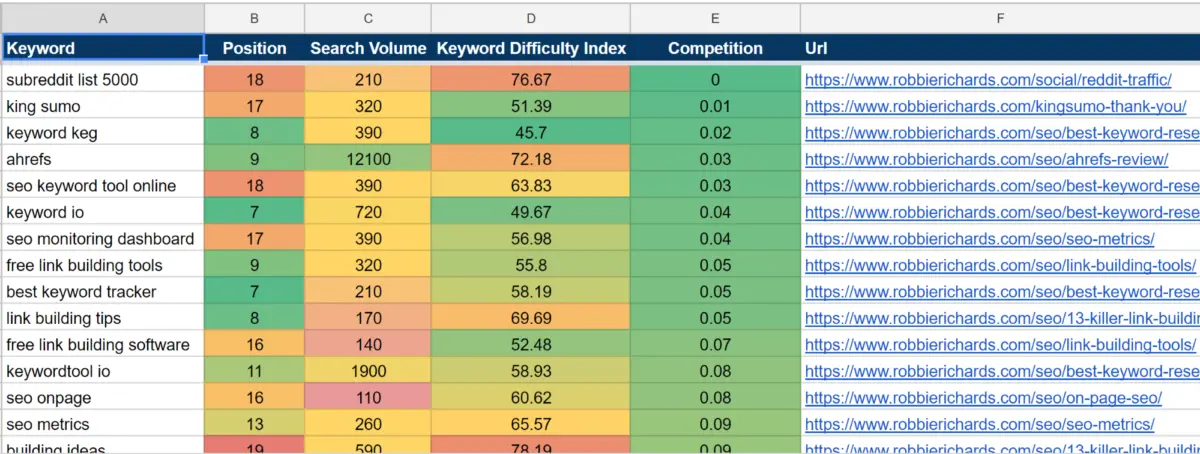
For analysts who prefer external manipulation, dedicated templates allow users to ingest this raw data into automated spreadsheets, where conditional formatting instantly flags high-volume, low-competition keywords ripe for immediate optimization.
Phase 2: Decoding Competitor Strategies
If analyzing your own data provides the foundation, competitor analysis provides the acceleration. Dissecting the organic footprint of industry rivals reveals proven, high-intent pathways to monetization without the trial-and-error phase.
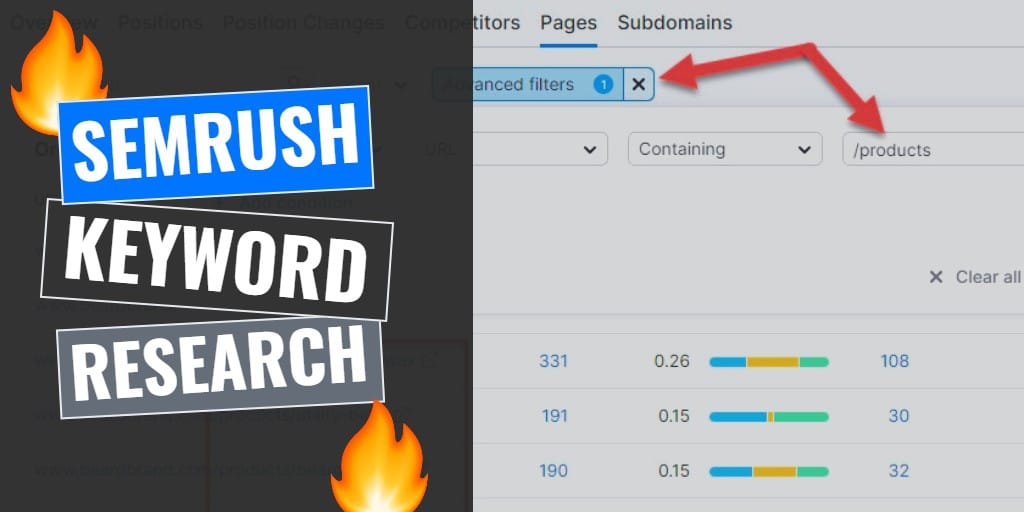
Top Pages and Subfolder Analysis: By examining a competitor’s domain through the Organic Research >> Pages report, marketers can identify which URLs generate the lion’s share of traffic. E-commerce platforms can isolate /products subfolders, while legal or service-based businesses can target /legal-services directories to pinpoint exact revenue-driving pages.
Keyword Modifiers: When competitors lack structured subfolders, applying modifier filters (such as "best," "software," "vs," or specific product names) strips away informational noise to reveal commercial and transactional intent keywords.
Supporting Context, Comparative Metrics, and Use Cases
Understanding how to deploy specific tools within the Semrush ecosystem allows businesses across different verticals to tailor their campaigns for maximum return on investment. Below is an evaluation of core methodologies supported by the platform.
Tool / Report
Primary Function
Ideal Use Case
Key Advantage
Organic Research Positions
Identifies current rankings and volatility
Quick-win optimization for pages ranking 4–15
Capitalizes on existing domain authority with minimal effort.
Keyword Gap
Compares domain rankings against multiple competitors
Uncovering missing or weak keyword opportunities
Highlights exact terms competitors rank for that you ignore.
Keyword Magic Tool
Generates expansive topical lists from a seed term
Brainstorming broad categories and sub-niches
Accesses an immense database (24B+ keywords) with deep intent filters.
Keyword Manager
Groups and clusters raw keyword data
Creating comprehensive content hubs
Automatically categorizes hundreds of terms into semantic silos.
The Power of Keyword Gap Analysis
The Keyword Gap tool is arguably one of the most sophisticated features within Semrush, permitting side-by-side comparisons of up to five domains. Marketers frequently examine two primary views:
Missing Keywords: Search terms where all selected competitors rank, but your domain does not register.
Weak Keywords: Terms where your website currently ranks lower than the benchmark competitors, signaling content deficiencies or technical under-optimization.
Furthermore, advanced PPC-organic gap analysis allows brands to evaluate paid search initiatives. By identifying queries where a domain ranks outside the top three organically and fails to bid on paid ads, businesses can deploy targeted PPC campaigns to secure immediate visibility ("air cover") while long-term organic strategies take root.
Semantic Search and Topical Clustering
Modern search engines reward topical authority over isolated keyword targeting. Semrush addresses this shift through its advanced clustering capabilities within the Keyword Manager.
By seeding the tool with broad category terms or uploading an unorganized list of hundreds of keywords, the platform’s algorithm evaluates SERP overlap to group related terms into logical semantic clusters. Crucially, the tool identifies Content references, showing whether competitors rank for those clusters using a single comprehensive URL or distinct sub-service pages. This prevents internal cannibalization and guides architectural decisions for your website’s navigation.
Official Statements and Platform Integration
Industry experts and power users consistently emphasize the value of ecosystem integration. Rather than operating as a disjointed array of features, Semrush links its core research modules directly to downstream execution tools.
"One of the greatest efficiencies within Semrush is the seamless transition from research to execution. Once your target keyword lists are curated, you can instantly dispatch them to the Position Tracking tool to monitor ongoing performance or feed them directly into the SEO Writing Assistant to guide real-time, on-page content production."
This connected workflow eliminates friction, allowing content teams to scale production without constantly exporting data between third-party software applications. By keeping keyword generation, ranking audits, and content optimization housed under a single digital roof, organizations maintain data integrity and accelerate time-to-market for new web pages.
Future Outlook: The Evolution of Search Intent and AI
As artificial intelligence and machine learning continue to reshape search engine algorithms, the nature of keyword research is undergoing a profound evolution. Search engines are moving past literal string matching toward deep contextual understanding, prioritizing user intent above all else.
Looking forward, tools like Semrush will increasingly lean into automated intent classification, semantic clustering, and predictive traffic forecasting. Marketers who adapt early by utilizing granular intent filters (navigational, informational, commercial, and transactional) will be best positioned to capture micro-moments along the modern consumer journey.
To remain competitive, digital strategists must transcend traditional volume-chasing and adopt a holistic, cluster-based approach to content architecture. By harnessing the full integration of Semrush’s data suites—from initial quick-win audits to complex gap analyses and automated topical grouping—businesses can future-proof their organic visibility against algorithmic volatility and secure enduring digital dominance.