

Executive Overview
In the modern culinary landscape, home cooks are frequently inundated with rigid prescriptions, precise metric measurements, and highly specialized ingredients that transform everyday cooking into a stressful science experiment. However, foundational cooking has always relied on a deeper, more sustainable philosophy: mastering techniques rather than memorizing measurements. As part of an ongoing culinary masterclass series dedicated to stripping away unnecessary complexities, food writer, recipe developer, and cookbook author Casey Elsass has turned his attention to one of the most fundamental yet misunderstood elements of home cooking: the homemade vinaigrette.
The core thesis of this movement is remarkably simple. Once a cook understands the universal structural framework of a vinaigrette—and, crucially, how to diagnose and correct flavor imbalances on the fly—the need for a recipe entirely evaporates. Eschewing the traditional reliance on measuring spoons and bottled grocery store dressings, this intuitive approach empowers individuals to craft dynamic, restaurant-quality dressings using whatever pantry staples happen to be on hand. By breaking down the process into deliberate, sequential steps—starting with acid, layering flavor, seasoning prior to emulsification, balancing ratios, and executing "in situ" taste tests—cooks can liberate themselves from culinary constraints. This investigative exploration dives deep into the mechanics of the unmeasured vinaigrette, examining the chemistry of emulsification, expert troubleshooting methodologies, and the psychological shift from following recipes to trusting one’s palate.
Detailed Chronology and Methodological Breakdown
To understand how to build a vinaigrette without a recipe, one must first deconstruct the chronological steps that transform raw ingredients into a cohesive, harmonious sauce. Elsass’s methodology outlines a precise sequence of events that leverages basic culinary chemistry to maximize flavor distribution.
Step 1: The Foundation of Acid
The architectural blueprint of any vinaigrette invariably begins with the acid. Far from being a mere supporting player, the acid sets the tonal quality and brightness of the dressing. The culinary spectrum offers an array of potent options, ranging from sharp red and white wine vinegars to delicate champagne vinegar, complex sherry vinegar, fruity apple cider vinegar, mild rice vinegar, and the bright, enzymatic clarity of fresh citrus juices like lemon or lime.
For the novice, starting with a straightforward medium—such as standard red wine vinegar or freshly squeezed lemon juice—provides a reliable baseline. As confidence grows, the kitchen doors open to experimentation. Advanced cooks frequently mix multiple acids within a single bowl, marrying the sharp bite of white wine vinegar with the rounded, mellow sweetness of apple cider to achieve a layered, nuanced flavor profile.
Step 2: Layering Dimensional Flavor
Once the acid base is established, the canvas is primed for flavor fortification. This is where the creator’s personality and the constraints of the refrigerator intersect. Flavor builders act as structural bridges, adding depth, body, and complexity to the sharp vinegar or citrus juice.
Common and effective flavor boosters include:
- A touch of natural sweetness via honey, maple syrup, or a spoonful of fig jam.
- Emulsification and pungency aids like Dijon mustard.
- Aromatic depth from freshly grated garlic, finely minced shallots, or chopped seasonal herbs.
- Savory, umami-rich accents such as a scrape of leftover pesto from the jar, a splash of pepperoncini brine, a teaspoon of white or red miso paste, or even a melted anchovy fillet.
Crucially, technique dictates timing here. When utilizing potent alliums like raw garlic or shallots, the ingredient must be allowed to macerate directly in the acidic medium for approximately five minutes. This short rest period allows the acid to mellow the aggressive, pungent bite of the allium, neutralizing harsh raw notes while infusing the liquid with aromatic oils.
Step 3: The Order of Operations (Salt Before Oil)
A common pitfall for amateur cooks is introducing salt at the very end of the dressing-making process. Elsass emphasizes a counterintuitive yet chemically sound rule: salt must always be added to the acid before the oil is introduced.
The physical science behind this is straightforward: sodium chloride dissolves significantly better in aqueous solutions (such as vinegar and citrus juice) than it does in fats (such as olive oil or canola oil). By seasoning the acid directly, the salt fully dissolves, ensuring an even, homogenous distribution of flavor throughout the mixture. Furthermore, because the dressing must eventually coat an entire bowl of unseasoned greens, the initial pinch of salt should be applied with a degree of assertive confidence, accounting for the dilution that will occur once the oil and vegetables are introduced. A vigorous whisking or shaking at this stage ensures total integration.
Step 4: Mastering the Ratio
While culinary textbooks traditionally mandate a strict 3:1 ratio of oil to acid, real-world cooking benefits from flexibility based on personal preference. Classic French technique dictates three parts neutral or high-quality oil to one part acid, but many modern palates—including Elsass’s—lean closer to a punchy 2:1 ratio for a brighter, more assertive bite.
To maintain efficiency and minimize kitchen cleanup, measuring cups are bypassed entirely in favor of visual estimation. A cook simply pours an amount of oil that visually registers as roughly double or triple the volume of the acid sitting in the bowl. Another vigorous whisk or shake brings the disparate phases into a temporary, cohesive emulsion.
Supporting Context and Metrics: The Science of "In Situ" Tasting
The true hallmark of an intuitive home cook is the refusal to taste a dressing directly off a spoon. Because a vinaigrette is chemically designed to coat and elevate raw vegetables, evaluating it in isolation is deeply misleading. A dressing that tastes aggressively sharp or overwhelmingly salty on a spoon will often taste completely balanced and harmonious once distributed across a dense bed of bitter greens, sweet tomatoes, or earthy root vegetables.
The "In Situ" Evaluation Protocol
To accurately gauge whether a vinaigrette is ready for service, one must execute the "in situ" test: plucking a representative leaf from the salad bowl, dipping it directly into the freshly whisked dressing, and consuming it in its intended context.
This sensory feedback loop immediately reveals structural imbalances, prompting precise, micro-adjustments:
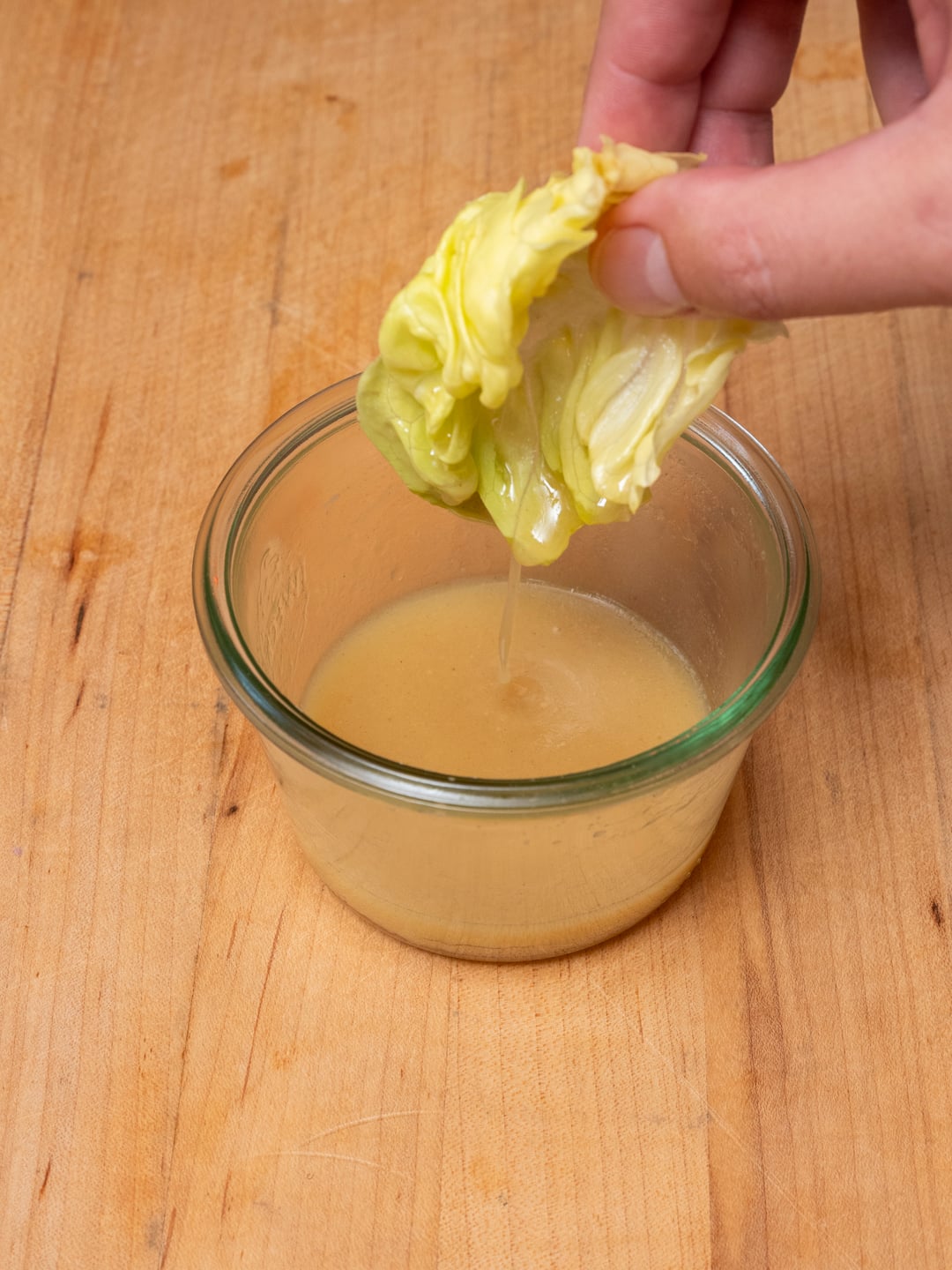
- Too sharp or acidic? Introduce a small additional drizzle of oil to mute and envelop the harsh notes.
- Too bland or heavy? Add a splash more acid to wake up the palate.
- Too bitter (often stemming from poor-quality olive oils or bitter greens)? A microscopic squeeze of honey or maple syrup will round out and soften the jagged edges.
- Too flat or uninspired? A final pinch of pre-dissolved salt will elevate the underlying flavors.
- Too salty? Correct the balance by incorporating more oil to dilute the sodium concentration.
This iterative process continues until the leaf dip achieves perfection, transforming cooking into an active, responsive dialogue between the cook and the ingredients.
Expert Perspectives
The philosophy of unmeasured, intuitive cooking has found a powerful champion in Casey Elsass. Based in Brooklyn, New York, Elsass has established himself as a prominent voice in contemporary food writing, recipe development, and culinary literature. As the author of the bestselling cookbook What Can I Bring?: Recipes to Help You Live Your Guest Life, and a seasoned collaborator who has co-authored more than 30 cookbooks, Elsass brings a wealth of professional and domestic cooking experience to the table. His work—regularly featured in premier culinary publications including The New York Times, New York Magazine, Bon Appétit, NPR, and Food52—frequently emphasizes the democratization of food.
Elsass’s pedagogical approach seeks to dismantle the intimidation factor often associated with home cooking. By reframing basic kitchen tasks as exercises in sensory awareness rather than academic compliance, he encourages home cooks to trust their instincts. As he notes in his foundational teachings, "Give a person a vinaigrette recipe and you feed them for a day; teach a person to make a vinaigrette and you feed them for a lifetime." This mindset transforms everyday kitchen remnants—such as the final half-lemon, three forgotten sprigs of dill, or the scraped-clean bottom of a Dijon mustard jar—into the exciting genesis of a creative culinary creation.
Future Outlook: The Shift Toward Intuitive Home Cooking
As culinary culture continues to evolve in the coming years, the trend toward intuitive, low-waste, and adaptable cooking is projected to accelerate. Driven by a combination of economic mindfulness, environmental sustainability, and a cultural rejection of hyper-curated perfectionism, home cooks are increasingly seeking out foundational skills that reduce their reliance on single-use products, store-bought dressings, and rigid recipe books.
The movement championed by culinary educators like Elsass points toward a future where kitchens are liberated from the tyranny of strict measurement. By understanding the underlying mechanics of flavor balancing—acid, fat, salt, and aromatics—cooks are better equipped to utilize leftover ingredients, minimize food waste, and adapt to whatever supplies are available in their pantries. Ultimately, mastering the unmeasured vinaigrette serves as a gateway skill, proving that the most memorable meals are born not from strict adherence to a page of instructions, but from confidence, curiosity, and a well-trained palate.