For over a decade, Moz has cemented its reputation as a cornerstone in the search engine optimization (SEO) industry. Offering a comprehensive, all-in-one SEO toolset, Moz has empowered digital marketers, small business owners, and enterprise agencies to perform granular keyword research, execute deep site crawls, analyze backlink profiles, manage local business listings, and evaluate real-time ranking data directly within the SERP via its proprietary SEO Toolbar.
However, the modern search landscape is changing rapidly. As algorithms grow increasingly complex, user expectations shift, and budgetary constraints tighten, no single tool serves every professional’s exact workflow. While Moz remains a robust platform, a segment of the digital marketing community encounters specific friction points:
Pricing and Plan Tiers: Some users find Moz’s pricing structure too steep for their current scale, prompting a search for more cost-effective or entirely free alternatives.
Data Limits: Growing businesses and enterprise agencies often report that data quotas for automated audits, keyword tracking limits, and backlink historical reports are restrictive on lower-tier plans.
User Interface and Feature Specialization: Others prefer the modern user interface (UI), lightning-fast crawlers, or specialized data depth found in competing standalone or all-in-one platforms.
This comprehensive guide investigates the top 10 free and paid Moz alternatives, evaluates their core functionalities, analyzes their relative strengths, and helps you determine which platform best aligns with your strategic objectives.
Detailed Chronology: The Evolution of SEO Software
To understand why marketers actively seek Moz alternatives, it is essential to examine the historical trajectory of the SEO software industry.
The Early Era of Directory Submissions (Late 1990s–Mid 2000s): SEO tooling began as rudimentary script-based scrapers that checked meta tags and keyword densities. Optimization was largely manual, mechanical, and focused on keyword stuffing.
The Rise of Authority Metrics (2004–2010s): Companies like SEOmoz (later rebranded as Moz) introduced proprietary algorithmic scores—most notably Domain Authority (DA) and Page Authority (PA)—giving marketers a standardized yardstick to measure link equity. This era birthed the all-in-one suite model, combining site audits, rank trackers, and link analysis under one digital roof.
The Big Data Explosion (2015–Present): As Google integrated machine learning (RankBrain) and prioritized user intent and technical core web vitals, software requirements shifted dramatically. Competitors like Semrush and Ahrefs invested heavily in crawling infrastructure, expanding their indexes to multi-billion-keyword databases and trillion-link networks. This technical arms race caused some legacy platforms to lag in database velocity and cross-channel marketing integrations.
Consequently, modern SEO workflows demand specialization. Professionals no longer rely exclusively on a single tool; instead, they choose between powerhouse all-in-one suites and hyper-focused point solutions.
Supporting Context & Metrics: The Contenders Compared
1. Best All-in-One Moz Alternative: Semrush
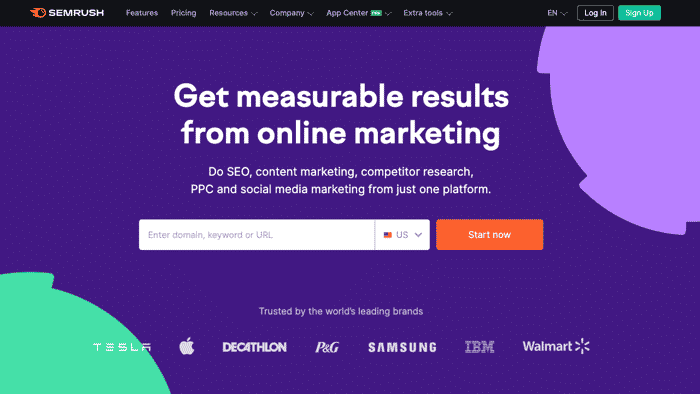
Semrush is the industry heavyweight in all-in-one digital marketing platforms. Boasting over 55 advanced tools, it serves more than 10 million users globally, including enterprise titans like Amazon, Tesla, and Walmart.
Data Firepower: Semrush houses an immense database consisting of over 24 billion keywords, 142 geo-locations, 808 million domain profiles, and an expansive backlink index encompassing over 43 trillion historical links.
Traffic Analytics: Unlike Moz, Semrush offers deep-dive traffic intelligence. You can analyze any competitor’s traffic channels (organic, paid, referral, and social), view estimated bounce rates, and run bulk traffic analytics on up to 200 websites simultaneously.
Rank Tracking & Audits: Semrush provides hyper-local position tracking down to the zip-code level. Its Site Audit tool acts as a premier technical crawler, issuing health scores and side-by-side comparison reports to track iterative progress.
2. Best Moz Alternative for Beginners: Mangools
Mangools is a delightfully streamlined, highly visual 5-in-one SEO toolset designed for users who want robust data without a steep learning curve. Trusted by brands like Airbnb and Adidas, Mangools offers arguably the cleanest user interface on the market.
Key Components: It includes KWFinder (keyword research), SERPWatcher (rank tracking), SERPChecker (SERP analysis), LinkMiner (backlink analysis leveraging Majestic’s trust and citation flow metrics), and SiteProfiler.
Value Proposition: It bridges the gap between affordable pricing and premium data quality, making it ideal for solopreneurs, bloggers, and small agencies.
3. Best Free Moz Alternative: Ubersuggest
Maintained by digital marketing expert Neil Patel, Ubersuggest provides a freemium gateway into SEO analysis.
Capabilities: Users can access over 6 billion keywords and 1 billion content pieces to run basic keyword research, topic ideation, backlink analysis, and top-level site audits.
Limitations: The free tier restricts users to 100 keyword results per search and limits daily reports, but paid lifetime deals and monthly tiers ($29–$99/mo) offer scalable expansions.
4. Best Specialized Point Solutions
If you do not require a sprawling all-in-one platform, several single-purpose tools outperform Moz in their respective niches:
Backlink Analysis (Ahrefs Site Explorer): Ahrefs operates the second most active web crawler after Google, maintaining the largest live backlink index on the web. It is the premier choice for link prospecting and competitor content mapping.
Rank Tracking (AccuRanker):AccuRanker is an on-demand, lightning-fast rank tracker utilized by over 25,000 professionals. It connects ranking fluctuations directly to traffic and revenue conversions.
Technical Audits (Screaming Frog & Sitebulb): Screaming Frog remains the go-to desktop crawler for deep technical audits, while Sitebulb offers gorgeous, color-coded visual graphs and actionable hints that make complex audits accessible to non-developers.
Content Optimization (Surfer SEO):Surfer SEO utilizes natural language processing (NLP) to analyze top-ranking pages and provide real-time content scoring inside Google Docs or its dedicated editor.
Local SEO (BrightLocal):BrightLocal specializes in citation building, citation cleanup, Google Business Profile (GBP) auditing, and localized review management for multi-location enterprises.
Official Statements and Industry Insights
Industry analysts and veteran SEO practitioners emphasize that the selection of an SEO toolkit depends heavily on project scope and team structure.
"Semrush was voted the best keyword research tool by over 130 SEO experts because it provides the largest, and arguably the most accurate, keyword database on the market," notes digital strategist Robbie Richards.
Regarding specialized tools, industry consensus highlights that while all-in-one suites offer convenience, point solutions like Screaming Frog for technical inspections and Ahrefs for link intelligence often provide deeper, more specialized data granularity than legacy suites.
Furthermore, platform developers continually emphasize API integrations and automated reporting. Modern agencies prioritize tools that integrate seamlessly with Google Data Studio, Google Search Console, and Google Analytics to streamline client communications.
Future Outlook: What Lies Ahead for SEO Toolsets?
As we look toward the future of search engine optimization, the software market will undoubtedly be shaped by several emerging technological shifts:
AI-Driven Search and Generative Engines (SGE): With Google and alternative search engines integrating generative AI directly into search results, traditional keyword tracking and click-through-rate (CTR) models are evolving. SEO tools must adapt to track visibility within conversational AI answer boxes rather than traditional blue links.
Real-Time Data Processing: Batch-processed weekly updates are becoming obsolete. Tools that provide on-demand, real-time rank tracking and instantaneous site crawling will dominate market share.
Consolidation vs. Specialization: While all-in-one platforms like Semrush continue to acquire and build adjacent toolkits (spanning PPC, social media, and content marketing), specialized micro-SaaS tools will continue to thrive by offering hyper-focused solutions for technical auditing and content optimization.
Conclusion: Which Alternative Is Right for You?
If you require an enterprise-grade all-in-one platform with immense data depth that mirrors or exceeds Moz’s capabilities, Semrush is the definitive choice. If you are operating on a budget, Mangools and Ubersuggest provide accessible entry points. Alternatively, if your strategy demands surgical precision in a single discipline—such as link building, rank tracking, or local citations—deploying a specialized toolset will yield the highest return on investment. Evaluate your operational needs, take advantage of free trials, and choose the stack that propels your digital presence forward.