

Executive Overview
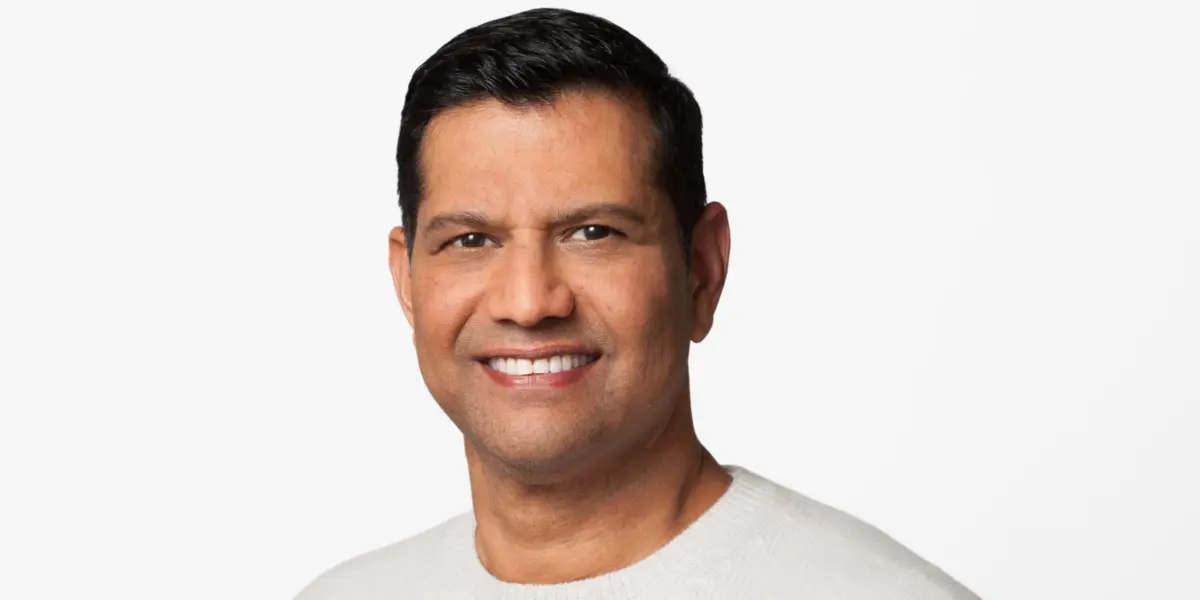
In a high-profile executive recruitment move that signals its continued commitment to building out an independent monetization engine, Netflix has announced the appointment of Darshan Kantak as Vice President of its Ads Platform. Kantak, a seasoned technology and product leader whose impressive résumé features senior stints at Google Cloud, Snap Inc., Meta, Microsoft, and Yahoo, steps into the role at a critical juncture for the world’s leading subscription video-on-demand service.
Tasked with spearheading the engineering, product development, and data and insights teams that construct the underlying architecture of Netflix’s global advertising ecosystem, Kantak will report directly to Amy Reinhard, Netflix’s President of Advertising. His primary mandate involves scaling the technical infrastructure of the Netflix Ads Suite, refining partner operations, and delivering robust reporting tools designed to appeal to major brand advertisers and programmatic buyers alike.
However, Kantak’s arrival takes place against a backdrop of sweeping corporate turbulence. The streaming giant is currently navigating a complex internal reorganization that has seen sweeping leadership departures—including high-profile exits across its film and television divisions—alongside a workforce reduction that claimed approximately 6% of its staff. Furthermore, Netflix recently adjusted its near-term advertising revenue projections downward, citing a slower-than-anticipated rollout of critical ad product capabilities.
By bringing in a veteran product architect with deep roots in applied artificial intelligence and scalable platform operations, Netflix is clearly betting that advanced technology and smarter automation will iron out these operational friction points, ultimately steering its ad-supported tier toward its ambitious long-term financial targets.
Detailed Chronology: The Evolution of Netflix’s Ad Ecosystem and Leadership Shifts
The Pivot to Advertising: From Ad-Free Purist to Hybrid Giant
For the first decade and a half of its existence as a dominant streaming platform, Netflix fiercely protected its ad-free user experience, branding television commercials as an outdated relic of linear broadcasting. However, as subscriber growth in mature markets began to saturate and competition intensified across the media landscape, leadership reversed course.
The launch of the ad-supported tier marked a seismic cultural and operational shift for the company. Suddenly, Netflix was forced to rapidly transition from a purely consumer-centric product organization into an enterprise capable of handling complex ad-tech infrastructure, programmatic bidding, audience measurement, and linear-style upfront negotiations.
To manage this monumental undertaking, Netflix established its dedicated advertising division under the leadership of Amy Reinhard. Over the past two years, the streamer has raced to build an in-house ad platform—moving away from early reliance on third-party technology partners like Microsoft—to retain greater control over data, user experience, and ad inventory monetization.
The Recruitment of Darshan Kantak
The decision to hire Darshan Kantak as Vice President of the Ads Platform is the latest step in this technological maturation. Kantak brings decades of experience building massive, data-driven consumer and enterprise products. Most recently serving as VP of Product at Google Cloud’s Applied AI division, Kantak has spent his career at the bleeding edge of software engineering, artificial intelligence, and platform scalability.
Before his tenure at Google Cloud, Kantak held influential product leadership positions at Snap Inc., Meta, Microsoft, and Yahoo. His background uniquely equips him to tackle the architectural challenges of modern digital advertising, where real-time bidding, cross-device measurement, and machine learning-driven targeting intersect.
Under Reinhard’s overarching strategy, Kantak will oversee the tripartite engine of the ads business:
- Product Development: Designing intuitive, high-impact ad formats that integrate seamlessly into the user interface without disrupting the viewing experience.
- Engineering: Strengthening the underlying codebase and server-side ad insertion (SSAI) technologies to prevent buffering, latency, and technical glitches during high-traffic streaming events.
- Data & Insights: Expanding robust measurement capabilities and operational tools for media buyers utilizing the Netflix Ads Suite.
A Turbulent Backdrop: Layoffs and Leadership Exits
While Kantak’s appointment is designed to project technical stability and forward-looking growth, it arrives amid an unprecedented period of organizational restructuring at Netflix. Earlier this month, the streaming company confirmed a round of layoffs impacting approximately 6% of its global workforce—equating to roughly 1,000 employees—as part of a broader corporate realignment to streamline costs and refocus on core operational priorities.
Simultaneously, the company’s executive ranks have experienced an extraordinary wave of departures. Most notably, Chief Content Officer Bela Bajaria exited the company, making way for Peter Rice, the seasoned former executive from Disney and Fox, to step into the influential content role.
The executive exodus extended far beyond the C-suite. Major creative and operational leaders have departed the company in quick succession, including film chief Dan Lin, film Vice President Doug Belgrad, and a cadre of prominent television executives such as Lisa Lang McMullen, James Oh, Carolina Garcia, and Andrew McQuinn.
This convergence of massive layoffs, high-level creative turnover, and strategic pivots in the advertising business underscores a company in transition—one eager to shed legacy operational inefficiencies while aggressively pursuing new revenue streams.
Supporting Context & Metrics: Navigating Revenue Projections and Tech Rollouts
Adjusting the Financial Compass: The Path to Billions in Ad Revenue
The financial stakes for Netflix’s advertising division could hardly be higher. Following the successful initial rollout of its ad-supported tier, market analysts and internal company forecasts projected that advertising revenue would double for two consecutive years, with many pointing toward a landmark $3 billion target for 2026.
However, the reality of building a proprietary ad tech stack from scratch has presented distinct operational hurdles. During Netflix’s Q3 earnings call last month, company executives tempered expectations, announcing that projected ad revenue for the upcoming period would be lowered to $2.7 billion.
Management attributed this adjustment to a "slightly slower than expected rollout of some ad product capabilities." In the hyper-competitive digital advertising ecosystem, brands and media agencies demand sophisticated targeting parameters, verified third-party measurement, and seamless programmatic buying options. Any delay in deploying these features can cause brands to redirect budgets toward more mature digital platforms like Google, Meta, or Amazon Prime Video.
The Netflix Ads Suite Updates
To counter these deployment delays and win back advertiser confidence, Netflix has aggressively pushed out updates to its proprietary advertising ecosystem. Just last month, the company announced a major wave of enhancements to the Netflix Ads Suite.
These updates focused heavily on two critical pillars:
- Enhanced Measurement Capabilities: Providing advertisers with deeper transparency, verified audience metrics, and comprehensive reporting tools to prove campaign effectiveness and return on ad spend (ROAS).
- Expanded Programmatic Offerings: Opening up inventory to automated, real-time bidding marketplaces, making it vastly easier for medium and large-scale buyers to integrate Netflix inventory into their omni-channel media plans.
This is precisely where Darshan Kantak’s expertise in applied artificial intelligence and platform infrastructure becomes mission-critical. By leveraging advanced machine learning tools, Kantak’s teams aim to accelerate the deployment of these delayed features, ensuring that the Netflix Ads Suite matches—and eventually surpasses—the sophisticated capabilities expected by modern media buyers.
Official Statements and Executive Perspectives
The strategic importance of Kantak’s appointment was underscored by leadership in their public announcements regarding the hire.
Amy Reinhard, President of Advertising at Netflix, emphasized the unique intersection of technical rigor and operational scale that Kantak brings to the table:
"Darshan’s expertise spans from innovative technical skills to unique AI tooling and operations, all of which I’m excited for him to bring to the Netflix ads business."
Reinhard’s focus on artificial intelligence and operational execution highlights Netflix’s ambition to move beyond basic ad-serving capabilities. The company wants to pioneer AI-driven ad relevance, ensuring that commercials do not feel like intrusive interruptions to subscribers, but rather contextual, welcome touchpoints.
For his part, Kantak expressed enthusiasm about joining the streaming pioneer at such a pivotal inflection point in its technological evolution:
"What drew me to Netflix is the chance to use that technology to build impactful solutions—ads that feel relevant and welcome for members, and technical tools that make advertising even more innovative and effective. I look forward to building that with the team."
Kantak’s vision aligns closely with Netflix’s overarching consumer-first philosophy. By prioritizing user experience alongside advertiser utility, the company hopes to avoid the ad-load fatigue that has historically plagued traditional linear television and competing streaming services.
Future Outlook: What Kantak’s Arrival Means for the Future of Streaming Advertising
As Netflix looks toward the horizon, the success of its advertising business will serve as a definitive litmus test for the company’s next phase of financial growth. With subscriber growth in developed territories naturally plateauing, monetization per user via advertising and gaming represents the primary avenue for long-term equity value creation.
1. Accelerating Product Feature Delivery
With Kantak now steering the ads platform engineering and product teams, the immediate priority will be closing the gap on the delayed capabilities that forced last month’s downward revenue revision. Expect to see an accelerated rollout of advanced audience verification tools, dynamic creative optimization, and tighter integrations with major demand-side platforms (DSPs).
2. Deepening AI Integration
Given Kantak’s background as VP of Product at Google Cloud’s Applied AI, it is safe to anticipate a heavy infusion of machine learning across Netflix’s ad architecture. This could manifest in predictive frequency capping, smarter ad-pacing algorithms that identify optimal narrative breaks within specific content genres, and hyper-personalized ad creative generation.
3. Stabilizing Amid Corporate Change
Beyond the pure technology stack, Kantak’s leadership will be tested in human capital management. Stepping into an organization that has recently endured widespread layoffs and high-profile executive departures requires steady, transparent leadership. By rallying his engineering and product teams around clear, achievable milestones, Kantak can help foster a culture of stability and innovation.
Conclusion
Netflix’s recruitment of Darshan Kantak is far more than a routine executive backfill; it is a calculated strategic investment in the technical machinery required to secure the company’s financial future. As the streaming wars enter a mature phase where profitability and monetization supersede raw subscriber acquisition, Netflix is doubling down on engineering excellence. If Kantak can successfully leverage his background in applied AI and platform scaling to deliver the long-awaited features of the Netflix Ads Suite, the streaming pioneer will be well-positioned to recapture its aggressive revenue targets and redefine what advertising looks like in the golden age of digital entertainment.