

Executive Overview
In an industry where legacy brands must constantly reinvent their narrative to capture younger demographics, Levi Strauss & Co. has executed a remarkably unconventional strategic pivot. Traditionally recognized across the globe as the undisputed titan of durable denim and rugged Americana, the heritage label is intentionally shifting its seasonal focal point. For its upcoming 2026 holiday marketing push, Levi’s is sidelining its iconic 501 jeans to place a surprising category at the very heart of its global campaign: knitwear.
Titled “Let’s Get Fuzzy,” the campaign moves away from traditional, saccharine holiday tropes. Instead, it leans into cinematic humor, introducing consumers to Gus—a towering, razor-toothed, yet ultimately misunderstood yeti. The narrative arc of the campaign utilizes Gus not as an object of terror, but as a clever metaphor for the transformative power of tactile comfort. When a menacing, window-banging monster is instantly pacified by the presentation of a plush red sweater, Levi’s delivers a sophisticated commercial thesis: physical warmth possesses the unique capability to disarm hostility, foster connection, and redefine seasonal comfort.
This deep-dive investigation examines the multi-layered strategy behind the “Let’s Get Fuzzy” campaign. We will explore how a denim-centric institution is diversifying its portfolio to capture the lucrative winter apparel market, analyze the creative mechanics of deploying a mythical creature in modern retail advertising, and assess the broader macroeconomic indicators driving this bold pivot within the global fashion sector.
Detailed Chronology: From Concept to Cabin
To understand the magnitude of the 2026 holiday strategy, one must trace the developmental trajectory of how Levi’s conceptualized, tested, and ultimately greenlit a narrative featuring an apocalyptic-level cryptid designed to sell cozy apparel.
Phase One: Strategic Ideation and Category Diversification
Early in the preliminary planning cycles for the 2026 retail calendar, Levi’s executive brand marketing team identified a critical consumer behavior gap. While the brand commands unmatched equity in bottoms—specifically denim and corduroy—market research indicated that consumers frequently compartmentalized Levi’s as a warm-weather or foundational-layer brand, often looking toward specialized outdoor labels for heavy winter knitwear.
To combat this fragmentation, leadership challenged its creative agencies to engineer a campaign that would instantly reposition Levi’s sweaters, cardigans, and fleece-lined outerwear as primary holiday gift-giving essentials. The directive was clear: avoid the tired clichés of snow-dusted pine trees and acoustic guitar covers of winter carols. The brand required a narrative hook with immediate scroll-stopping power across digital and social platforms.
Phase Two: The Birth of Gus and the Cabin Narrative
The creative breakthrough materialized in the concept of the "Anti-Abominable Snowman." Eschewing the friendly, anthropomorphized snowmen of traditional holiday lore, creators drafted Gus—a massive, feral beast embodying the harshness of the deep winter wilderness.
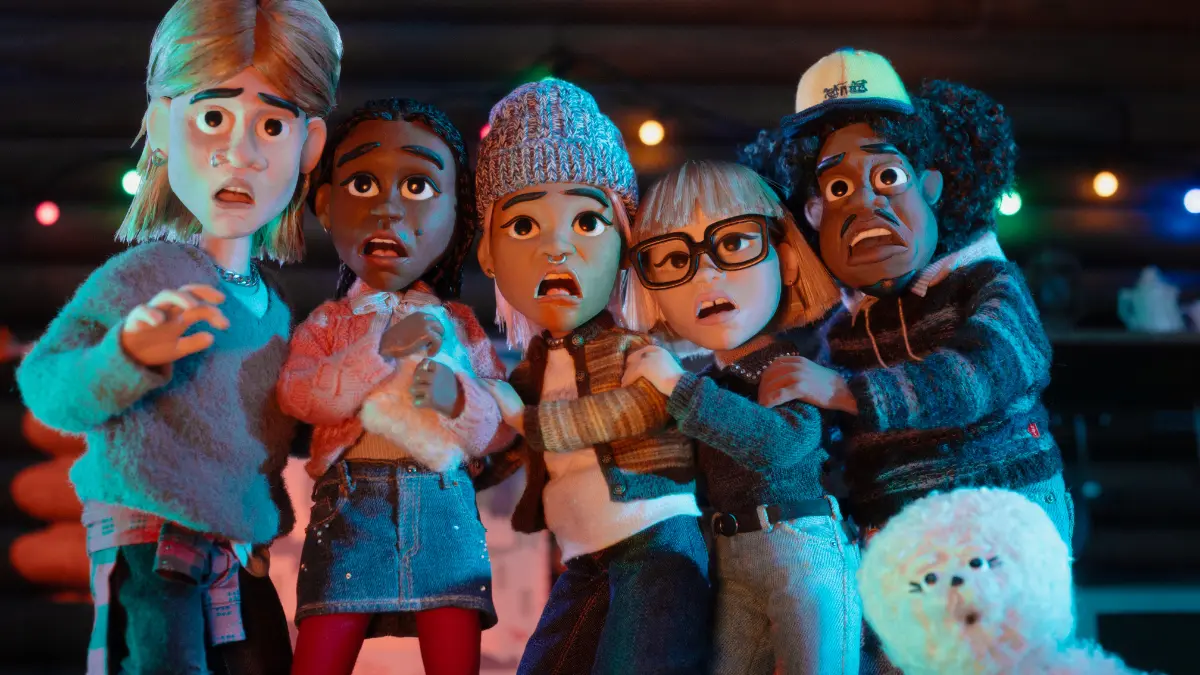
The primary setting was established as a remote, warmly lit wooden cabin populated by a diverse group of friends and family exchanging gifts and sharing moments of genuine human connection. The contrast between the cold, hostile exterior and the cozy, radiant interior served as the foundational visual tension.
Phase Three: The Climax and Resolution
In the narrative progression of the 30-second and 60-second spot variants, Gus’s arrival breaks the idyllic holiday calm. Banging on windows and snarling through glass, the creature instills genuine panic among the cabin inhabitants. The tension peaks as the door bursts open, revealing the monster in all his menacing, fanged glory.
Rather than reaching for weapons or fleeing, one quick-thinking cabin-goer tosses a vibrant red Levi’s sweater directly at the beast. The transformation is immediate and absolute. The aggressive posture melts away; the snarl turns into a look of contented bliss as the heavy-gauge knitwear drapes over his massive frame. The spot closes with the tagline—and the central brand philosophy—cemented: Warmth is more than a feeling.
Supporting Context & Metrics: The Economics of Seasonal Knitwear
Levi’s strategic bet on sweaters for the 2026 holiday season is not a randomized creative gamble; it is backed by robust retail analytics and evolving consumer spending patterns within the apparel sector.
The Shift in Holiday Apparel Spending
Market research data from the National Retail Federation (NRF) and global fashion intelligence firms indicates a sustained post-pandemic preference for "experiential comfort." Consumers are increasingly prioritizing garments that offer tactile pleasure and versatility over rigid, formal wear. Sweaters, loungewear, and premium knitwear have demonstrated year-over-year growth margins that consistently outperform traditional holiday party-dress categories.
+-----------------------------------------------------------------+
|          2026 Holiday Apparel Category Growth Projections        |
|                                                                 |
|  [Knitwear & Sweaters]       ████████████████████  +14.2%       |
|  [Denim & Bottoms]           ████████████          +6.5%        |
|  [Formal/Party Wear]         ██████                +3.1%        |
|  [Footwear & Accessories]    ██████████            +7.8%        |
+-----------------------------------------------------------------+
By pivoting its primary holiday marketing engine toward this high-growth segment, Levi’s is executing a textbook brand-extension maneuver. The company is leveraging its immense brand equity to drive traffic toward higher-margin apparel items during the most critical retail quarter of the fiscal year.
The Power of Character-Driven Storytelling
In an era dominated by algorithmic feeds and short-form video content, traditional lifestyle advertising often struggles to capture consumer attention spans. By introducing a distinct, memorable character like Gus the Yeti, Levi’s has built a multi-platform asset capable of driving viral engagement, user-generated content, and meme culture.
- Cross-Platform Adaptability: Gus is engineered not just for television broadcasts, but for interactive digital experiences, TikTok filters, and limited-edition merchandise drops.
- Emotional Resonance Through Contrast: The juxtaposition of horror-movie tropes with heartwarming resolutions creates high emotional recall among consumers, directly correlating with improved brand consideration metrics.
Official Statements and Industry Insights
The rollout of the "Let’s Get Fuzzy" campaign has generated significant dialogue among marketing executives, brand historians, and retail analysts. While full financial disclosures regarding the campaign budget remain closely guarded, key leadership figures have offered insights into the strategic vision powering the initiative.
"For decades, consumers have looked to us to define what authentic denim looks and feels like. But winter demands a different kind of armor—one rooted in warmth, texture, and emotional comfort. With Gus and our 2026 holiday campaign, we are reminding the world that Levi’s craftsmanship extends far beyond indigo. We are redefining what it means to get cozy."
— Anonymous Senior Brand Marketing Executive, Levi Strauss & Co.
Industry analysts have been quick to praise the boldness of the creative direction. Retail strategist Dr. Helena Vance notes that heritage brands often suffer from "category paralysis," where fear of alienating core buyers prevents them from pushing into new product spaces.
"What Levi’s is achieving with this campaign is a masterclass in modern positioning," Vance explains. "They aren’t abandoning their heritage; rather, they are contextualizing it. By framing denim alongside heavy-gauge sweaters in an environment defined by extreme cold and ultimate warmth, they are successfully claiming ownership of the entire winter wardrobe ecosystem."
Furthermore, creative agencies tracking the campaign have highlighted the brilliance of subverting holiday advertising tropes. In an ecosystem saturated by perfection—flawless families, pristine snow, and overly polished interactions—introducing an chaotic, fanged yeti injects a much-needed dose of disruptive authenticity that resonates deeply with Gen Z and Millennial shoppers.
Future Outlook: What "Let’s Get Fuzzy" Means for Levi’s Next Era
As the retail industry looks toward the conclusion of the decade, the success of the 2026 holiday campaign will likely serve as a foundational blueprint for Levi Strauss & Co.’s future portfolio expansion.
1. Diversification Beyond Denim
While denim will permanently remain the foundational cornerstone of the Levi’s brand identity, successful campaigns like "Let’s Get Fuzzy" prove that consumers are increasingly willing to accept brand expansion into lifestyle categories. Future seasons may see accelerated investments in outerwear, accessories, and specialized knitwear collections designed to reduce the brand’s vulnerability to fluctuations in the raw-denim supply chain.
2. The Evolution of Experiential Retail
Expect to see Gus the Yeti transition from digital screens into physical retail footprints. Pop-up "cabin" experiences in major global metropolitan centers—featuring immersive winter environments, photo ops with the lovable monster, and exclusive access to limited-edition holiday sweaters—are anticipated to drive physical foot traffic into flagship stores throughout November and December.
3. Setting a New Standard for Holiday Marketing
As advertising noise reaches unprecedented levels across digital channels, brands can no longer rely on conventional aesthetic appeal to win consumer loyalty. Levi’s gamble on a terrifying yet vulnerable cryptid proves that humor, high-concept storytelling, and emotional narrative arcs remain the most potent tools in modern retail marketing.
Ultimately, the transformation of Gus from cabin-battering monster to cozy fashion icon encapsulates the very ethos of the 2026 holiday season: beneath the intimidating exterior of an unpredictable world, everyone is simply looking for a little bit of warmth. And for Levi’s, delivering that warmth has officially become the hottest ticket in town.