

Executive Overview
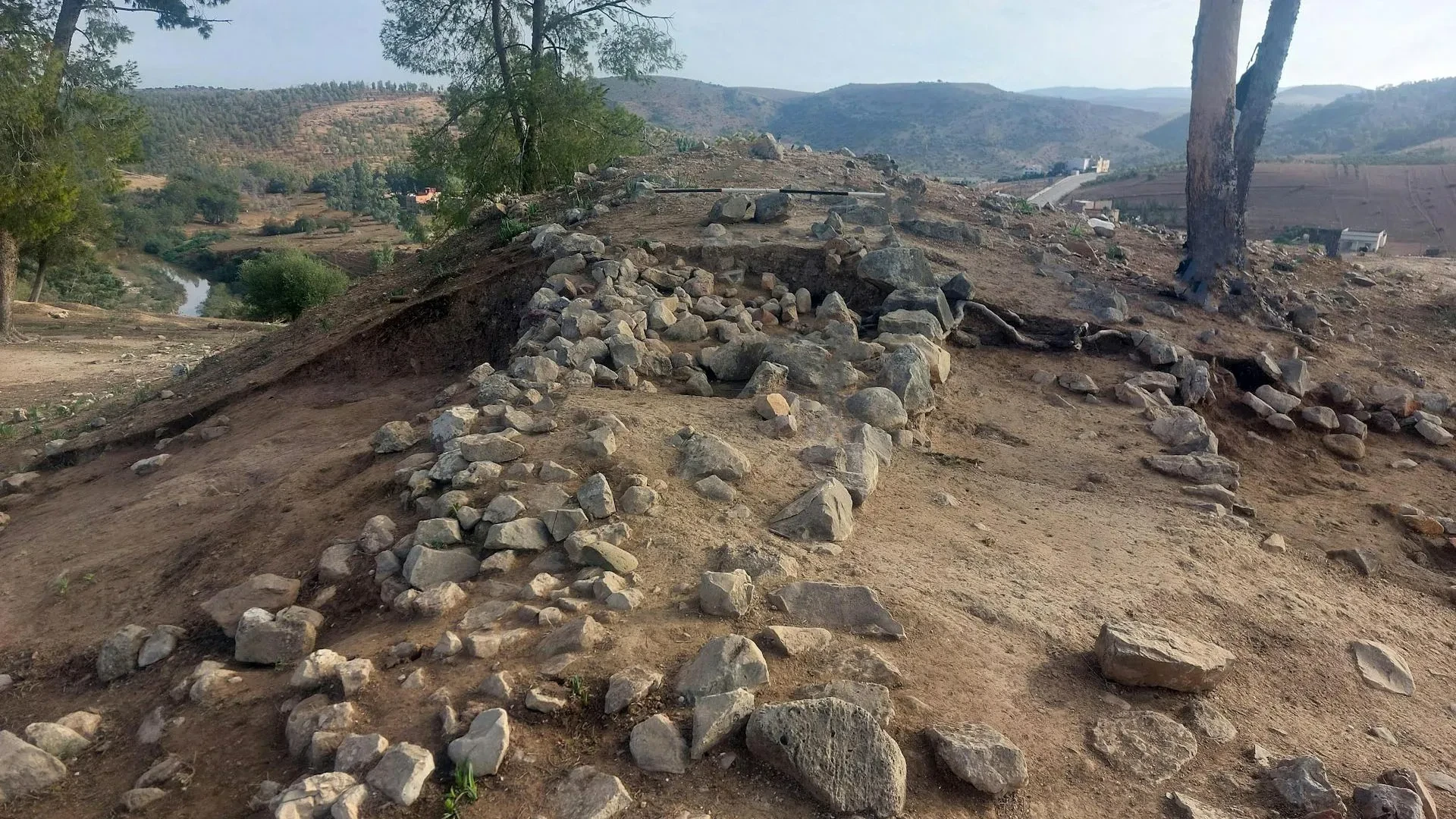
High in the rugged hills of north-west Morocco, overlooking the winding river that shares its name, the archaeological site of Oued Beht is fundamentally rewriting the ancient history of North Africa. For generations, historical narratives concerning the western Mediterranean and the Maghreb—comprising modern-day Morocco, Algeria, and Tunisia—have suffered from a distinct geographic bias. Prehistoric studies disproportionately focused on European shores like Iberia or the sophisticated urban developments of the eastern Mediterranean and the Nile Valley, largely sidelining North Africa as a passive or isolated periphery.
Recent excavations spearheaded by the Oued Beht Archaeological Project, including pivotal field seasons completed in 2023, have blown this outdated paradigm wide open. Researchers have unearthed the remains of a monumental, heavily fortified complex dating back to the second millennium BC, alongside what is already recognized as the largest and earliest agricultural society discovered in Africa outside of the Nile Valley, dating from 5,400 to 4,900 years ago.
The uncovering of this sophisticated, multi-phase defensive architecture—comprising elaborate ditches, ramparts, and stone walls—pushes back the timeline for organized monumental construction in the Maghreb by millennia. It demonstrates unequivocally that ancient North African communities were not isolated agrarian groups, but rather highly organized, structurally complex societies deeply integrated into vibrant maritime and overland networks across the broader Mediterranean world. Furthermore, startling evidence from the medieval period reveals that the Oued Beht ridge remained a strategic focal point centuries later, serving as a repurposed stronghold complete with hamlets, cemeteries, and agricultural settlements. These combined findings offer a rare, multi-layered glimpse into the resilience, organization, and evolution of rural communities across deep time.
Detailed Chronology: From Neolithic Farmers to Medieval Strongholds
To understand the monumental significance of Oued Beht, archaeologists must untangle a complex, multi-period stratigraphic record that spans thousands of years. The site is not merely a single-period snapshot, but a dynamic cultural landscape chosen and re-chosen by distinct human communities across millennia.
The Final Neolithic Foundation (Mid-4th to Early 3rd Millennium BC)
The earliest major phase of human activity at Oued Beht dates back to the Final Neolithic period. During this era, the site blossomed into a sprawling, vibrant hub spreading across at least ten hectares. Environmental data gathered from plant macrofossils and faunal remains paint a picture of an advanced farming economy. These early Moroccans successfully cultivated cereal crops such as wheat and barley, while simultaneously harvesting wild indigenous flora and managing domestic livestock.
Crucially, Oued Beht was also an industrial powerhouse of craft production. Excavations have yielded thousands of meticulously polished stone axes, specialized working tools, and finely crafted pottery, frequently adorned with intricate painted geometric patterns. Whether this vast concentration served as a permanent, year-round settlement, a seasonal gathering ground, or a ceremonial nexus remains a subject of ongoing debate, but its sheer scale confirms it was a dominant geographic and economic focal point in north-west Morocco.
The Bronze Age Shift and the Rise of Defensive Architecture (2000–1500 BC)
As the site transitioned into the second millennium BC—a period contemporaneous with the European Bronze Age—the spatial focus of human activity at Oued Beht underwent a dramatic geographical shift. While earlier inhabitants utilized the broader, open northern expanses, later communities gravitated toward the narrow, easily defensible southern tip of the ridge.
It was during this window, roughly 4,000 to 3,500 years ago, that the community engineered a massive defensive structure. First noted vaguely by French archaeologist Armand Ruhlmann in the 1930s as a potential éperon barré (barred spur), the precise nature of these earthworks remained an enduring archaeological mystery for nearly a century. Modern excavations and rigorous radiocarbon dating have now confirmed a multi-phase system of ditches, ramparts, and stone walls cutting cleanly across the narrow neck of the ridge between the river and a steep ravine.
This monumental construction represents the earliest confirmed large-scale defensive architecture discovered in North Africa outside of Egypt. Building such a system required advanced engineering, meticulous advance planning, centralized coordination, and the mobilization of a significant labor force—hallmarks of a highly stratified and politically organized society.
The Medieval Renaissance (11th to 13th Centuries AD)
The story of Oued Beht does not end with prehistory. Centuries after the Bronze Age structures fell into disuse, the strategic advantages of the ridge caught the attention of medieval populations. Between the 11th and 13th centuries AD, during the height of various medieval Islamic dynasties in the Maghreb, the ancient defensive line was consciously rebuilt and readapted.
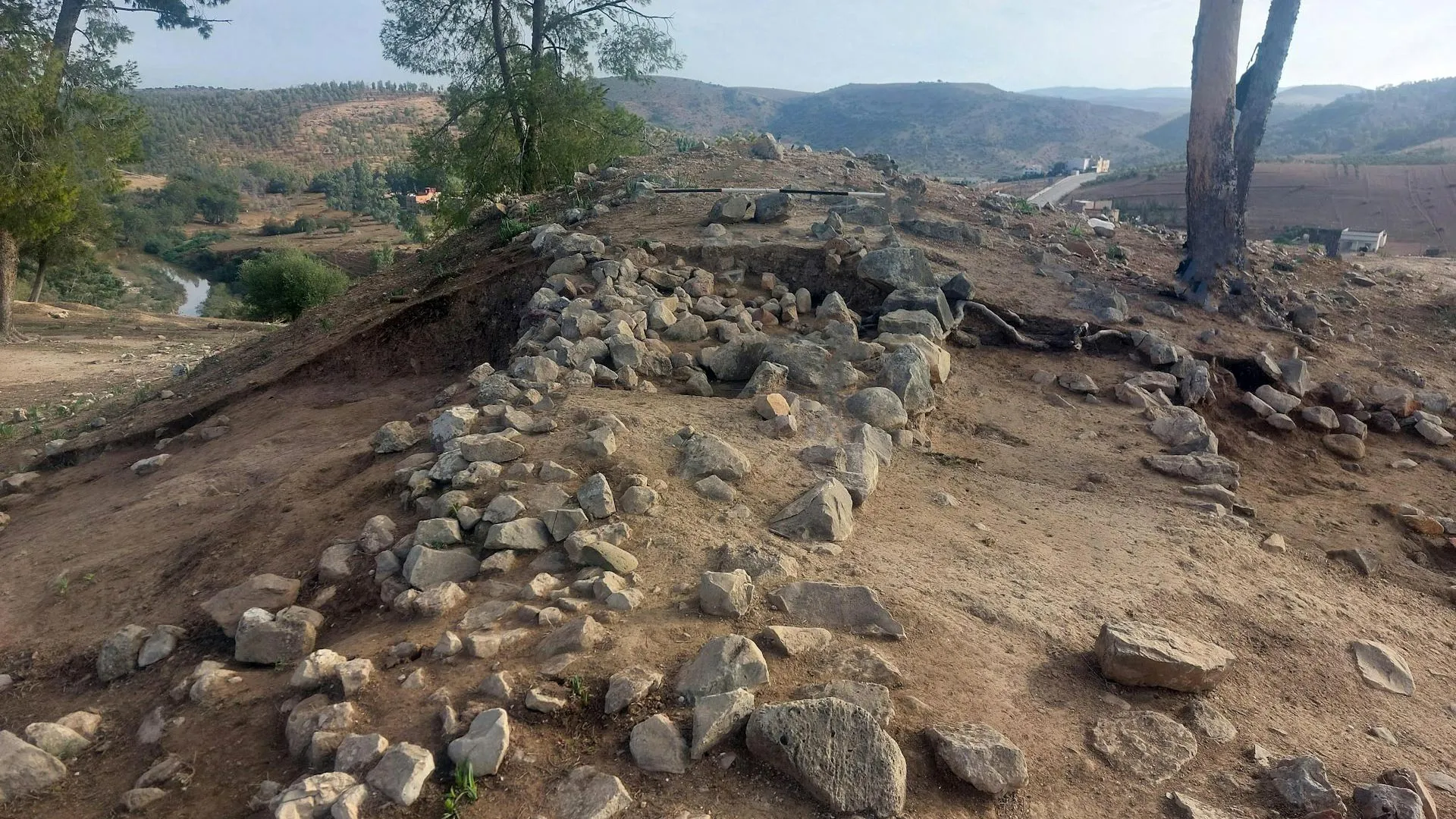
Concurrently, a rural hamlet or farm was established on a nearby hilltop, and a dedicated community cemetery was laid out in the saddle between the rebuilt fortress and the residential zone. This medieval chapter underscores the enduring strategic importance of the landscape, proving that Oued Beht’s geography dictated its utility across entirely different socioeconomic epochs.
Supporting Context & Metrics
The revelations at Oued Beht are best understood through the hard data and comparative metrics that elevate the site from a local curiosity to a paradigm-shifting archaeological anchor.
- Spatial Footprint: The prehistoric zone of human activity spans a massive expanse of at least 10 hectares, marking it as an exceptionally large concentration for North African prehistory.
- Temporal Depth: Radiocarbon assays place the earliest agricultural complex between 5,400 and 4,900 years ago (mid-4th to early 3rd millennia BC), while the newly dated defensive wall system dates back roughly 4,000 to 3,500 years ago (second millennium BC).
- Material Culture Metrics: Excavations have recovered thousands of polished stone axes, complex utilitarian tools, and intricately painted ceramic assemblages, pointing to high-volume, specialized craft manufacturing.
- Geographic Uniqueness: Oued Beht represents the earliest known agricultural complex in Africa outside the Nile Valley, and the earliest confirmed defensive construction in North Africa outside of Egypt.
- Comparative Chronology: The construction of Oued Beht’s defensive works mirrors the exact historical window of the Argaric culture (2200–1550 BC) in south-eastern Iberia, which was similarly characterized by hilltop fortifications, advanced metallurgy, and stratified social hierarchies.
Official Perspectives and Expert Analysis
The international team of researchers behind the Oued Beht Archaeological Project emphasizes that these discoveries demand a radical rewrite of Mediterranean and North African history books.
Rethinking the "Invader" Paradigm
For decades, the appearance of defensive walls in ancient archaeological sites was reflexively attributed to the arrival of foreign invaders or sudden external threats. However, lead researchers and participating archaeologists argue that the reality at Oued Beht is far more nuanced. The construction of the wall-like barriers likely arose from internal socio-political developments: mounting competition over fertile land, valuable agricultural resources, and the control of strategic trade routes and movement through the landscape.
"Constructions like these suggest communities felt an acute need to protect their assets, demarcate territories, or assert centralized power over strategic locations," note members of the excavation team. Rather than pointing to violent foreign conquest, the fortifications reflect a changing internal social landscape characterized by emerging elite leadership, formalized social stratification, and shifting regional power dynamics.
Shattering the Myth of North African Isolation
One of the most consequential outcomes of the Oued Beht project is the dismantlement of the Eurocentric or Near-Eastern-centric models that historically viewed the Maghreb as an isolated cultural backwater. During the second millennium BC, the western Mediterranean was a theater of intense maritime and overland connectivity. Societies in modern-day Spain and Portugal (such as the aforementioned Argaric civilization) shared technological, architectural, and social trajectories with their North African neighbors.
The evidence points unmistakably to a dynamic web of exchange. The Maghreb was an active participant—and potentially a central driver—in the broader socio-economic and cultural processes that shaped the western Mediterranean world during the Bronze Age. Trade networks carried not only physical commodities like metals, pottery, and agricultural goods, but also architectural concepts, symbolic ideologies, and defense strategies across the Mediterranean basin.
Future Outlook: Unlocking the Mysteries of the Maghreb
As archaeological field seasons progress, Oued Beht is rapidly transforming into a foundational touchstone for Mediterranean studies. The ongoing analysis of paleoethnobotanical remains, faunal bones, lithics, and architectural stratigraphy promises to shed further light on how prehistoric societies adapted to environmental fluctuations and shifting climatic conditions in north-west Africa.
Future research aims to map out the broader regional settlement hierarchy. Archaeologists are eager to discover whether Oued Beht stood alone as an isolated citadel or if it was the crown jewel of an interconnected network of smaller farming villages and watchtowers spread across the Gharb plain and the surrounding foothills. Furthermore, expanding archaeometric analyses—such as isotope testing on human remains and trace-element analysis of pottery—will trace migration patterns and trade routes with unprecedented precision, verifying the exact nature of contacts between North Africa and southern Europe.
Ultimately, the earthworks of Oued Beht stand as a monument to human ingenuity and resilience. By dragging the deep history of the Maghreb out of the shadows of neglect, current archaeological efforts ensure that North Africa claims its rightful place in the global narrative of human civilization, urbanization, and societal evolution.