

Executive Overview
In the high-stakes, hyper-competitive landscape of the modern consumer packaged goods (CPG) industry, few brands possess the mythic lineage—or the formidable marketing challenge—of Newman’s Own. Born out of a freezing December in Westport, Connecticut, in 1980, when legendary actor Paul Newman mixed oil, vinegar, and spices in a bucket and stirred them with an old canoe paddle, the brand has grown from a quirky holiday experiment into a philanthropic powerhouse. To date, Newman’s Own has donated more than $600 million to charitable causes, most notably funding The Hole in the Wall Gang Camp for children with serious illnesses.
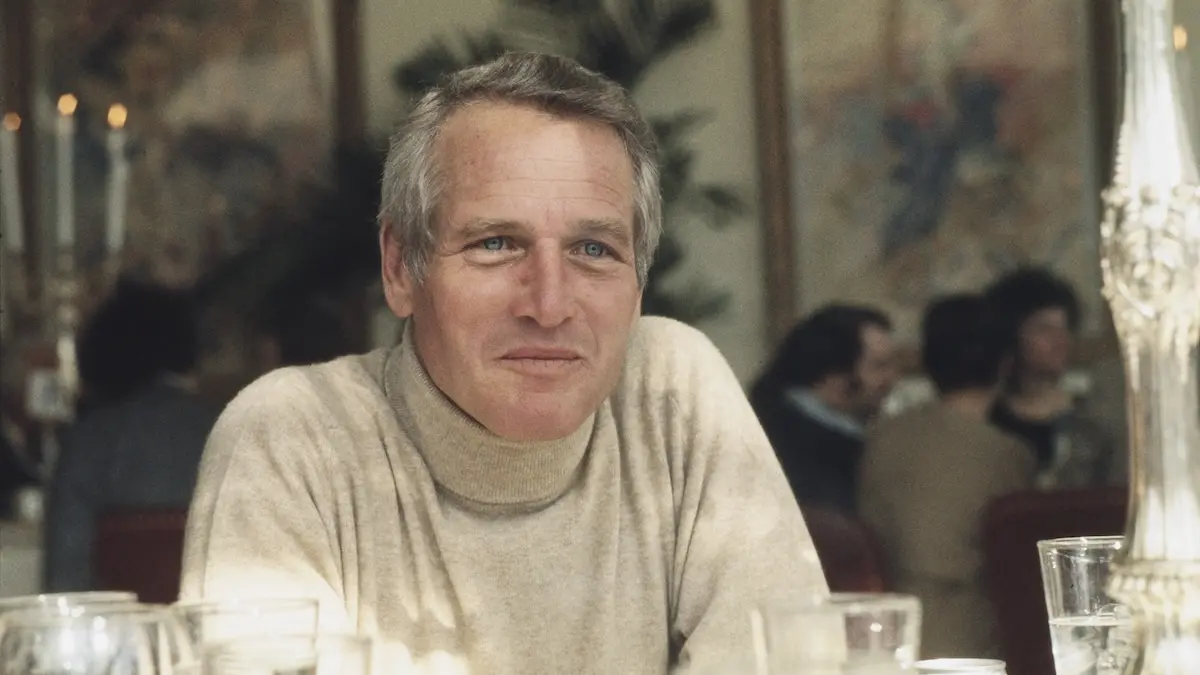
Yet, as the brand approaches its mid-40s, it faces an existential hurdle familiar to legacy companies: the steady, generational erosion of its founder’s immediate cultural footprint. Paul Newman has been gone for nearly two decades. While Baby Boomers and Generation X bought the brand because they recognized those dazzling baby blues and wanted to share in the actor’s iconographic cool, younger demographics are growing up increasingly detached from his cinematic legacy.
Enter Mark Anthony Edmonson, the company’s newly appointed Chief Marketing Officer. A seasoned CPG veteran with high-level experience at Campbell Soup Company and Procter & Gamble, Edmonson has taken the reins of a challenger brand operating in the shadow of corporate goliaths with exponentially larger marketing budgets. His diagnosis of the brand’s current trajectory is both sharp and pragmatic.
In a strategic pivot that is sending ripples through the marketing world, Edmonson has spearheaded a shift in the brand’s messaging. Previous iterations of Newman’s Own marketing leaned heavily on the philanthropic angle, with taglines such as “100% of profits to charity.” The new positioning—“Great Ingredients. Greater Purpose”—flips the script. It leads with the intrinsic quality of the food and lets the philanthropy complete the thought.
This calculated adjustment addresses a fundamental flaw that has plagued the broader marketing industry over the past decade: the dangerous illusion of “purpose-before-product.” As Edmonson and industry analysts recognize, a noble cause may inspire a consumer to pick up a bottle of dressing off the shelf for the first time, but superior taste and functional appeal are what bring them back for a repeat purchase five weeks later. By anchoring the brand in product excellence while preserving its revolutionary philanthropic soul, Newman’s Own is redefining what it means to be a purpose-driven enterprise in the 21st century.
Detailed Chronology: From Canoe Paddle to Global Phenomenon
The Winter of 1980: An Accidental Empire
The genesis of Newman’s Own reads like Hollywood folklore, yet it was rooted in down-to-earth authenticity. In December 1980, Paul Newman was at his Connecticut home experimenting with a personal vinaigrette recipe. Having never manufactured the dressing on a commercial scale, he mixed the ingredients in a large bucket, stirred the concoction with a canoe paddle, and decanted the liquid into recycled wine bottles. He distributed these homemade gifts to neighbors while out caroling.
Among the recipients was a local caterer with monumental ambitions: Martha Stewart. Recognizing a superior product, Stewart subjected the dressing to a blind taste test against leading commercial alternatives. Newman’s homemade blend won hands down.
Encouraged by this early validation, Newman and his close friend, author A.E. Hotchner, each invested $40,000 to launch the enterprise. Emblazoned with Newman’s wry, self-deprecating humor, the company adopted a founding motto that would become its North Star: "Shameless exploitation in pursuit of the common good."
Defying the Odds: The First Year and Beyond
To the surprise of industry skeptics, Newman’s Own turned a $300,000 profit in its very first year of operation. True to his word, Newman gave every single cent away. For most of his life, Newman’s image and likeness had been commercially exploited by others for profit; now, he seized the opportunity to invert the selfish, superficial tenets of traditional corporate capitalism, turning his celebrity into an engine for altruism.
What followed was an extraordinary trajectory. Eschewing traditional corporate expansion strategies, the brand steadily expanded its footprint from salad dressings into pasta sauces, lemonade, popcorn, salsa, and pizza. Along the way, it carved out a unique space in grocery aisles, proving that a for-profit enterprise could function primarily as a charitable vehicle without sacrificing commercial viability.
The Post-Founder Era and the Generational Shift
Every movie star eventually passes into history, and every commercial brand eventually faces the risk of creative stagnation. With Paul Newman’s passing in 2008, the company entered a transitional era. For years, the brand equity was intrinsically tied to Newman’s magnetic persona—the rugged charm, the piercing blue eyes, and the effortless counter-cultural cool.
However, as time marches forward, the demographic realities shift. Millennials and Generation Z consumers possess little to no visceral memory of Newman’s cinematic masterpieces like Butch Cassidy and the Sundance Kid or Cool Hand Luke. For these younger cohorts, buying a product because of a dead Hollywood icon holds significantly less emotional weight. The brand needed to evolve from being a monument to a movie star into a sustainable, self-sustaining consumer goods brand powered by modern relevance.
Supporting Context & Metrics: The "Say-Do" Gap and the Fall of Fake Purpose
To fully appreciate the significance of Newman’s Own’s strategic pivot under Edmonson, one must examine the broader cultural and economic missteps of the marketing industry over the past ten to fifteen years.
The Decade of Misplaced "Purpose"
For nearly a decade, mainstream marketing strategists collectively lost their way, overthinking corporate purpose to an unprecedented degree. During this era, crafting an elaborate, emotionally resonant "brand purpose" often felt infinitely cooler—and garnered more industry awards—than the mundane work of manufacturing, distributing, and selling a superior product at a sustainable profit.
Market research during this period frequently validated these delusions. When researchers asked consumers whether they preferred brands that paid fair wages or championed environmental sustainability, the overwhelming response was affirmative. Every head nodded in virtuous agreement.
Yet, this research suffered from a critical methodological flaw known as the "say-do gap." When researchers stand in a fluorescent-lit grocery aisle and ask shoppers why they purchased a specific tube of toothpaste, consumers rarely cite corporate social responsibility or ideological alignment. Instead, they shrug, mention a coupon, point to product familiarity, or cite long-established habits. The previous surveys did not measure actual consumer values; rather, they measured how consumers wanted to be perceived when answering an interviewer’s question.
The Opportunity Cost of Ideology
The pursuit of performative corporate purpose came at a steep financial and strategic cost. Brand teams spent years obsessing over lofty mission statements while neglecting the foundational pillars of distinctiveness, availability, pricing architecture, and core product quality. It became commonplace to encounter brand management teams who could recite their corporate purpose platform verbatim, yet had no working knowledge of their actual market penetration metrics.
Of course, notable exceptions existed. Iconic outliers like Patagonia, Dove, and Ben & Jerry’s successfully anchored their market presence in deep-seated social missions from their inception. However, these brands became overused case studies at global marketing conferences, serving as flawed templates for traditional corporations trying to retrofit a social conscience onto products that lacked intrinsic consumer demand. You cannot artificially graft a founding principle onto a product after the fact; genuine purpose must be baked into the DNA of the enterprise from day one.
Official Statements & Strategic Shifts
Mark Anthony Edmonson’s arrival as Chief Marketing Officer signals a pragmatic return to marketing fundamentals at Newman’s Own. In navigating the delicate balance between honoring a storied legacy and driving future growth, Edmonson has championed an unflinching assessment of how consumers actually make purchasing decisions.
"Worthiness alone does not make your salad taste better, nor does it get you back in the aisles five weeks later buying more of it," industry analysts observing the brand’s pivot have noted.
This realization underpins the brand’s new creative direction. By pivoting from old messaging like "100% of profits to charity" to the refreshed positioning of "Great Ingredients. Greater Purpose," Edmonson is executing a subtle yet monumental perceptual shift.
Under the new framework, the charitable mission is no longer deployed as a crutch to compensate for average product performance; instead, it acts as the concluding validation of an already superior product. As Edmonson’s strategy demonstrates, the charity is what successfully entices a shopper to try the product for the first time, but the superior flavor profile, quality ingredients, and functional appeal are what secure repeat purchases.
This ordering—product first, purpose second—is precisely what aligns the brand with the ethos of its late founder. Paul Newman was not merely a philanthropist; he was a dedicated craftsman, an exceptional actor, and a perfectionist in all his endeavors. He understood that to leave a lasting legacy, one must excel at the craft itself.
Future Outlook: Can a Legacy Brand Win the Modern Grocery Aisle?
As Newman’s Own looks toward the horizon, the challenges facing Edmonson and his marketing team are substantial, yet the foundation remains remarkably resilient. Ranked second among U.S. food brands in Time magazine’s World’s Best Brands list, the company enters this new strategic era from a position of considerable financial and institutional strength.
The road ahead will require careful navigation. In an era dominated by private-label dominance, direct-to-consumer digital disruptors, and shifting macroeconomic pressures, modern grocery shoppers are more price-conscious and discerning than ever. Relying solely on historical nostalgia is no longer a viable growth strategy.
However, by refocusing on product superiority while proudly maintaining its historic commitment to donating 100% of its profits, Newman’s Own possesses a distinct competitive advantage that modern corporate conglomerates cannot easily replicate. True purpose, when paired with uncompromising product quality, creates an emotional moat that insulates a brand from transient market trends.
Ultimately, the reinvention of Newman’s Own serves as a masterclass for the entire CPG sector. It proves that brands do not need to choose between commercial viability and social impact; rather, the former must actively serve as the vehicle for the latter. Just as Paul Newman mixed his dressing with a canoe paddle and a healthy dose of humor, today’s stewards of his legacy are blending modern marketing discipline with timeless authenticity—ensuring that the "shameless exploitation in pursuit of the common good" will endure for generations to come.