

This report is created in partnership with SMG.
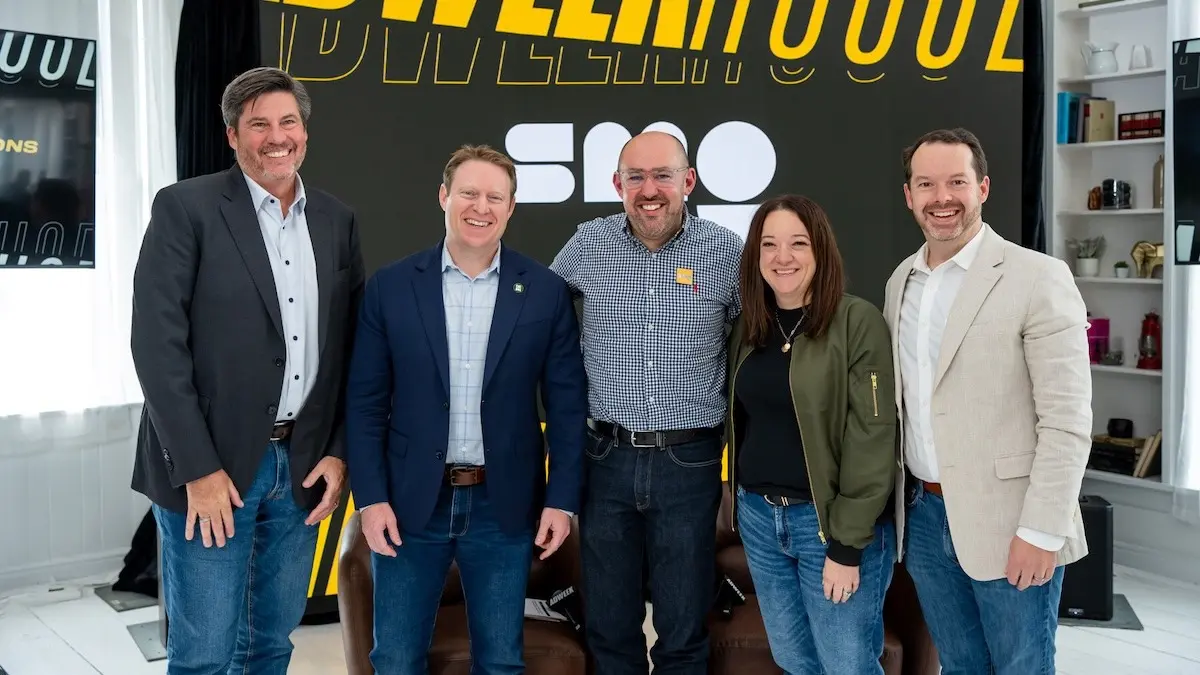
As the digital marketing ecosystem undergoes a structural shift away from traditional cookie-based tracking and top-of-funnel blanket advertising, retail media networks (RMNs) have firmly established themselves as the engine room of modern commerce. Brands are continuously finding innovative yet complex ways to connect with high-intent consumers. To navigate these evolving opportunities and challenges, industry leaders recently gathered at ADWEEK House Advertising HQ for a trio of commerce connection sessions co-hosted with SMG.
The sessions provided an authoritative deep dive into the state of the industry, dissecting everything from the nuances of measuring physical in-store media effectiveness and mastering the grocery shopper’s journey to unlocking the vast, untapped potential of travel media networks.
Executive Overview: The Maturation of Commerce Media
For years, retail media was viewed as a tactical add-on—a digital shelf-space play meant to capture last-minute intent on a retailer’s e-commerce website. Today, that narrow definition is obsolete. RMNs have evolved into sophisticated, omnichannel media ecosystems that seamlessly bridge the physical and digital worlds.
The conversations at ADWEEK House illuminated a pivotal realization across the advertising landscape: media and retail are no longer separate entities. Every physical environment—from the aisle of a local grocery store and the concourse of a regional mall to the backseat of a rideshare vehicle and the lobby of an international hotel—is now a dynamic media channel.
However, this expansion brings significant strategic hurdles. Advertisers are no longer satisfied with vanity metrics or closed-loop reporting systems that grade their own homework. They demand rigorous, cross-channel measurement, authentic consumer engagement, and proof of true incremental sales. As explored during the SMG-hosted sessions, the future belongs to networks that can transparently prove value while honoring the consumer’s physical and emotional context.

Detailed Chronology: Key Sessions and Strategic Debates
The day’s programming was structured around three core pillars of modern commerce media, each unpacking a distinct environment where brands and consumers intersect.
1. Building on the In-Store Experience: The Battle for Physical Dominance
The opening session, titled "Choose Your Player: The Battle for In-Store Leadership," was moderated by Ollie Shayer, senior director of global strategy and innovation at SMG. Shayer led a powerhouse panel featuring Collin Colburn, VP of commerce and retail media at IAB; Chip Harding, EVP of simon media and experiences at Simon Property Group; Austin Leonard, VP and general manager of DG Media Network; and Britt Polihronis, COO of RedMedia at Hy-Vee, Inc.
The panel confronted a central paradox of modern retail: despite the explosion of e-commerce, the vast majority of retail transactions still happen inside physical four-walled stores. Consequently, brands are fiercely battling for in-store leadership, turning digital screens, endcaps, and floor decals into high-yield real estate.
However, translating digital targeting precision into the physical store environment requires entirely new playbooks. The panelists discussed how measurement must be localized and contextual. In sprawling environments like shopping malls, foot traffic patterns and subsequent store sales serve as critical performance signals. Conversely, in grocery and convenience environments, hyper-immediate consumer behaviors—such as dwell time, shelf interaction, and whether a shopper physically picks up a product—offer real-time insights into campaign efficacy.
Beyond metrics, the panel stressed that the physical store must prioritize the human experience. Advertisers and retailers cannot simply digitize the physical store by blasting ads at exhausted shoppers; they must curate environments that inspire discovery, facilitate seamless product trials, and turn routine errands into enjoyable journeys.
2. From Story to Store: Navigating the Complexities of the Grocery Shopper
Transitioning from physical infrastructure to holistic consumer habits, the second session took the form of a fireside chat titled "From Story to Store: Creating Connected Campaigns Across Every Touchpoint." Zoë Ruderman, chief content officer at ADWEEK, sat down with Liz Roche, VP of media and measurement at Albertsons Media Collective, to dissect the intricacies of marketing to the ultimate recurring consumer: the grocery shopper.

Grocery shopping is arguably the most habitual and frequent consumer journey. Because food and household essentials are constant necessities, marketing to these shoppers cannot be relegated to a single touchpoint at the cereal aisle. Success requires an always-on, connected ecosystem that accompanies consumers through their entire routines.
Roche emphasized that brands must utilize upper- and mid-funnel tactics—such as Connected TV (CTV) campaigns and targeted digital promotions—to build brand equity long before the consumer ever steps foot inside a store or opens a grocery app.
Crucially, Roche challenged the industry’s heavy reliance on standard performance metrics like Return on Ad Spend (ROAS) and incremental ROAS (iROAS) within media networks. Because data outputs fluctuate wildly depending on attribution windows and methodology variations, she urged marketers to exercise critical thinking. A single metric cannot tell the whole story; instead, brands must look at a broader dashboard of performance indicators, including how a media campaign impacts overall category health and brand baseline velocity in-store.
3. Media on the Move: Unlocking the Power of Travel Media Networks
The final panel of the day, "Media on the Move: How Brands Are Winning Across the Travel Journey," was moderated by Sean Crawford, managing director of North America at SMG. Crawford facilitated a forward-looking discussion with Katie Blackburn, VP of commercial strategy and operations at WHSmith North America; Shane Dwyer, VP of advertiser solutions at Lyft Ads; Chris Norton, SVP of marketing capabilities at Marriott Media; and Steven Paganelli, VP of media and partnerships at Tripadvisor.
This session shed light on one of the fastest-growing frontiers in commerce media: travel media networks. Travelers represent a uniquely lucrative demographic. As the panel highlighted, travelers typically possess higher-than-average purchasing power, strong educational backgrounds, and heightened consumer intent. Furthermore, they exhibit an above-average propensity to spend across diverse categories, ranging from premium retail and alcoholic beverages to home improvement and electronics.
Even more compelling for marketers is the emotional state of the traveler. Travel is inherently associated with positive emotions—excitement, anticipation, relaxation, and discovery. This psychological state makes consumers significantly more receptive to brand messaging and discovery-driven advertising.

However, capturing the attention of a traveler requires nuance. Standard retail measurement models fall short when applied to a mobile, transient consumer. The panelists noted that while conversion and brand lift remain vital, successful travel media strategies require an empathetic understanding of the entire journey. Brands must map out the micro-moments of travel—anticipation, transit, arrival, exploration, and return—and deliver the exact products and services consumers need at each specific stage.
Supporting Context & Metrics: The State of Commerce Media
To fully appreciate the urgency behind the discussions at ADWEEK House, one must examine the broader macroeconomic and technological shifts transforming the media landscape.
- The Saturated Digital Ad Market: As privacy regulations tighten and third-party cookies deprecate, brands are losing their ability to track consumers seamlessly across the open web. Retailers and travel hubs, sitting on mountains of first-party deterministic data, have stepped into this vacuum as trusted curators.
- The Rise of In-Store Digital Real Estate: Industry estimates suggest that in-store retail media networks are growing at an exponential rate, with digital screens and smart carts transforming static physical environments into programmatic inventory.
- The Omnichannel Mandate: Consumers no longer distinguish between online and offline channels; they expect a fluid shopping experience. Data from commerce networks indicates that campaigns combining upper-funnel digital touchpoints (like CTV) with lower-funnel in-store activations deliver significantly higher conversion lifts than siloed single-channel campaigns.
Official Statements and Industry Insights
The thought leaders driving these conversations offered clear guidance on where the industry is heading:
- On In-Store Innovation: SMG’s Ollie Shayer emphasized that as commerce media expands into physical spaces, the focus must remain on creating genuine value for the consumer rather than simply multiplying ad impressions.
- On Measurement Realities: Albertsons Media Collective’s Liz Roche issued a call to arms for analytical rigor, noting: "Rather than relying on a single metric, [brands must adopt] critical thinking and a broader view of performance that considers multiple data points, including what is happening to a category or brand in-store."
- On the Travel Mindset: Sean Crawford and his fellow panelists underscored that travel media is ultimately about meeting consumers in moments of high receptivity, transforming transit and hospitality touchpoints into avenues of meaningful brand discovery.
Future Outlook: What Lies Ahead for Retail and Commerce Media
As we look toward the future of retail media networks and their offshoots in travel and entertainment, several clear trajectories are emerging:
- Standardization of Measurement: The wild-west era of RMN measurement is slowly drawing to a close. As third-party industry bodies like the IAB work alongside major networks to establish common definitions and standards, brands will demand transparent, cross-network attribution models that cut through walled gardens.
- The Blurring of Media and Retail: The distinction between a retailer, a media company, and a physical real estate entity will continue to dissolve. Malls, airports, rideshare apps, and grocery stores will operate primarily as media networks that happen to sell physical goods or services.
- Hyper-Personalization and Contextual Relevance: Future campaigns will move beyond basic demographic targeting to leverage real-time contextual data. Whether a consumer is browsing for flights, waiting in a hotel lobby, or pushing a smart cart down a supermarket aisle, future media will deliver hyper-relevant, frictionless solutions precisely when they are needed.
Ultimately, the insights shared at ADWEEK House in partnership with SMG prove that commerce media is no longer just a trend—it is the foundational infrastructure of modern marketing. Brands that master the art of contextual relevance, demand rigorous and holistic measurement, and respect the physical and emotional journeys of consumers will lead the next decade of retail leadership.