

Executive Overview
The United States is bracing for what is widely projected to be one of the most politically polarized, fiercely contested, and economically critical legislative battles in modern history. Scheduled for Tuesday, November 3, 2026, the upcoming midterm elections carry the gravity, intensity, and financial investment typically reserved for a presidential election cycle. With control of both the United States House of Representatives and the United States Senate hanging in the balance, the political stakes could not be higher for either major party.
For the Democratic Party, the 2026 midterms represent a critical referendum on the second term of President Donald Trump. Following a turbulent transition back to the White House, Democrats have positioned this election cycle as a national check on executive overreach, rallying their base around key legislative safeguards, reproductive rights, climate policy, and the defense of democratic institutions. Party strategists are banking on voter fatigue, legislative gridlock, and historic midterm trends—which traditionally favor the party out of power—to recapture majorities in both chambers of Congress.
Conversely, the Republican Party enters the November showdown determined to consolidate its legislative authority and protect its hard-won congressional majorities. Buoyed by their policy agendas on immigration, deregulation, and tax policy, GOP leaders argue that maintaining control of Capitol Hill is vital to ensuring administrative continuity and preventing legislative paralysis. For Republicans, the goal is not merely defense; it is about expanding their legislative footprint to secure a durable conservative mandate for the remainder of the decade.
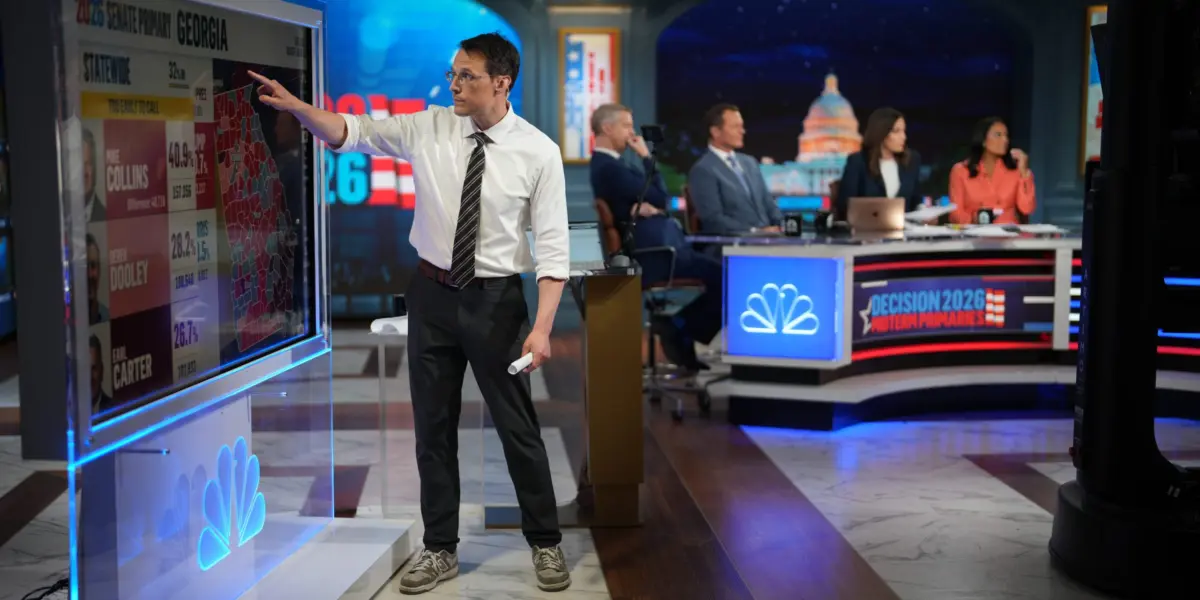
Recognizing the monumental stakes of this election cycle, the nation’s premier broadcast, cable, digital, and international news networks have mobilized unprecedented resources. Newsrooms are deploying state-of-the-art projection technology, dispatching investigative and field correspondents to critical battleground states, and establishing state-of-the-art studio command centers. From traditional legacy networks to specialized financial platforms, international broadcasters, and Spanish-language media outlets, the American public will be met with exhaustive, round-the-clock journalism as the democratic process unfolds on November 3, 2026.
Detailed Chronology: The Road to November 3, 2026
The trajectory of the 2026 midterm elections has been defined by a relentless, multi-year campaign cycle characterized by record-breaking fundraising, shifting voter demographics, and high-stakes legislative maneuvers in Washington, D.C.
Early Foundations and Primary Battles (Spring – Summer 2025)
The groundwork for the November showdown was laid more than a year in advance as both political parties initiated aggressive candidate recruitment drives. Following the stabilization of the post-2024 political landscape, early legislative battles in Congress served as trial balloons for the messaging campaigns that would dominate the airwaves. During the primary season in the spring and summer of 2025, ideological factions within both the Democratic and Republican parties clashed.
For Republicans, the primaries tested the enduring influence of the MAGA movement, with incumbent lawmakers facing challenges from both traditional conservatives and populist firebrands. Meanwhile, Democrats navigated internal debates over how best to counter the Trump administration’s policy agenda, balancing progressive demands for systemic reform with centrist appeals to independent suburban voters in key swing districts.
The Legislative Squeeze and Campaign Intensification (Fall 2025 – Spring 2026)
As the calendar turned to late 2025 and early 2026, Capitol Hill transformed into an election-year battleground. Major legislative votes on federal spending, border security measures, tax code expirations, and judicial nominations were strategically scheduled by party leadership to create definitive record votes for vulnerable incumbents.
By the spring of 2026, campaign spending reached astronomical heights. Super PACs, national party committees, and dark-money groups flooded media markets in pivotal states such as Pennsylvania, Arizona, Wisconsin, Georgia, Michigan, and Nevada. The sheer volume of political advertising transformed local news broadcasts and streaming platforms, signaling to voters that the battle for control of Congress had officially entered its decisive phase.
The Final Stretch and Pre-Election Dynamics (Summer – October 2026)
The final months leading up to November 3 witnessed an unprecedented mobilization effort. Both parties focused intensely on early voting and mail-in ballot infrastructure—mechanisms that had historically favored Democrats but saw increased Republican participation as party leadership adjusted its ground game.
In the final weeks of October 2026, national news organizations began finalizing their technical deployments. Broadcasters stress-tested election night projection models, integrated real-time voter file analytics, and established live-shot positions outside key state party headquarters and major political data centers. By the eve of the election, the stage was set for a historic night of journalistic coverage.
Supporting Context & Metrics: The Anatomy of the 2026 Midterms
To fully understand the scope of the 2026 midterm elections, one must examine the underlying statistical trends, demographic shifts, and institutional factors shaping the electorate.
The Historical Midterm Penalty
Political science models have long documented the "midterm penalty"—the historical tendency of the party occupying the White House to lose seats in Congress during midterm elections. Since the Civil War, the president’s party has lost seats in the House in nearly all midterm cycles, and in the majority of Senate cycles.
However, political analysts note that modern hyper-polarization and the decline of true swing districts have compressed the margin of error. With the House and Senate resting on razor-thin majorities, even minor shifts in suburban turnout or independent voter preference could dramatically alter the balance of power.
+--------------------------------------------------------------------------+
|                 HISTORICAL MIDTERM DYNAMICS AT A GLANCE                  |
+--------------------------------------------------------------------------+
| Metric                      | Historical Trend / 2026 Projection         |
+-----------------------------+--------------------------------------------+
| Average House Seat Loss     | ~26 seats for the President’s party        |
| Senate Vulnerability        | Heavily dependent on map geography         |
| Primary Spending            | Surpassed all previous midterm cycles      |
| Key Demographic Focus       | Suburban independents, working-class base  |
+--------------------------------------------------------------------------+
The Economic Landscape
Voter sentiment heading into November 3, 2026, remains heavily anchored to economic indicators. While inflation rates and employment figures have fluctuated throughout the presidential term, cost-of-living concerns, housing affordability, and wage growth remain top-of-mind for the American electorate. Both parties have sought to weaponize economic data: Republicans point to regulatory burdens and federal spending as drivers of financial anxiety, while Democrats emphasize investments in domestic manufacturing, infrastructure, and labor protections.
The Media Ecosystem and Information Consumption
The 2026 election also marks a structural evolution in how Americans consume political news. While traditional cable news networks and legacy broadcasters continue to command massive audiences on election night, streaming platforms, digital-first newsrooms, and social media verification hubs play an increasingly dominant role in real-time information delivery. Broadcasters have adapted by integrating multi-platform strategies, ensuring that comprehensive analysis is accessible across linear television, connected TV apps, audio podcasts, and live digital blogs.
Official Statements and Industry Preparations
As the nation approaches November 3, executives, lead anchors, and chief political analysts from the media industry have outlined their operational philosophies and coverage strategies for the evening.
Industry leaders have emphasized that accuracy, transparency, and speed will be the defining metrics of successful election night reporting. With public trust in media institutions facing persistent scrutiny, newsrooms have reinforced their decision desks, utilizing rigorous, independent data models to project outcomes only when statistical certainty has been achieved.
Furthermore, networks have made substantial investments in cybersecurity and misinformation tracking. Recognizing the potential for coordinated disinformation campaigns, deepfakes, and premature race calls on social media platforms, major news organizations have established specialized verification units tasked with debunking false narratives in real time.
Future Outlook: The Morning After and Beyond
The conclusion of the November 3, 2026, broadcast does not mark the end of the political story; rather, it serves as the prologue to a new era of American governance.
The Lame-Duck Session and Immediate Legislative Fallout
Depending on the final tally, the weeks following the election will witness either a high-stakes lame-duck congressional session or an immediate scramble to organize the new 115th Congress. If control of either chamber changes hands, transition teams will immediately mobilize to staff committee leadership positions, draft priority legislation, and prepare oversight investigations.
Policy Implications for the Remainder of the Presidential Term
The legislative outcome of the 2026 midterms will fundamentally dictate the contours of American politics through the end of the decade:
- Under a Divided Government: If Democrats succeed in capturing one or both chambers of Congress, President Trump faces a deeply combative legislative branch characterized by aggressive oversight, confirmation battles, and potential legislative gridlock, setting the stage for the 2028 presidential campaign.
- Under Unified Republican Control: If the GOP retains or expands its congressional majorities, the administration will possess a clear runway to enact its comprehensive conservative legislative agenda, secure judicial confirmations, and reshape federal policy across immigration, energy, and taxation.
As the country tunes in on Tuesday, November 3, 2026, the collective journalistic apparatus of the nation stands ready to deliver the facts, figures, and analysis necessary to navigate one of the most pivotal electoral moments in contemporary history.