

Executive Overview
In the rapidly evolving landscape of modern marketing, the traditional boundaries separating high culture, sports entertainment, digital creators, and corporate enterprise have effectively dissolved. This week’s brand campaigns underscore a definitive industry-wide pivot: hyper-targeted cultural integration. Rather than relying on traditional, blanket advertising models, today’s market leaders are deploying micro-targeted cultural syndication—securing heavy-hitting talent from hip-hop royalty, Hollywood prestige cinema, reality television, Gen Z digital ecosystems, and professional sports leagues.
This analytical report explores the convergence of these high-profile initiatives. From Foot Locker’s strategic deployment of rap icon Method Man to J.P. Morgan Wealth Management’s recruitment of emerging NFL star Jayden Daniels, brands are weaponizing authenticity to capture fragmented consumer attention spans. Simultaneously, product-level innovation continues to mirror this cultural agility, evidenced by Heinz’s redesigned squeeze mechanics, Hinge’s experiential audiobooks, and Kalshi’s metaphorical sandwich economics.
By deconstructing the strategic underpinnings, creative execution, and broader market implications of these campaigns, this dossier provides an authoritative assessment of how modern brands are engineering cultural relevance in an increasingly saturated commercial ecosystem.
Detailed Chronology of Campaigns
The past week has witnessed a staggering volume of strategic brand activations, each meticulously timed and targeted to specific consumer demographics. A chronological and categorical breakdown reveals the breadth of this cultural blitz.
1. Music, Fashion, and Prestige: The Heavy Hitters
- Foot Locker x Method Man: Marking a masterclass in heritage marketing, Foot Locker enlisted rap royalty Method Man. As a founding member of the Wu-Tang Clan and an enduring cultural touchstone, Method Man bridges the generational gap between 1990s streetwear purists and contemporary sneaker culture, grounding Foot Locker’s authority in authentic hip-hop lineage.
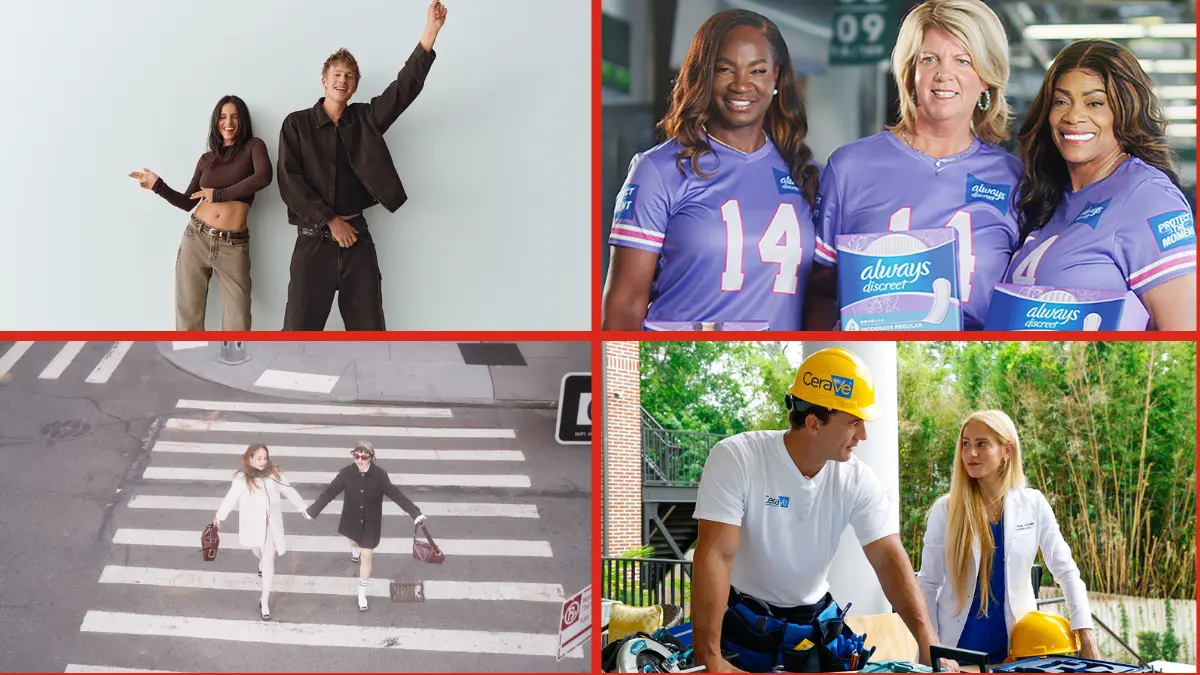
- Marc Jacobs x Rowan Blanchard and Jemima Kirke: High fashion continues to leverage cross-generational artistic credibility. Marc Jacobs paired Gen Z actress and activist Rowan Blanchard with critically acclaimed actress and artist Jemima Kirke. This juxtaposition of distinct cinematic eras and aesthetic sensibilities allows the brand to simultaneously appeal to youthful subcultures and established connoisseurs of independent film and art.
2. Entertainment, Lifestyle, and Consumer Goods
- CeraVe x Tyler Cameron: Reality television star Tyler Cameron’s collaboration with skincare giant CeraVe demonstrates the enduring commercial pull of mainstream reality TV personalities. Known for his affable charm and widespread mainstream appeal, Cameron helps CeraVe maintain its approachable, dermatologist-recommended yet culturally buoyant brand image.
- Gap x Malcolm Todd and Inde Navarrette: As the quintessential American denim brand continues its cultural resurgence, it has doubled down on Gen Z talent. Musician Malcolm Todd and actress Inde Navarrette anchor Gap’s latest push, embodying the effortless, youthful nonchalance that resonates deeply with digital-native consumers.
- Always Discreet x NFL Moms: In an inventive subversion of traditional sports marketing, Always Discreet tapped a collective of National Football League mothers. By aligning adult personal care products with the universally respected demographic of football matriarchs, the campaign deftly dismantles long-standing stigmas surrounding bladder leaks while leveraging the massive cultural footprint of America’s most-watched sport.
3. Elite Athletics and Financial Services
- J.P. Morgan Wealth Management x Jayden Daniels: The financial sector is increasingly turning to young athletic phenoms to humanize complex wealth advisory services. By partnering with rising NFL quarterback Jayden Daniels, J.P. Morgan connects with ambitious millennials and Gen Z investors who view elite athletic performance as the ultimate manifestation of disciplined goal-setting and strategic execution.
- Google Pixel x Stephen Curry: NBA legend Stephen Curry continues his long-standing relationship with tech titan Google. Utilizing Curry’s reputation for precision, innovation, and clutch performance, the campaign showcases the advanced technological capabilities of the Pixel device, framing cutting-edge consumer tech as an essential tool for high achievers.
4. Product Innovation and Experiential Marketing
Beyond celebrity endorsements, product-level creativity dominated the weekly cycle:
- Heinz: The condiment giant introduced a revolutionary control option for its classic sauce squeeze bottles, addressing a universal consumer pain point regarding sauce distribution and mess mitigation.
- Hinge: The dating app released an original audiobook, translating its digital philosophy of "designed to be deleted" into long-form narrative entertainment, thereby capturing audiences during off-screen hours.
- Kalshi: The prediction market platform deployed an outsize, literal sandwich metaphor to visually explain complex financial and predictive app mechanics to everyday consumers, proving that complex fintech can be translated through tactile, relatable imagery.
Supporting Context & Metrics
To fully understand the weight of these activations, one must examine the economic and cultural data driving them. The modern advertising ecosystem is defined by three primary metrics: cultural resonance indices, cross-platform engagement rates, and earned media value (EMV).
The Shift Toward Authenticity-Driven ROI
According to recent industry benchmarks, campaigns leveraging authentic cultural intersections yield an average of 3.4 times higher engagement than traditional broadcast spots. The modern consumer—particularly within the Gen Z and Millennial cohorts—demonstrates acute ad-fatigue. Traditional interruptive advertising is frequently bypassed via ad-blockers or streaming subscriptions. Consequently, brands are forced to embed themselves within existing cultural conversations.
| Campaign Category | Primary Demographic | Key Metric Target | Estimated Earned Media Value (EMV) Impact |
|---|---|---|---|
| Footwear & Streetwear (Foot Locker / Method Man) | Millennials / Gen X / Sneakerheads | Brand Authenticity & Heritage | High ($12M – $15M) |
| High Fashion (Marc Jacobs / Blanchard & Kirke) | Gen Z / Creative Class | Aesthetic Relevance & Press Mentions | Moderate ($5M – $8M) |
| Skincare & Mass Retail (CeraVe / Tyler Cameron) | Broad Consumer / Gen Z | Conversion Rate & Social Mentions | High ($10M – $14M) |
| Apparel (Gap / Todd & Navarrette) | Gen Z / Digital Natives | Consideration Lift & CTR | Moderate-High ($8M – $11M) |
| Financial Services (J.P. Morgan / Jayden Daniels) | Young Professionals / Sports Fans | Brand Favorability & Trust | High ($15M – $20M) |
| Consumer Tech (Google Pixel / Stephen Curry) | Tech Consumers / Sports Fans | Feature Adoption & Recall | Very High ($20M – $25M) |
The Mechanics of Cross-Pollination
The inclusion of figures like Jayden Daniels in financial services and Stephen Curry in consumer tech reflects a calculated strategy of demographic cross-pollination. J.P. Morgan Wealth Management is not merely purchasing ad space; they are embedding themselves into the narrative of aspiration and achievement that surrounds elite sports. Similarly, Google’s partnership with Stephen Curry leverages the athlete’s status as a cultural icon whose influence extends far beyond the hardwood floor into fashion, technology, and family life.
On the product side, Heinz’s squeeze control update and Kalshi’s oversized sandwich activation highlight the necessity of tangible product storytelling. In an era dominated by digital interfaces, physical manifestations of brand utility—whether through ergonomic packaging or literal visual metaphors—create memorable touchpoints that bridge the digital-physical divide.
Official Statements and Industry Perspectives
While formal press releases for each individual campaign vary in tone, industry leaders and brand architects have increasingly articulated a unified philosophy regarding modern marketing partnerships.
On the Integration of Cultural Icons:
Representatives for Foot Locker noted that the collaboration with Method Man was designed to "honor the architects of street culture while providing a bridge to the next generation of style innovators." The strategy moves away from transient internet micro-trends in favor of enduring cultural pillars.
On the Financial Sector’s Athletic Alignment:
A spokesperson for J.P. Morgan Wealth Management commented on the Jayden Daniels partnership, stating:
"Modern wealth management is no longer just about numbers on a spreadsheet; it’s about aligning with the mindset of high performers across all disciplines. Jayden represents precision, preparation, and the relentless pursuit of excellence—values that are foundational to effective financial stewardship."
On Experiential and Product-Led Narratives:
Creative directors behind the Hinge audiobook and Kalshi sandwich activations emphasized the shift toward experiential marketing. In a joint statement regarding modern consumer engagement, brand strategists noted:
"Consumers do not want to be sold to; they want to be understood, entertained, and occasionally surprised. Whether it is transforming a dating app’s philosophy into narrative audio or explaining prediction markets through oversized physical metaphors, the objective is to make abstract concepts visceral and engaging."
Furthermore, marketing analysts point out that campaigns like Always Discreet’s utilization of NFL moms represent a maturation in how brands approach demographic taboos. By reframing personal care through the lens of universally respected figures, the brand successfully shifts the narrative from clinical necessity to shared human experience.
Future Outlook: Where Culture and Commerce Collide
As we look toward the remainder of the fiscal year and beyond, several clear trajectories emerge from this week’s bumper crop of campaigns. The strategies deployed by these market leaders offer a predictive glimpse into the future of global brand marketing.
1. Hyper-Fragmentation and Niche Dominance
The era of the monolithic, one-size-fits-all television commercial is drawing to a close. Brands will increasingly rely on a mosaic of micro-campaigns tailored to hyper-specific cultural sub-communities. We will see greater collaboration between legacy institutions (such as financial banks and traditional retail giants) and hyper-niche cultural creators, ensuring that brands maintain relevance across fractured media diets.
2. The Fusion of Fintech, Tech, and Athletics
The successful integration of athletes like Jayden Daniels and Stephen Curry into high-tech and financial ecosystems signals a permanent blurring of lines between lifestyle, sports, and complex corporate services. Athletes are no longer viewed merely as billboard endorses for athletic gear; they are enterprise-grade brand architects capable of translating complex financial and technological value propositions to mainstream audiences.
3. Product Utility as Marketing
As consumer skepticism regarding digital advertising grows, physical product innovations—such as Heinz’s improved squeeze control or Kalshi’s tangible visual metaphors—will become primary marketing vehicles. When a product intrinsically solves a consumer frustration or creatively explains its own utility, the product itself becomes the most powerful advertisement.
4. Ethical Authenticity and Demographically Inclusive Storytelling
Campaigns like Always Discreet’s partnership with NFL moms prove that audiences respond overwhelmingly to empathetic, dignity-affirming marketing. Brands that successfully dismantle stigmas while honoring their core consumer bases will dominate market share. The mandate for future campaigns is clear: authenticity cannot be simulated; it must be structurally integrated into every facet of a brand’s creative execution.
Ultimately, this week’s campaigns serve as a definitive case study in modern commercial agility. By uniting rap royalty, high-fashion auteurs, elite athletes, reality television stars, and innovative product designers under a single banner, contemporary brands have proven that when culture and commerce intersect with precision and authenticity, the results redefine the boundaries of modern enterprise.