

Executive Overview
For nearly half a century, the digital world has operated under a single, unchallenged assumption: human intent must be translated into machine-readable commands via visual interfaces. Ever since the commercialization of the Graphical User Interface (GUI), pioneered by foundational systems like the Xerox Star and popularized globally by the original Apple Macintosh, software has relied heavily on point-and-click interactions.
Whether booking a cross-country flight, purchasing retail goods, or researching a complex medical symptom, users have long been expected to navigate a labyrinthine series of digital checkpoints. We click through nested menus, adjust range sliders, fill out multi-step onboarding forms, clear intrusive cookie pop-up banners, and open dozens of browser tabs simply to cross-reference basic information. Consequently, modern consumers have become conditioned to spending more time managing software than actually achieving their real-world goals.
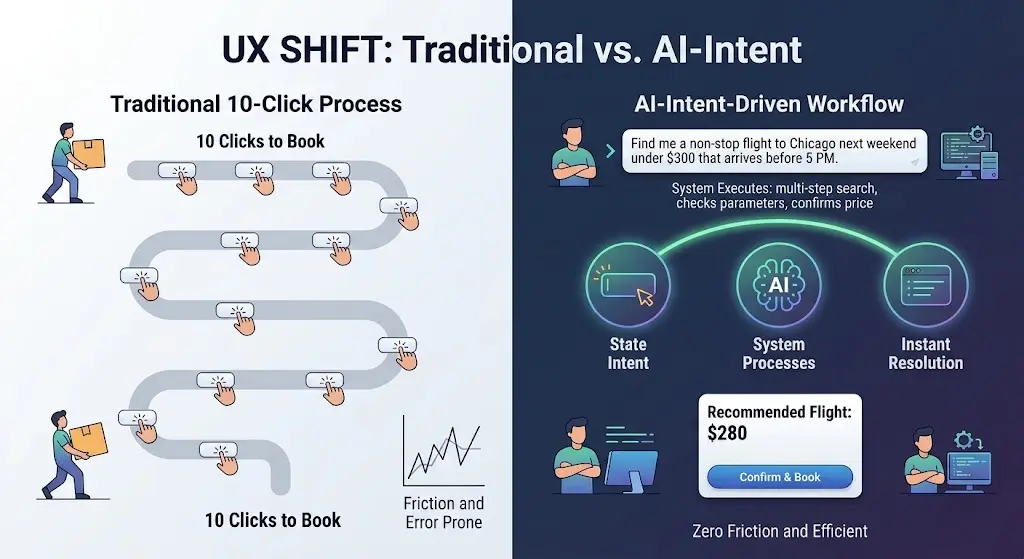
That contract is now officially expiring. Driven by rapid advancements in artificial intelligence (AI) and large language models (LLMs), a new paradigm of web development is taking root: Intent-Driven Design. Rather than forcing users to learn complex navigation trees, multi-page sales funnels, and proprietary software architecture, this emerging philosophy relies on capturing high-level human goals and autonomously executing the heavy lifting in the background.

For UX designers, product managers, and software engineers, understanding this paradigm shift requires a radical re-evaluation of their craft. The mandate is moving away from the styling of visible interfaces toward guiding transparent, context-aware, and intent-driven AI ecosystems. The ultimate ambition of modern web design is no longer to build prettier buttons or flashier animations; it is to eliminate the interface entirely.
Detailed Chronology: From Punch Cards to Invisible Interfaces
To appreciate the weight of the current transition toward intent-driven design, it is necessary to examine the evolutionary milestones of human-computer interaction (HCI). The digital landscape has progressed through distinct eras, each altering the distance between human intent and machine execution.
Era 1: The Mechanical and Batch Era (1950s–1970s)
In computing’s infancy, interacting with a computer required literal translation. Programmers expressed intent via punch cards and magnetic tape. Interaction was indirect, highly technical, and completely batch-oriented. The burden of translation rested entirely on the human.
Era 2: The Command-Line Interface (CLI) Era (1970s–1980s)
The CLI allowed direct, text-based communication with the machine. Users typed explicit commands (e.g., COPY, DIR, EXECUTE). While faster than punch cards, it demanded that users memorize syntax, parameters, and system directories. The interface remained rigid, unyielding, and text-bound.
Era 3: The Graphical User Interface (GUI) Revolution (1984–Present)
The introduction of the Xerox Star and the Apple Macintosh democratized computing through visual metaphors—desktops, folders, wastebaskets, and point-and-click mice. This era successfully bridged the gap for non-technical users by mapping abstract computing tasks onto physical, spatial actions. However, as software expanded in capability, the GUI bloated. Websites and applications transformed from simple pages into sprawling, multi-layered dashboards, forms, and shopping carts.
Era 4: The Intent-Driven and Interface-Free Era (Present and Beyond)
Today, generative AI and autonomous agents are collapsing the multi-step GUI. Instead of demanding that users manually orchestrate data across dozens of screens, the machine now accepts natural language inputs or contextual signals, interprets high-level goals, and delivers consolidated outcomes. The computer shifts from a passive container of tools that the human must operate to an active, intelligent partner that executes tasks autonomously.
Supporting Context & Metrics: The Friction Cost of the Web
For decades, the digital economy has thrived on a set of core engagement metrics: time spent in-app, click-through rates (CTR), and page views per session. Websites were deliberately engineered to maximize interaction volume, often artificially extending user journeys to display more advertisements or capture deeper data.
However, a growing body of human-computer interaction research—championed by visionaries like Golden Krishna in The Best Interface Is No Interface and usability pioneer Don Norman—suggests that high interaction metrics are often symptoms of deep design friction rather than user satisfaction.
Consider the traditional workflow of booking a commercial flight online:
- Navigate to an aggregate search engine.
- Manually input departure and destination airport codes.
- Select dates via a multi-month drop-down calendar widget.
- Filter by stops, airlines, baggage allowances, and departure times using sidebars and checkboxes.
- Review a results page populated with dozens of options, opening several external tabs to compare prices.
- Select a flight, navigate through mandatory seat-selection upsell screens, travel insurance prompts, and baggage add-ons.
- Fill out multi-part passenger information forms, payment fields, and two-factor authentication prompts.
This is the quintessential point-and-click UI paradigm. The computer acts as a passive canvas, while the human acts as the manual data processor.
Intent-driven design flips this script entirely. Instead of forcing the user through a mechanical 10-click funnel, an intent-driven interface asks a single, human-centric question: What are you trying to accomplish?
When a user states, "Find me a non-stop flight to Chicago next weekend under $300 that arrives before 5 PM," the underlying software parses the intent, queries multiple backend APIs simultaneously, filters out irrelevant noise, and presents a single, actionable resolution. Ten clicks dissolve into one clear intent outcome.
Real-World Platforms Leading the Charge
This transformation is no longer a futuristic theory. Several prominent web platforms are actively replacing traditional buttons and forms with intent-capturing systems:
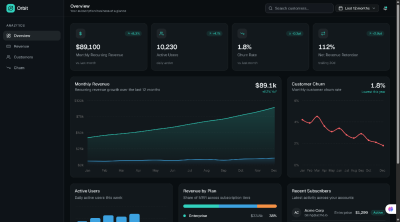
- Perplexity AI: Shifting away from traditional search engines that reward users with "ten blue links" and force them to open multiple tabs, Perplexity synthesizes comprehensive, cited answers based on immediate contextual intent.
- Vercel v0: Moving past traditional visual layout builders, drag-and-drop editors, and manual CSS coding, v0 allows developers and designers to generate fully functional UI components, design systems, and SaaS dashboards purely through natural language prompting.
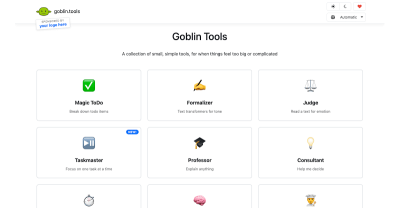
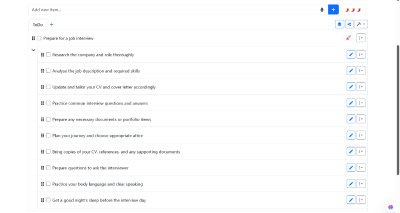
- Goblin.tools: Designed to assist neurodivergent users or individuals experiencing cognitive overload, this single-page AI suite breaks down massive, intimidating real-world tasks into microscopic, manageable steps without requiring user sign-ups or configuration menus.
Official Perspectives and Industry Frameworks
As the industry pivots away from traditional interaction models, leading design and research institutions have established critical frameworks to guide the transition toward intent-driven architecture.
The Three Pillars of Intent-Driven Web Design
Pioneering designers rely on three foundational pillars to maintain usability in the absence of traditional menus, sidebars, and forms:
- High-Level Goals vs. Micro-Actions: Rather than waiting for users to trigger dropdowns and toggles, modern ambient systems leverage environmental metadata—such as device state, location history, and behavioral patterns—to anticipate needs proactively, aligning with Apple’s Human Interface Guidelines on Contextual & Ambient Design.
- Generative UI: Computing is shifting from command-based interaction to outcome-specification, as highlighted by the Nielsen Norman Group. Generative UI dynamically renders layouts on the fly. If a user expresses a need to evaluate complex financial forecasts, the interface spins up an interactive calculator widget on demand, which then dissolves once the goal is accomplished.
- Autonomous Execution with Easy Reversibility: Traditional software relies heavily on intrusive pre-action warning modals ("Are you sure you want to delete this file?"). Intent-driven interfaces adapt Jakob Nielsen’s usability heuristics by shifting the safety net from prevention to easy reversibility. Because autonomous agents take actions on behalf of the user, products prioritize frictionless rollback mechanisms, prominent "Undo" buttons, and transparent revision prompts.
| Design Pillar | Traditional UX Approach | Intent-Driven UX Approach |
|---|---|---|
| User Input | Micro-actions (Clicks, dropdowns, toggles) | High-level goals (Natural language, context, habits) |
| Interface State | Static layouts (Every user sees the exact same page) | Generative UI (Layouts created dynamically on the fly) |
| Task Execution | Manual execution orchestrated by the human | Autonomous execution managed by background AI agents |
Navigating Ethical Pitfalls and Risks
While stripping away interface friction liberates the user, it introduces profound product design challenges. When software acts on inferred intent rather than explicit commands, designers must navigate critical risks:
- The Illusion of Control: When an algorithm makes decisions autonomously, it can quickly feel invasive or patronising. Research from the Stanford Human-Computer Interaction (HCI) Group emphasizes that automation must maintain clear boundaries. As outlined by the Center for Humane Technology, designers must guard against manipulative defaults and ensure that high-stakes actions—such as financial transactions or data privacy modifications—always require explicit human confirmation.
- The "Black Box" Problem: In a traditional UI, diagnostic troubleshooting is straightforward (e.g., recognizing an incorrect filter box). In an intent-driven ecosystem, troubleshooting hidden agent logic is far harder. To mitigate this, the Google PAIR (People + AI Research) Guidebook advocates for transparent feedback loops. The system must explicitly state its active interpretation (e.g., "Searching for non-stop flights to Chicago under $300…") so users can calibrate trust and correct misinterpretations instantly.
Future Outlook: The Death of Digital Friction
The ultimate goal of modern web development is rapidly converging on a singular truth: The best design is no design.
For decades, digital success was measured by how long users remained trapped inside an application’s ecosystem. The intent-driven paradigm turns these legacy metrics upside down. The ultimate test of a modern digital product is no longer how visually captivating its buttons are, but rather how effectively the software solves the user’s problem and gets completely out of their way.
We are entering an era where web applications will no longer be judged by the ornate complexity of their user interfaces, but by their ability to render those interfaces entirely obsolete. The future of the web is not more interaction—it is seamless, invisible completion. As UX professionals redefine their roles to become architects of intent rather than decorators of screens, the digital experience will finally fulfill its original promise: serving human ambition with absolute clarity and zero friction.