

Executive Overview
The digital landscape of the 21st century is marked by rapid technological evolution, yet few brands evoke as much nostalgic recognition as LimeWire. Once infamous as a peer-to-peer (P2P) file-sharing titan that defined the decentralized music consumption habits of the early 2000s, LimeWire has undergone a radical metamorphosis. Today, it has re-emerged not as a relic of digital copyright battles, but as a cutting-edge, Web3-integrated generative AI publishing platform.
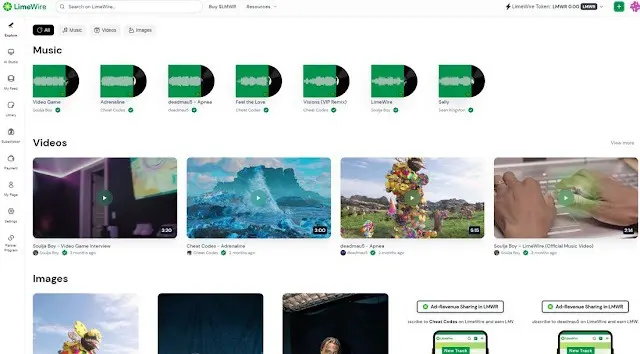
This comprehensive analysis explores LimeWire’s contemporary iteration: LimeWire AI Studio. By bridging the gap between artificial intelligence content generation, blockchain-based ownership, and decentralized monetization models, LimeWire has positioned itself at the intersection of two of the most disruptive technological movements of our era. The platform empowers a diverse cohort of creators—ranging from amateur hobbyists to high-profile industry veterans like Deadmau5, Soulja Boy, and Sean Kingston—to conceptualize, mint, distribute, and monetize digital media with unprecedented autonomy.
As regulatory frameworks, creator economies, and intellectual property standards shift to accommodate generative AI, LimeWire offers a compelling case study in brand resurrection, utility pivoting, and decentralized creator empowerment. This report details the architectural foundation, revenue models, technological capabilities, and strategic trajectory of LimeWire’s modern ecosystem.
Detailed Chronology
The 2000s: The P2P Genesis and Legal Twilight
To understand LimeWire’s current trajectory, one must contextualize its origins. Founded in 2000 by Mark Gorton, LimeWire operated as a Gnutella-network-based P2P file-sharing client. At its peak, it was installed on millions of desktop computers worldwide, serving as a primary medium for digital audio and software exchange.
However, the platform’s decentralized nature placed it squarely in the crosshairs of the Recording Industry Association of America (RIAA). Following years of high-stakes litigation (Arista Records LLC v. Lime Group LLC), a federal court ordered LimeWire to halt its file-sharing operations in 2010, resulting in a multi-million-dollar settlement and the apparent death of the brand.
The 2022–2023 Pivot: Acquisition and Web3 Rebirth
In 2022, Austrian entrepreneurs Julian and Paul Zehetmayr acquired the intellectual property rights to LimeWire with a clear vision: to resurrect the dormant brand as a mainstream digital collectibles marketplace. Initially launched as an NFT marketplace focusing on digital art and music, the platform quickly recognized the shifting tides of the digital creation space.
By integrating generative AI tools in early 2023, LimeWire transitioned from a passive marketplace into an active creation studio, allowing users to generate images, mint them as NFTs, and participate in a community-driven circular economy powered by its native utility token, LMWR.
Supporting Context & Metrics: The LimeWire AI Studio Ecosystem
LimeWire AI Studio operates as an end-to-end digital asset factory. The platform’s architecture is meticulously designed to lower the barrier to entry for content generation while providing institutional-grade tools for advanced digital artists.
+-----------------------------------------------------------------+
|                    LIMEWIRE AI STUDIO ARCHITECTURE              |
+-----------------------------------------------------------------+
                                  |
         +------------------------+------------------------+
         |                                                 |
         v                                                 v
+------------------+                              +------------------+
|   AI GENERATION  |                              |  BLOCKCHAIN MINT |
| - Stable Diff 2.1|                              | - Polygon (MATIC)|
| - Stable Diff XL |                              | - Algorand (ALGO)|
| - DALL-E 2       |                              | - Auto-NFTs      |
+------------------+                              +------------------+
         |                                                 |
         +------------------------+------------------------+
                                  |
                                  v
+-----------------------------------------------------------------+
|                      MONETIZATION LAYER                         |
| - Ad Revenue Sharing (50% - 70%)                                |
| - Secondary Trade Royalties (2.5%)                              |
| - LMWR Utility Token Ecosystem                                  |
+-----------------------------------------------------------------+
1. Advanced Multimodal AI Generation Engines
LimeWire does not rely on a single proprietary engine; instead, it aggregates industry-leading generative models to give creators maximum flexibility. The platform currently supports:
- Stable Diffusion (Versions 2.1 and XL): Known for hyper-realistic rendering, intricate detail, and deep prompt adherence.
- DALL-E 2: OpenAI’s powerful text-to-image model, prized for its conceptual synthesis and surrealist capabilities.
Users can interface with these engines through simple text prompts or complex parameter adjustments. Furthermore, LimeWire offers specialized stylistic presets that allow creators to instantaneously shift the aesthetic output of their prompts. These styles include:
- Cinematic: High-contrast, dramatic lighting designed for visual storytelling.
- Digital Art & Pixel Art: Tailored for modern illustrators and retro-gaming enthusiasts.
- Anime & Analog Film: Mimicking traditional hand-drawn Japanese animation or vintage photographic grain and color grading.
To ensure continuous improvement, LimeWire has announced the ongoing development of its own proprietary AI generation model, aimed at tailoring outputs specifically to the commercial and aesthetic needs of its user base.
2. Automated Blockchain Minting Infrastructure
A core differentiator for LimeWire is its seamless Web3 integration. Upon generating an image, music track, or video, creators are given the option to publish their work. Behind the scenes, LimeWire automatically mints the creation as a Non-Fungible Token (NFT) on either the Polygon or Algorand blockchain.
This automated process imbues every digital artifact with a cryptographic signature, establishing verifiable provenance, scarcity, and undeniable ownership. Creators maintain granular control over their distribution strategy:
- Public Release: Content is indexed globally across the LimeWire community, maximizing discovery, public engagement, and secondary trading volume.
- Subscriber-Only Exclusivity: Content is locked behind a paywall, accessible exclusively to dedicated fans who subscribe to the creator’s profile.
3. The Economics of the Creator Fund: LMWR and Ad Revenue
LimeWire has structured a multi-tiered monetization framework designed to financially reward active participants in its ecosystem.
- Ad Revenue Share: When content (images, music, and upcoming video media) is viewed by other platform users, generated ad revenue is funneled back to the creator. Depending on the creator’s subscription tier, they receive between 50% and 70% of the ad revenue generated by their content.
- LMWR Token Economy: Earnings are distributed monthly in the form of LMWR, LimeWire’s native ERC-20 utility token. LMWR is actively traded on major decentralized and centralized cryptocurrency exchanges, including Uniswap, Kraken, and ByBit. Beyond cashing out earnings, users utilize LMWR tokens to purchase additional AI prompt credits and micro-transactions within the platform.
- Secondary Market Royalties: Whenever a digital asset minted on LimeWire is traded on the secondary market, the original creator automatically receives a 2.5% royalty fee, establishing a perpetual passive income stream from successful digital collectibles.
Official Statements and Platform Positioning
Leadership at LimeWire has consistently framed the platform’s renaissance as a democratization of digital art and a blueprint for the creator economy of the 2030s.
"We are taking the friction out of content creation and monetization," notes the platform’s strategic product documentation. "By merging state-of-the-art generative AI with automated Web3 infrastructure, we enable anyone—from a teenager experimenting with digital prompts to a platinum-selling recording artist—to build a self-sustaining digital media business in a matter of clicks."
The onboarding of mainstream musical icons such as Deadmau5, Soulja Boy, and Sean Kingston serves as an official validation of LimeWire’s institutional pivot. By utilizing LimeWire Studio to drop NFT-backed singles, visual art pieces, and exclusive video content, these artists have helped legitimize the platform as a viable alternative to traditional, gatekept media distribution channels.
Furthermore, industry analysts have highlighted LimeWire’s model as a potential antidote to the copyright and compensation crises currently facing AI developers. By baking revenue-sharing and blockchain tracking directly into the creation pipeline, LimeWire creates an auditable trail of authorship and financial distribution.
Pricing Models and Tiered Access
To accommodate everyone from casual hobbyists to enterprise-level digital design agencies, LimeWire utilizes a subscription-based credit system alongside a freemium entry point.
| Subscription Tier | Monthly Cost | Monthly Credits | Estimated Image Generation Limit | Ad Revenue Share | Key Perks |
|---|---|---|---|---|---|
| Free Tier | $0 | 10 Credits | Up to 20 Images/day | 50% | Basic model access, community support. |
| Basic Plan | $9.99 | 1,000 Credits | Up to 2,000 Images | 50% | Pro badge, creation history, ad-free experience. |
| Advanced Plan | $29.00 | 3,750 Credits | Up to 7,500 Images | 60% | Early access to new AI models, faster rendering. |
| Pro Plan | $49.00 | 5,000 Credits | Up to 10,000 Images | 70% | Maximum revenue share, priority generation queues. |
| Elite Plan | $99.00 | 11,250 Credits | Up to 22,500 Images | 70% | Maximum credits, elite priority status, VIP support. |
All paid tiers remove native advertisements from the user interface, grant full access to historical generation logs, and provide early experimental access to newly integrated AI architectures.
Future Outlook: The Road Ahead for LimeWire AI Studio
As LimeWire looks toward the horizon, its roadmap is characterized by aggressive technological expansion. While the platform’s current generative capabilities are anchored primarily in text-to-image processing, strategic development is already well underway for multimodal expansions.
1. Generative AI Music and Video Tools
The most anticipated milestone on LimeWire’s roadmap is the deployment of dedicated AI Music and Video Generation tools. The integration of audio-synthesis and text-to-video engines will bring the platform full circle back to its musical roots. Independent musicians will soon be able to generate backing tracks, complete audio compositions, and accompanying cinematic music videos entirely within the LimeWire Studio environment—subsequently minting and monetizing them as multimedia NFTs.
2. Proprietary AI Model Deployment
Transitioning away from complete reliance on third-party models like Stable Diffusion and DALL-E, LimeWire’s internal engineering teams are refining a proprietary AI model. This custom model is expected to offer hyper-specific styling options optimized explicitly for commercial licensing, graphic design, and Web3 asset generation.
3. Market Expansion and Regulatory Adaptability
As global regulatory bodies begin drafting comprehensive legislation governing artificial intelligence (such as the European Union’s Artificial Intelligence Act) and digital asset taxation, LimeWire’s transparent blockchain infrastructure places it in a strong position for compliance. By maintaining immutable records of asset creation and transparent revenue distribution, the platform mitigates many of the legal uncertainties plaguing centralized generative AI services.
Conclusion
LimeWire’s journey from a controversial P2P file-sharing outlaw to a sophisticated, Web3-enabled generative AI publishing platform is one of the most remarkable corporate pivots in digital history. By successfully harnessing the explosive growth of generative artificial intelligence and pairing it with automated blockchain minting, tokenized economies, and robust ad-revenue sharing, LimeWire has crafted a sustainable, creator-first ecosystem.
For digital artists, designers, musicians, and everyday creators, LimeWire offers a frictionless environment to experiment, publish, and monetize their creative output. With forthcoming expansions into AI-driven music and video production, LimeWire is not merely participating in the future of the digital creator economy—it is actively helping to author it.