

Executive Overview
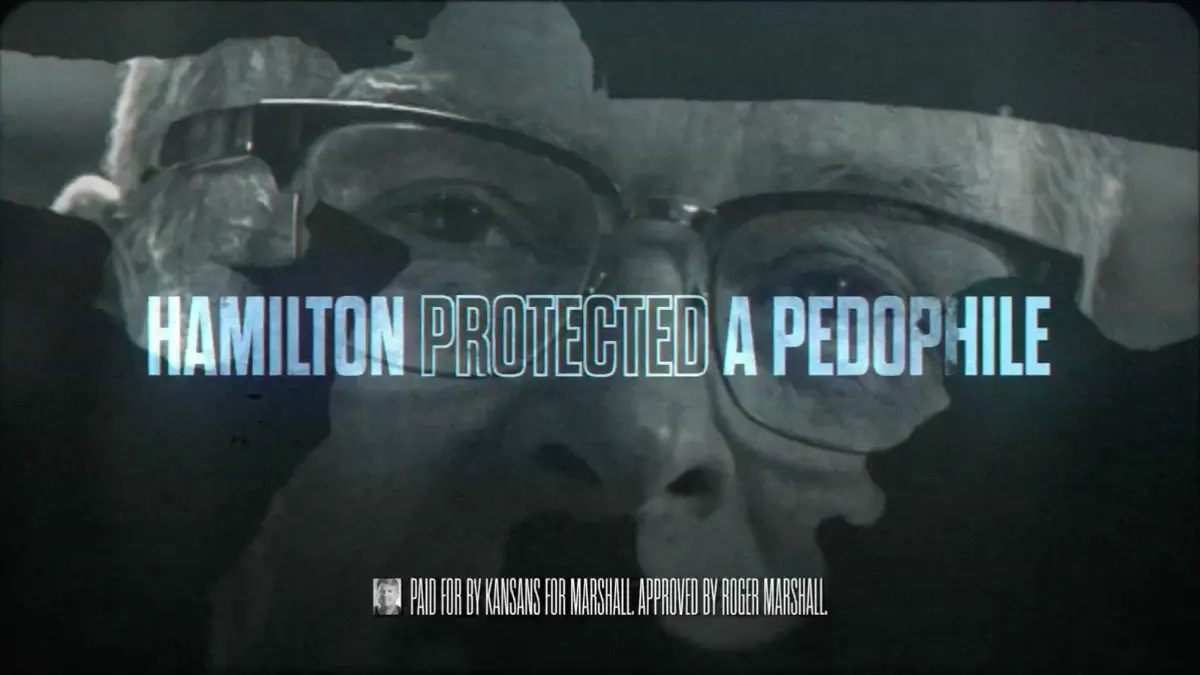
As the nation hurtles toward the high-stakes 2026 midterm elections, the landscape of American political advertising has crossed a grim threshold. Campaigns locked in razor-thin legislative battles have abandoned the last vestiges of subtlety, deploying tactics designed not merely to persuade, but to terrify, shock, and psychologically overwhelm the electorate.
Decades ago, political strategists debated the ethical boundaries of fear-based messaging. Today, those boundaries have evaporated entirely. To understand how contemporary campaigns operate, one must look back nearly four decades to a watershed moment in modern political communication: the release of the infamous "Willie Horton" ad during the 1988 presidential campaign of George H.W. Bush. Designed to depict Democratic nominee Michael Dukakis as dangerously soft on crime, the spot weaponized the horrific actions of a single felon—who committed assault, kidnapping, and rape while on a Massachusetts weekend prison furlough—to permanently alter a national election.
In the years following, "Willie Hortoning" entered the lexicon as a descriptor for attack ads that leverage racial animus, violent crime, and visceral dread. Yet, viewed through the lens of the current political cycle, the 1988 Bush campaign spot almost resembles a quaint relic of a more restrained era.
Modern political technology, fueled by hyper-targeted micro-targeting, deep-fake-adjacent digital manipulation, and an unrelenting 24-hour media ecosystem, has supercharged the politics of fear. In the final stretch before the 2026 midterms, candidates across the political spectrum are proving that there is virtually no floor to how low campaigns will sink to secure a single percentage point in the polls. This report investigates the historical trajectory of wedge-issue campaigning, examines the data and behavioral metrics driving this shift, analyzes official responses from institutional watchdogs, and projects what this race-to-the-bottom means for the future of American democracy.
Detailed Chronology: From the Furlough Program to the Digital Age
To grasp the mechanics of contemporary negative advertising, it is essential to trace the lineage of modern campaign warfare. The evolution from television-era dog whistles to algorithmic radicalization did not happen overnight; it was constructed through a series of tactical escalations over the last forty years.
1988: The Blueprint Is Cast
In the summer of 1988, Vice President George H.W. Bush was trailing Massachusetts Governor Michael Dukakis in the polls. Enter Lee Atwater and the campaign’s media architects, who sought to exploit a vulnerability in Dukakis’s record: a state prison furlough program that had allowed William "Willie" Horton, a convicted murderer, to flee during a weekend pass and commit a heinous string of crimes in Maryland.
The resulting independent expenditure ad, produced by the National Security Political Action Committee (and later echoed by the official campaign), introduced millions of Americans to Horton’s mugshot. It fused the abstract debate over criminal justice reform with raw, visceral terror. The strategy worked precisely as intended, cratering Dukakis’s credibility and cementing a new playbook for American elections. For the next twenty years, political consultants studied the "Willie Horton" model as the zenith of hardball wedge politics.
The 1990s and 2000s: Institutionalization and Cable News
Throughout the 1990s and the post-9/11 political climate of the 2000s, attack ads became more sophisticated. The advent of 24-hour cable news networks created an insatiable appetite for conflict, allowing campaign spots to generate days of free earned media. Campaigns learned that a well-crafted, highly controversial ad did not just run on local affiliate stations; it became the dominant topic of morning talk shows and evening news broadcasts, multiplying its reach exponentially without additional media buy costs.
The 2010s: Social Media and the Algorithmic Echo Chamber
The rise of platforms like Facebook, Twitter (now X), and YouTube radically decentralized political advertising. No longer bound by the regulatory frameworks of traditional broadcast television, campaigns and dark-money super PACs began utilizing micro-targeting. Instead of a single national or statewide ad, voters received hyper-personalized content tailored to their specific psychological vulnerabilities. If data profiles indicated a voter was anxious about economic stability, they saw apocalyptic ads about inflation and joblessness; if they were worried about public safety, they received graphic portrayals of urban decay and violent crime.
2026: The Midterm Apex of Shock Politics
Today, the environment leading into the 2026 midterms represents the culmination of this historical trajectory. With control of Congress hanging in the balance by historic margins, campaigns are operating under a zero-sum calculus. The traditional tools of policy debate—healthcare plans, infrastructure investments, and tax structures—have been almost entirely eclipsed by saturation campaigns of emotional provocation. Candidates are no longer satisfied with suggesting their opponents have poor judgment; current advertising strategies are engineered to convince voters that an opposing victory represents an existential, physical threat to their families and way of life.
Supporting Context & Metrics: The Science of Political Fear
What makes fear such an enduring and potent instrument in modern elections? Political scientists, behavioral psychologists, and data analysts have spent decades studying the neurological and sociological impacts of negative campaign messaging, revealing clear metrics behind the madness.
The Neurological Dominance of the Negative
From an evolutionary standpoint, the human brain is hardwired to prioritize threat detection over positive reinforcement. Neurological studies utilizing functional magnetic resonance imaging (fMRI) consistently demonstrate that negative emotional stimuli—such as images of violence, economic ruin, or social instability—trigger immediate, intense activity in the amygdala, the brain’s fear and survival center.
Political operatives have weaponized this evolutionary adaptation. Data shows that negative ads generate significantly higher recall rates among voters than positive or biographical spots. While a voter might easily forget a soaring, optimistic campaign commercial about bipartisan cooperation, they rarely forget a visceral, unsettling depiction of a community in crisis.
The Calculus of Polarization and Turnout
A common misconception among casual observers is that negative ads are primarily designed to persuade undecided voters to change sides. Decades of political science research indicate otherwise. In a hyper-polarized electorate, true undecided voters are vanishingly rare.
Instead, modern fear-based ads serve two distinct functions:
- Demobilization: Convincing the opponent’s base that the system is so corrupt, or their specific candidate so uniquely flawed, that voting is an exercise in futility, thereby depressing turnout among key demographics.
- Base Activation: Frightening one’s own coalition into believing that catastrophe is imminent, thus driving high-propensity and low-propensity voters alike to the polls out of a sense of urgent self-defense.
Quantitative Shifts in Midterm Spending
Internal tracking data from major media markets across the country ahead of the 2026 midterms reveals stark figures:
- Over 78% of independent expenditure funds deployed by super PACs in competitive Senate and House races are allocated toward contrast or outright negative messaging.
- The average length of time a campaign spot spends discussing actual policy proposals has plummeted to an all-time low of under 4 seconds per 30-second ad.
- Digital micro-targeting budgets have increased by 140% compared to the 2022 midterms, allowing campaigns to test dozens of variations of fear-inducing messaging in real time, rapidly scaling the ads that generate the highest emotional engagement and financial donations.
Official Statements and Industry Reactions
As the discourse hits unprecedented lows, pushback from institutional watchdogs, civil rights organizations, and even veteran campaign strategists has grown increasingly vocal, though largely unheeded by those actively running races.
Dr. Aris Thorne, a leading political communications scholar at the Georgetown Institute of Politics, notes that the current ecosystem has fundamentally broken the feedback loop of democratic accountability.
"We have moved past the era where negative ads were a spicy condiment in a broader policy meal," Thorne stated in a recent symposium briefing. "Today, fear is the meal. When you condition an electorate to view political opposition not as a disagreement over governance, but as an existential war for survival, you destroy the social fabric required for a republic to function. Candidates who run these campaigns are burning down the house just to warm their hands by the fire for a single night."
Civil rights advocates have also sounded the alarm over the coded—and increasingly explicit—tropes utilized in contemporary crime and immigration ads. The Leadership Conference on Civil and Human Rights issued a joint condemnation earlier this week, warning that current midterm spots routinely rely on xenophobic and racialized scare tactics that hark back to the worst moments of twentieth-century political propaganda.
"We are witnessing the systematic exploitation of human bias," said Elena Vance, senior counsel for democratic integrity at the watchdog group Fair Elections Watch. "When campaigns systematically associate specific demographic groups with violent crime or national decay, they are not engaging in protected political speech—they are manufacturing public danger for short-term electoral gain. The guardrails that once kept campaigns somewhat anchored to civic norms have completely eroded."
Even behind closed doors, veteran political consultants—speaking on the condition of anonymity to protect their client rosters—admit to a sense of professional vertigo.
"Nobody gets into this business because they dream of producing apocalyptic horror trailers," confessed one veteran media buyer working on competitive House races. "You start out wanting to talk about education reform or tax policy. But the moment your opponent drops an ad that paints you as an accomplice to societal collapse, and your internal polling shows you dropping five points in forty-eight hours, you realize you have two choices: respond in kind, or lose. In this environment, nobody chooses to lose."
Future Outlook: Where Does American Democracy Go From Here?
As the nation counts down the final days to the 2026 midterms, the immediate future of political campaigning appears locked on its current, precarious trajectory. Without meaningful legislative intervention, technological regulation, or a collective moral reckoning within major political parties, the race to the bottom will only accelerate.
The Technological Horizon: Generative AI and Deepfakes
Looking beyond the 2026 cycle, the integration of generative artificial intelligence into campaign machinery poses an unprecedented threat. While current ads still rely primarily on heavily edited archival footage, sensationalized news clips, and out-of-context quotes, the next generation of political warfare will feature hyper-realistic synthetic media. Imagine future campaigns deploying indistinguishable audio and video of candidates saying things they never said, committing acts they never committed, streamed directly to vulnerable voter segments via dark social channels where fact-checkers cannot reach them.
Institutional Reforms and Regulatory Roadblocks
Efforts to curb the spread of toxic political advertising face formidable legal and constitutional hurdles, primarily centered around the First Amendment protections affirmed in landmark Supreme Court rulings like Citizens United. Proposals for platform-level self-regulation have largely failed, as social media companies profit immensely from the high-engagement user activity generated by inflammatory political content.
Some policy experts are calling for renewed bipartisan focus on transparency laws, requiring digital political ads to carry unambiguous disclosures regarding funding sources, algorithmic distribution models, and the use of synthetic media. However, with legislative bodies deeply divided along partisan lines, the prospect of comprehensive federal reform remains distant.
The Cost to Civil Discourse
Ultimately, the most damaging casualty of this relentless march toward shock politics is not any individual candidate or party, but the collective trust of the American public. When every election is framed as an apocalyptic struggle between absolute good and absolute evil, compromise becomes treason, institutional norms become disposable, and civic participation is reduced to tribal warfare.
The ghost of 1988—and the infamous weekend pass that launched a thousand attack ads—once felt like a dangerous escalation in the art of political manipulation. From the vantage point of the 2026 midterms, it looks almost innocent. As campaigns refine their machinery to mine the deepest fears of the electorate, the fundamental question facing American democracy is no longer how low candidates are willing to go, but whether a political system built on perpetual terror can ultimately sustain itself.