

Executive Overview
For decades, the television upfront marketplace operated with the predictable cadence of a high-stakes, meticulously choreographed ritual. Every spring, media buyers, advertising executives, and network potentates would descend upon Manhattan’s grandest theaters—Radio City Music Hall, Carnegie Hall, and Lincoln Center—to wine, dine, and pledge billions of dollars against the upcoming autumn television schedule. It was an ecosystem built on scarcity, appointment viewing, and predictable seasonal blocks.
Today, that foundational bedrock has shifted irrevocably. While doomsayers have prematurely pronounced the death of the upfront for the better part of fifteen years, the ritual refuses to perish. Instead, it has mutated.
As top media buyers observe, the traditional upfront is very much alive, but it has transformed into a radically different, infinitely more complex beast. The 2024–2025 upfront cycle proved to be a watershed moment, characterized not by traditional broadcast pilot presentations alone, but by a high-stakes tug-of-war dominated by live sports, a massive influx of ad-supported streaming inventory, and a labyrinthine ecosystem of cross-platform deals.
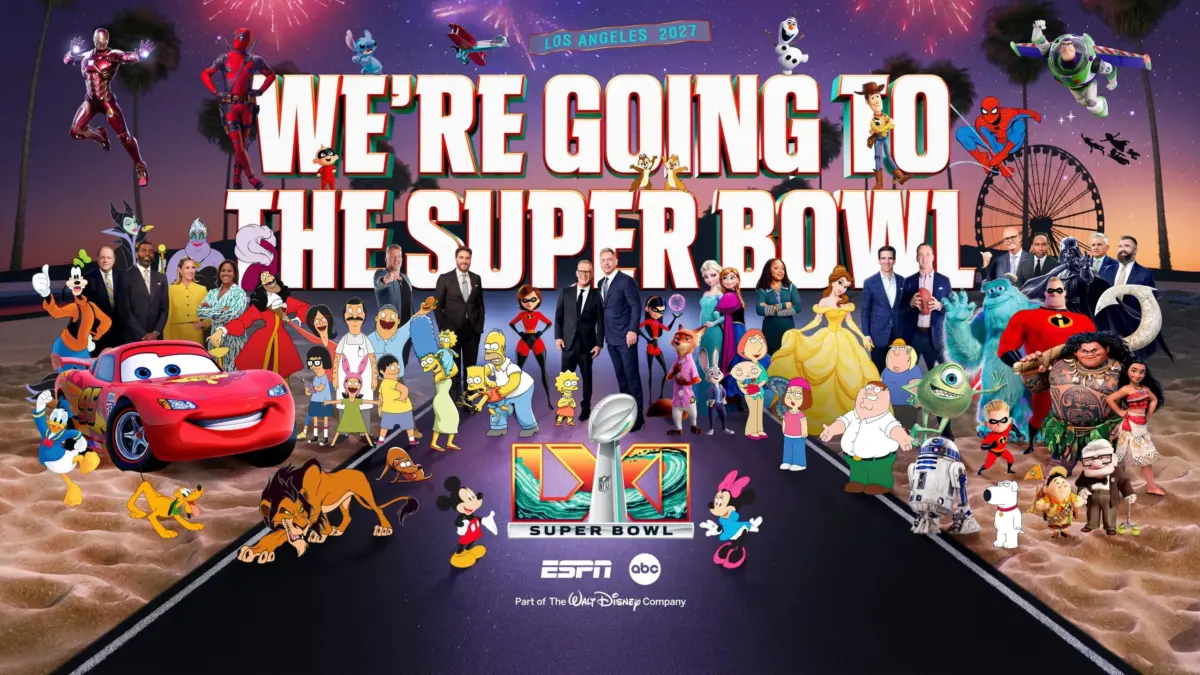
At the center of this transformation is Disney’s historic integration of the Super Bowl into its portfolio—its first in decades—alongside surging advertiser demand for guaranteed live-audience engagement in a fractured media landscape. No longer a straightforward transaction of trading linear eyeballs for upfront discounts, the modern upfront is a multi-billion-dollar puzzle of data clean rooms, streaming addressability, identity resolution, and flexible cancellation options.
This deep-dive investigative report explores how the upfront marketplace adapted to these seismic shifts, examining the structural forces reshaping the industry, the metrics driving media investments, and the strategic positioning of the world’s largest entertainment conglomerates as they navigate the streaming era.
Detailed Chronology: The Anatomy of an Upfront Season
To understand how the modern upfront functions, one must trace the timeline of negotiation, presentation, and execution that defines the spring-to-summer market cycle. The 2024–2025 season broke historical molds, rewriting the temporal boundaries of media buying.
Phase One: Early Posturing and the Sports Land Grab (January – March)
Long before the first presentation sizzle reel rolled in May, the market dynamics for the 2024–2025 upfront were already being dictated by live sports rights. The January to March window saw unprecedented early-market positioning.
With the traditional linear entertainment slate facing production delays lingering from the previous year’s dual Hollywood strikes, media buyers and network ad sales chiefs recognized that sports would serve as the primary lifeblood of the upfront commitments.
Networks armed with tier-one sports rights—most notably Disney with its newly expanded NFL portfolio and the upcoming Super Bowl, NBCUniversal with the Paris Olympics and Big Ten football, and Paramount with its NFL and college football packages—began bilateral conversations with holding companies far earlier than historical norms dictated. This "pre-upfront" activity effectively drained a significant portion of tier-one budgets before the official presentation tents were even pitched in New York.
Phase Two: Presentation Week and the Streaming Invasion (May)
By mid-May, the physical ritual of upfront week commenced. However, the nature of the pitches had fundamentally changed. Gone were the days when linear ratings guarantees dominated the executive keynotes. Instead, tech platforms, streaming operating systems, and legacy media companies with hybrid streaming apps took center stage.
- Monday: Disney kicked off the week at the North Javits Center, leaning heavily into its unified ad tech platform, DRAX, and highlighting the sheer scale of its combined Disney+ and Hulu ad tiers alongside ESPN’s digital and linear footprint.
- Tuesday: NBCUniversal hosted its presentation at Radio City Music Hall, emphasizing its One Platform Total Audience product. Executives stressed the seamless transition of linear budgets into Peacock’s growing subscription-video-on-demand (SVOD) and advertising-based video-on-demand (AVOD) tiers.
- Wednesday & Thursday: Paramount, Warner Bros. Discovery, and Amazon Prime Video staked their claims. Amazon’s presence was particularly disruptive, as the tech giant leveraged its first full upfront cycle following the introduction of commercial interruptions on Prime Video to command massive upfront commitments, sending ripples through legacy competitors.
Phase Three: The Bilateral Grind and Deal Complexity (June – July)
Following the glamour of presentation week, the real work began behind closed doors. Unlike previous decades, where volume deals were struck swiftly over handshakes and preliminary spreadsheets, the 2024–2025 deal-making phase dragged deep into the summer.
Media buyers reported that negotiations were bogged down by structural complexities. Advertisers were no longer merely buying "commercial units" (C3 or C7 ratings models); they were buying audience segments verified by third-party measurement partners like iSpot and Comscore, often integrated via clean rooms designed to protect consumer privacy while proving campaign efficacy.
Furthermore, the integration of streaming supply meant that agencies had to negotiate complex cross-screen guarantees. A single deal might encompass linear prime-time placement, Connected TV (CTV) impressions on a streaming app, programmatic guaranteed inventory, and social-media-adjacent extensions.
By the time the market formally wrapped in late July, total volume remained resilient—defying early skepticism—but the internal mechanics of how those dollars were allocated bore little resemblance to the upfronts of the past.
Supporting Context & Metrics: The Numbers Driving the Shift
The transformation of the upfront is not merely philosophical; it is grounded in hard economic metrics and structural shifts in consumer behavior. To grasp the current landscape, one must analyze the numbers governing inventory supply, viewership fragmentation, and pricing power.
The Rise of Streaming Inventory Supply
For years, the streaming revolution threatened to starve linear-dependent networks of ad revenue as consumers migrated to ad-free subscription tiers on Netflix, Disney+, and Max. However, the 2024–2025 upfront marked the tipping point of the "streaming ad-tier revolution."
According to industry estimates, ad-supported streaming supply expanded by nearly 40% year-over-year heading into the 2024 upfront. Major streamers that once prided themselves on commercial-free experiences completed their pivots:
- Netflix entered its second full upfront with a vastly expanded inventory pool and proprietary ad technology.
- Disney+ and Hulu operated as a unified, programmatic-friendly ecosystem, capturing billions in upfront commitments.
- Amazon Prime Video instantly became a titan of the upfront by default, introducing ads to over 115 million U.S. households overnight.
This sudden influx of high-end streaming inventory prevented a steep deflation in overall ad pricing. While traditional linear broadcast ratings continued their structural decline (dropping roughly 8% to 12% among key demographics), the absorption of these budgets by streaming extensions allowed major media conglomerates to hold—and in some cases increase—their overall CPMs (cost per thousand impressions).
The Dominance of Live Sports and Event Television
Nothing commands premium pricing quite like live cultural moments. In the 2024–2025 upfront, sports and unscripted event programming served as the anchor for almost every major media holding company.
| Media Holding Company | Key Sports/Event Assets | Upfront Strategy Highlights |
|---|---|---|
| The Walt Disney Company | NFL, College Football Playoffs, Super Bowl LIX, NBA | Unified linear/streaming sports packages; focus on multi-platform reach. |
| NBCUniversal | Paris 2024 Summer Olympics, Big Ten, NFL Sunday Night Football | "Total Audience" guarantees bridging linear NBC and Peacock streaming. |
| Paramount Global | NFL, March Madness, UEFA Champions League | Cross-platform sports integration leveraging Paramount+ and CBS. |
| Amazon Prime Video | Thursday Night Football, WNBA, Nascar (upcoming) | Pure-play streaming scale combined with massive first-party e-commerce data. |
Live sports accounted for an estimated 40% to 50% of total upfront volume for legacy broadcast networks, proving that in an on-demand world, appointment viewing is dead—except when the score is being settled live.
Official Statements and Industry Perspectives
To capture the true sentiment of the marketplace, it is essential to examine the direct commentary of the executives navigating this terrain. The tension between traditional linear habits and modern digital realities is evident in how leaders articulate their strategies.
The Media Buyer’s Dilemma
Speaking anonymously to protect ongoing client relationships, a senior investment officer at one of the world’s largest media-buying holding companies offered a stark assessment of the modern upfront:
"For years, everyone said the upfront’s dead or going to die. It’s not. It’s going to continue to exist. But it is very different, and in some ways a lot more complicated. We aren’t just buying spots on a grid anymore. We are managing a complex portfolio of data rights, audience segments, dynamic ad insertion, and cross-platform frequency capping. The upfront is no longer a sprint; it’s an architectural engineering project."
Another top agency executive highlighted the leverage shift caused by streaming alternatives:
"When Amazon, Netflix, and Disney all have massive ad-supported tiers bidding for the same corporate budgets, the traditional broadcast networks no longer hold a monopoly on premium sight-sound-and-motion video. That forced a competitive pricing environment where buyers could demand more flexibility, better cancellation options, and granular audience guarantees."
The Network Perspective
Media network executives, conversely, frame this complexity as an evolution toward consumer-centric, data-driven monetization. During upfront presentations, leadership teams continuously emphasized accountability and cross-screen measurement.
An ad-sales chief at a major broadcast network noted during the market cycle:
"The fragmentation of video consumption is real, but the desire for brands to reach mass audiences safely and effectively hasn’t changed. What the upfront does today is provide stability and predictability in a chaotic media world. Advertisers want guaranteed access to the cultural moments that matter, backed by data that proves business outcomes. That is what our platforms deliver."
Future Outlook: Where the Upfront is Headed
As the dust settles on the 2024–2025 upfront cycle and industry analysts begin forecasting the trajectory for the years ahead, several clear trends emerge regarding the future of video advertising marketplaces.
1. The Death of the Traditional Upfront Week Gala
The theatrical presentations in Manhattan—complete with celebrity appearances, musical performances, and lavish after-parties—face mounting scrutiny over return on investment. While legacy media companies may cling to these traditions for prestige, the actual business of the upfront is increasingly decoupled from the stage. Future upfronts will likely see a bifurcation: highly targeted, intimate client summits focused on data and technology, contrasted with digital-first presentations that can be consumed asynchronously.
2. Complete Automation and Programmatic Convergence
The manual negotiation of upfront sheets is on borrowed time. As streaming inventory grows and identity resolution standards (such as alternative IDs and clean room environments) mature, the upfront will migrate toward automated, programmatic guaranteed transactions. Buyers want the price protection and inventory security of the upfront combined with the operational efficiency and real-time optimization of programmatic pipes.
3. The Multi-Currency Reality
The days of Nielsen holding an absolute monopoly as the sole currency of the upfront are officially over. The 2024–2025 market solidified a multi-currency ecosystem, with alternative measurement providers like iSpot, Comscore, and VideoAmp playing central roles in transaction validation. Moving forward, the ability to transact seamlessly across multiple measurement systems will be a baseline requirement for any publisher seeking upfront dollars.
Conclusion
The TV upfront has not died; it has evolved. By shedding its rigid linear-only skin and embracing the messy, dynamic realities of the streaming and live-sports era, the marketplace has proven its enduring utility. For media buyers and sellers alike, the challenge ahead lies not in lamenting the complexity of the new system, but in mastering it.