

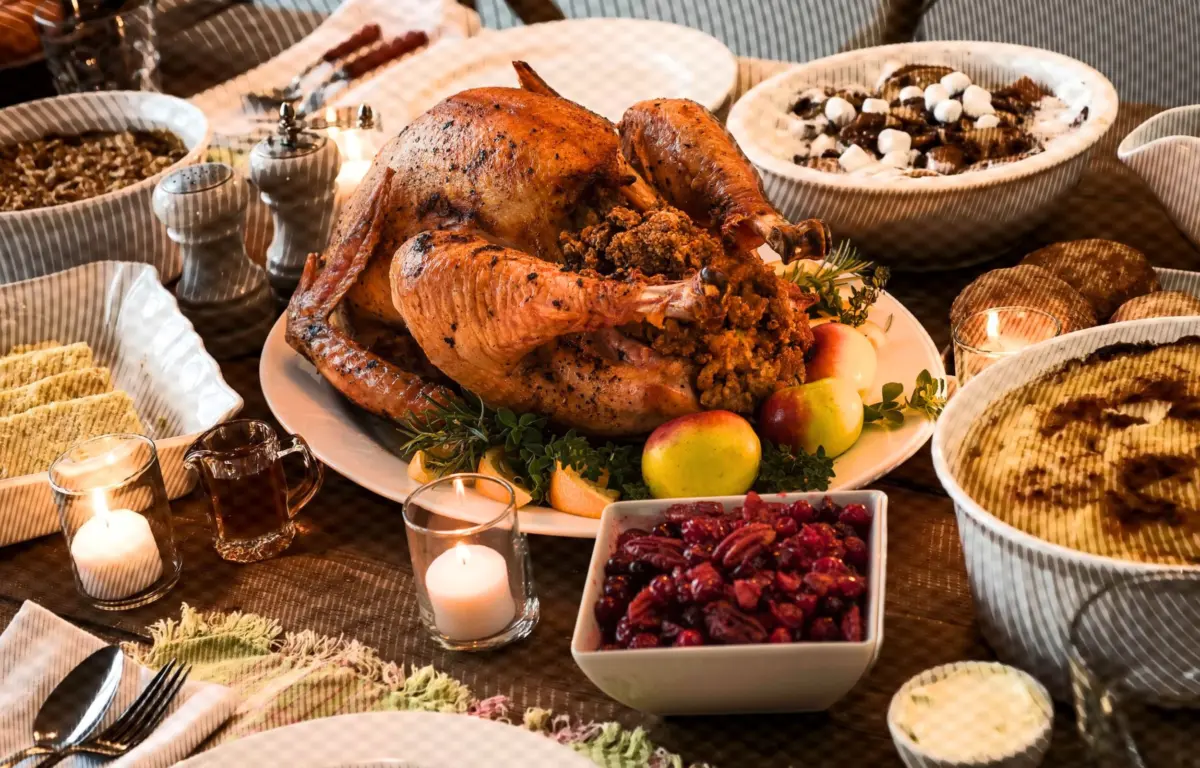
Executive Overview
As inflation continues to influence consumer behavior and reshape household budgets, major supermarkets and hyper-retailers have deployed a familiar yet increasingly aggressive retail strategy for the holiday season: the heavily discounted Thanksgiving meal bundle. According to a recent industry report by The New York Times, grocery chains across the United States are intentionally taking a financial loss on holiday meal packages. Their objective? To drive foot traffic, undercut competitors, and capture a larger share of overall consumer wallet share.
This retail tactic relies on classic "loss-leader" economics. Stores price essential holiday items—such as whole frozen turkeys, stuffing, and gravy mixes—well below wholesale costs. The calculated gamble is that cash-strapped shoppers drawn in by a $35 feast for ten will naturally load their carts with higher-margin items, ranging from specialty beverages to baking supplies and hostess gifts.
While everyday food inflation has pushed the baseline cost of a traditional Thanksgiving dinner upward—with the American Farm Bureau Federation noting a 6% year-over-year increase to an average of $58.63 for ten people—retail giants are moving in the opposite direction. By trimming or entirely eliminating profits on core holiday staples, companies like Walmart, Aldi, and Hy-Vee are sparking a competitive price war that has sent demand soaring to unprecedented levels. Yet, at the opposite end of the economic spectrum, luxury grocers and warehouse clubs are catering to convenience-driven consumers with premium, ready-made spreads costing anywhere from $200 to upwards of $750.
This deep dive explores the mechanics of the holiday meal bundle phenomenon, examining consumer demand, competitive retail positioning, official statements from industry leaders, and the broader economic implications for the grocery sector.
Detailed Chronology of the Holiday Price Wars
The competitive maneuvering for the holiday grocery season does not begin in November; rather, it represents the culmination of strategic planning that kicks off well in advance of the autumn holidays.
Early Fall: Establishing the Baseline
The opening salvos of the holiday grocery battle typically occur in late September and October. Retailers assess supply chain forecasts, wholesale turkey availability, and projected consumer sentiment indices to design their promotional packages.
In October, regional giant Hy-Vee made headlines by releasing a comprehensive 26-item holiday meal bundle designed to feed ten people for $39. Recognizing the intense competition from national big-box rivals, Hy-Vee quickly adjusted its strategy just days after the initial rollout. The chain dropped the price to $35, successfully matching—and in some cases beating—national retail benchmarks.
Simultaneously, retail colossus Walmart introduced its own comprehensive "feast for 10" bundle in October. Priced at $35, the Walmart package bundled a frozen turkey alongside core side-dish essentials such as sweet potatoes and gravy mix. By moving early, these retailers aimed to capture the attention of budget-conscious shoppers before they could commit to alternative holiday planning strategies.
Mid-November: Scaling Up and Closing Windows
As November progresses, the logistics of the loss-leader strategy shift from acquisition to fulfillment. Supermarkets ramp up instore display campaigns, deploy targeted digital advertisements, and manage massive cold-storage inventories to keep up with surging demand.
By mid-November, however, the landscape for premium offerings begins to close. Membership warehouse clubs like Costco finalized orders for their high-end, pre-cooked Thanksgiving spreads—such as an $199 package featuring a five-pound turkey breast, ready-made mashed potatoes, macaroni and cheese, and pies—underscoring a strict operational window designed to manage kitchen and supply chain capacities.
Meanwhile, traditional grocers and hard discounters like Aldi and Amazon maintained aggressive inventory flows on their baseline bundles, ensuring that shelves remained stocked through the peak shopping weekend immediately preceding Thanksgiving Day.
Supporting Context & Metrics: The Economics of Loss Leaders
To understand why major retailers are willing to absorb financial losses on thousands of tons of poultry and produce, one must examine the foundational economic concept of the loss leader.
The Mechanics of Loss-Leader Pricing
A loss leader is a pricing strategy where a product is sold at a price below its market cost to stimulate other, profitable sales. In the grocery sector, staples like milk, eggs, and—most notably—holiday turkeys serve this function.
- Wholesale vs. Retail Dynamics: Supermarkets purchase turkeys and dry goods in massive quantities from major food conglomerates. Even when selling a 16-pound turkey and all the fixings for $35, the retailer often incurs a net loss on the bundle as a standalone transaction.
- The Basket-Building Effect: Retail analytics consistently show that consumers rarely visit a supermarket exclusively for a single discounted item. Once inside, shoppers fill their carts with higher-margin items such as alcoholic beverages, greeting cards, floral arrangements, premium cheeses, and specialty baking ingredients.
- Customer Acquisition Cost (CAC): In retail terms, viewing a discounted Thanksgiving bundle as a marketing expense allows executives to justify the loss. Acquiring a new customer or recapturing a lapsed shopper who has defected to discount grocers or dollar stores justifies the short-term margin compression.
Macroeconomic Pressures and Consumer Metrics
The urgency behind these deep discounts is amplified by broader macroeconomic realities. According to the American Farm Bureau Federation (AFBF), the average cost to feed ten people a traditional Thanksgiving dinner reached $58.63, marking a 6% increase compared to the previous year. This upward pressure was driven primarily by a 10% increase in wholesale turkey prices, caused by ongoing supply-side adjustments and production cost fluctuations within the poultry industry.
When baseline commodity prices rise, consumers become hyper-sensitive to holiday pricing. Retailers recognize that if they fail to offer competitive holiday solutions, price-sensitive shoppers will pivot entirely to ultra-discount competitors or scale back their celebrations. Consequently, absorbing the cost of turkey inflation has become a defensive necessity for traditional supermarkets striving to protect their market share.
Official Statements and Industry Insights
The intensity of the 2026 holiday meal bundle season has prompted rare public commentary from top-tier retail executives and frontline workers alike.
Executive Perspectives
Retail leaders have been remarkably transparent about the intentional sacrifice of profit margins to secure customer loyalty.
Scott Patton, Chief Commercial Officer at Aldi, provided clear insight into the strategic value of the holiday season during an interview with The New York Times:
"Thanksgiving is one of the biggest grocery occasions of the year, and it is our chance to show millions of shoppers what we have to offer."
Aldi’s approach—featuring a comprehensive meal deal for ten people, anchored by a generous 16-pound turkey for $39—exemplifies the hard-discount model designed to win over consumers looking for straightforward value without complex digital coupon clipping.
Walmart executives have similarly championed the success of their holiday promotions. John Furner, CEO of Walmart U.S., shared striking sales figures with Business Insider, noting that the retailer had "sold a million more turkeys" than during the identical period a year prior. Furner emphasized the overwhelmingly positive market response, stating plainly:
"The customer response is strong."
Frontline Realities
Beyond corporate boardrooms, the impact of these viral meal deals has been acutely felt by store-level employees tasked with managing unprecedented inventory movement.
A Walmart associate working at a Neighborhood Market in Oklahoma described the logistical rush to Business Insider:
"The meal deal frenzy has been nuts! I work at a neighborhood market, and we are still experiencing a higher volume."
This sentiment echoes across retail floors nationwide, where associate teams have had to continually restore refrigerated display cases and manage heavy customer traffic driven by viral social media coverage of the promotions.
The Divergent Market: Premium vs. Budget
While discount and big-box retailers battle over the sub-$40 consumer, the market at the opposite end has stratified dramatically.
- Costco’s Mid-Tier Convenience: Costco’s $199 Thanksgiving spread for eight people targeted families seeking culinary convenience without the effort of roasting a whole bird. By offering precooked turkey breasts and classic side dishes, Costco captured members willing to pay a premium for time-saving solutions.
- Erewhon’s Ultra-Luxury Offering: At the extreme luxury tier, Los Angeles-based grocer Erewhon introduced its $749 "Ultimate Organic Feast" for ten people. Featuring a cooked free-range turkey, sourdough and roasted vegetable stuffing, rainbow carrots, garlic mashed potatoes, organic turkey gravy, and deep-dish pumpkin pie, the offering highlights a stark bifurcation in the American consumer landscape—where a subset of shoppers remains entirely insulated from inflationary pressures.
Future Outlook: What the Holiday Price War Means for Grocery Retail
As the holiday season concludes and retail analysts parse quarterly earnings reports, the long-term impact of the 2026 Thanksgiving loss-leader war will offer critical lessons for the grocery industry.
1. Margin Compression vs. Volume Gains
The immediate takeaway is that volume can successfully offset margin compression—provided that shoppers maintain a high basket size for non-discounted goods. However, as food supply chains continue to experience cost volatility, smaller independent grocers who cannot absorb multi-million-dollar losses on core commodities may struggle to compete with national chains. This dynamic threatens to further consolidate market share in the hands of giants like Walmart, Amazon, and Aldi.
2. The Evolution of Convenience
The success of tiered offerings—ranging from Walmart’s $35 traditional bundle to Costco’s $199 ready-made meal and Erewhon’s ultra-luxury package—indicates that modern grocery consumers value options tailored precisely to their lifestyle constraints. Future holiday strategies will likely see grocers leaning even further into modular meal kits, catering hybrid models, and digital-first reservation systems.
3. Consumer Loyalty in an Era of Choice
Ultimately, loss-leader bundles serve as a trust-building exercise. In an economic climate where shoppers feel squeezed by persistent inflation across housing, utilities, and transportation, supermarkets that step up with genuine holiday bargains earn invaluable goodwill. Grocers who successfully convert holiday deal-seekers into year-round loyal customers will have won the ultimate prize of the retail calendar—proving that sometimes, taking a loss upfront is the safest bet for long-term growth.
