

By the Editorial Desk
Published: Industry Insights & Digital Media
Executive Overview
In the hyper-saturated landscape of modern social commerce, legacy beauty brands face a persistent paradox: millions of organic impressions are generated daily by creators who aren’t officially affiliated with them, yet traditional marketing teams rarely spot these unprompted brand advocates before the momentum fades.
For decades, influencer marketing has relied on intentional, highly managed campaigns—complete with rigorous contract negotiations, strict content guidelines, and precise hashtag tracking. However, as the digital ecosystem shifts toward authentic, unvarnished content formats like the "Get Ready With Me" (GRWM) video, consumer attention has migrated away from polished advertisements and toward organic, peer-to-peer recommendations. Within this decentralized environment, some of the most lucrative marketing moments happen entirely by accident.
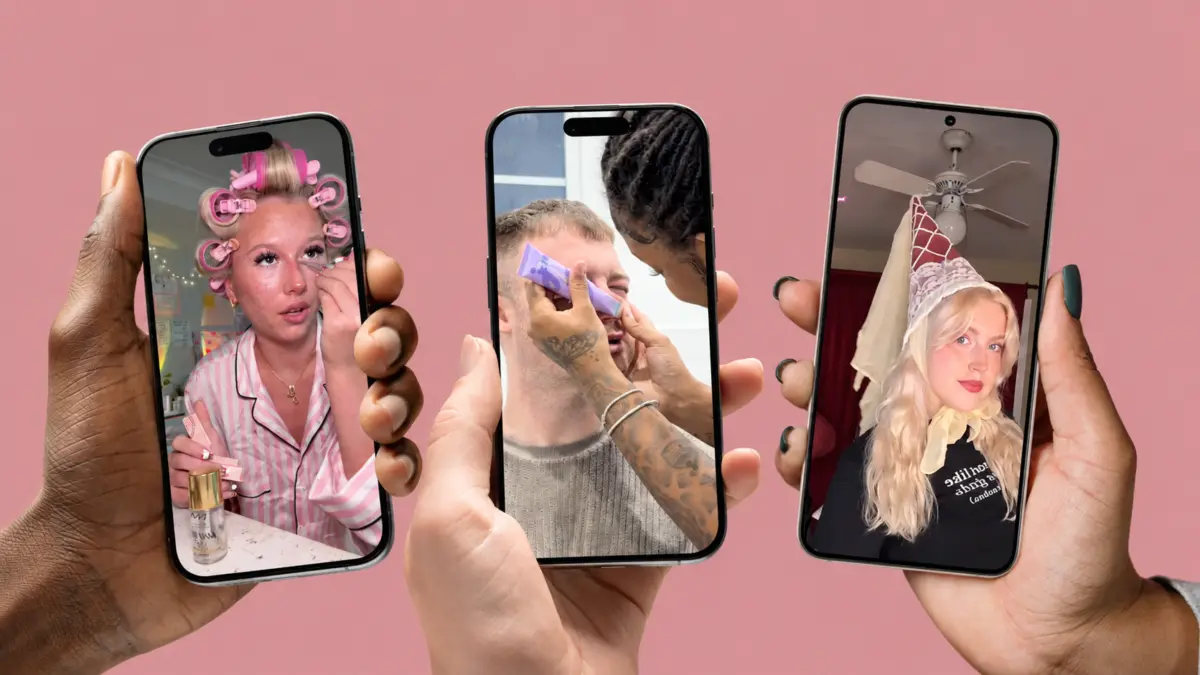
Enter Samara Boulter—known to her 6.2 million TikTok followers as @samaraispinkk—who never set out to capture the corporate attention of cosmetics giant Benefit Cosmetics. Boulter simply engaged in her habitual routine of filming chatty, conversational get-ready videos while a light pink box of Benefit’s iconic Cookie Highlighter sat in plain sight on her dresser. She didn’t tag the brand, nor did she feature it as a sponsored integration. Yet, over a compressed three-month window, her casual, background inclusion of the product amassed tens of millions of organic views.
Without the intervention of Plot, an emerging startup backed by Reddit co-founder Alexis Ohanian, these high-value impressions might have quietly slipped past Benefit’s marketing radar. Instead, Plot’s data-driven creator intelligence platform flagged the anomaly, allowing Benefit to swiftly transition an unprompted fan into an official member of its gifting roster.
This case study examines the mechanics of modern organic advocacy, the technological infrastructure required to capture invisible brand mentions, and the fundamental shift in how enterprise beauty brands identify, nurture, and capitalize on unexpected digital partnerships.
Detailed Chronology: From Accidental Placement to Enterprise Engagement
To understand the profound impact of tools like Plot on contemporary brand strategy, one must examine the precise timeline of how an unscripted background prop evolved into a measurable corporate asset.
Phase 1: The Accidental Integration
Samara Boulter’s rise on TikTok has been meteoric, driven primarily by her authentic, conversational style of content creation. As her follower count swelled toward 6.2 million, her daily GRWM videos became a trusted routine for her audience. In these videos, Boulter routinely applied her makeup in front of a bedroom vanity that doubled as storage for her daily cosmetics rotation.
Prominently positioned on that dresser was a light pink box housing Benefit Cosmetics’ Cookie Highlighter. Because Boulter’s videos center heavily on personal storytelling, lifestyle chat, and casual beauty application, the highlighter box became a permanent fixture of her background mise-en-scène. Crucially, Boulter did not tag Benefit Cosmetics in her captions, nor did she launch into a dedicated review or promotional breakdown of the product. To the untrained eye—and to traditional social listening tools that scan primarily for brand handles, hashtags, and direct audio mentions—Boulter’s content appeared entirely agnostic to Benefit Cosmetics.
Phase 2: The Data Blind Spot
For major beauty conglomerates, monitoring brand equity across platforms like TikTok, Instagram, and YouTube historically required manual oversight or basic keyword-tracking software. If a creator did not use the handle @benefitcosmetics or deploy specific campaign hashtags, corporate analytics dashboards registered zero attribution.
For months, thousands of potential customers were being visually exposed to Benefit’s Cookie Highlighter via Boulter’s channel. Viewers would scrutinize her vanity setup, ask about the products in the comments, and seek out the highlighter independently. Yet, internal marketing dashboards at Benefit remained completely blind to the millions of impressions accumulating on Boulter’s feed. In the traditional influencer marketing framework, unmonitored advocacy is effectively nonexistent advocacy.
Phase 3: The Discovery via Plot
The turning point arrived when Plot—an Alexis Ohanian-backed startup specializing in advanced creator intelligence and visual tracking—scanned the digital ecosystem for uncredited brand visibility. Unlike legacy tools that rely solely on textual metadata, Plot’s infrastructure possesses the capability to identify visual assets, product packaging, and logos embedded organically within video frames.
Plot’s algorithms flagged an extraordinary concentration of visual brand equity originating from Boulter’s channel. The startup compiled the hard data: over the preceding three months alone, Boulter had casually integrated Benefit products into her videos seven distinct times. More importantly, those seven unprompted appearances had collectively generated over 32 million views.
Phase 4: Corporate Intervention and Relationship Building
Armed with this granular intelligence, Plot surfaced the insight directly to Benefit Cosmetics. For Toto Haba, Benefit’s Senior Vice President of Growth and Digital Transformation, the revelation was both an eye-opener and an immediate call to action.
Recognizing the immense, untapped value of an organically loyal creator with a massive following, Benefit’s influencer relations team bypassed the traditional cold-outreach phase. They immediately added Boulter to their priority PR gifting list. By acknowledging her genuine affinity for the brand and initiating a direct line of communication, Benefit transformed a passive, accidental advocate into an active, valued partner—all before competitors could intercept the opportunity.
Supporting Context & Metrics: The Economics of Invisible Impressions
The encounter between Samara Boulter and Benefit Cosmetics highlights a broader structural evolution in the digital marketing economy: the transition from explicit sponsorship to implicit, ambient product placement.
The Shift Toward Ambient Advocacy
Historically, influencer marketing operated on a transactional binary: brands paid creators a flat fee or commission structure in exchange for dedicated screen time, explicit endorsements, and mandatory disclosures (such as #ad or #sponsored). However, modern social media audiences have grown increasingly skeptical of overtly commercial content. Trust has shifted toward creators who demonstrate genuine, long-term personal routines.
When a product appears naturally in the background of a creator’s daily life—without a corporate script or a financial incentive—it carries an inherent credibility that traditional ads struggle to replicate. Viewers do not feel sold to; instead, they experience FOMO (Fear Of Missing Out) and a desire to emulate the lifestyle of the creator.
Quantifying the Unquantifiable
The metrics provided by Benefit’s leadership underscore the sheer scale of these invisible impressions:
- Duration: A compressed 3-month window.
- Frequency: 7 distinct video appearances.
- Reach: Over 32 million organic views.
To purchase 32 million targeted impressions via traditional paid social media ad units or sponsored tier-one creator rates would require a substantial marketing budget. By relying on organic visibility, Benefit secured this reach at zero initial acquisition cost. However, the true value lies not just in the view count, but in the conversion potential. Followers who observe a trusted creator using a specific product over a period of months exhibit significantly higher purchase intent than consumers targeted by a one-off sponsored post.
The Rise of Creator Intelligence Startups
The challenges exposed by this case have spurred a new wave of technological innovation. Startups like Plot are filling a critical gap in the martech (marketing technology) stack. By deploying computer vision, object recognition, and advanced machine learning models, these platforms scan millions of hours of user-generated video content to detect:
- Product packaging and unbranded logos.
- Distinctive bottle shapes and colorways.
- Recurring spatial positioning of consumer goods within creator studios.
As venture capital flows into this sector—exemplified by high-profile backers like Alexis Ohanian—brands are waking up to the reality that textual listening tools are no longer sufficient. To maintain a competitive edge, marketing teams must adopt visual intelligence tools that capture the totality of their brand’s digital footprint.
Official Statements and Industry Perspectives
The convergence of organic creator behavior and automated discovery has prompted significant commentary from industry leaders who view this moment as a harbinger of broader changes in digital strategy.
Toto Haba on the Power of Organic Scale
Reflecting on the discovery of Samara Boulter’s organic advocacy, Toto Haba, Senior Vice President of Growth and Digital Transformation at Benefit Cosmetics, emphasized the sheer magnitude of unmonitored engagement.
"In the last three months alone, Boulter has talked about Benefit seven times, and those seven times have earned over 32 million views," Haba noted, highlighting the disconnect between traditional tracking metrics and real-world consumer behavior.
Haba’s perspective underscores a vital operational challenge for modern enterprises: digital marketing teams are often swimming in data while simultaneously starving for actionable insights. While internal dashboards track scheduled campaigns down to the decimal point, massive waves of organic value can surge entirely outside the corporate perimeter. For Benefit, the integration of Plot’s technology bridged this analytical chasm, turning a blind spot into a high-yield engagement strategy.
Alexis Ohanian and the Investment Thesis Behind Plot
The backing of Plot by prominent tech investor Alexis Ohanian signals a broader venture capital consensus: the future of advertising intelligence lies in unstructured, organic data capture. Ohanian has consistently championed platforms that empower creators and provide brands with transparent, efficient mechanisms to navigate the attention economy.
Industry analysts note that platforms like Plot represent a maturation of the creator economy. In its early days, influencer marketing was characterized by wild-west dynamics, manual outreach, and crude spreadsheet tracking. Today, it demands enterprise-grade software capable of parsing millions of decentralized video streams in real time. Investors are betting that brands failing to adopt visual AI intelligence will routinely miss out on their most valuable organic advocates.
Future Outlook: The Next Era of Brand-Creator Synergy
As artificial intelligence and computer vision continue to mature, the relationship between beauty brands and digital creators is poised for a fundamental transformation. Several key trends are expected to define the next phase of influencer marketing and brand intelligence.
1. The Death of the "Blind Spot" in Social Listening
Within the next few years, text-only social listening tools will likely be rendered obsolete. Brands will no longer rely on creators to use correct tags, hashtags, or affiliate links to measure their digital impact. Computer vision will become a standard component of enterprise marketing stacks, allowing real-time tracking of product placement across TikTok, YouTube Shorts, Instagram Reels, and emerging video platforms. Consequently, marketing departments will have a holistic, panoramic view of their brand equity, encompassing both paid partnerships and unprompted organic advocacy.
2. Proactive Relationship Building via Micro-Signals
The traditional workflow of influencer marketing—where a brand scouts a creator, pitches a contract, and negotiates deliverables—is being upended by proactive gifting and relationship cultivation. As demonstrated by Benefit’s swift response to Samara Boulter, brands will increasingly use intelligence platforms to identify existing fans who are already championing their products for free.
This flips the traditional power dynamic: rather than convincing an indifferent influencer to promote a product for a fee, brands will reward authentic loyalty. This approach yields higher-performing partnerships, as the creator’s audience perceives the subsequent official collaboration as a natural evolution of an existing preference rather than a cash-grab endorsement.
3. Ethical and Privacy Considerations in Visual Tracking
As AI-driven visual tracking becomes more sophisticated, it will inevitably spark important conversations regarding digital privacy and surveillance. Scanning millions of user-generated videos to catalog background items, consumer goods, and lifestyle products operates in a complex regulatory grey area.
Brands and tech vendors will need to navigate these waters carefully, balancing the desire for hyper-granular creator intelligence with respect for digital creator autonomy. Ensuring that creators feel supported and valued—rather than spied upon by corporate algorithms—will be paramount to maintaining the authenticity that drives these organic ecosystems in the first place.
Conclusion
The story of Samara Boulter and Benefit Cosmetics is more than a viral marketing anecdote; it is a preview of how commerce and culture intersect in the algorithmic age. It demonstrates that while algorithms dictate what content gets pushed to millions of screens, human authenticity remains the ultimate currency.
By embracing advanced creator intelligence tools, forward-thinking brands are learning to listen to the whispers of unprompted advocacy before they fade into the digital noise. In doing so, they are rewriting the playbook for modern brand-consumer relationships, proving that sometimes the most powerful marketing strategy is simply noticing who is already rooting for you.