

Executive Overview
In the contemporary literary landscape, the romance genre is undergoing a profound cultural and structural transformation. Once frequently marginalized in mainstream critical discourse as formulaic or purely escapist, contemporary romance is now recognized as a vital nexus of economic resilience, community-driven curation, and stylistic innovation. This evolution is driven by readers who demand narratives balancing emotional catharsis with elevated prose, complex mental health subplots, and nuanced intersectional representation.
Recent discourse across prominent reader communities—captured in vibrant digital forums and book-lover threads—illustrates a readership that is both highly discerning and vastly expansive. Today’s romance enthusiasts are actively dismantling traditional genre boundaries, championing books that bridge the gap between literary fiction and contemporary romance, exploring speculative subgenres like monster and alien romance, and utilizing serialized audiobooks to sustain rigorous personal habits such as distance running and daily commuting.
This report provides a comprehensive examination of the current romance reading ecosystem. It analyzes the specific subgenres capturing reader imaginations, evaluates the operational mechanics of digital book recommendation loops, reviews critical reader-to-reader dialogues regarding standout summer releases, and forecasts the trajectory of the romance market as it intersects with cinematic adaptations and mainstream publishing powerhouses.
Detailed Chronology of the Modern Romance Boom
To understand the current vitality of the romance genre, one must trace the convergence of digital community-building, shifting publishing strategies, and changing consumer habits over the past several seasons.
Phase One: The Pandemic Readership Surge and Digital Migrations
During the global disruptions of the early 2020s, readership demographics shifted dramatically. Confined to domestic spaces, readers turned en masse to romance for its structural guarantee of emotional resolution—a reliable counterweight to real-world uncertainty. Platforms like BookTok, digital book clubs, and interactive comment sections on literary blogs transformed from niche hobbyist corners into powerhouse marketing engines. Readers began sharing not just reviews, but emotional testimonials, matching specific books to life stages, running routines, and mental health journeys.
Phase Two: Cross-Pollination with Literary Fiction
By mid-decade, the boundaries separating "literary fiction" and "genre romance" began to blur. Readers increasingly sought contemporary novels that utilized the stylistic rigor, pacing, and thematic depth of literary fiction while retaining the emotional stakes and relational arcs characteristic of romance. Books exploring grief, existential dread, and complex familial dynamics began incorporating romantic subplots that felt earned rather than obligatory.
Phase Three: The Summer Publishing Cycle and Breakout Hits
The summer book cycle serves as the ultimate testing ground for new releases. Recent months have seen an influx of high-profile titles dominating both bestseller lists and community forums. From Reese Witherspoon’s meticulously curated August selection—Kelly Anderson’s The Wild Beneath—to breakout hits like Emma Brodie’s Into The Blue, the market has demonstrated an appetite for intense emotional depth. Readers reported spending sleepless nights turning pages, comparing the visceral impact of these narratives to musical touchstones like Noah Kahan’s Orbiter.
Concurrently, backlist titles experienced massive resurgences. Historical romances, queer contemporary comedies, and character-driven explorations of second-chance love found second winds as readers swapped recommendations across digital networks, creating micro-trends that outpaced traditional corporate marketing campaigns.
Supporting Context & Metrics: Reader Demographics, Subgenres, and Formats
The contemporary romance consumer is characterized by high engagement, multi-format consumption, and a pronounced appetite for niche diversification.
The Audio Revolution: Commutes, Running, and Page-Turners
A significant trend in modern reading habits is the marriage of physical endurance activities with audiobook consumption. Readers report leveraging suspenseful or deeply romantic audiobooks as behavioral incentives to maintain running habits or survive arduous daily commutes. Titles that feature stellar voice acting—such as Kevin Wilson’s Nothing to See Here or immersive narratives like The Husbands—serve as psychological anchors, proving that the medium of consumption deeply influences genre appreciation.
Subgenre Diversification
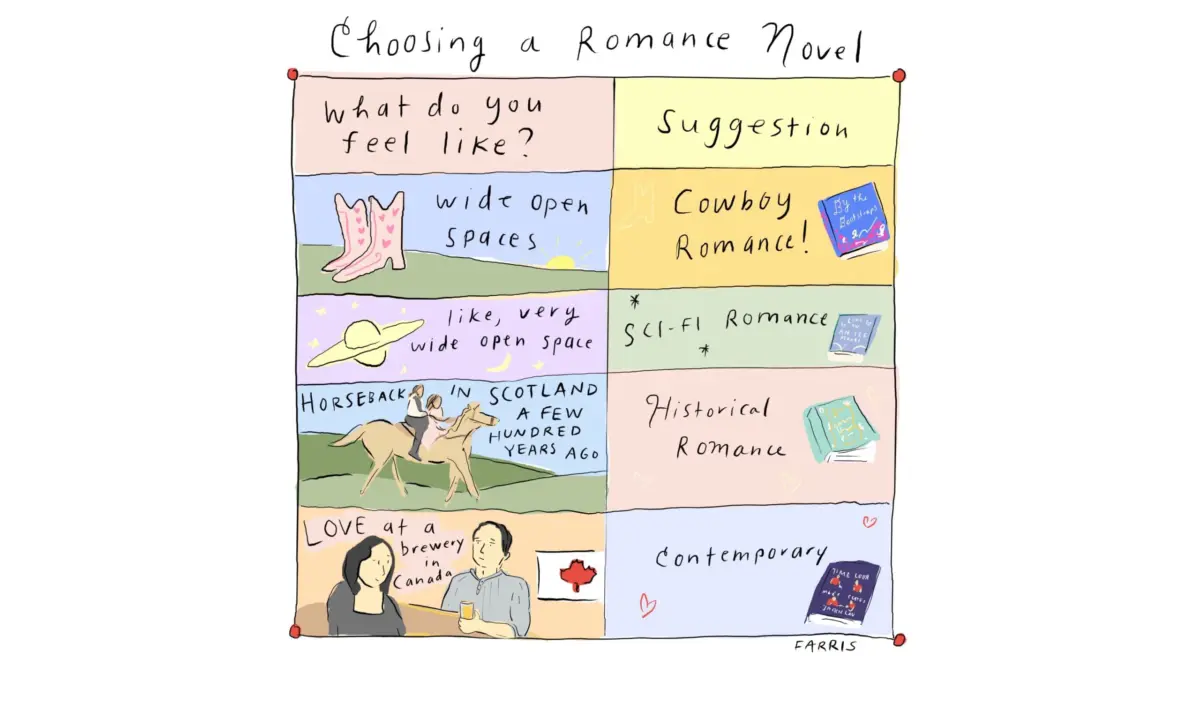
While contemporary and historical romances remain foundational pillars of the industry, several specialized subgenres have experienced exponential growth:
- Queer Contemporary and Sports Romance: Catalyzed by viral media phenomena like Heated Rivalry, readers are gravitating toward stories featuring witty banter, profound emotional longing, capable protagonists, and emotionally intelligent ("green flag") male leads. Authors such as Rachel Reid (Role Model), Casey McQuiston (Red, White & Royal Blue), and Alexis Hall (Boyfriend Material) have established benchmarks for this movement.
- Speculative and Non-Human Romance: A dedicated segment of the readership actively consumes monster and alien romance, drawn by the unique world-building and psychological exploration afforded by speculative frameworks.
- Intersectionality and Diverse Contemporary Voices: Summer reading lists have been heavily defined by Black romance writers exploring multifaceted cultural and personal landscapes. Standouts include Danielle Allen’s Curvy Girl Summer, Farrah Rochon’s veterinarian-centered Pugs and Kisses, LaQuette’s reunion romance Second Time Around, Regina Black’s August Lane, and Nikki Payne’s contemporary adaptation Pride and Protest.
- Cozy and Regency Humor: Readers seeking low-stress escapism turn to series-driven historicals and contemporary rom-coms, such as Jenny Holiday’s Earls Trip, Virginia Heath’s Merriwell Sisters, and Annabel Monaghan’s widely praised Dolly All the Time.
Official Statements & Community Discourse
The vitality of the modern literary ecosystem is best observed through the unfiltered dialogues of readers themselves. Below is a synthesized overview of core community discussions reflecting reader motivations, frustrations, and recommendations.
The Quest for "Lit Fic with Romance"
Readers frequently articulate a desire for stylistic elevation within the genre. As one community member noted:
"I’m late to the game but does anyone have recs for a novel that combines lit fic with romance? I guess I’m going for more of a contemporary novel with writing that mirrors lit fic, and has elements of romance. It sounds specific, but I feel like there should be a lot of novels that fit the bill!"
This sentiment highlights a persistent demand for prose that challenges the intellect while satisfying emotional desires. Recommendations answering this call range from Ashley Poston’s A Novel Love Story to Helen Hoang’s The Kiss Quotient and Jasmine Guillory’s Flirting Lessons.
The Appeal of the Guaranteed Happy Ending
For many, the defining feature of romance is its structural contract with the reader: the promise of emotional resolution. A seasoned genre reader explained:
"I love Romance because I love a happy ending. Part of the fun of this genre is trusting an author to take you on a (sometimes wild) journey while knowing everything will work out in the end."
This trust enables authors to explore dark, complex, or turbulent themes—such as family trauma in Sarah MacLean’s These Summer Storms (likened to Succession with more kissing) or historical injustice in Julie Anne Long’s My Season of Scandal—without alienating readers who require psychological safety and closure.
Quirky Anecdotes: The Library Desk Dynamic
Community interactions often blend serious literary critique with lighthearted personal confessions. The intersection of real-life romance and the romance reader’s lifestyle was humorously captured by a reader discussing Phoebe Berman’s Going to Lose It:
"I have a crush on the library desk guy… and sheepishly try to hide my romance novel habit from him, sometimes more successfully than others hahaha."
Such anecdotes underscore how reading romance is not merely a solitary intellectual exercise, but a deeply felt, highly personalized subculture that intersects with daily public life.
Future Outlook
As the romance genre looks toward the remainder of the decade and into the 2030s, several key trajectories are poised to reshape publishing, media adaptation, and reader engagement:
1. Cinematic Adaptations and Cross-Media Franchises
The imminent transition of beloved romance novels to film and television—exemplified by the upcoming screen adaptation of Emily Henry’s Beach Read, featuring comedian Tig Notaro—will continue to drive cross-media consumption. Publishers can expect significant backlist spikes whenever adaptation news breaks, reinforcing the symbiotic relationship between Hollywood and the publishing industry.
2. The Professionalization of Reader Curation
Algorithmic recommendations on social media platforms are increasingly being supplemented by hyper-targeted, human-curated recommendation hubs. Digital book clubs, celebrity endorsements (such as Reese Witherspoon’s book club picks), and niche community forums will wield unprecedented influence over debut authors and mid-list breakouts, often eclipsing traditional print review media.
3. stylistic Convergence and Genre Fluidity
The artificial wall between "literary fiction" and "genre fiction" will continue to erode. As mainstream literary awards increasingly recognize novels that center emotional intimacy, interpersonal relationships, and happy resolutions, the stigma historically attached to romance will vanish entirely. Authors will be free to employ advanced narrative structures, non-linear timelines, and experimental prose styles while delivering the emotional payoff that readers demand.
Ultimately, the contemporary romance renaissance is much more than a temporary publishing trend; it is a fundamental realignment of literary culture. By centering emotional honesty, community curation, and narrative innovation, the romance ecosystem has secured its position as the beating heart of modern fiction.