

Executive Overview
With less than a week remaining before the crucial 2026 midterm elections, the political landscape is characterized by a palpable sense of desperation among the Republican Party leadership. Facing tightening races across the country—ranging from fiercely contested Senate battles in Michigan and Mississippi to vulnerable congressional seats nationwide—the GOP is leaning heavily into an increasingly aggressive playbook. Having cycled through various strategies earlier in the cycle, including economic grievances and sensationalized warnings regarding democratic socialism, the party’s closing argument has pivoted aggressively toward overt xenophobia and anti-Muslim bigotry.
For the past decade, political dominance within the MAGA movement has relied on the architecture of othering. While previous iterations of conservative strategy leaned on subtle dog whistles to mobilize suburban electorates, the modern Republican apparatus has largely discarded historical political caution. In the final stretch of the 2026 midterms, prominent party figures—including President Donald Trump, Vice President JD Vance, and Cabinet officials such as Health and Human Services Secretary Robert F. Kennedy Jr.—have deployed inflammatory, explicitly bigoted rhetoric targeting Muslim and immigrant communities. This reporting examines the strategic pivot toward Islamophobia, placing it within the historical trajectory of American political dog-whistling and evaluating its potential impact on an electorate heading rapidly toward the ballot box.
Detailed Chronology
To understand the tactical evolution of the Republican campaign in the autumn of 2026, one must trace the progression of messaging maneuvers attempted by the party as poll numbers have fluctuated.
- Early 2025: Following unexpected electoral victories by democratic socialist candidates—including New York Mayor Zohran Mamdani—the GOP launched a coordinated "red-baiting" campaign. Mainstream Democrats were repeatedly framed as communist sympathizers, while conservative leaders doubled down on perpetual, culturally divisive culture-war rhetoric regarding transgender Americans and public education.
- Summer 2026: As immigration enforcement remained a central pillar of the administration’s platform—spurring high-profile deportations and crackdowns that disproportionately impacted Latino communities—national figures actively expanded their targets. During campaign stops, Vice President JD Vance amplified fringe claims regarding Haitian immigrants, repeating discredited narratives to galvanize the conservative base.
- September 2026: A viral social media post by Bo French, the GOP nominee for Texas Railroad Commissioner, exposed a rising current of antipathy directed toward Indian Americans within conservative digital spaces. This introduced internal contradictions for a party featuring prominent figures of South Asian descent, such as Vance and Ohio gubernatorial candidate Vivek Ramaswamy.
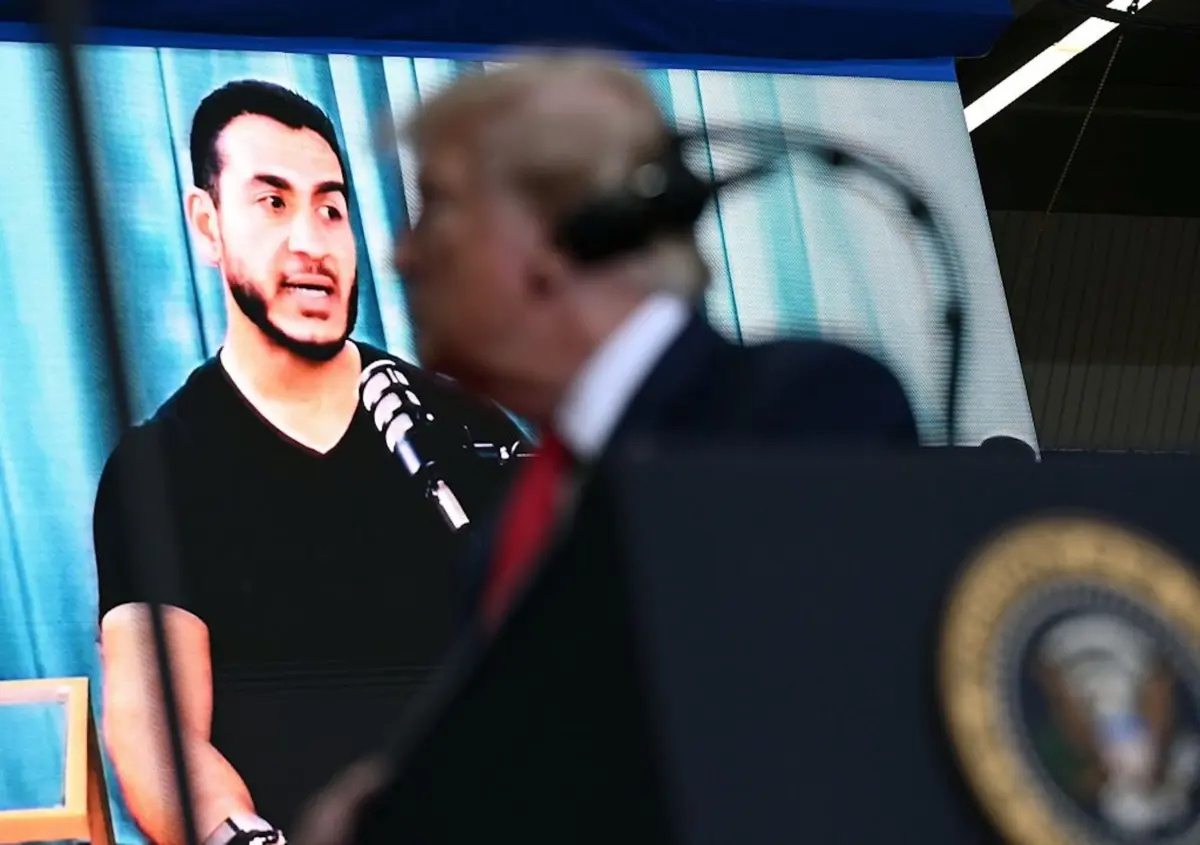
- October 25, 2026: President Trump held a high-profile campaign rally in Port Huron, Michigan, targeting Dr. Abdul El-Sayed, the Michigan-born Democratic nominee for the U.S. Senate. Trump characterized El-Sayed with inflammatory rhetoric, while Vice President Vance separately denounced him as "very, very evil" and a "psychopath" pushing anti-white racial hatred.
- Late October 2026: In the final days before the midterms, cabinet members and surrogates escalated the rhetoric. HHS Secretary Robert F. Kennedy Jr. delivered remarks disparaging the global Muslim population, mirroring the administration’s wholesale embrace of generalized Islamophobia to energize disaffected voters as mid-term projections began to slip.
Supporting Context & Metrics
The revival of unvarnished Islamophobia in 2026 does not occur in a vacuum; rather, it represents the modern culmination of decades of electoral strategy. For generations, conservative strategists understood the delicate balance required to mobilize a predominantly white working-class base without alienating moderate suburban voters.
The strategy traces its modern lineage to figures like Richard Nixon, who popularized the phrase "law and order" as a coded response to urban civil rights protests, and Ronald Reagan, whose 1976 campaign popularized the racially loaded caricature of the "welfare queen." In 1980, Reagan famously launched his general election campaign with a speech emphasizing "states’ rights" near Philadelphia, Mississippi—the site where three civil rights workers were murdered in 1964.
For decades, the golden rule of this strategy, famously articulated by Republican strategist Lee Atwater, was plausible deniability. Atwater explained how coded language regarding programs, busing, and crime allowed campaigns to communicate racial anxiety without using explicit slurs that might trigger moral revulsion among moderate voters.
However, the post-2015 political environment shattered these parameters. Donald Trump’s introduction of the "birther" conspiracy theory against President Barack Obama—frequently emphasizing his middle name, Hussein, with deliberate emphasis—marked a structural shift. The subsequent enactment of the 2017 "Muslim travel ban," which faced protracted legal battles before receiving Supreme Court approval in 2018, institutionalized anti-Muslim sentiment as a central policy pillar.
In the current cycle, data compiled by civil rights organizations and watchdog groups tracking political speech indicates a measurable escalation in dehumanizing rhetoric online and at campaign events. According to monitoring reports, references to religious and ethnic minorities in campaign advertisements have grown more direct, bypassing traditional dog whistles in favor of sweeping generalizations about demographic groups—particularly targeting Somali Americans in Minnesota and Arab-American populations in the Midwest.
Official Statements and Campaign Rhetoric
The shift toward explicit Islamophobia in the closing weeks of the campaign has been underscored by direct statements from the highest levels of the executive branch and allied political nominees.
Addressing crowds in Michigan—a state that became a focal point of national politics following the integration of regional figures into federal debates—President Trump leveled harsh criticisms at the state’s Somali-American community. Characterizing regions of Somalia in crude, derogatory terms, Trump asserted that immigrant populations were disproportionately engaged in criminal activity and urged domestic political opponents to "fight back" against local communities.
The targeting of Dr. Abdul El-Sayed has likewise drawn intense condemnation from civil rights advocates. Vice President JD Vance characterized El-Sayed during a Michigan campaign stop by stating:
"He is very, very evil… a psychopath who pushes anti-white racial hatred."
Compounding this, HHS Secretary Robert F. Kennedy Jr. made remarks during a campaign appearance suggesting that the global population of more than one billion Muslims has contributed nothing of cultural or scientific value to modern society—a claim thoroughly debunked by historians, scientists, and sociologists worldwide.
These statements reflect a calculated gamble by the GOP leadership: that by pushing the boundaries of acceptable political discourse, they can successfully override voter concerns regarding domestic policy, economic performance, and legislative stagnation.
Future Outlook
As the nation approaches election day, the long-term political ramifications of the GOP’s 2026 closing strategy remain profoundly concerning. By normalizing overt bigotry at the highest levels of government, the campaign has eroded long-standing norms regarding pluralism and civic respect in American politics.
If this strategy succeeds in rescuing tight congressional and Senate races, it will validate the abandonment of political restraint, signaling to future candidates across the political spectrum that explicit xenophobia and religious bigotry are viable paths to electoral victory. Conversely, should these tactics fail to stem the tide against a mobilized electorate, the party may face a severe reckoning over its moral and strategic direction.
Regardless of the immediate outcome at the ballot box, the normalization of unmasked Islamophobia during the final days of the 2026 midterms has left an indelible mark on the American political experiment—permanently altering the boundaries of what is said, heard, and tolerated in public life.
