

Executive Overview
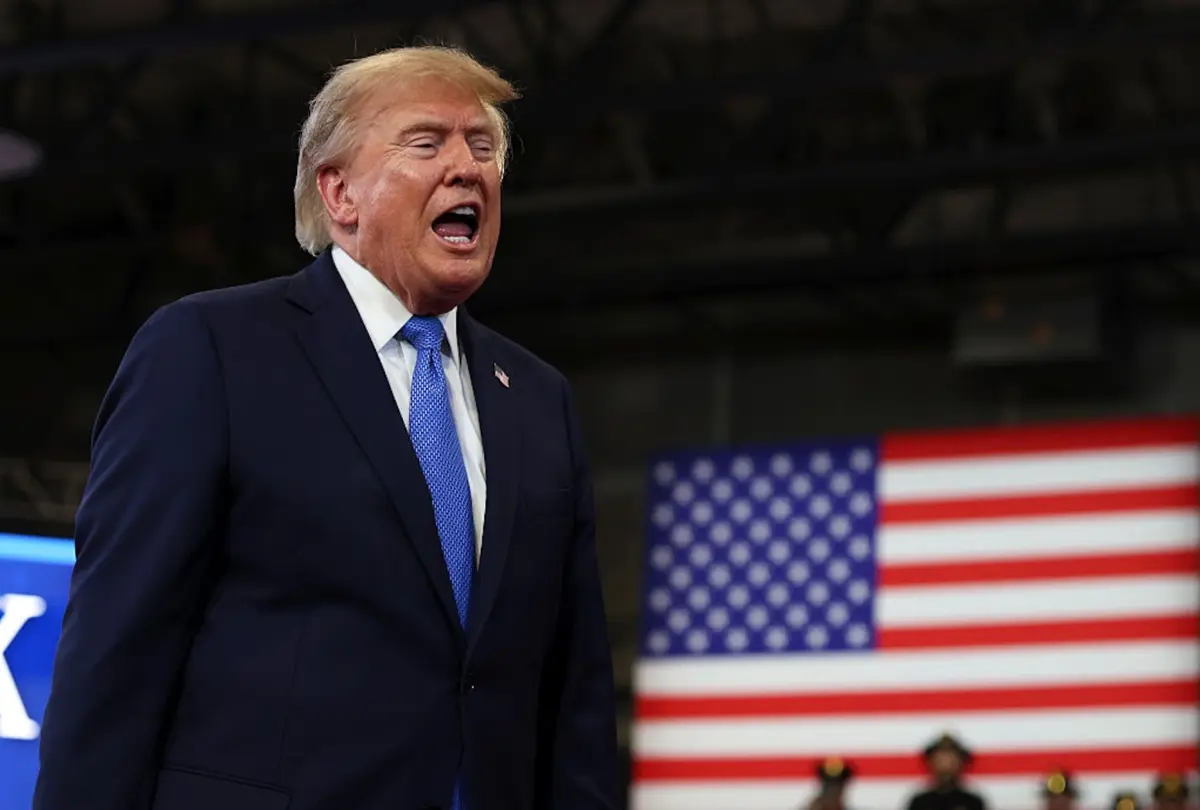
The intersection of American campaign politics, financial incentives, and constitutional law has once again become a battleground following a controversial proposal by President Donald Trump. Speaking at the Republican midterm convention, Trump dangled a striking incentive before the American electorate: a guaranteed $5,000 payment for every adult citizen, contingent upon the Republican party maintaining its majorities in both the House of Representatives and the Senate in the upcoming November elections.
The pledge—dubbed the "Trump Dividend"—drew immediate, sharp retorts from political commentators, consumer advocates, and legal scholars alike. Critics wasted no time accusing the president of engaging in blatant electoral bribery, comparing the proposal to unlawful vote-buying schemes. Yet, beneath the initial wave of partisan outrage lies a complex constitutional and statutory puzzle. Federal law strictly prohibits buying votes or offering tangible government benefits in exchange for specific political actions, yet decades of legal precedent—most notably rooted in First Amendment protections for political speech—draw a sharp line between corrupt quid pro quo transactions with individual voters and broad policy promises made to the public at large.
This report examines the intricate legal landscape governing political promises, reviews the historical context of "turnout buying" and recent flashpoints involving high-profile figures like Elon Musk, and analyzes whether Trump’s $5,000 dividend crosses the line from aggressive campaign rhetoric into criminal electoral interference.
Detailed Chronology: From Convention Stage to National Outcry
The controversy unfolded in rapid succession during the autumn of 2026, setting off a nationwide debate over the boundaries of permissible campaign promises.
- September 9, 2026: Taking the stage for his keynote address at the Republican midterm convention, President Donald Trump outlines his vision for the legislative future. He makes a direct appeal to voters, promising that if the GOP retains control of Congress in the November midterms, his administration will authorize a direct, one-time $5,000 payment to every American adult.
- Immediately Following the Speech (September 9–10, 2026): The remarks trigger an instant media firestorm. Political commentator Sam Stein takes to social media platform X to condemn the move, writing that Trump is "openly bribing people to vote for republicans." Lisa Gilbert, co-president of consumer advocacy group Public Citizen, releases a scathing public statement branding the promise a "desperate attempt to bribe voters with the false promise of cash."
- September 15, 2026: Legal and political analyses begin to flood mainstream publications, assessing the constitutional validity of the proposal. Scholars unpack federal statutes dating back to the mid-20th century, comparing Trump’s broad fiscal pledge to narrow, localized vote-buying scandals.
- Historical Precedents Looming in the Background (2025–2026): Observers immediately draw parallels to recent high-stakes election interference allegations. Notably, tech billionaire Elon Musk faced scrutiny earlier in 2026 over $1 million payouts tied to a Wisconsin Supreme Court election—a case that ultimately saw a state prosecutor decline to bring criminal charges due to the high legal threshold of proving guilt beyond a reasonable doubt.
Supporting Context & Metrics: The Mechanics of Political Incentives
To understand why Trump’s $5,000 proposal sparked such fierce legal debates, it is essential to examine the mechanics of voter mobilization and the historical footprint of financial incentives in American politics.
The Return of "Turnout Buying"
Financial inducements in elections are far from a modern invention. During the late 19th and early 20th centuries, "machine politics" in major American cities heavily relied on transactional relationships. Political bosses regularly utilized patronage jobs, direct cash payments, and favors to secure reliable blocs of voters.
In contemporary political science, scholars like Simeon Nichter have reframed these historical practices under the banner of "turnout buying." Rather than attempting to change voters’ ideological minds, politicians and their proxies frequently utilize "street money"—small, often unreported cash outlays ostensibly earmarked for legal get-out-the-vote (GOTV) operations, canvassing, and transportation—as a mechanism to directly incentivize voter participation.
The modern era has witnessed high-profile iterations of this strategy. Most recently, Elon Musk’s aggressive financial backing of a 2025 Wisconsin Supreme Court race included offers of $1 million to registered voters. While the Wisconsin Elections Commission referred complaints to a local district attorney regarding potential violations of state election bribery laws, the local prosecutor ultimately concluded that the evidentiary burden—proving a direct corrupt intent and quid pro quo agreement beyond a reasonable doubt—was too high to secure a conviction.
The Federal Framework: Statutes and Precedents
When evaluating Trump’s proposal, federal statutes governing elections provide the primary baseline, though their application to broad legislative promises remains untested in this exact context.
- 18 U.S.C. § 597: Enacted by Congress in 1948, this statute makes it a federal crime to make or offer an expenditure to any person to induce them to vote, withhold their vote, or support a specific candidate. It also penalizes those who solicit or accept such expenditures.
- 18 U.S.C. § 600: This provision prohibits promising federal employment, contracts, or any other "government benefit" as consideration, favor, or reward for political activity or support for any candidate or party in connection with a federal election.
Despite the sweeping language of these statutes, federal courts have carved out wide latitude for political candidates under the umbrella of free speech. The landmark 1982 Supreme Court case Brown v. Hartlage established that political figures possess robust First Amendment rights to advocate for their election and discuss public policy issues, including outlining the financial benefits constituents might experience under their governance.
Writing for a unanimous court, Justice William Brennan emphasized that broad, openly stated promises of economic gains—subject to public scrutiny, political debate, and opponent criticism—are fundamentally distinct from the "corrupting private agreements and solicitations" that historically constitute illegal bribery.
Official Statements and Legal Perspectives
The legal community remains sharply divided over whether a broad, conditional fiscal promise like the "Trump Dividend" crosses legal red lines or merely flirts with them rhetorically.
- Lisa Gilbert, Co-President of Public Citizen: Condemned the proposal outright, stating, "Trump knows he can’t do this, and yet he’s attempting to bribe voters with the false promise of cash to help his party win an election."
- John Day, Former Federal Prosecutor: Offered a more cautious, legally grounded perspective to The New York Times, comparing the $5,000 dividend to a traditional pledge for sweeping tax cuts. "A promise to lower taxes also gives voters a financial reason to support a candidate, but that does not, by itself, make the promise a bribe," Day noted, highlighting the difficulty of prosecuting broad policy pledges under existing criminal statutes.
- Austin Sarat, Professor of Jurisprudence and Political Science at Amherst College: Emphasized that the debate extends far beyond technical legal definitions into the realm of civic culture. Sarat pointed to warnings from critics like former presidential speechwriter Peter Wehner regarding the dangers of a purely transactional political philosophy, where public discourse is reduced to a series of quid pro quo deals rather than shared civic values.
Future Outlook: Implications for American Governance
As the nation looks toward the midterm elections, the fallout from the "Trump Dividend" proposal highlights a deeper, systemic evolution in how political campaigns are conducted and perceived.
Legally, the hurdle for prosecuting a president or major party leader for a broad campaign pledge remains extraordinarily high due to First Amendment protections affirmed by Brown v. Hartlage. Unless a prosecutor can demonstrate a direct, corrupt, individualized quid pro quo agreement—such as a targeted payment linked to proof of a specific voter’s ballot—federal and state bribery charges are unlikely to stick.
However, the longer-term implications for American democracy are profound. When political campaigns increasingly pivot on direct financial transactions between the state (or prospective leaders) and the citizenry, the nature of civic engagement shifts. Politics risks transforming from a contest of governance philosophies and public policy debates into an auction house where parties compete by bidding for constituent loyalty.
Whether the electorate views the $5,000 proposal as an innovative economic stimulus or an erosion of democratic norms, the debate ensures that the boundaries of political bribery and free speech will remain at the forefront of legal and public scrutiny for years to come.