

Executive Overview
In the realm of home organization and lifestyle psychology, few tasks evoke as much procrastination, sentimental paralysis, and cognitive fatigue as cleaning out a closet. For decades, traditional advice has centered on rigid, algorithmic formulas: discard anything you haven’t worn in twelve months, evaluate items based on cost-per-wear ratios, or strictly adhere to minimalist capsule wardrobe frameworks. While these methodical approaches work for the hyper-organized, they frequently fail the average person grappling with emotional attachments to material possessions.
Enter a novel, instinct-driven philosophy that is rapidly gaining traction among organization experts and urban minimalists alike: The Ex-Partner Test.
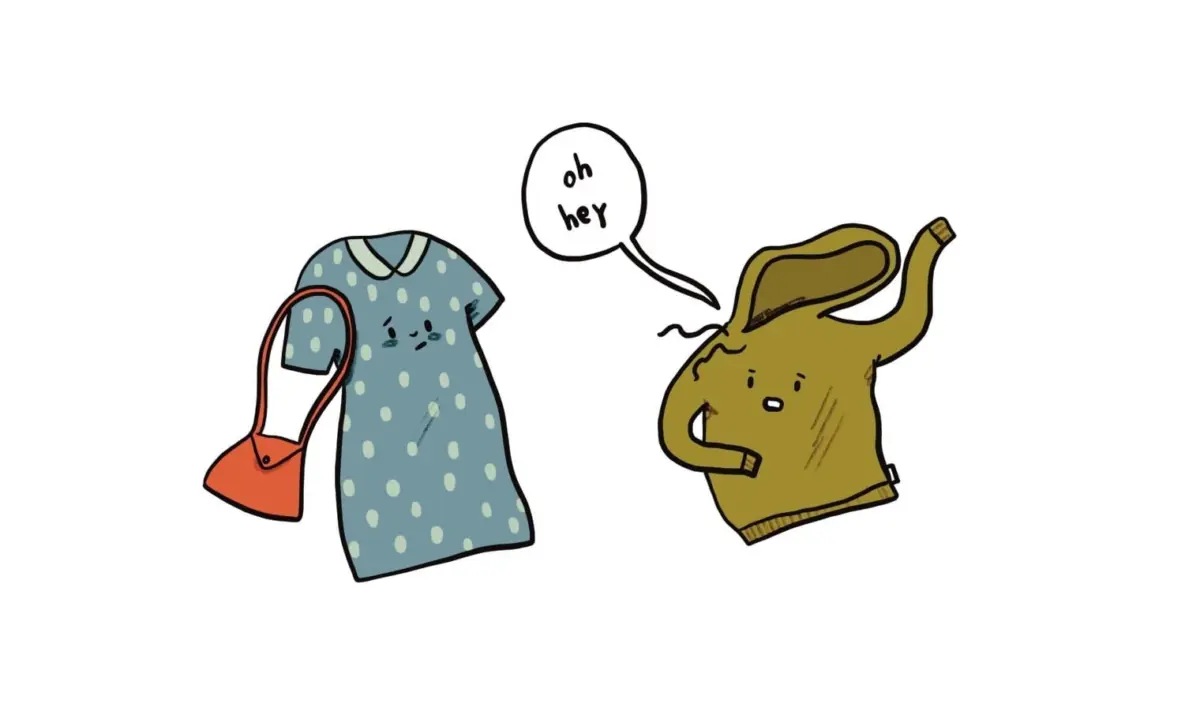
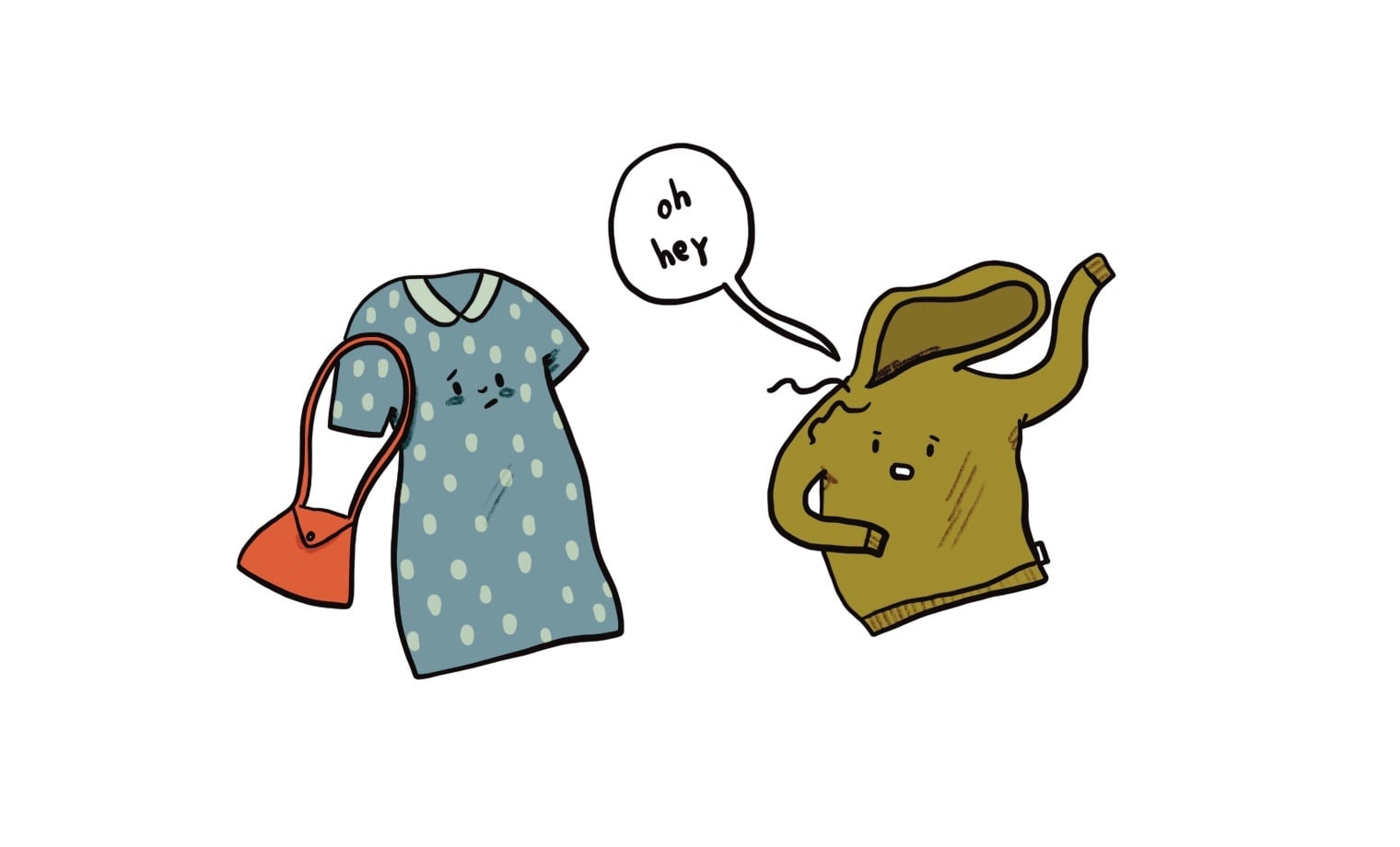
Debuting as part of the lifestyle publication Cup of Jo’s new "Pro Tips" column—illustrated by artist Brooke Barker and highlighted by long-time New York City small-space resident and author Laura Fenton—this counterintuitive rule cuts through sentimental clutter with brutal psychological efficiency. The core premise is disarmingly simple: when deliberating whether to keep a borderline dress, shirt, or pair of jeans, ask yourself honestly if you would feel confident, empowered, and unbothered running into an ex-partner while wearing it. If the immediate internal answer is hesitation, awkwardness, or a sinking feeling of being underdressed or frumpy, the item’s days in your wardrobe are numbered.
This report explores the mechanics of this viral organizational hack, contextualizing it within broader trends of sustainable fashion, capsule wardrobe design, and the psychology of personal decluttering. By synthesizing expert opinions, spatial design philosophies for compact urban living, and consumer behavior metrics, we examine why emotional shortcuts are increasingly replacing rigid systems in modern home management.
Detailed Chronology: The Evolution of Closet Decluttering
Phase One: The Era of Abundance and Accumulation (Late 20th Century)
For generations, wardrobe curation was largely dictated by accumulation. Post-Industrial manufacturing shifts and the rise of fast fashion in the late 1990s and 2000s transformed clothing from a durable investment into disposable, seasonal commodities. Closets swelled, architectural walk-in spaces became suburban status symbols, and home organization literature focused primarily on storage maximization rather than reduction. Books taught readers how to pack more items onto tiered hangers, install complex shelving units, and conceal clutter rather than confront it.
Phase Two: The Minimalist Reckoning (2010s)
As square footage in metropolitan hubs like New York, London, and Tokyo shrank relative to rising housing costs, a cultural pendulum swing occurred. The mid-2010s introduced rigid, systematic minimalism. Marie Kondo’s KonMari method swept global consciousness, asking adherents to hold every garment and evaluate whether it "sparks joy."
Simultaneously, the capsule wardrobe movement gained momentum, encouraging consumers to limit their active rotations to 30 to 40 versatile pieces per season. While these methods achieved massive success, they demanded significant emotional labor and time investment. For many, evaluating whether a beige cardigan sparked "joy" felt too abstract, leading to decision fatigue and eventual abandonment of the organizing process altogether.
Phase Three: The Psychological Shortcut (Present Day)
Recognizing the burnout associated with hyper-structured minimalism, contemporary lifestyle experts have pivoted toward behavioral psychology and situational visualization. Rather than relying on abstract metrics like joy or frequency of wear, modern experts utilize emotional acid tests.
The introduction of the "Ex Test" by Laura Fenton—gleaned from a professional organizer and publicized in late 2026—marks a turning point in this evolution. By anchoring fashion decisions to a hyper-specific, highly relatable social scenario (an unexpected encounter with an ex-partner), the technique bypasses prolonged deliberation. It instantly exposes how a garment makes an individual feel in the real world, stripping away the optimistic fantasies people project onto unworn clothes.
Supporting Context & Metrics: The Cost of Closet Clutter
To understand why simple psychological hacks are resonating so deeply, one must examine the broader economic and psychological data surrounding modern consumer wardrobes.
The "Wear Frequency" Illusion
Industry data compiled by sustainable fashion researchers indicates that the average consumer utilizes only 20% to 30% of their wardrobe on a regular basis. The remaining 70% languishes in a state of suspended animation, kept alive by "someday" aspirations—the jeans awaiting a targeted weight loss goal, the cocktail dress waiting for a gala that never materializes, or the fast-fashion impulse buy justified by a steep discount.
+-------------------------------------------------------------+
            AVERAGE CONSUMER WARDROBE UTILIZATION
+-------------------------------------------------------------+
 [████████████████████              ] Active Rotation (25%)
 [██████████████████████████████████] Dormant/Unworn Items (75%)
+-------------------------------------------------------------+
The Spatial and Mental Toll of Clutter
Living in high-density urban environments—such as the small New York City apartments navigated by Laura Fenton for over two decades—amplifies the penalty of wardrobe inefficiency.
- Decision Fatigue: Behavioral psychologists note that every choice, including sorting through an overstuffed closet filled with sub-par clothing items every morning, depletes cognitive bandwidth.
- The Emotional Tax: Possessions act as silent visual stimuli. Clothing items that evoke negative self-image—such as a poorly tailored denim dress that induces feelings of being "frumpy"—deliver low-grade psychological friction every time the eye passes over them.
When an individual applies the Ex Test, they are not merely getting rid of fabric; they are shedding micro-doses of daily self-doubt. As Fenton noted regarding her own purge sparked by the advice, letting go of garments that fail the test brings immediate clarity and emotional liberation.
Official Statements and Expert Perspectives
The methodology behind situational wardrobe auditing has garnered significant praise from professional organizers, interior designers, and lifestyle commentators.
"A professional organizer once gave me this advice, and I’ve never forgotten it: When you’re uncertain about a dress, shirt, or pair of jeans, ask yourself if you would want to run into your ex while wearing it. As soon as I heard that, I knew exactly which pieces I was ready to give away, like a denim dress that always makes me feel frumpy."
— Laura Fenton, Author and Small-Space Living Expert
Industry analysts point out that the brilliance of Fenton’s anecdote lies in its weaponization of human vanity and pride in the service of minimalism. People are notoriously bad at predicting future utility ("I might wear this camping someday"), but they are exceptionally sharp judges of how they present themselves under social scrutiny.
Clinical psychologists suggest that the anxiety of running into an ex-partner acts as a proxy for social authenticity. When projecting oneself into that hypothetical scenario, the ego strips away rationalizations. You do not imagine yourself wearing an uncomfortable, ill-fitting, or unflattering outfit because your subconscious refuses to project vulnerability in front of a former partner. By leveraging this defensive instinct, the organizer helps the client identify clothes that actively undermine their self-esteem.
Furthermore, community response to the advice—demonstrated by over 171 detailed comments and ongoing discussions on digital lifestyle platforms—underscores a collective appetite for intuitive, low-stress organization techniques. Readers have reported adapting the metric for other scenarios, such as the "Job Interview Test" or the "Impromptu Public Speaking Test," proving the versatility of situational self-assessment.
Future Outlook: The Future of Wardrobe Curation and Sustainable Living
As we look toward the future of home organization and consumer habits, the cultural shift away from quantitative minimalism toward emotional clarity is expected to accelerate. Several key trends are shaping this horizon:
1. Integration of Emotional AI and Digital Closets
While analog rules like the Ex Test rely on human instinct, technological advancements in digital wardrobing apps are beginning to incorporate behavioral feedback loops. Future wardrobe management tools will prompt users to log how confident they felt wearing specific items, gradually building a data-driven profile of personal style preferences and filtering out garments that fail real-world usability metrics.
2. The Rise of Circular Fashion Economies
As consumers ruthlessly purge items that fail real-world confidence tests, the secondary resale market (platforms like Poshmark, Depop, and luxury consignment networks) continues to boom. Clearcutting wardrobes using decisive mental frameworks channels higher-quality, lightly worn garments back into the circular economy, reducing textile waste and mitigating the environmental toll of fast fashion.
3. Redefining Personal Style in Small Spaces
With global urbanization trends projecting higher percentages of populations living in compact apartments, efficient spatial management is no longer a niche lifestyle choice—it is a necessity. Techniques that demand zero physical tools, expensive storage bins, or complex spreadsheets will dominate. The future belongs to psychological hacks that take seconds to execute but yield permanent improvements to daily quality of life.
Conclusion
The resurgence of interest in simple lifestyle hacks, as highlighted by Laura Fenton’s endorsement in Cup of Jo, proves that the best organizational tools do not come from complicated instruction manuals. They come from clever mental reframing.
By substituting tedious cost-benefit analyses with a quick, humorous, and deeply intuitive question—"Would I want to see my ex in this?"—individuals can bypass emotional paralysis and curate wardrobes that genuinely serve their present identities. In an age of relentless consumerism and decision fatigue, reclaiming physical and mental space can be as simple as leaving your fashion regrets in the past, right where they belong.