In the contemporary digital economy, customer acquisition is increasingly driven by written marketing channels—ranging from direct-response email newsletters and long-form blog posts to targeted paid advertising and social media ghostwriting. However, a persistent misconception plagues the industry: the belief that superior copywriting is defined by eloquent prose and stylistic flair.
An analytical examination of high-performing digital channels reveals a starkly different reality. High-converting copy is fundamentally rooted in clarity, direct customer research, precise positioning, and systematic objection handling. In digital marketing, writing is not an artistic exercise; it is an engine designed to convert audience attention into measurable business equity.
Drawing from multi-million-dollar digital agencies, content platforms, and modern conversion frameworks, this study analyzes the ten strategic tenets essential for mastering direct-response copywriting. By shifting focus from subjective literary craft to quantifiable return on investment (ROI), copywriters and growth marketers can build repeatable ecosystems that consistently drive commercial revenue.
Detailed Breakdown: Strategic Tenets of High-Converting Copywriting
1. Deep Customer Empathy & Mirroring Prospect Reality
The foundational objective of any commercial text is to capture attention, establish trust, present a tailored solution, overcome psychological friction, and prompt a definitive action. Achieving this sequence requires an acute understanding of the target demographic’s psychological landscape:
Current Pains: The immediate frustrations experienced daily.
Desired Outcomes: The ideal, frictionless future state.
Key Objections: Internal reservations regarding risk, cost, time, or efficacy.
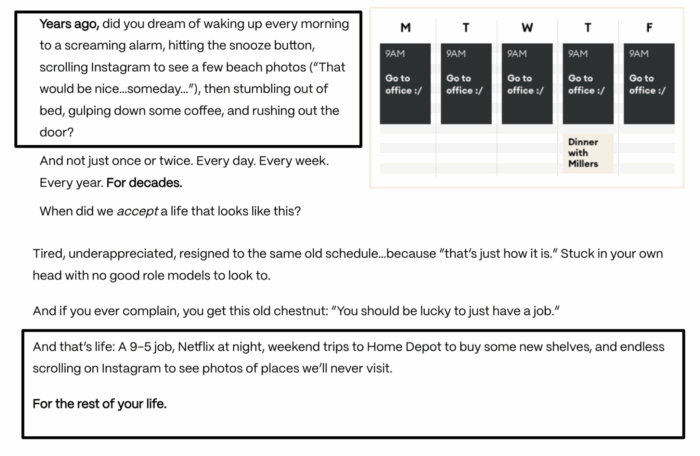
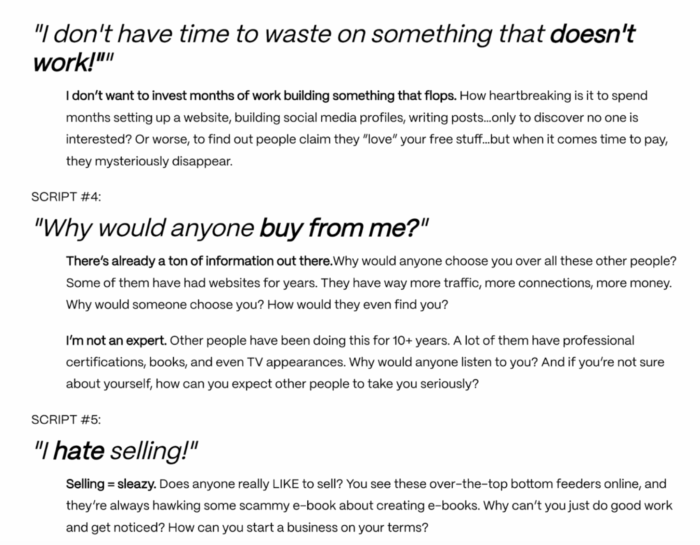
Rather than relying on abstract benefit statements (e.g., "Learn how to make more money"), top-performing marketing campaigns mirror the prospect’s exact daily reality. For example, in the sales material for his business program Earnable, entrepreneur Ramit Sethi systematically outlines the granular habits of his target demographic—mentioning the 9-to-5 job routine, evening media consumption, weekend errands, and passive social media scrolling. By reflecting the reader’s lived experience back to them, the copy implicitly validates the product as an exact solution designed for their specific condition.
Tactical Customer Research Methodologies
When direct consumer interviews are not feasible due to deadline constraints, strategic researchers utilize alternative data collection methods:
Sales Team Interrogation: Interviewing frontline account executives to document top prospect objections and recurring pain points.
AI Transcript Analysis: Ingesting recorded call transcripts into Large Language Models (LLMs) to automatically categorize linguistic patterns, emotional triggers, and buyer friction points.
Organic Community Mining: Scraping unstructured discussion threads on platforms such as Reddit, Quora, and targeted Facebook Groups to observe unvarnished user dialogue and sentiment.
2. Competitive Intelligence & Paid Ad Reverse-Engineering
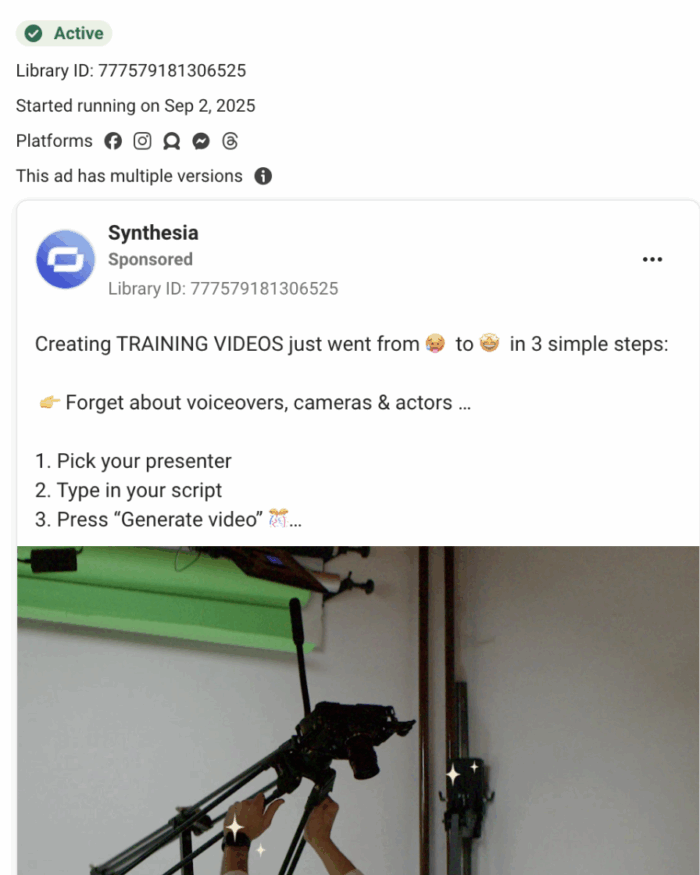
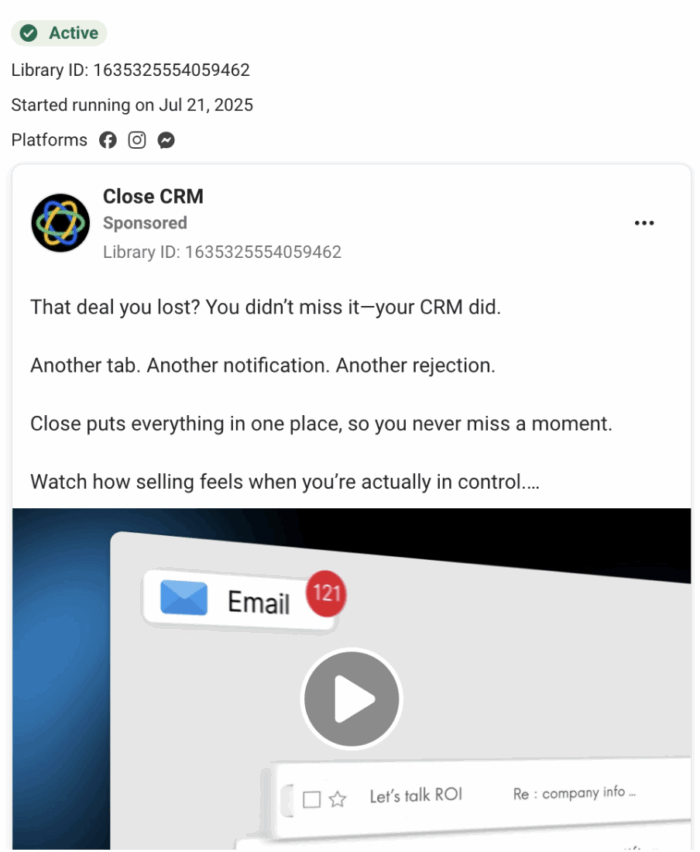
Leading competitors within any industry have often spent substantial capital running empirical tests on messaging angles. Rather than operating in an empirical vacuum, copywriters can inspect competitors’ longest-running paid advertising campaigns via public archives like the Meta Ad Library and LinkedIn Ad Transparency Center.
       COMPETITOR AD ANALYSIS FRAMEWORK
  ┌──────────────────────────────────────────┐
  │ Identify Industry Leader                │
  └────────────────────┬─────────────────────┘
                       │
                       ▼
  ┌──────────────────────────────────────────┐
  │ Query Meta / LinkedIn Ad Library          │
  └────────────────────┬─────────────────────┘
                       │
                       ▼
  ┌──────────────────────────────────────────┐
  │ Filter for Longest Active Running Ads    │
  └────────────────────┬─────────────────────┘
                       │
                       ▼
  ┌──────────────────────────────────────────┐
  │ Isolate Winning Angles & Core Friction   │
  │ Example: Synthesia -> Video Production   │
  │ Example: Close CRM -> Noise / Lost Deals │
  └──────────────────────────────────────────┘
An ad that has run uninterrupted for months strongly signals commercial viability and audience resonance. For instance:
Synthesia (AI Video): Focuses heavily on the operational nightmare of coordinating physical film shoots, studio rentals, and editing timelines for corporate training videos.
Close CRM: Highlights how disorganized pipeline data causes lost revenue due to operational noise and missed follow-ups.
Analyzing these active campaigns uncovers high-performing angles that can be adapted for email sequences, landing pages, and long-form editorial content.
3. Curation of Specialized Swipe Files
Top copywriters maintain active "swipe files"—curated repositories of high-converting headlines, email subject lines, call-to-action (CTA) frameworks, and complete landing page structures.
Beyond personal collection, industry platforms such as SwipeFile.com (curated by veteran marketer Neville Medhora) offer benchmark repositories. Analyzing copy validated by experienced practitioners helps novice writers train their judgment to recognize conversion structure over superficial prose.
4. Establishing a Systematic Workflow
Writer’s block is primarily a structural failure rather than a creative block. Formulating a standardized content assembly pipeline eliminates ambiguity and ensures that critical persuasive elements are systematically integrated.
Case Study: Editorial & SEO Content Pipeline
Research & Key Messaging Mapping: Document primary buyer pain points, target search queries, core value propositions, and targeted conversion actions before drafting text.
Structural Skeleton Creation: Build detailed outlines using standardized narrative arcs: Hook $rightarrow$ Problem Amplification $rightarrow$ Solution Architecture $rightarrow$ Social Proof $rightarrow$ Direct Call-to-Action.
Execution & Editing Pass: Draft rapidly against the structural outline, followed by dedicated passes for clarity, readability, and structural flow.
This approach transforms copywriting from a subjective, blank-page undertaking into an engineering workflow.
5. Intentional Practice & Entrepreneurial Skin in the Game
Theoretical study yields diminishing returns without real-world market feedback. To accelerate skill acquisition, copywriters must deploy copy against live market forces where metrics dictate success.
                   THE INTENT VS. VOLUME MATRIX
    High
     │                         ┌───────────────────────────┐
     │                         │  HIGH-INTENT COMMERCIAL   │
     │                         │  Targeted ROI / Purchases │
  I  │                         │  Ex: "Cuckoo Clock Repair"│
  N  │                         └───────────────────────────┘
  T  │
  E  │ ┌───────────────────────────┐
  N  │ │  LOW-INTENT INFORMATIONAL │
  T  │ │  Passive Vanity Traffic   │
     │ │  Ex: "Clock History"      │
     │ └───────────────────────────┘
    Low ──────────────────────────────────────────────────── High
                             VOLUME / TRAFFIC
A notable case study involves a six-figure copywriter who launched her career through an e-commerce store selling cuckoo clocks. Initially, her content focused broadly on cuckoo clock maintenance and repair. While this generated high traffic, it attracted inbound service inquiries rather than product buyers. This outcome highlighted a core principle of revenue-driven copywriting: Content must target high purchase intent rather than gross traffic volume.
Useful avenues for deliberate practice include:
Personal Social Positioning: Building a specialized audience on platforms like LinkedIn or X to demonstrate authority and client acquisition capabilities.
Affiliate Niche Websites: Drafting content optimized for high-intent search terms to measure direct click-through and conversion metrics.
Micro-SaaS & E-commerce: Developing lightweight digital assets via modern no-code/low-code tools to run end-to-end sales campaigns.
6. Pragmatic AI Integration
While generative AI tools cannot fully replace nuanced positioning and strategy, using them as workflow assistants enhances execution velocity.
AI Use Case
Tactical Application
Key Prompting Framework
Pain Point Research
Rapidly analyzing core industry frustrations and common customer friction points.
"List the top 5 operational frustrations experienced by mid-market B2B sales directors when adopting a new CRM."
Sentence Refinement
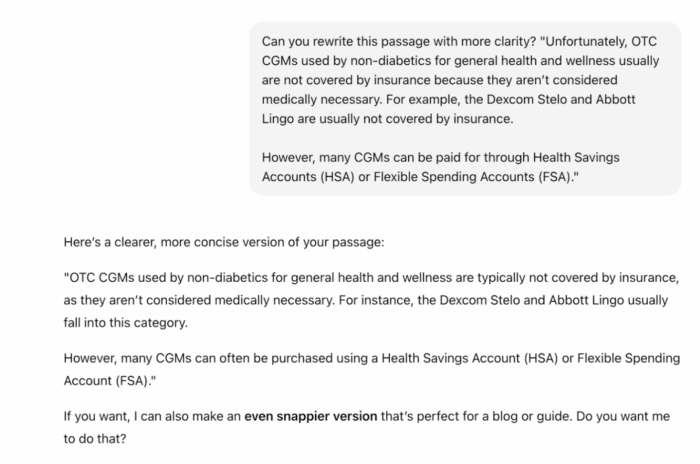
Rewriting convoluted passages for clarity, brevity, and punchy cadence.
"Rewrite this paragraph for maximum clarity and conciseness while retaining an authoritative tone."
Expert Quote Harvesting
Locating real industry commentary and qualitative viewpoints across digital forums.
"Find real industry quotes and perspectives from verified influencer marketers discussing gifting strategies on LinkedIn."
7. Channel Specialization & Algorithmic Alignment
Persuasive principles remain constant, but content formatting varies significantly across media platforms:
Mastering a single platform’s distribution dynamics allows copywriters to generate higher ROI per piece of content, justifying premium fees based on verifiable performance.
8. Strict ROI Attribution & Conversion Metrics
A common pitfall among content creators is conflating superficial engagement metrics (likes, shares, raw pageviews) with business growth. High-performing copy is judged strictly on commercial performance.
Methodologies for Tracking Content ROI
Social Ghostwriting: Track qualitative profiles within comment threads. Inquiries from target decision-makers (e.g., Enterprise VPs of Sales) indicate high-value resonance, whereas high engagement from low-intent accounts signals poor alignment.
Blog Content: Implement custom event and conversion tracking within web analytics suites (e.g., Google Analytics 4) to directly connect organic blog landing pages with demo bookings or checkout events.
Self-Reported Attribution: Integrate qualitative "How did you hear about us?" fields into demo forms to capture multi-touch, dark-social conversions.
9. Active Participation in Feedback Loops & Peer Review
Writing in isolation can lead to blind spots. Constructive feedback loops with experienced practitioners help identify structural issues, weak hooks, or unaddressed objections before content is deployed.
To extract maximum value from peer review:
Submit raw drafts alongside defined customer avatars and conversion goals.
Weigh feedback based on the reviewer’s track record—prioritizing guidance from proven conversion practitioners over subjective novice feedback.
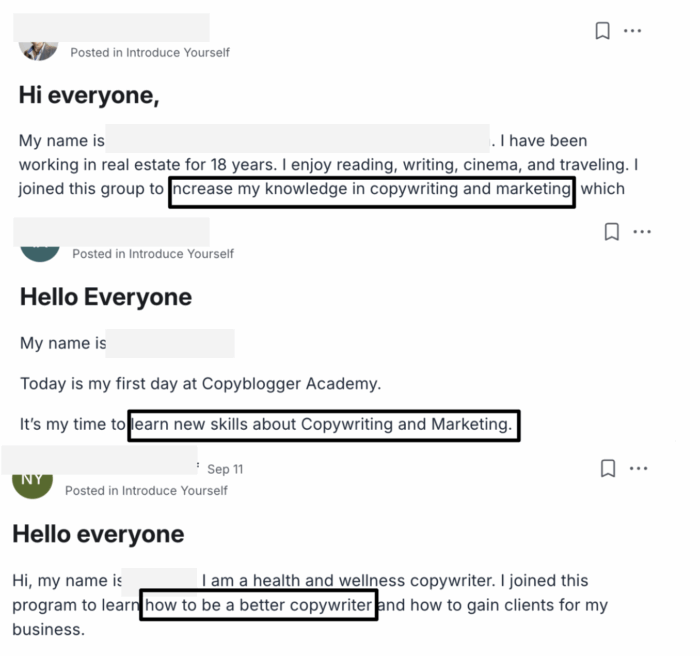
Leverage structured communities (e.g., Copyblogger Academy, co-led by digital marketers Tim Stoddart and Charles Miller) to receive direct critique on headline hooks, sales pages, and email sequences.
10. Long-Term Execution & Asymmetric Patience
Building high-value copywriting capabilities requires applying investor Naval Ravikant’s principle: "Be impatient with action, patient with results."
              THE COMPOUNDING TRAJECTORY OF COPYWRITING
  High ─────────────────────────────────────────────────────────────
       │                                                    / (Exponential ROI)
       │                                                   /
  R    │                                                  /
  E    │                                                 /
  V    │                                                /
  E    │                                      ─────────┘
  N    │                           ─────────── (Skill Refinement Phase)
  U    │  ───────────────────────── (Initial Friction)
  E    │
  Low  └────────────────────────────────────────────────────────────
       0 Months                    6 Months                 12+ Months
                                 TIME & EFFORT
Success requires high daily output combined with a long-term horizon. While individual assets may underperform, consistent drafting, testing, and optimization compound over time to deliver high conversion efficiency.
Supporting Context & Operational Metrics
To quantify the commercial impact of conversion copywriting, organizations evaluate campaigns using precise performance metrics across content categories:
                        COMMERCIAL COPYWRITING METRICS MATRIX
┌───────────────────────┬───────────────────────────────┬───────────────────────────────┐
│ CHANNEL               │ VANITY METRICS (LOW VALUE)    │ REVENUE METRICS (HIGH VALUE)  │
├───────────────────────┼───────────────────────────────┼───────────────────────────────┤
│ B2B Social            │ Impressions, Likes, Reposts   │ Qualified Pipeline Inbound,   │
│                       │                               │ ICP Comment Ratio             │
├───────────────────────┼───────────────────────────────┼───────────────────────────────┤
│ SEO Content           │ Total Sessions, Raw Keyword   │ MQL-to-SQL Conversions,       │
│                       │ Rank                          │ GA4 Event Revenue             │
├───────────────────────┼───────────────────────────────┼───────────────────────────────┤
│ Direct Email          │ Open Rates                    │ Click-to-Purchase Conversion, │
│                       │                               │ Customer Lifetime Value (LTV) │
└───────────────────────┴───────────────────────────────┴───────────────────────────────┘
Direct-Response Conversion Benchmarks
Cold Landing Pages: Target conversion rate of 3% to 7% from cold referral traffic to opt-in or low-dollar purchase.
Warm Lead Nurturing Email Sequences: Target click-through rate (CTR) of 2.5% to 5%, driving directly to offer pages.
Sales Page Conversions: High-intent traffic should convert at 1% to 3% for mid-ticket offers ($500–$2,000) when key customer objections are thoroughly addressed in the copy.
Expert Perspectives & Direct Frameworks
Industry experts emphasize that copywriting performance relies on psychological positioning rather than standard prose mechanics.
"Becoming a better copywriter doesn’t mean you write more eloquently. In fact, the opposite is often true. Great copywriters are clear, concise, and ultimately convert readers into customers. If you can prove that your copywriting generates a higher ROI than the market average, you hold the ultimate growth engine."
— Tim Stoddart, Partner at Copyblogger
Similarly, investor and entrepreneur Naval Ravikant highlights the temporal mindset required to build long-term enterprise value across digital channels:
"Be impatient with action, patient with results."
— Naval Ravikant
Applied to commercial content production, this directive requires writers to rapidly produce and deploy content assets daily while allowing weeks or months for attribution metrics to reflect full pipeline ROI.
Future Outlook
The landscape of commercial copywriting is undergoing a structural shift driven by three primary market forces:
Commoditization of Baseline Text Generation: Generative AI tools have lowered the cost of producing basic informational content to near zero. Consequently, generic copywriting is rapidly declining in market value. Premium positioning now belongs to strategists who excel at deep customer research, proprietary data synthesis, expert interviewing, and high-converting offer positioning.
Rise of Dark Social & Qualitative Attribution: As buyers increasingly share opinions across private messaging apps, podcasts, and social feeds, attribution models are shifting from simple first-click or last-click rules toward self-reported attribution ("How did you hear about us?") alongside qualitative community verification.
Platform-Native Personal Branding: B2B marketing budgets continue to shift toward executive personal profiles. Ghostwriters who combine personal storytelling, algorithm awareness, and direct-response offers will command higher retainer fees compared to traditional corporate copywriters.
Strategic Summary
To achieve consistent revenue growth through written media, marketers and agency owners must abandon artistic obscurity in favor of systematic performance:
By prioritizing buyer intent, deploying structured production workflows, leveraging AI assistants judiciously, and evaluating copy through strict revenue metrics, writers can establish highly profitable customer acquisition systems across any digital channel.