In the highly competitive digital commerce landscape, the ability to turn written words into financial return on investment (ROI) has emerged as a defining competitive advantage. While traditional marketing education often prioritizes creative flair and literary eloquence, contemporary direct-response data tells a radically different story. The most lucrative digital assets are built on clear, concise, and customer-centric copywriting designed systematically to drive acquisition.
This investigative analysis explores the operational methodologies of seven-figure digital copywriting. Drawing on the foundational principles of industry pioneers, historical campaign data, and the modern growth strategies utilized by Copyblogger—a premier multi-million dollar educational platform and community—this report outlines the systematic frameworks required to turn digital content into a predictable customer acquisition engine.
The transition from speculative writing to high-performance copywriting requires a fundamental mindset shift: viewing written copy not as art, but as financial engineering. By analyzing market-tested tactics, algorithmic optimization, and the integration of generative artificial intelligence (AI), this article provides an authoritative blueprint for modern marketing professionals, agency founders, and digital entrepreneurs.
Detailed Chronology: The Blueprint for Modern Copywriting Mastery
The path to building a high-revenue copywriting engine is neither accidental nor purely creative. It relies on a sequential, execution-focused framework divided into four distinct phases of market engagement.
+-------------------------------------------------------------+
|              THE HIGH-CONVERSION COPYWRITING ENGINE          |
+-------------------------------------------------------------+
|  PHASE I: MARKET INTELLIGENCE & CUSTOMER RESEARCH          |
|  - Conduct qualitative audits (Reddit, CRM logs)            |
|  - Perform competitor ad intelligence (Meta/LinkedIn)       |
+-------------------------------------------------------------+
|  PHASE II: PROCESS DESIGN & STRUCTURAL SYSTEMATIZATION      |
|  - Standardize drafting, SEO, and distribution workflows     |
|  - Curate and analyze high-performing swipe files           |
+-------------------------------------------------------------+
|  PHASE III: ALGORITHMIC ENGAGEMENT & PLATFORM MASTERY       |
|  - Optimize content structures for platform-specific reach  |
|  - Pivot from engagement metrics to hard conversion KPIs    |
+-------------------------------------------------------------+
|  PHASE IV: INTELLIGENT TECH STACK INTEGRATION               |
|  - Leverage LLMs for research, phrasing, and sourcing       |
|  - Implement robust conversion tracking (GA4, UTM funnels)  |
+-------------------------------------------------------------+
Phase I: Ground-Level Market Research and Customer Psychology
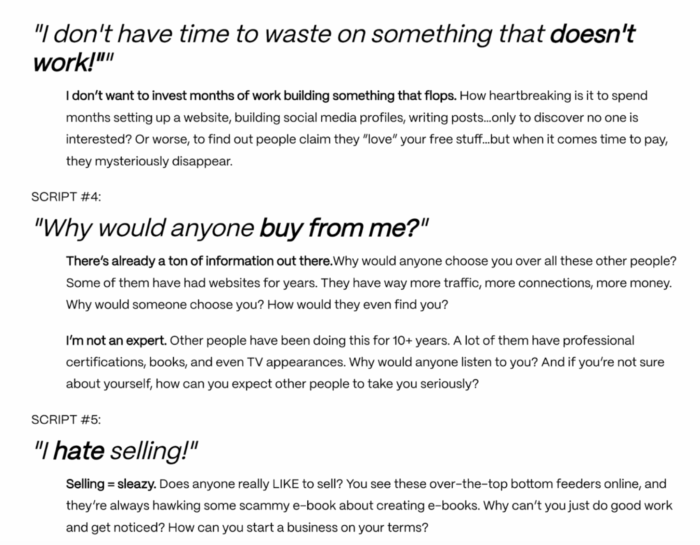
High-conversion copywriting begins long before a single word is drafted. The foundational step of any successful campaign is the thorough collection of qualitative customer data. The copywriter’s primary objective is to map the target audience’s psychological profile, identifying their specific pain points, objections, and desired outcomes.
Direct Customer and Stakeholder Auditing: When direct customer interviews are not feasible due to tight production schedules, writers must audit internal stakeholders. Sales representatives serve as a highly valuable source of information, as they interact daily with prospective buyers and can quickly list the most common purchasing objections.
AI-Assisted Call Transcript Analysis: Modern research workflows leverage large language models (LLMs) to analyze sales data. By processing raw call transcripts through tools like ChatGPT, writers can systematically extract recurring customer objections and specific phrasing used by prospects.
Digital Community Ethnography: Platforms such as Reddit, Quora, and niche Facebook groups offer unedited insights into consumer challenges. Analyzing these organic discussions allows writers to observe the exact vocabulary, emotional triggers, and frustrations of their target market, which can then be mirrored in sales copy.
Phase II: Competitor Ad Intelligence and Swipe File Curation
To avoid building marketing campaigns from scratch, successful copywriters analyze the market-tested strategies of their competitors. This process relies on two primary research tools:
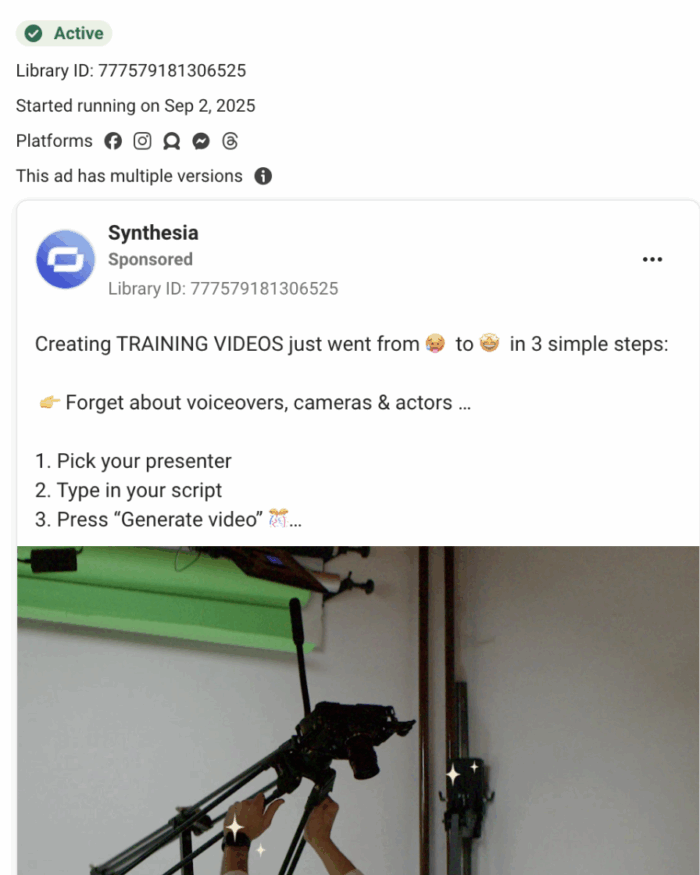
The Meta and LinkedIn Ad Libraries: These public repositories allow writers to analyze active advertising campaigns across various industries. By tracking the longevity of specific ad creatives, writers can identify which copy angles are driving profitable conversions. Ads that run continuously for months indicate a highly successful, high-ROI value proposition.
The Structured Swipe File: Maintaining a organized archive of successful marketing assets—ranging from landing pages to email subject lines—serves as a continuous source of strategic inspiration. Resources like Neville Medhora’s SwipeFile.com offer valuable reference points for analyzing the underlying psychological frameworks of high-performing copy.
Phase III: Process Standardization and Platform Specialization
Creative block is often a symptom of a disorganized writing workflow. To scale production and maintain quality, writers must establish standardized operating procedures (SOPs) for every content medium.
+-----------------------------------------------------------------+
|               STANDARD BLOG COPYWRITING WORKFLOW                |
+-----------------------------------------------------------------+
|  1. RESEARCH & OUTLINE                                          |
|     - Perform keyword research and competitive analysis         |
|     - Map primary pain points to structural H2/H3 headings      |
+-----------------------------------------------------------------+
|  2. DRAFTING & REVIEW                                           |
|     - Draft copy targeting reader paint points                  |
|     - Review structure to eliminate fluff and jargon            |
+-----------------------------------------------------------------+
|  3. METADATA & SEO OPTIMIZATION                                 |
|     - Configure title tags, meta descriptions, and URL slugs    |
|     - Optimize internal linking structure for search indexing   |
+-----------------------------------------------------------------+
Furthermore, copywriters must master the unique dynamics of their chosen distribution channels. Actionable, educational content is highly effective for organic search engine optimization (SEO), whereas thought leadership and narrative-driven hooks perform exceptionally well on professional networks like LinkedIn. Understanding these algorithmic nuances allows writers to increase organic reach and deliver stronger client results.
Phase IV: Human-AI Collaboration and Tech Stack Integration
The modern copywriter’s competitive advantage lies in their ability to use AI as an analytical partner rather than a replacement for human creativity. Successful integration focuses on three key areas:
Accelerated Pain Point Discovery: Prompting LLMs to analyze specific market segments helps writers quickly map out consumer anxieties, speeding up the initial brainstorming phase.
Clarity and Phrase Optimization: Writers can use AI to identify awkward phrasing, simplify complex sentences, and test different tones, ensuring the final copy is clear and concise.
Expert Sourcing and Case Study Retrieval: AI tools help writers find relevant industry quotes, real-world examples, and social proof across digital platforms, lending authority and credibility to the narrative.
Supporting Context & Metrics: Measuring the Business Value of Copy
The true value of copywriting is measured in financial performance, not vanity metrics. Many writers make the mistake of equating social media engagement with commercial success. To build a sustainable business, copywriters must connect their output directly to business revenue.
+-----------------------------------------------------------------+
|             VANITY METRICS VS. TRUE COMMERCIAL VALUE            |
+-----------------------------------------------------------------+
|  VANITY METRICS (Low Business Value):                           |
|  - Social Media Likes & Shares                                  |
|  - Raw Website Traffic (Unqualified Visitors)                   |
|  - Platform Impressions                                         |
+-----------------------------------------------------------------+
|  COMMERCIAL METRICS (High Business Value):                      |
|  - Qualified Lead Generation & CRM Pipeline Influence           |
|  - Direct Conversion Rate Optimization (CRO)                    |
|  - Customer Acquisition Cost (CAC) Reduction                    |
+-----------------------------------------------------------------+
Analyzing High-Converting Landing Pages
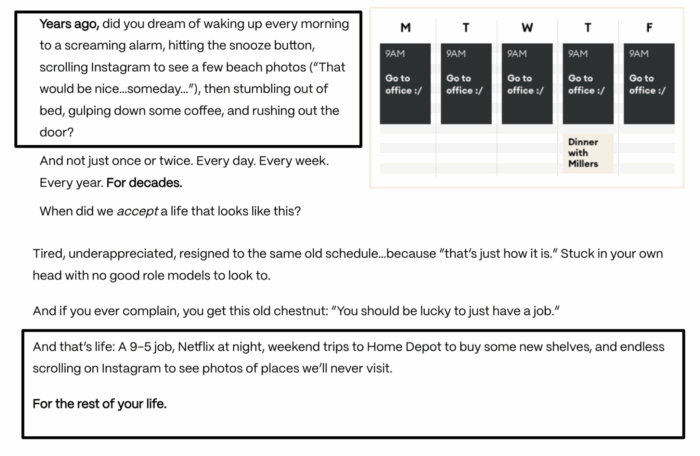
Analyzing successful landing pages reveals how strategic copy directly addresses customer psychology. For example, Ramit Sethi’s landing page for his business program, Earnable, uses detailed, highly relatable descriptions of his audience’s daily routines—such as long commutes, evening media consumption, and weekend errands.
Rather than relying on vague promises of financial freedom, the copy mirrors the prospect’s current reality back to them. This specific, descriptive approach builds immediate trust, showing the reader that the program was designed for their exact situation.
B2B Software Advertising Frameworks
In the B2B software-as-a-service (SaaS) sector, successful advertisements focus on clear, practical problem-solving. Ads for HubSpot and Close CRM illustrate this approach:
HubSpot: Focuses on the frustration of managing disorganized customer data across disconnected systems, positioning its platform as an organized, easy-to-use solution.
Close CRM: Highlights the direct financial cost of messy data, showing how cluttered sales pipelines lead to lost deals and missed revenue.
Setting Up Modern Conversion Tracking
To prove the financial impact of their work, writers must establish clear tracking systems in partnership with their clients:
LinkedIn and Social Media Attribution: Instead of relying solely on engagement metrics, companies should include qualitative questions like "How did you hear about us?" on demo and purchase forms to accurately track social media conversions.
SEO and Blog Content Tracking: Using Google Analytics 4 (GA4) to track conversion paths allows businesses to see exactly which articles lead to newsletter signups, product trials, and purchases.
Direct-Response Sales Funnels: Tracking click-through rates, email open rates, and direct sales conversions provides clear, undeniable proof of a campaign’s financial performance.
Official Statements: Industry Leadership and Strategic Perspectives
The core principles of high-conversion copywriting are reinforced by leading figures in digital marketing, investment, and direct-response advertising.
In his analysis of digital distribution, direct-response copywriter Neville Medhora emphasizes the importance of learning from proven, successful frameworks:
"The best copywriters don’t reinvent the wheel; they study what has already proven to work. By maintaining a disciplined swipe file, you train your mind to recognize the underlying psychological triggers that drive human action."
Discussing the long-term compounding value of focused, daily execution, investor and philosopher Naval Ravikant outlines the ideal balance between active work and long-term expectations:
"Be impatient with action, but patient with results."
This philosophy is highly relevant for modern copywriters. While daily writing and continuous testing are essential, building a highly profitable copywriting career or organic content engine requires months of consistent effort before generating significant financial returns.
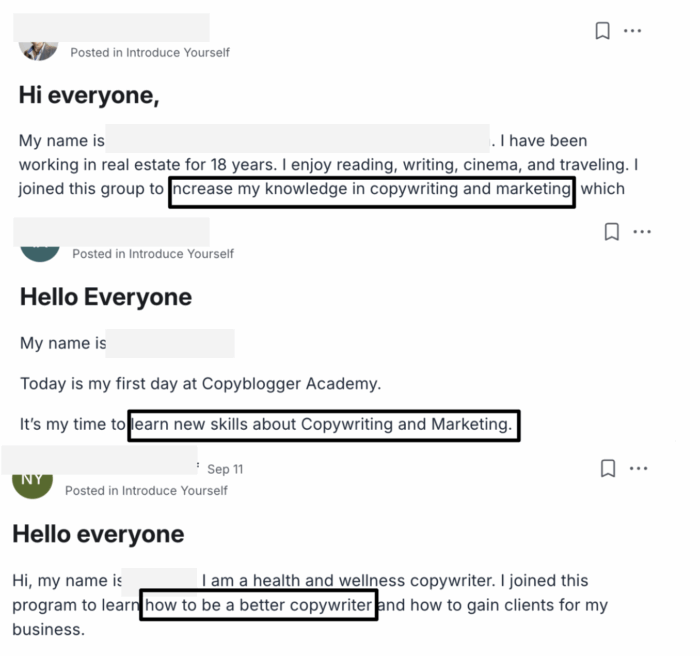
Reflecting on the mission of the Copyblogger Academy, the organization’s leadership highlights the importance of peer feedback and professional accountability in a rapidly changing market:
"The process of building a career as a digital writer can be incredibly isolating. We designed the Academy to bridge the gap between theory and execution, giving writers direct access to experienced mentors and a collaborative community where they can refine their work and build real business value."
Future Outlook: Copywriting in the Age of Artificial Intelligence
The digital marketing landscape is undergoing a major shift, driven by rapid advancements in generative AI and changes in how search engines index content. As AI tools make it easy to generate basic content at scale, the market value of generic, low-effort writing is rapidly declining.
+-----------------------------------------------------------------+
|              THE FUTURE OF THE DIGITAL COPYWRITING MARKET       |
+-----------------------------------------------------------------+
|  DECLINING VALUE:                                               |
|  - Generic, AI-generated blog posts                             |
|  - Low-effort SEO content designed only for search crawlers     |
|  - Superficial social media copywriting                         |
+-----------------------------------------------------------------+
|  INCREASING VALUE:                                              |
|  - Deep, qualitative customer research & original insights      |
|  - High-trust, personality-driven email newsletters             |
|  - Conversion-focused landing page design & technical writing   |
+-----------------------------------------------------------------+
In this changing environment, the most successful copywriters will focus on areas that AI cannot easily replicate: deep qualitative research, unique personal branding, and high-trust community building.
Furthermore, the rise of "vibecoding" and accessible, low-code platforms allows copywriters to quickly build and launch their own digital products and micro-SaaS tools. By combining conversion copywriting with digital product development, writers can transition from service-based client work to building scalable, independent digital businesses.
Ultimately, while the tools and distribution channels will continue to evolve, the core psychological principles of copywriting remain unchanged. The future belongs to writers who can combine deep customer empathy with technical marketing skills, clear writing processes, and a relentless focus on delivering measurable business results.