

Executive Overview
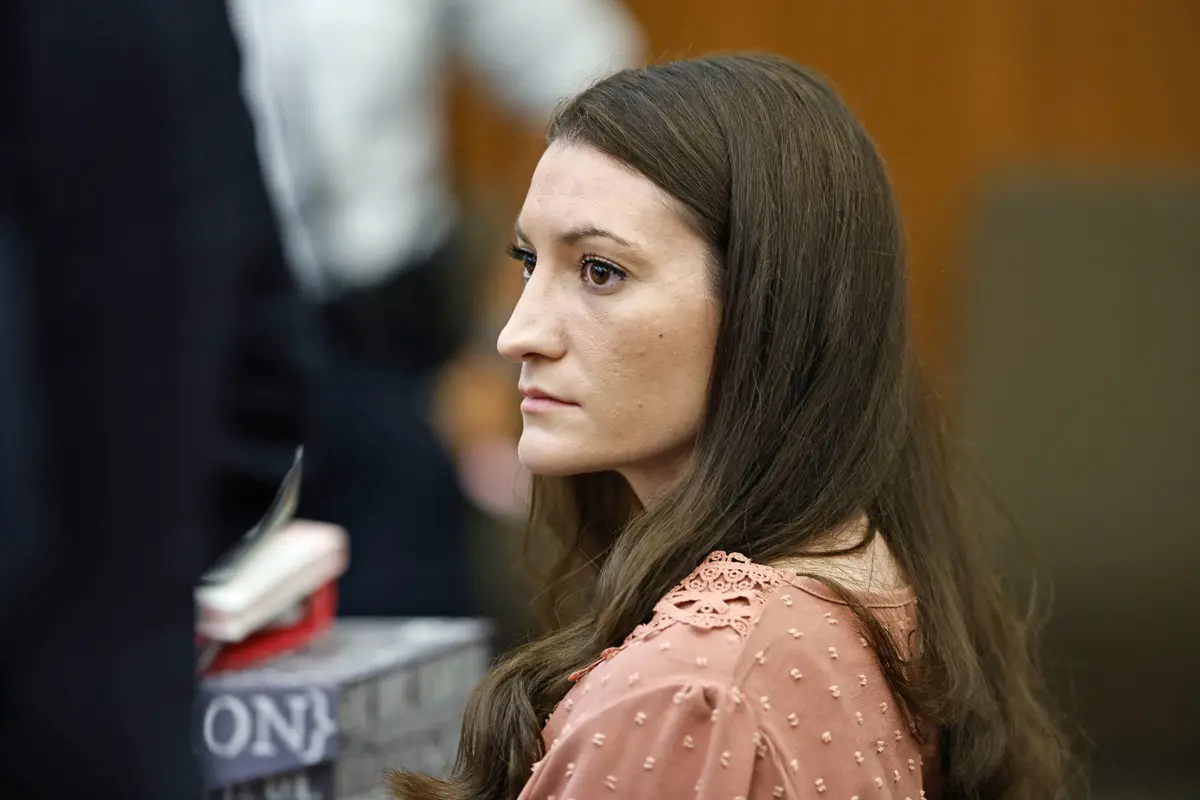
The courtroom in Massachusetts was packed to capacity, surrounded by hundreds of supporters wearing pink—a poignant visual statement for a case that has bitterly divided public opinion and deeply shaken the medical and legal communities. On the 22nd day of trial, closing arguments were delivered in the high-profile prosecution of Lindsay Clancy, a 34-year-old former labor and delivery nurse accused of strangling her three young children to death in January 2023.
Clancy faces three counts of first-degree murder in connection with the tragic deaths of five-year-old Cora, three-year-old Dawson, and eight-month-old Callan. While Clancy has not denied physically committing the acts, the crux of the trial rests on a deeply complex and harrowing question: Was she legally responsible for her actions, or was she suffering from acute postpartum psychosis so severe that it entirely stripped her of her rational faculties?
Following the tragedy, Clancy attempted to take her own life by jumping from a second-story window of her home. The fall left her paralyzed from the waist down, confining her to a wheelchair and resulting in her continuous detention at a state-run medical facility. Throughout the weeks-long trial, the judicial proceedings have illuminated systemic failures in maternal mental healthcare, the heavy reliance on complex pharmaceutical regimens, and the profound legal ambiguity surrounding severe postpartum psychiatric disorders.
While the defense has painted a devastating picture of a devoted mother failed by a disjointed medical system and trapped in a pharmaceutical fog, the prosecution has countered with a rigorous narrative of calculation, asserting that Clancy acted with rational intent and clear premeditation. As the case moves toward jury deliberation, it forces a reckoning on how the American justice system evaluates severe mental illness in mothers, echoing harrowing historical precedents such as the 2001 prosecution of Andrea Yates.
Detailed Chronology of the Case and Trial
The Events of January 2023
The tragedy unfolded on the evening of January 24, 2023, inside a quiet suburban home in Duxbury, Massachusetts. According to evidence presented by the prosecution and corroborated by trial testimony, Lindsay Clancy systematically orchestrated the moments leading up to the killings. Prosecutors argue she manipulated her then-husband, Patrick Clancy, sending him on a prolonged errand to pick up takeout from a restaurant much farther than usual, and subsequently asking him to stop at a pharmacy to pick up medication for one of the children.
This maneuver, the state argued, bought her the uninterrupted time necessary to carry out the killings. Within a short window, Clancy strangled her three children. Following the murders, she threw herself from a second-story window in an apparent suicide attempt, sustaining severe spinal injuries that left her permanently paralyzed.
Opening Statements and the Defense Case
The trial officially commenced on July 27, 2023, with testimony opening from an unexpected source: Patrick Clancy. In emotional and heartbreaking testimony, the ex-husband stood by his wife, detailing her rapid and alarming mental health deterioration in the months following the birth of their youngest child. He described a woman who "kept getting worse and worse," despite seeking intensive medical intervention.
The defense, led by veteran attorney Kevin Reddington, structured its entire case around the diagnosis of postpartum psychosis—a rare, medically recognized condition marked by extreme delusions, mood swings, and command hallucinations. Reddington presented voluminous medical records showing that in the months preceding the tragedy, Clancy had been prescribed over a dozen psychiatric medications, including Ativan, Zoloft, Valium, trazodone, and buspirone.
To support the defense’s claim of severe psychiatric break, the defense called renowned forensic psychiatrist Dr. Phillip Resnick, who evaluated Clancy extensively over a four-month period. Resnick testified that Clancy was "clearly psychotic" at the time of the killings and experienced command hallucinations. According to Resnick, Clancy held an altruistic, albeit deeply delusional, belief that her children would suffer immeasurably if she died by suicide or if they were taken away by social services, leading her to believe that taking their lives and sending them to heaven was the only protective option available.
Resnick famously described her state of mind during the killings: "It was almost like she was a puppet and someone else was pulling the strings."
The defense also leaned heavily on the testimony of Sheila Cavanaugh, a hospital chaplain who met with Clancy in the days immediately following her extubation at Brigham and Women’s Hospital. Cavanaugh testified that Clancy spontaneously confessed to hearing a "persistent" voice telling her that if she did not follow its commands, neither she nor her children would be safe. Reddington emphasized that this disclosure occurred days before any defense psychologist had even evaluated her, thus refuting the state’s insinuation that the hallucination narrative was a manufactured legal defense.
The Prosecution’s Rebuttal
Seeking to dismantle the defense’s narrative, the prosecution mounted a fierce rebuttal case relying on several expert witnesses who challenged the presence of a true psychotic break or mania.
Dr. Avram Mack testified that while Clancy undoubtedly suffered from a depressive episode and generalized anxiety, there was no clinical evidence of a manic state, which is a foundational requirement for a bipolar disorder diagnosis.
Similarly, forensic psychologist Dr. Kirk Heilbrun testified for the state, informing the jury that Clancy retained an understanding of the legal and moral wrongfulness of her actions. Heilbrun pointed to inconsistencies in Clancy’s accounts of her hallucinations and argued that her decision to withhold thoughts of harming her children from her doctors—while sharing them with her husband—demonstrated a rational awareness that her thoughts were dangerous and socially unacceptable. Heilbrun asserted that Clancy acted out of a desperate desire to end her own overwhelming exhaustion and depression, and that eliminating her children was a conscious, albeit horrific, choice rather than the mechanical execution of a command hallucination.
The state’s final rebuttal witness, FBI Behavioral Analysis Unit senior psychiatrist Dr. Gregory Saathoff, spent hours detailing his interviews with Clancy. Saathoff underscored structural flaws in her narrative, noting that while she claimed a voice commanded her to kill her children and herself immediately, the voice offered no specific instructions on how to execute the murders, yet she was able to seamlessly manage phone calls and everyday tasks amidst the events. Saathoff concluded that individuals experiencing severe psychosis can still evaluate right from wrong, and that Clancy’s actions reflected a calculated decision-making process.
Supporting Context & Metrics
The trial has brought to light alarming metrics regarding maternal mental healthcare and the societal taboos surrounding postpartum psychiatric complications.
- Pharmaceutical Load: Medical disclosures during the trial revealed that in the four months leading up to January 2023, Clancy was prescribed a rotating cocktail of more than 10 distinct psychiatric medications, raising profound questions among medical experts regarding the risks of polypharmacy in treating perinatal mood disorders.
- Diagnostic Disparities: A central debate in the courtroom centered on diagnostic timelines. Reddington openly criticized the American psychiatric community’s standard four-week cutoff for peripartum-onset disorders, contrasting it with the World Health Organization’s broader window, arguing that restrictive American definitions prevent clinicians from recognizing severe psychiatric deterioration occurring months after childbirth.
- Financial and Social Fallout: The intense public scrutiny surrounding the case led to the establishment of the Musgrave Family Fund via GoFundMe. The campaign, which sought to raise $2 million, was designed to support Clancy’s parents, Michael and Paula Musgrove, who relocated from Connecticut to Massachusetts to maintain a constant physical presence at her grueling, multi-week trial.
Official Statements and Arguments
The closing arguments crystallize the two irreconcilable interpretations of Lindsay Clancy presented to the jury.
Defense Counsel Kevin Reddington:
"This young lady did nothing wrong in her life. She was a nurse, a daughter, a wife, and a darn good mother. You can see from the objective evidence… She was reaching out for help, and she was not getting it. How does this turn into this? How? Because of the damn medicine and the lousy medical care she got."
Prosecutor Jennifer Sprague:
"This wasn’t a woman suffering from a lack of care, a lack of resources. She had an abundance of care… She left them discarded on the basement floor like broken toys because she was done playing the game. You know to a moral certainty she is guilty… It was a choice to take them with her. It was a horrible choice. It is a choice that we don’t want to think about that a mother could make, because that doesn’t make us feel safe or comfortable in this world. But it’s a choice she made."
Future Outlook
As the trial concludes its lengthy proceedings and the jury prepares to deliberate, the verdict in the case against Lindsay Clancy will resonate far beyond the borders of Massachusetts.
If convicted of first-degree murder, Clancy faces a mandatory sentence of life imprisonment without the possibility of parole, though her specialized medical needs resulting from her paralysis will continue to pose logistical and humanitarian challenges for the state correctional and healthcare systems. Conversely, a verdict of not guilty by reason of insanity would mandate her indefinite commitment to a secure psychiatric facility, reinforcing legal precedents regarding the incapacity of individuals consumed by psychotic illnesses.
Regardless of the jury’s eventual decision, the trial has permanently altered the public and professional discourse surrounding maternal mental health. It forces an uncomfortable national dialogue regarding the systemic vulnerabilities of new mothers, the limits of pharmacological interventions, and the complex legal thresholds required to prove that a mother suffering from profound psychological distress was stripped of her free will.