

Executive Overview
The aerospace industry has long stood as a triumph of human engineering—a marvel of physics, metallurgy, and precision that shrank the globe and made mass air travel a daily reality. At the center of this technological frontier was The Boeing Company. For decades, the American aerospace titan was globally revered not merely for its financial success, but for an uncompromising commitment to safety, rigorous quality control, and an organizational culture that empowered its workforce to halt production at the slightest hint of a defect.
Today, that foundational ethos is the subject of a devastating retrospective. Netflix’s new documentary, Freefall: A Reckoning for Boeing, directed by acclaimed documentarian Rory Kennedy, tears open the corporate machinery of one of America’s most critical defense and commercial contractors. Following up on her 2022 documentary Downfall: The Case Against Boeing, which investigated the catastrophic losses of Lion Air Flight 610 and Ethiopian Airlines Flight 302, Kennedy’s latest project digs far deeper. Freefall explores the structural rot that insiders argue poisoned the company from the inside out, transforming a legendary engineering firm into a profit-driven enterprise allegedly willing to sacrifice safety for share price.
Through never-before-seen deposition footage, undercover recordings, and harrowing firsthand accounts from former quality engineers, investigators, and whistleblowers, the documentary paints a grim picture of a corporate giant in crisis. Among its most haunting subjects is the late John “Swampy” Barnett, a long-serving Boeing quality engineer turned whistleblower, whose tragic death in March 2024 cast a glaring light on the immense personal toll exacted upon those who challenge corporate negligence.
As regulatory bodies circle, public trust frays, and ongoing litigation questions the structural integrity of thousands of commercial aircraft currently operating worldwide, Freefall: A Reckoning for Boeing serves as an urgent, highly authoritative autopsy of systemic corporate failure.
Detailed Chronology: The Corporate Decimation of an Engineering Giant
To understand how Boeing arrived at its current state of turmoil, Freefall traces the company’s trajectory through a decades-long corporate evolution. Former employees interviewed in the film point to a distinct inflection point: the dawn of the 2000s and, more specifically, the arrival of Jim McNerney as Chief Executive Officer in 2005.
The Golden Age of Engineering vs. The Era of the Financial Manager
Prior to McNerney’s tenure, Boeing operated under a culture where engineering and quality assurance reigned supreme. Merle Meyers, a former Boeing quality manager, notes in the documentary that the company’s structural integrity depended heavily on the absolute authority granted to its quality departments.
"The Boeing Company was unique in that if there was ever a dispute, the quality department made the final decision as to whether or not to sign off on the work," Meyers recalls.
This autonomy was stripped away when McNerney took the helm. A protégé of legendary General Electric CEO Jack Welch, McNerney brought a hyper-fixation on shareholder value, short-term earnings, and aggressive cost-cutting to the aerospace sector. Under his leadership, priorities shifted from crafting the world’s safest aircraft to optimizing profit margins. McNerney departed in 2015—securing a massive financial exit package totaling $244 million—but the operational philosophy he embedded within the corporate DNA outlived him.
The Shift to Outsourcing and Compromised Supply Chains
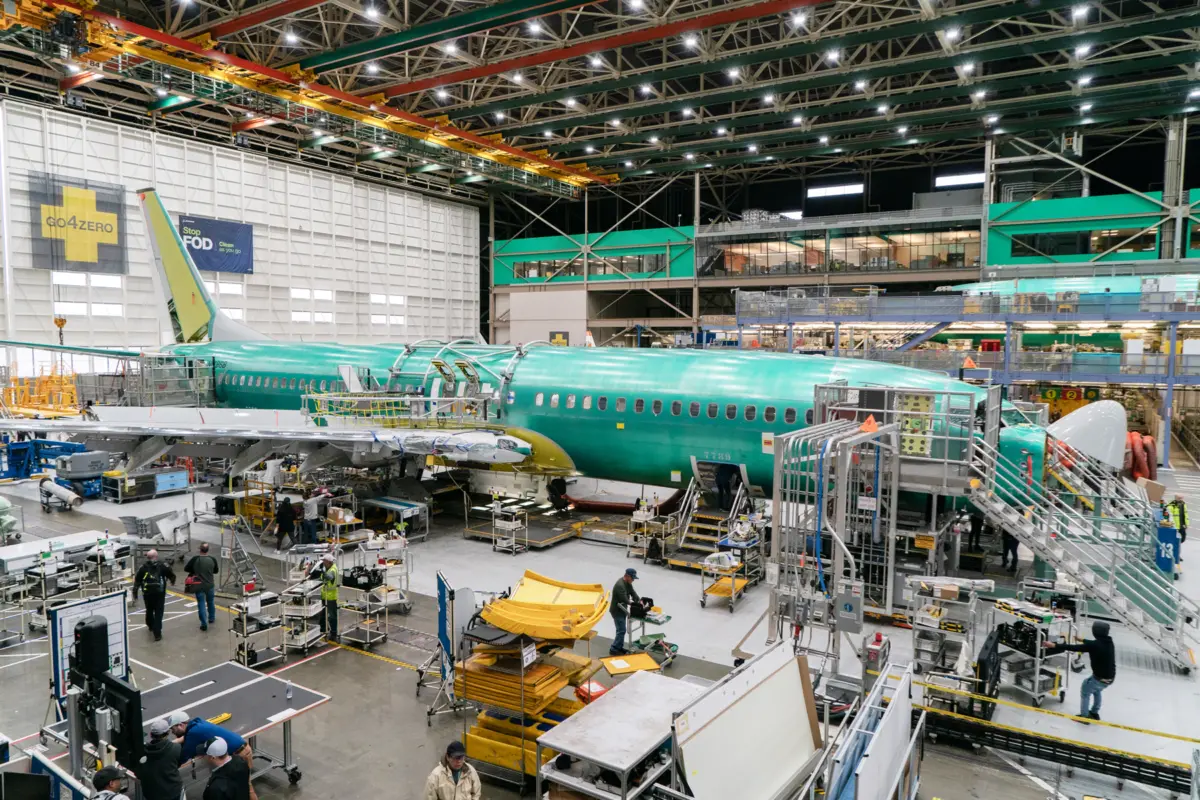
Driven by the mandate to slash manufacturing costs, Boeing systematically began outsourcing critical components of its commercial aircraft production to external suppliers, frequently overseas. When these parts arrived at domestic facilities for final assembly, the consequences were immediately visible to frontline staff.
Rather than fitting together with the micron-level precision required in aerospace manufacturing, outsourced parts frequently arrived corroded, structurally flawed, or entirely out of code. Sam Mohawk, a former Boeing quality investigator, underscores the Kafkaesque environment this created for workers on the floor:
"You automatically knew that was going to have a direct effect on safety and quality. We just have to accept what is given to us and put it on the airplane."
These cost-cutting maneuvers ultimately backfired, creating cascading delays and bloated remedial budgets. Yet, management routinely brushed aside internal warnings, creating a pressurized atmosphere where meeting production quotas superseded compliance.
The Charleston Experiment and the 787 Dreamliner Crisis
When Boeing’s initial plans to outsource major sections of its flagship 787 Dreamliner fleet encountered severe bottlenecks, the company established a massive new manufacturing facility in Charleston, South Carolina. Geographically and culturally distant from the International Association of Machinists and Aerospace Workers union in the Pacific Northwest, the Charleston plant relied heavily on hiring workers straight out of college with little to no prior aerospace experience.
Manufacturing errors multiplied instantly. In one of the most chilling sequences of Freefall, undercover video footage captures multiple unnamed workers at the Charleston facility openly admitting they would refuse to fly on the company’s aircraft. When asked directly if they or their families would board a 787, one worker bluntly answered: "No."
Further compounding these fears, Merle Meyers uncovered evidence that components previously flagged by quality managers as “scrap”—parts formally deemed too damaged or defective for use—were systematically re-introduced into the production stream and installed on active Dreamliner planes. Internal company investigations subsequently cleared management of wrongdoing, leaving an estimated 1,200 commercial aircraft flying across 85 countries laden with what insiders describe as potentially degraded and compromised hardware.
Supporting Context & Metrics: The Whistleblower’s Toll and the Barnett Tragedy
The human cost of corporate retaliation forms the emotional core of Freefall. No single figure exemplifies this burden more vividly than John “Swampy” Barnett.
The Warnings of John Barnett
During his tenure as a quality manager, Barnett grew increasingly alarmed by lax manufacturing protocols at the Charleston facility. In documentary depositions, Barnett described inspecting newly built 787 Dreamliners and finding dangerous accumulations of metal shavings—remnants of drilled bolts left unsecured inside the electrical wiring bundles.
"Over time, this metal sliver’s gonna vibrate down in there and it’s gonna short wires out," Barnett warned. "Just a little short will bring down a whole plane."
When Barnett formally escalated these issues, he was met with administrative pushback, ignored by superiors, and eventually transferred to another department. His prophetic warnings—"Is it gonna take an airplane to go down before some people say, ‘Wow, guess we should have listened?’"—echo throughout the film.
The Tragic Death and Legal Aftermath
On March 9, 2024, amidst a grueling multi-day deposition in Charleston alongside his attorneys Rob Turkewitz and Brian Knowles, Barnett was found dead in his truck from a self-inflicted gunshot wound to the head.
While official police investigations and autopsies definitively ruled the death a suicide—recovering a heartbreaking notebook entry reading, "I can’t do it any longer. Enough. Fuck Boeing. I pray the motherfuckers that destroyed my life pay"—his legal representatives maintain that the corporate environment was fundamentally culpable.
"Boeing may not have pulled the trigger, but Boeing was responsible for John’s death," attorney Rob Turkewitz states in the documentary.
In the wake of Barnett’s death—and compounded by concurrent structural failures, such as the January 2024 Alaska Airlines Flight 1282 incident where an improperly secured door plug blew off a 737 MAX 9 mid-flight—dozens of additional whistleblowers have stepped forward. In August 2025, Boeing formally settled Barnett’s retaliatory lawsuit for an undisclosed financial sum, while ongoing wrongful death litigation continues to wind its way through the courts.
Official Statements and Institutional Defense
As expected, Boeing declined to participate directly in the production of Freefall: A Reckoning for Boeing. However, the aerospace giant issued a comprehensive public statement to filmmakers addressing the film’s foundational allegations.
"The allegations in this film have been widely reported over the years," the corporate statement reads. "Some remain unfounded claims to this day, while others are issues that Boeing thoroughly addressed or continues to improve upon."
The company maintains that its internal manufacturing standards, oversight protocols, and safety compliance metrics have undergone significant remediation in the wake of intense congressional scrutiny, multi-billion-dollar federal fines, and successive whistleblower testimonies. Furthermore, Boeing highlighted the rollout of its newly implemented "Values and Behaviors" program as proof of an institutional pivot toward transparency and accountability.
Despite these corporate reassurances, federal regulators remain skeptical. In November 2025, the U.S. Department of Justice formally dropped pending criminal charges against Boeing under a deferred prosecution agreement, instead ordering the company to pay a staggering $1.1 billion penalty.
Future Outlook: Can Boeing Reclaim Its Legacy?
Rory Kennedy’s Freefall: A Reckoning for Boeing is more than a true-crime corporate expose; it is a diagnostic examination of modern industrial capitalism where short-term fiscal yields routinely eclipse long-term public safety.
The documentary arrives at a precarious crossroads for American aviation. With thousands of commercial airliners currently navigating global skies, restoring confidence in the brand requires far more than public relations campaigns and internal compliance seminars. It demands a systemic cultural overhaul that places engineers back in the driver’s seat and permanently shields whistleblowers from systemic retaliation.
As the remaining wrongful death lawsuits proceed and regulatory oversight tightens, the legacy of whistleblowers like John Barnett will continue to haunt the executive suites in Arlington, Virginia. Their sacrifices have ensured that the systemic shortcuts of the past can no longer hide in the dark—forcing Boeing into a generational reckoning from which there is no turning back.