

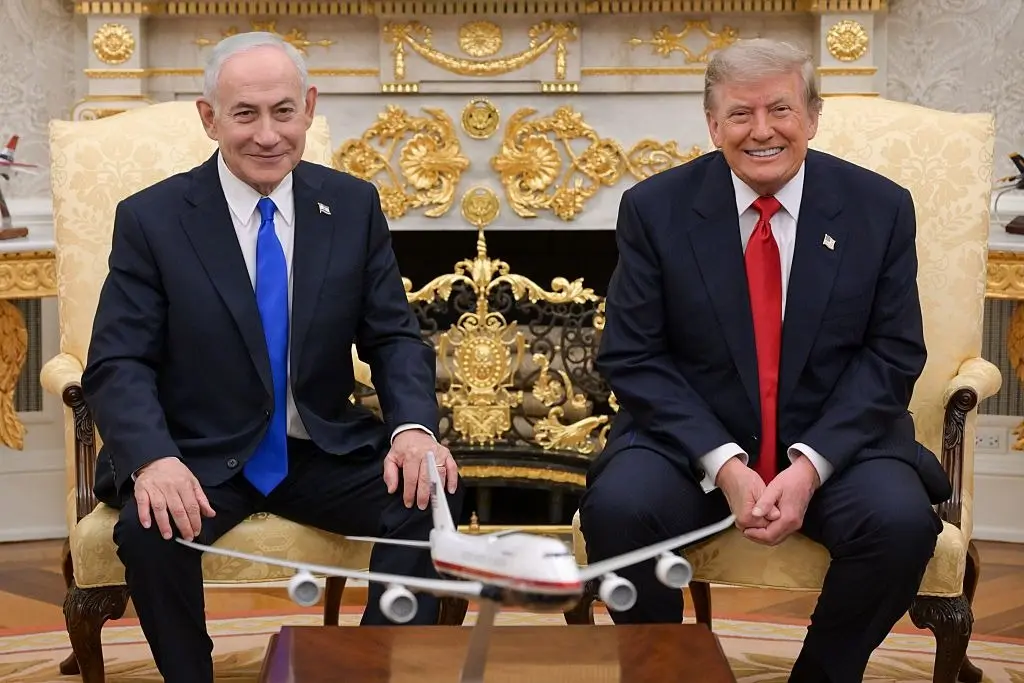
WASHINGTON / JERUSALEM — In a dramatic intervention with profound geopolitical ramifications, U.S. President Donald Trump has officially endorsed Israeli Prime Minister Benjamin Netanyahu for reelection. The endorsement, delivered via social media just nine days before Israel’s fiercely contested national election, directly linked the outcome of the vote to future U.S. military strategy concerning Iran.
The announcement marks a notable pivot in Trump’s recent public posture toward his longtime ally. For months, the U.S. leader had maintained a diplomatic distance from Israeli domestic politics, even telling Time magazine earlier in October that he was "not involved in politics anymore." However, with Netanyahu facing a precarious political landscape and an uphill battle in the polls ahead of the October 27 vote, Trump threw his full weight behind the incumbent prime minister, warning Israeli voters that choosing alternative leadership could jeopardize vital security cooperation between Washington and Jerusalem.
Executive Overview
With Israeli voters preparing to head to the polls on October 27—the country’s first national election since the devastating Hamas attacks of October 2023—the political stakes could not be higher. Prime Minister Benjamin Netanyahu, heading the Likud party, is fighting for his political survival against a consolidated and motivated opposition bloc led by figures such as former military chief Gadi Eisenkot and former Prime Minister Naftali Bennett.
Recent polling indicates that Netanyahu’s right-wing governing bloc may fall short of securing the 61 seats required to command a majority in the 120-member Knesset. Recognizing the fragility of his ally’s political footing, President Trump intervened on Sunday with a forceful message on Truth Social.
Trump lauded Netanyahu as a "Great Warrior Prime Minister" and cast him as an indispensable partner in the ongoing campaign against Iran. Crucially, the U.S. president tied domestic Israeli electoral choices directly to American military intervention, warning that a defeat for Netanyahu could force the United States to shoulder the burden of neutralizing Iranian threats entirely on its own—a prospect for which Trump declared he has little inclination.
The endorsement highlights a broader pattern in Trump’s foreign policy approach, which frequently disregards the traditional diplomatic taboo against U.S. presidents intervening in foreign democratic elections. Having previously endorsed political figures in Hungary, Japan, and Argentina, Trump’s latest intervention injects Washington’s formidable geopolitical weight directly into the heart of Israeli democracy.
Detailed Chronology: From Strain to Public Endorsement
The path leading to Sunday’s high-profile endorsement has been characterized by months of underlying friction, strategic disagreements, and a shifting security paradigm across the Middle East.
Summer 2026: White House Consultations
Relations between the two leaders appeared solidified during a high-profile White House summit in July 2026. Photographed together in the Oval Office, Netanyahu and Trump projected a united front against what they framed as existential threats emanating from Tehran. Yet, behind closed doors, underlying policy fractures were beginning to widen.
Early October 2026: Diplomatic Distance
As the Israeli electoral campaign heated up, Trump sought to distance himself from the domestic political fray. In an interview published by Time magazine on October 1, 2026, Trump was explicitly asked whether he supported Netanyahu’s bid for another term. His response—"I’m not involved in politics anymore"—was widely interpreted by regional analysts as a sign of cooling relations.
This apparent chill stemmed from a series of escalating policy disagreements. Over the preceding eight months, tensions had mounted over the prosecution of the regional conflict with Iran, the tactical handling of Israeli military operations in Lebanon, and arduous, stop-and-go negotiations aimed at securing a ceasefire and hostage-release deal in Gaza.
October 18, 2026: The Truth Social Intervention
The diplomatic chill evaporated abruptly on Sunday, October 18, 2026. In a sharply worded and expansive post on Truth Social, Trump upended the electoral dynamics in Israel by issuing his unequivocal endorsement:
"If Israel has the wrong Leader, which would be anyone other than Bibi, America will have to do this work ourselves, and I am not inclined to do so," Trump wrote, while warning Tehran’s leadership that they must "soon finish the job" or face devastating consequences unless they "change their ways, rapidly."
Immediate Aftermath and Campaign Integration
Netanyahu moved quickly to capitalize on the endorsement. Within hours, the prime minister took to social media platforms, including X (formerly Twitter), to express his profound gratitude to his American counterpart.
"President Trump, my friend Donald — thank you for your extraordinary endorsement," Netanyahu posted. "Israel has never had a greater friend in the White House. Together we will never let Iran’s regime get nuclear weapons. Thank you for your clarity, courage and unwavering support."
Netanyahu’s Likud party rapidly integrated the presidential endorsement into its closing campaign strategy, releasing a promotional video featuring prominent imagery of the two leaders to galvanize right-wing and security-minded voters in the final stretch before election day.
Supporting Context & Metrics: The Israeli Electoral Landscape
To fully understand the weight of Trump’s intervention, it is essential to examine the precarious electoral arithmetic facing Benjamin Netanyahu as Israel approaches the October 27 ballot.
- The Knesset Math: Israel’s parliament, the Knesset, consists of 120 seats. To form a stable governing coalition, a party or bloc must secure a minimum threshold of 61 seats.
- Polling Realities: Final-stretch tracking polls published ahead of the October 27 election indicate that Netanyahu’s traditional governing bloc—comprising Likud alongside ultra-Orthodox and hard-right nationalist factions—is hovering between 56 and 59 projected seats. This leaves the prime minister short of a functional majority.
- The Opposition Challenge: The centrist and center-right opposition, spearheaded by heavyweights like former Chief of Staff Gadi Eisenkot and former Prime Minister Naftali Bennett, has campaigned aggressively on themes of national unity, institutional repair, and restoring international diplomatic alignment.
- The Security Factor: The upcoming vote represents the first national referendum on national leadership since the unprecedented trauma of the October 7, 2023, Hamas-led attacks. Security, intelligence preparedness, and the management of a multi-front regional conflict remain the paramount issues driving voter behavior.
Official Statements and Reactions
The fusion of American electoral pressure and Israeli domestic politics drew immediate, polarized reactions from political analysts, international observers, and domestic stakeholders.
Supporters of the prime minister argued that Trump’s intervention underscores Netanyahu’s unique standing on the global stage and his unmatched ability to secure vital American backing for Israel’s security imperatives. Proponents maintain that continuity in leadership is non-negotiable at a time when the Islamic Republic of Iran remains committed to regional destabilization and nuclear ambitions.
Conversely, opposition figures and foreign policy critics slammed the endorsement as an unacceptable foreign intrusion into Israeli sovereignty. Critics pointed out that by explicitly threatening that the U.S. would abandon unilateral action or scale back support if Israeli voters chose "the wrong Leader," Trump was effectively attempting to coerce the Israeli electorate.
Furthermore, regional security analysts noted that the explicit linkage between a democratic election and foreign military threats risks hardening anti-Western sentiment across the Middle East while placing unprecedented pressure on the incoming Israeli government—whichever coalition ultimately manages to cobble together a parliamentary majority.
Future Outlook: What Lies Beyond October 27?
As Israel counts down the final days to the October 27 election, the immediate impact of Donald Trump’s endorsement remains to be seen. Whether the intervention will successfully mobilize undecided voters and push Netanyahu’s bloc across the 61-seat threshold is the central question dominating political discourse in Jerusalem.
Regardless of the electoral outcome, the implications of Trump’s statement will reverberate long after the ballots are cast:
- The Iran Policy Nexus: If Netanyahu secures another term, his administration will likely move in lockstep with Washington to intensify economic and potentially military pressure on Tehran, emboldened by Trump’s promise to "finish the job."
- The Prospect of Opposition Leadership: Should the opposition pull off an upset and form a government under leaders like Bennett or Eisenkot, Jerusalem-Washington relations could face an initial period of recalibration, as the incoming coalition navigates a U.S. administration that openly favored its political rivals.
- The Precedent of Foreign Interference: Trump’s unabashed use of U.S. geopolitical leverage to influence a sovereign ally’s democratic election solidifies a new normal in international relations—one where traditional diplomatic boundaries are routinely bypassed in favor of direct, transactional appeals to populist electorates.
With the security of the region hanging in the balance, all eyes now turn to October 27, when Israeli voters will decide not only the composition of their next government, but potentially the future of military engagement across the entire Middle East.