

Executive Overview
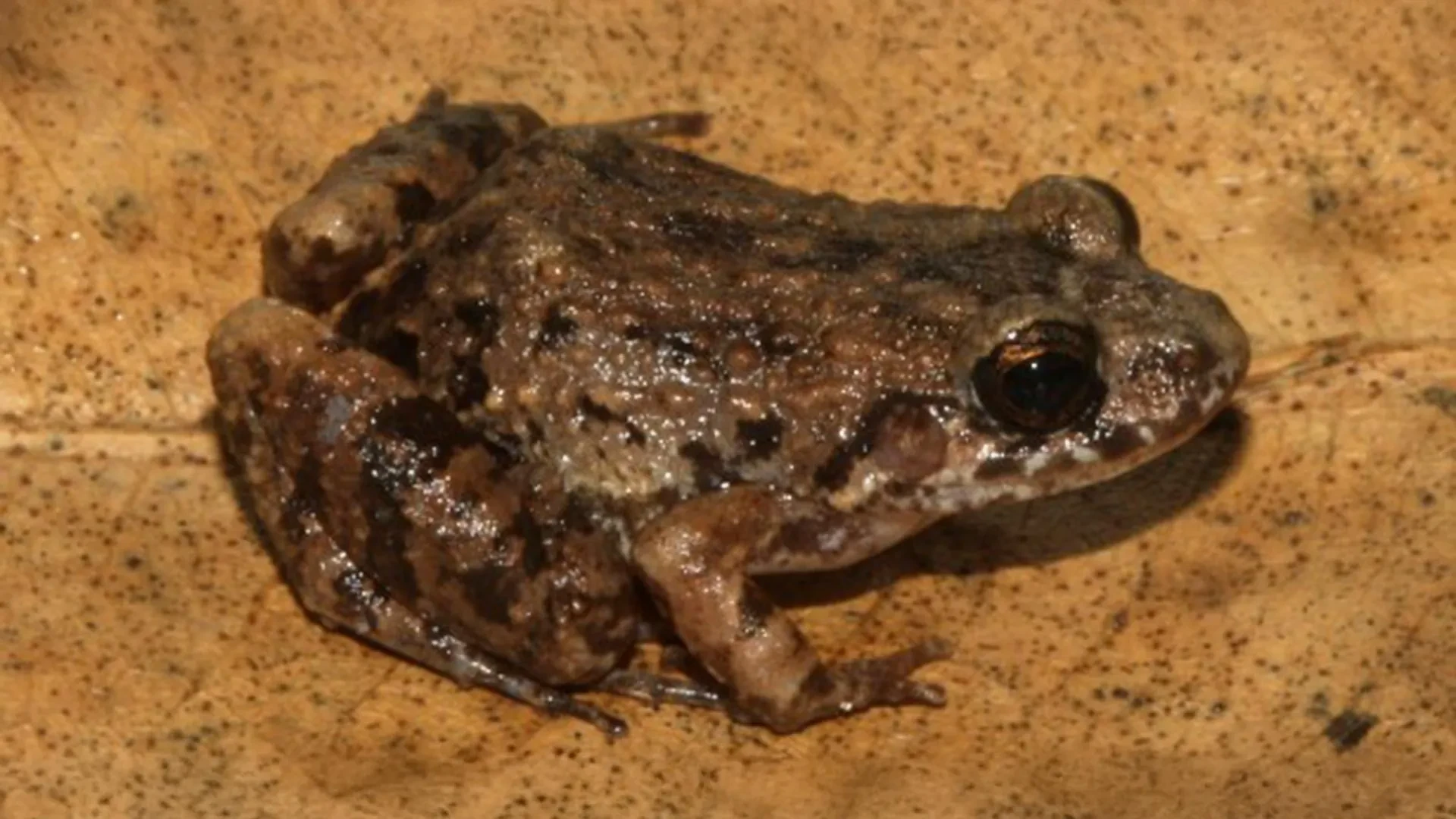
Deep within the seasonally inundated ecosystems of the western Amazon basin, scientists have formally described a previously unknown amphibian species: Adenomera varcena. Published in the peer-reviewed journal Ichthyology & Herpetology, the discovery is much more than a routine addition to global faunal lists. It serves as a compelling masterclass in "cryptic diversity"—the biological phenomenon wherein distinct species maintain near-identical morphological appearances while evolving separate genetic lineages and behavioral adaptations.
Led by a collaborative consortium of Brazilian and international researchers—including Célio F. B. Haddad of São Paulo State University (UNESP) and Thiago R. Carvalho of the Federal University of Minas Gerais (UFMG)—the identification of Adenomera varcena challenges long-held ecological assumptions about the genus Adenomera. Traditionally understood as inhabitants of unflooded, terra-firme (dryland) forests, members of this genus have now been found thriving in the challenging, dynamically changing environment of Amazonian floodplain forests, known locally as varzea—the very ecosystem from which the new species derives its specific epithet.
Yet, this scientific triumph is tempered by a sobering reality. As anthropogenic pressures mount across South America, the race to catalog biological diversity is increasingly becoming an uphill battle against time and habitat loss. Undescribed species like Adenomera varcena exist in a legal and environmental vacuum; because they lack formal taxonomy, they are routinely omitted from conservation policy, red-list assessments, and localized environmental impact reports. This authoritative report examines the discovery of Adenomera varcena, the integrative methodologies that unmasked its identity, the ecological significance of its unique habitat, and the ticking clock of climate change and deforestation that threatens Neotropical biodiversity before it can even be understood.
Detailed Chronology
The Expedition into the Upper Juruá
The journey toward uncovering Adenomera varcena began deep in the field, amid the remote, biologically rich expanses of the western Brazilian state of Acre. Specifically, the research team concentrated their efforts within the Upper Juruá River region, surveying fragile forest fragments situated near the Moa and Crôa rivers in close proximity to the municipality of Cruzeiro do Sul.
The western Amazon is globally recognized as a hotbed of endemism and evolutionary radiation. However, navigating these seasonally flooded terrain systems presents immense logistical and biological challenges. The landscape is defined by vast hydrological fluctuations; areas that resemble dry woodland during the dry season become entirely submerged aquatic ecosystems during peak water periods. It was within this transitional, fluid ecotone that the researchers encountered the small, unassuming frogs that would eventually upend taxonomic assumptions about the Adenomera genus.
Unraveling the Morphological Mask
In the early stages of field collection, distinguishing the new specimens from known species using classical morphology alone proved exceptionally difficult. To the naked eye, Adenomera varcena shares striking physical similarities with its congeneric relatives—a classic signature of cryptic evolution, where selective pressures have maintained conserved body plans across divergent evolutionary lineages.
However, meticulous anatomical examination by the research team began to unearth subtle, diagnostic divergences. Most notably, researchers observed the consistent absence of a distinct dark spot on the underside of the forearm—a microscopic morphological marker that separates Adenomera varcena from morphologically similar sister taxa.
Recognizing that morphology tells only part of the story, the team deployed an integrative framework, pairing physical voucher specimens preserved in institutional natural history collections with state-of-the-art molecular and acoustic techniques.
Decoding the Acoustic and Genetic Signature
To confirm that they were dealing with a distinct evolutionary species, the researchers turned to two powerful diagnostic tools: DNA barcoding and bioacoustics.
Mitochondrial and nuclear DNA sequence comparisons provided definitive genetic proof that the populations sampled in the Acre floodplains constituted an independent lineage, genetically isolated from other known Adenomera groups. Simultaneously, field recordists captured the mating calls of the male frogs. In anurans (frogs and toads), vocalizations act as pre-zygotic isolating mechanisms—behavioral barriers that prevent interbreeding between closely related species.
The mating call of Adenomera varcena revealed a unique acoustic profile. The frog produces a characteristically short vocalization delivered at a notably slow rhythm. By combining this distinct bioacoustic signature with molecular divergence data, anatomical nuances, and detailed micro-habitat records, the team built an unassailable scientific case for the formal naming and description of Adenomera varcena.
Supporting Context & Metrics
The Enigma of Cryptic Diversity
The formal documentation of Adenomera varcena brings sharply into focus the broader phenomenon of cryptic diversity within tropical ecosystems. For decades, biodiversity estimates relied heavily on phenotypic taxonomy—classifying organisms based strictly on physical appearance. However, the advent of molecular phylogenetics has completely revolutionized tropical biology, repeatedly demonstrating that morphological conservatism can mask staggering levels of hidden biological diversity.
In the Amazon basin, where evolutionary pressures, historic riverine barriers, and complex climatic shifts have driven intense speciation, cryptic species may account for a substantial percentage of total vertebrate and invertebrate richness. When animals look virtually identical, traditional field surveys fail to register the presence of distinct evolutionary units. This has profound implications for biogeography; it suggests that our foundational maps of Amazonian biodiversity are heavily underestimating the true magnitude of life packed into these complex forest ecosystems.
Shifting Paradigms: Adenomera in Flooded Forests
The ecological context of Adenomera varcena represents perhaps its most surprising scientific contribution. The genus Adenomera has historically been categorized as an archetypal inhabitant of terra firme (non-flooded) forests, where species typically deposit their eggs in foam nests on land or in shallow terrestrial burrows, away from the direct hazards of rushing river currents.
By contrast, Adenomera varcena was discovered making its home within seasonally flooded forests (várzea ecosystems). This habitat specialization upends conventional ecological wisdom regarding the genus. The specific epithet varcena was explicitly chosen by the authors to honor these dynamic, water-stressed ecosystems.
Living in a várzea environment requires specialized physiological and behavioral adaptations. Because these forests experience regular, predictable cycles of deep inundation, resident amphibians must synchronize their life histories—including calling, territory defense, mating, and embryonic development—with the shifting hydrological regimes of the river basins.
Institutional Collaboration and Global Science
The discovery and description of Adenomera varcena was not an isolated academic exercise; it was the product of a massive, multi-institutional scientific network designed to tackle the complexities of Neotropical biodiversity. The research initiative brought together academic powerhouses across Brazil and beyond.
Core leadership was provided by researchers affiliated with the Center for Research on Biodiversity Dynamics and Climate Change (CBioClima)—a prestigious Research, Innovation, and Dissemination Center (RIDC) funded by the São Paulo Research Foundation (FAPESP). Institutional contributors included:
- São Paulo State University (UNESP)
- Federal University of Minas Gerais (UFMG)
- University of São Paulo (USP)
- Federal University of Uberlândia (UFU)
- Pontifical Catholic University of Ecuador (PUCE-Quito)
This cross-institutional collaboration highlights the modern reality of taxonomic research: resolving complex cryptic species complexes requires high-end laboratory infrastructure, genetic sequencing facilities, extensive bioacoustic libraries, and access to internationally curated natural history museums.
Official Statements
The formal publication of Adenomera varcena in Ichthyology & Herpetology has triggered important conversations within the scientific community regarding the vulnerability of undescribed taxa and the compounding threats of global environmental change.
Reflecting on the ecological uncertainties surrounding the species, Dr. Thiago R. Carvalho, professor at the Federal University of Minas Gerais (UFMG) and researcher with CBioClima, emphasized the challenges of predicting how the frog will respond to anthropogenic pressures:
"Since we don’t yet know in detail the species’ ecological requirements and its natural history [reproductive period and mode], it’s difficult to predict the impacts of climate change, which may alter the seasonal flooding patterns of the floodplain forest ecosystem in this region of the Amazon. Since the species has a preference for this specific ecosystem, it’s possible to suggest that these changes in flood dynamics may influence—though we don’t know to what extent—the species’ reproductive behavior. In a scenario of accelerated loss of natural areas, the formal description of a new species underscores how much more effort we still need to make to advance studies on our biodiversity. Species may become locally extinct even before they’re formally recognized as species through their naming and description."
Echoing these concerns from a systemic and conservation-focused perspective, Dr. Célio F. B. Haddad, professor at São Paulo State University (UNESP) and co-author of the study, addressed the perilous disconnect between the rapid pace of ecosystem destruction and the deliberate, methodical nature of taxonomic science:
"Currently, the pace of ecosystem destruction outpaces the capacity of taxonomic studies to keep up. Consequently, species that haven’t yet been described are omitted from lists of threatened fauna and remain legally and environmentally vulnerable. Thus, describing new species serves as a tool that aids in their protection. Furthermore, deepening our knowledge of actual biodiversity expands our understanding of the evolution of organisms, consolidating an essential pillar for both pure science and conservation strategies."
These statements encapsulate the dual crisis facing tropical herpetology today: a vast, hidden reservoir of unrecognized biodiversity coexisting with an unprecedented wave of environmental degradation driven by deforestation, agricultural expansion, and shifting hydrological cycles.
Future Outlook
The Shadow of Climate Change on Várzea Ecosystems
As researchers look toward the future, understanding the fundamental ecology of Adenomera varcena has become an urgent scientific priority. The Amazonian várzea is not a static landscape; it is highly sensitive to broad-scale climatic shifts. Anthropogenic climate change is increasingly disrupting historical hydrological cycles across South America, triggering severe droughts in some river basins while causing unprecedented, prolonged flooding in others.
Because Adenomera varcena is specifically adapted to the unique ecological niche of seasonally flooded forests, any anthropogenic alteration to the timing, duration, or depth of these floods could have catastrophic repercussions for its life cycle. If floodwaters rise prematurely, embryonic stages deposited in the floodplain could be drowned or washed away before completion. Conversely, if dry spells extend abnormally, the microclimatic moisture required for adult survival and vocalization behavior could collapse.
At present, science simply does not have the baseline demographic or ecological data to model these risks accurately. Future research expeditions must prioritize longitudinal field studies focused on mapping the precise reproductive windows, larval development rates, population densities, and micro-habitat utilization of Adenomera varcena across multiple hydrological cycles.
Taxonomy as a Conservation Imperative
Beyond the specific fate of Adenomera varcena, this discovery serves as an urgent wake-up call for conservation policy and environmental management in Brazil and the broader Neotropical realm.
Taxonomy is frequently mischaracterized by the public—and occasionally by funding agencies—as a purely academic, archival pursuit of naming and cataloging organisms of historical interest. However, as Dr. Haddad points out, taxonomy is quite literally a matter of life and death for wild populations.
Under current international and domestic environmental legal frameworks, protection is overwhelmingly reactive. Governments establish protected areas, enact anti-deforestation laws, and compile endangered species red lists based almost entirely on formally described species. An organism that exists in the wild but lacks a scientific binomial name is effectively invisible to the legal apparatus. It cannot be listed as endangered, it cannot trigger environmental impact assessment mandates for industrial projects, and it cannot be prioritized for emergency conservation interventions.
Therefore, accelerating the pace of taxonomic description is an indispensable pillar of modern conservation biology. Uncovering hidden lineages like Adenomera varcena transforms anonymous, vulnerable populations into recognized legal entities equipped with the scientific documentation required to advocate for their preservation.
The Road Ahead for Amazonian Amphibians
The discovery of Adenomera varcena in the western Amazon confirms that the region harbors an immense wealth of evolutionary history that remains entirely undocumented. The research team’s finding that numerous other Adenomera lineages remain formally undescribed indicates that the surface has barely been scratched.
Unlocking these evolutionary secrets will require sustained, long-term financial investment in field research, support for natural history museums and taxonomic curation, and robust international scientific partnerships. As the pressures of climate change and habitat fragmentation continue to close in around the margins of the Amazon basin, the window of opportunity to document, understand, and protect these fragile ecosystems is rapidly narrowing.
In this light, every newly described cryptic species represents both a celebration of evolutionary ingenuity and a solemn reminder of what stands to be lost if humanity fails to match the speed of ecological destruction with an equally passionate commitment to scientific discovery.