

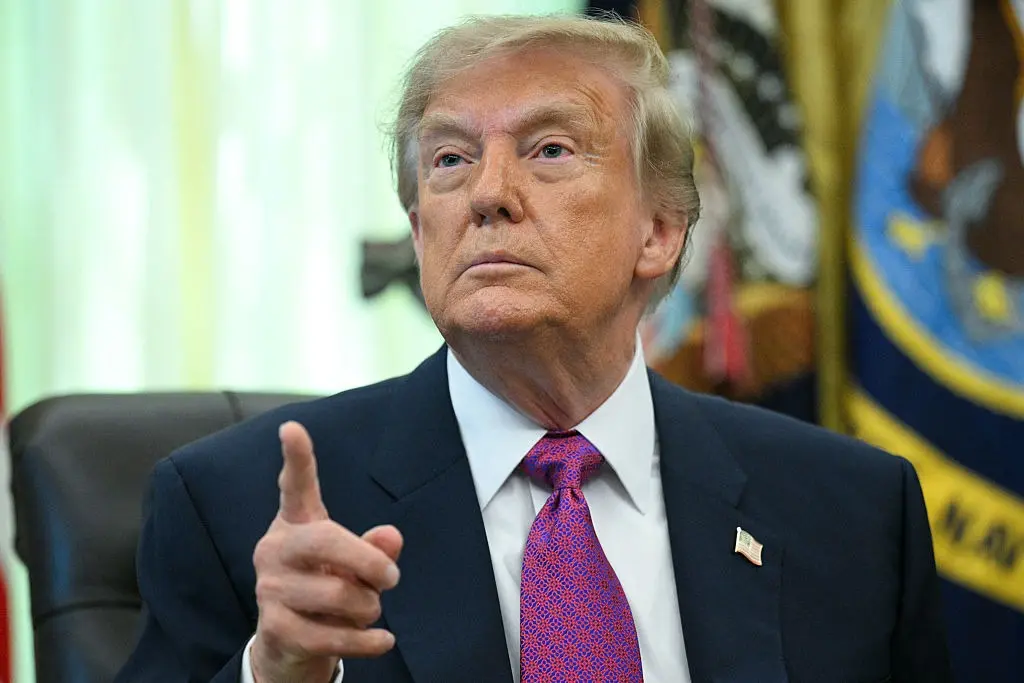
WASHINGTON — In a dramatic escalation of tensions between the executive branch and the American media, President Donald Trump announced an immediate ban barring journalists and personnel from CNN, MS NOW, and Politico from accessing the White House complex.
The sweeping restriction, declared via a widely circulated post on Truth Social, marks one of the most aggressive actions taken against the press in modern U.S. history. Press freedom advocates, legal scholars, and journalism organizations have swiftly condemned the move, labeling it a direct violation of First Amendment protections and a dangerous precedent for democratic governance.
Executive Overview
The announcement arrived on Friday afternoon via a volatile social media statement in which President Trump utilized the phrase "fake news" three times. He asserted that he was "proud to announce" the revocation of press credentials for three major news organizations, effective immediately.
"Media outlets shouldn’t be able to constantly write or report fiction and lies when they’re covering the President of the United States, the Trump Administration, or the United States of America," Trump wrote on Truth Social, adding a chilling warning to the broader media landscape: "Other Fake News Media Outlets to follow. Thank you for your attention to this matter!"
While the White House has yet to publish a formal executive order or policy document detailing the mechanics of the ban, the practical implications were felt immediately. Despite the administration’s declaration, reporters from CNN confirmed that their personnel remained seated in their designated White House workspace near the James S. Brady Press Briefing Room on Friday afternoon, setting the stage for a tense standoff between the press corps and executive enforcement.
First Amendment experts and media defense organizations argue that excluding specific, critical news organizations from a public building funded by taxpayers constitutes viewpoint-based discrimination and direct retaliation for unfavorable coverage—a clear constitutional violation.
Detailed Chronology: A Pattern of Escalation
To understand the gravity of the September 2026 ban, observers must look at the historical trajectory of adversarial relations between the second Trump administration and the fourth estate. This is not an isolated incident, but rather the latest escalation in a systematic campaign to marginalize independent media outlets.
The Precedent: The Associated Press Ban
The current crisis recalls a nearly identical confrontation in February 2025, when the Trump administration barred journalists from the Associated Press (AP) from the White House. That ban was enacted after the AP refused to comply with the administration’s unilateral directive to rename the Gulf of Mexico in its style guide.
The AP immediately challenged the decision, filing a federal lawsuit on First Amendment grounds. While the litigation remains ongoing, a federal judge ruled that the government could not arbitrarily bar accredited journalists from public proceedings, resulting in a temporary restoration of the AP’s access. Legal analysts note that the legal framework established during the AP case will likely serve as the foundation for upcoming legal challenges against the latest round of bans.
The Accumulation of Grievances
When questioned by reporters on Friday regarding the specific rationale behind banning CNN, MS NOW, and Politico, President Trump offered no specific articles, broadcasts, or investigations to justify the directive. Instead, NBC News reported that the president defended the policy as the result of "cumulative stories over the last few years."
Rather than pointing to factual retractions or formal corrections, the administration’s frustration appears rooted in persistent investigative reporting covering White House policy, internal administration conflicts, and ongoing legal challenges faced by the executive branch.
By refusing to cite specific journalistic infractions, the administration has framed the ban not as a dispute over accuracy, but as a punitive measure against outlets whose editorial tone does not align with executive messaging.
Supporting Context & Metrics: Public Perception and Press Freedom
The timing of the White House ban coincides with growing public anxiety regarding the state of American democracy and freedom of the press.
Pew Research Center Findings
A comprehensive study published by the Pew Research Center highlights a stark public awareness of the deteriorating climate for journalists. According to the data:
- 44% of all U.S. adults believe the press has become less free during the second Trump administration.
- 12% maintain that the press has become more free.
- 26% see no significant change in the media landscape.
- 17% remain unsure.
These figures underscore a deep societal divide over the role of journalism, yet they also reveal a broad public consensus that executive hostility toward the press has measurably damaged the information ecosystem.
The Role of the "People’s House"
Media critics emphasize that the White House is not a private corporate headquarters; it is the "People’s House," owned and maintained by the American public. Access to the executive mansion is historically managed through the White House Correspondents’ Association (WHCA) and institutional accreditation standards designed to ensure neutral, viewpoint-agnostic access. Banning organizations based on their editorial perspective undermines the structural integrity of these long-standing arrangements.
Official Statements and Industry Condemnation
The response from press advocacy groups, civil liberties organizations, and journalism unions has been swift and unyielding. The consensus among legal and media watchdogs is that allowing this ban to stand unchallenged would permanently alter the relationship between the government and the governed.
The National Press Club
In an official statement released shortly after the president’s announcement, the National Press Club urged the administration to reverse course immediately:
"If implemented, this ban would mark an unprecedented assault on press freedom. A president cannot simply choose to silence outlets that scrutinize his administration. We call on the White House to rescind this declaration immediately and restore full access to all accredited journalists."
Freedom of the Press Foundation
Seth Stern, chief of advocacy at the Freedom of the Press Foundation, issued a blistering critique of the administration’s strategy, pointing to the underlying motivations behind the executive action:
"It’s difficult to imagine a more blatant violation of the First Amendment than Trump banning news outlets from the People’s House for criticizing the government. It’s also hard to imagine a dumber move," Stern stated.
"The historically unpopular president has been retaliating against the press for years, but it hasn’t helped him. The press keeps exposing his corruption and his failures. These outrageous attacks only demonstrate how scared he is of an informed public."
Broad Institutional Pushback
Across the media spectrum, editors and publishers have recognized the systemic threat posed by the ban. Even outlets not explicitly named in the initial directive have expressed solidarity with CNN, MS NOW, and Politico, recognizing that a precedent permitting the executive branch to cherry-pick its interlocutors threatens the operational capacity of every independent newsroom in the country.
Future Outlook: Legal Battles and Constitutional Showdowns
As the dust settles on the initial announcement, the immediate future of White House press access will likely be decided in the federal courts.
Upcoming Legal Challenges
Legal scholars anticipate that CNN, MS NOW, and Politico—potentially joined by media coalitions and press advocacy organizations—will file emergency lawsuits seeking preliminary injunctions against the White House. The legal arguments will lean heavily on established First Amendment jurisprudence, which dictates that the government cannot open a public forum (such as the White House press facilities) and subsequently exclude participants based on the viewpoint or content of their speech.
The Standoff in the Press Room
On the ground, the physical confrontation inside the White House workspace points to a protracted logistical stalemate. With reporters refusing to vacate their desks and the administration threatening enforcement, executive staff face difficult choices regarding how—or if—they will physically restrict access. Forcing credentialed journalists out of the building would generate powerful imagery and significantly strengthen the legal standing of the plaintiffs in upcoming court battles.
Broader Implications for American Democracy
Beyond the immediate legal and physical confrontations, the broader implications for American democracy remain severe. When an administration normalizes the exclusion of critical media, it erodes the shared reality required for democratic debate.
As the legal challenges mount and public pressure intensifies, the coming weeks will test the resilience of American constitutional norms. Whether the judiciary will successfully defend the boundaries of the First Amendment against executive overreach remains the central question facing the nation’s press corps and its democratic institutions.