

Executive Overview
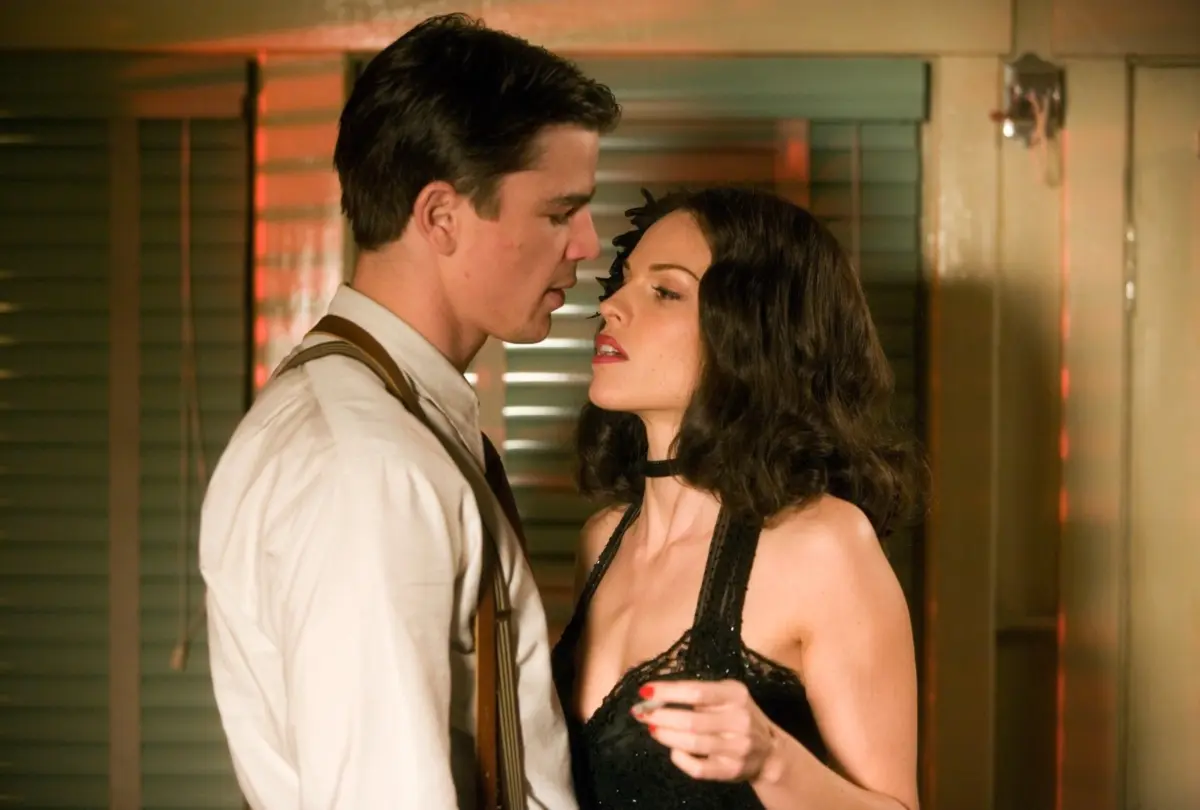
Two decades after its much-anticipated theatrical release, Brian De Palma’s cinematic adaptation of James Ellroy’s seminal 1987 neo-noir novel, The Black Dahlia, remains a fascinating study in high-profile misfires. Released in September 2006, the film arrived bearing the immense weight of elite expectations. De Palma, a master of stylistic suspense whose 1987 masterpiece The Untouchables set a gold standard for period crime thrillers, was operating at the helm of a star-studded cast that included Josh Hartnett, Scarlett Johansson, Aaron Eckhart, and Hilary Swank.
Yet, instead of matching the critical and commercial triumph of Curtis Hanson’s 1997 adaptation of Ellroy’s L.A. Confidential, De Palma’s film wilted under its own narrative contradictions and clumsy editing. Contemporary critics mercilessly savaged the picture, turning its performers into punchlines and warning audiences away from box-office ticket counters.
However, looking back with twenty years of hindsight reveals a more nuanced reality. In an era dominated by homogenous, algorithm-driven streaming content, The Black Dahlia‘s lavish, idiosyncratic ambitions look far more compelling than they did during the mid-2000s prestige boom. Moreover, the film’s flawed execution highlights a broader cultural struggle: Hollywood’s continuous, often exploitative inability to properly translate the real-life tragedy of Elizabeth Short—the 22-year-old aspiring actress whose brutal 1947 murder birthed modern America’s true-crime obsession—into a coherent, respectful cinematic narrative.
Detailed Chronology: From 1947 Los Angeles to the 2006 Cinematic Stumble
To understand why The Black Dahlia continues to cast such a long shadow over both cinema and true-crime culture, it is essential to trace the trajectory from the actual historical trauma to its troubled modern adaptations.
January 1947: The Birth of an American Myth
On January 15, 1947, the mutilated, bisected body of 22-year-old Elizabeth Short was discovered in a vacant lot in Leimert Park, Los Angeles. The brutality of the crime—including signs of severe torture and a "Glasgow grin" slashed from ear to ear—shocked a recovering post-war America. Sensationalist journalists quickly dubbed the victim "The Black Dahlia," a moniker inspired by Raymond Chandler’s 1946 noir thriller The Blue Dahlia. Instead of humanizing Short, the press transformed her into an ominous symbol of urban moral decay, establishing a dangerous template for how society processes violence against women.
1987: James Ellroy’s Literary Catalyst
Forty years after the murder, crime novelist James Ellroy published The Black Dahlia, the first installment of his celebrated L.A. Confidential (L.A. Quartet) series. Ellroy injected the historical tragedy into a sprawling, highly fictionalized narrative of police corruption, obsession, and sexual depravity. While critically acclaimed, Ellroy’s book cemented Short’s fictionalized legacy as a cautionary tale rather than an exploration of a real human being.
September 1997: The L.A. Confidential Peak
Curtis Hanson’s film adaptation of Ellroy’s L.A. Confidential dominated the cultural landscape, earning multiple Academy Awards and setting an exceptionally high bar for neo-noir cinema. Its success created an insatiable appetite in Hollywood for more Ellroy adaptations, setting the stage for De Palma’s eventual greenlight.
September 2006: De Palma’s Miscalculation
Nearly a decade after Hanson’s triumph, Universal Pictures released Brian De Palma’s The Black Dahlia. Costly, heavily stylized, and burdened by a convoluted plot that strayed wildly from historical fact, the film bombed with critics and audiences alike. Stephanie Zacharek, writing for Salon, memorably likened Josh Hartnett’s performance to "the Roach Motel of actors: Feelings get in, but they don’t get out." The film’s poor box-office performance temporarily sidelined major-studio attempts to tackle mid-century noir on an epic scale.
Supporting Context & Metrics: Re-Evaluating the Flop
Time often alters the perception of cinematic failures, and The Black Dahlia is a prime candidate for historical reassessment.
| Metric / Aspect | 2006 Reception | 2026 Perspective |
|---|---|---|
| Critical Consensus | Widely panned; criticized for messy editing, miscast leads, and tonal inconsistency. | Viewed as an ambitious, visually striking swing that surpasses much of today’s sterile streaming content. |
| Box Office Performance | Underperformed domestically against a high budget, failing to recoup its prestige investments. | Cult status has grown among cinephiles seeking bold auteur-driven failures. |
| The "Lost Cut" Legend | Rumors of studio interference and a sprawling 3-hour original edit by De Palma. | Praised by author James Ellroy in his essay collection The Hillikers, suggesting an unreleased masterpiece might exist. |
| Handling of Elizabeth Short | Overshadowed by genre tropes, police procedural mechanics, and the "femme fatale" mythos. | Analyzed through a modern lens that critiques how mid-century media flattened women into saints or sinners. |
The artistic legacy of the film is also tied to its production lore. Rumors persist of a legendary, three-hour director’s cut overseen by De Palma that was severely trimmed down by studio executives nervous about pacing and runtime. James Ellroy himself reportedly praised this longer version in his essay "The Hillikers," fueling fan speculation that a superior director’s cut could one day vindicate the project.
Official Statements and Industry Reflections
The cultural resonance of the Black Dahlia case extends far beyond Hollywood adaptations, drawing fierce commentary from authors, filmmakers, and cultural historians who grapple with the ethics of true crime.
James Ellroy, whose work is inextricably linked to the mythology of the case, has famously expressed disdain for the comforting narrative neatness that modern audiences demand from crime stories. In his searing 1996 memoir My Dark Places, written while investigating the unsolved murder of his own mother, Ellroy addressed the concept of "closure" with characteristic fury:
*"I wanted to find the fool who invented closure and shove a big closure plaque up his a*."
Ellroy’s resistance to tidy resolutions mirrors the reality of Elizabeth Short’s murder: an open wound that has never healed because the perpetrator was never definitively brought to justice.
Historians and contemporary researchers, such as William J. Mann—author of Black Dahlia: Murder, Monsters, and Madness in Midcentury Hollywood—have pushed back against the decades of myth-making. Mann’s work emphasizes journalistic meticulousness to dismantle lingering, misogynistic assumptions about Short’s life, such as the persistent, unproven rumor that she worked as a sex worker. These narratives, perpetuated by male-dominated pulp fiction and cinema, long relied on a rigid saint-sinner binary to process female identity.
Future Outlook: Breaking the Cycle of True-Crime Exploitation
As we look toward the future of cinematic and literary noir, the cultural appetite for stories about Elizabeth Short shows no sign of abating. However, the framework through which we view these tragedies is undergoing a profound evolution.
Audiences and creators are increasingly signaling an openness to dismantling the exploitative tropes that defined late-20th-century true crime. Shows like Ryan Murphy’s American Horror Story and various television documentaries have repeatedly leaned into the ghost of the Dahlia, treating her as a pop-culture cipher rather than a historical person. Yet, this very fatigue may pave the way for more responsible, humanizing storytelling.
The primary reason Hollywood has never delivered a universally satisfying cinematic adaptation of the Black Dahlia murder is simple: the crime was never definitively solved, making absolute narrative closure an impossibility. Brian De Palma tried to force a resolution and suffered for it creatively. Future filmmakers tackling mid-century Los Angeles crime may finally learn from these mistakes—abandoning the pursuit of tidy Hollywood endings in favor of acknowledging the messy, tragic reality of a young woman’s life swallowed whole by myth.