

Executive Overview
In modern American political theater, few strategies have been as persistently deployed—or as corrosive to democratic institutions—as "whataboutism." Designed not to defend an official’s record, but rather to tear down the very concept of objective accountability, this tactic forms the cornerstone of the contemporary MAGA political playbook.
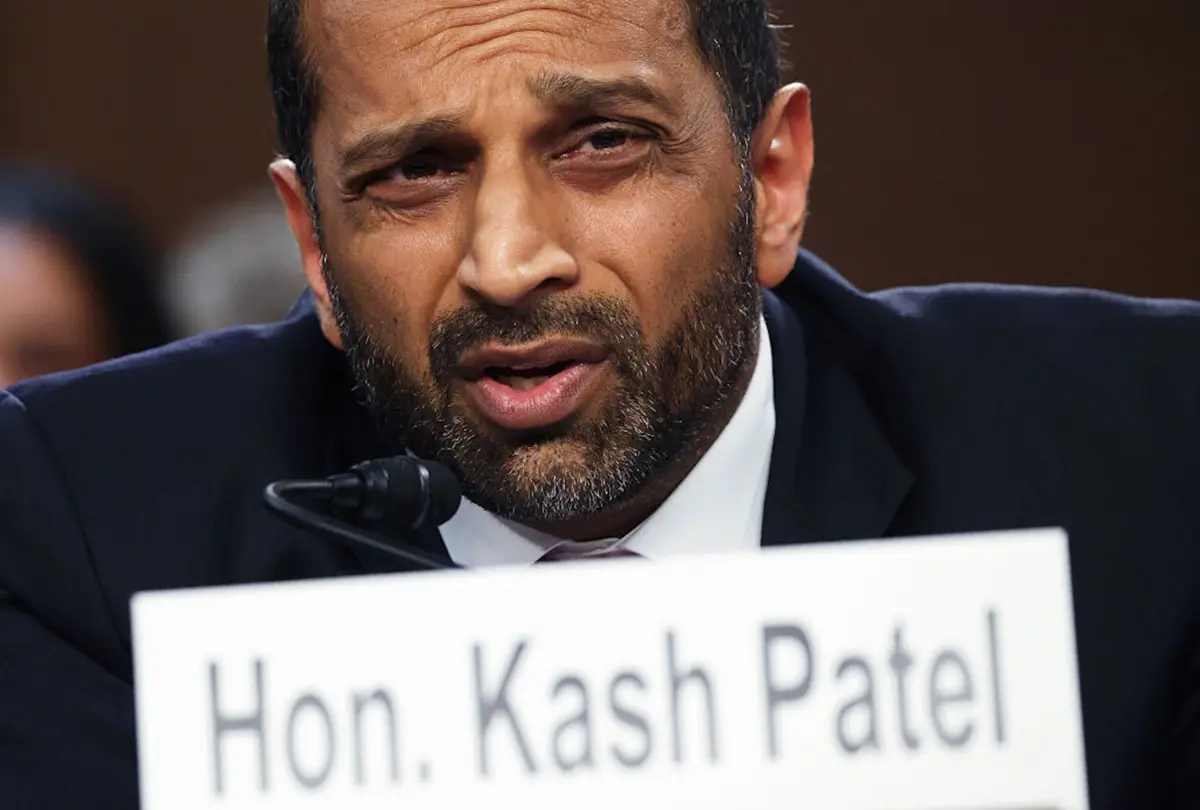
Nowhere was this phenomenon more vividly—and disastrously—on display than during Federal Bureau of Investigation (FBI) Director Kash Patel’s testimony before the Senate Judiciary Committee on September 15, 2026. What was ostensibly a routine oversight hearing quickly devolved into a surreal spectacle, highlighted by Patel’s bizarre defense of relaxed agency hiring standards regarding bestiality.
Yet, beneath the viral headlines and internet mockery lies a darker, more calculated design. Patel’s performance was not merely an exercise in personal incompetence; it was a symptom of a broader authoritarian strategy aimed at sowing profound public cynicism. By attempting to deflect legitimate oversight through pre-planned personal attacks and generalized accusations of systemic corruption, Patel and his political allies sought to propagate a single, insidious myth: everyone is just as corrupt as we are.
This comprehensive analysis examines the anatomy of Patel’s disastrous hearing, the mechanics of modern political whataboutism, the institutional degradation of federal law enforcement under partisan pressure, and the shifting political tides that suggest voters may finally be growing weary of manufactured outrage.
Detailed Chronology: The Senate Judiciary Committee Hearing
The sequence of events leading up to and during the September 15 Senate Judiciary Committee hearing underscored an administration increasingly incapable of governing through competence, relying instead on performative hostility.
1. The Setup: The "Burn Book" Strategy
Upon entering the Senate chamber, Director Patel was photographed carrying a strategically angled crib sheet designed to be captured by media cameras. The document listed personal attacks and grievances to fling at committee members, specifically targeting Senator Dick Durbin (D-Ill.). Entries included allegations regarding Durbin’s family lobbying connections and financial disclosures.
This pre-meditated maneuver mirrored previous administration hearings—most notably former Attorney General Pam Bondi’s appearances—where officials arrived equipped with visible "burn books" of insults. The goal was transparent: short-circuit substantive questioning by immediately putting the inquisitors on the defensive.
2. The Trap: Relaxed Standards and Bestiality
The strategy immediately fractured when Senator Durbin questioned Patel regarding a recent, highly controversial policy shift at the FBI. Facing severe recruitment and retention crises, the bureau had quietly rolled back various hiring regulations—most notably dropping a strict prohibition against applicants who admitted to engaging in bestiality.
When pressed on the rationale behind removing this ban, Patel offered a response that instantly ricocheted across global media:
"We did not want to punish victims of bestiality."
The statement inverted basic legal and moral logic, as human perpetrators in such acts are universally understood to be victimizers, not victims. Although Patel subsequently scrambled to argue that the rule change was intended to protect sex trafficking victims who might have been coerced into participating in such acts, the damage was done.
The exchange deteriorated further when Louisiana Republican Senator John Kennedy interjected, bewildered by the direction of the hearing:
"Why would you even get into bestiality?"
"We are not into bestiality," Patel replied.
With that single exchange, any veneer of administrative gravitas evaporated. The director of the premier federal law enforcement agency found himself on the congressional record formally clarifying that his agency was "not into" having sex with animals.
3. The Exhaustion of the Attack Dog
Following the bestiality debacle, Patel’s intended strategy of aggressive retaliation faltered. Visibly fatigued—noted by distinct circles beneath his eyes and a weary demeanor—Patel abandoned the detailed personal attacks scripted on his note card. Instead, he retreated to generic, unfocused grievances about "lies" and "fraud" within the legislative branch.
For over four hours, Patel performed indignation at being subjected to oversight by Democratic lawmakers, playing less like an accountable public servant and more like a political pundit executing a script written for a single viewer: Donald Trump. Media analysts quickly pointed out that the performance was tailored entirely for an audience of one in the West Wing, where institutional defiance is rewarded above all else.
Supporting Context & Metrics: The Erosion of Law Enforcement Standards
The controversy surrounding Patel’s testimony is not an isolated PR misstep; it is symptomatic of a systemic degradation of federal institutions under intense partisan pressure.
The Recruitment and Retention Crisis
The FBI has faced unprecedented internal turmoil and recruitment deficits in recent years, driven by intense political polarization, frequent leadership turnover, and the politicization of investigative priorities. Rather than addressing these structural challenges through professional management and improved morale, leadership opted to lower the bar for entry.
Key metrics highlighting the agency’s internal strain include:
- Erosion of Vetting Standards: The removal of categorical disqualifiers—including admissions related to severe behavioral abnormalities—points to a desperate quantitative push for personnel at the direct expense of qualitative integrity.
- Morale Deficit: Long-serving field agents and administrative personnel have expressed growing alarm over leadership prioritizing political loyalty over traditional law enforcement acumen.
- Public Trust Metrics: Historically, the FBI enjoyed bipartisan reverence as an apolitical shield against domestic and international threats. Consecutive years of partisan crossfire have measurably diminished public confidence in the agency’s operational independence.
The Anatomy of Whataboutism
Political scientists define whataboutism as the practice of responding to an accusation of wrongdoing by claiming that an offense committed by an opponent is similar or worse. In the MAGA political ecosystem, this is elevated from a rhetorical defense mechanism to an overarching governing philosophy.
As observed by cultural and political analysts, the mechanics of this strategy operate on three distinct levels:
- Deflection: Shifting focus away from substantive incompetence or ethical lapses by pointing out real or perceived flaws in the accuser.
- Equivalence: Fostering the false narrative that institutional corruption is universal, thereby neutralizing the moral weight of any specific scandal.
- Resignation: Inducing voter apathy by convincing the electorate that systemic reform is impossible because "everyone does it."
Official Statements and Responses
The fallout from the September 15 hearing generated swift reactions across the political spectrum, illustrating deep divisions over institutional norms and political rhetoric.
- Senate Judiciary Committee (Democratic Caucus): Lawmakers expressed profound alarm not only at the policy changes regarding agency hiring standards but also at the apparent contempt shown by Patel toward congressional oversight. Senator Durbin characterized the leadership’s justifications as "legally absurd and morally offensive," emphasizing that national security and criminal justice infrastructure cannot be managed via partisan grievance.
- Republican Leadership Reaction: Privately and publicly, several conservative lawmakers displayed open discomfort with the direction of the hearing. Senator John Kennedy’s blunt questioning highlighted growing anxiety within conservative ranks regarding executive branch nominees who prioritize viral culture-war skirmishes over competent administrative governance.
- Media and Punditry: Pundits across the political landscape focused heavily on the unprecedented nature of the exchange. While pro-administration commentators attempted to frame the questioning as a "gotcha" distraction orchestrated by partisan Democrats, mainstream analysts noted that Patel’s inability to defend basic agency policies pointed to a deeper crisis of executive competence. Joe Scarborough of MS NOW famously captured the dynamic, noting that Patel was merely "performing for an audience of one" rather than engaging in genuine legislative oversight.
Future Outlook: The Declining Utility of Manufactured Cynicism
As the political calendar advances, early indicators suggest that the efficacy of whataboutism and manufactured cynicism may be reaching a point of diminishing returns.
A Shift in Voter Tolerance
For years, the "both sides do it" defense provided a comfortable intellectual refuge for disaffected voters, enabling low voter turnout or tacit support for controversial candidates during periods of relative economic stability. However, as everyday Americans grapple with persistent inflation, rising fuel costs, and protracted international conflicts, the hidden costs of administrative incompetence and political diversion have become glaringly apparent.
Recent electoral contests in key battleground states suggest that voters are increasingly rejecting candidates who rely solely on corruption-deflection tactics. An anti-corruption message rooted in institutional restoration and basic competence is finding renewed resonance among an electorate growing intolerant of governance-by-spectacle.
The Real-World Cost of Institutional Decay
Ultimately, the viral explosion of Kash Patel’s bestiality defense was symbolic of a broader truth: the degradation of public institutions has tangible, real-world consequences. When federal law enforcement agencies prioritize political compatibility over rigorous background checks and operational professionalism, public safety is directly compromised.
As the public observes the practical fallout of placing partisan attack dogs in charge of critical investigative bodies, the tolerance for performative governance is wearing thin. Patel’s disastrous testimony may well be remembered not just as a bizarre viral moment, but as the tipping point where the strategy of institutional cynicism finally collapsed under the weight of its own absurdity.