

Executive Overview
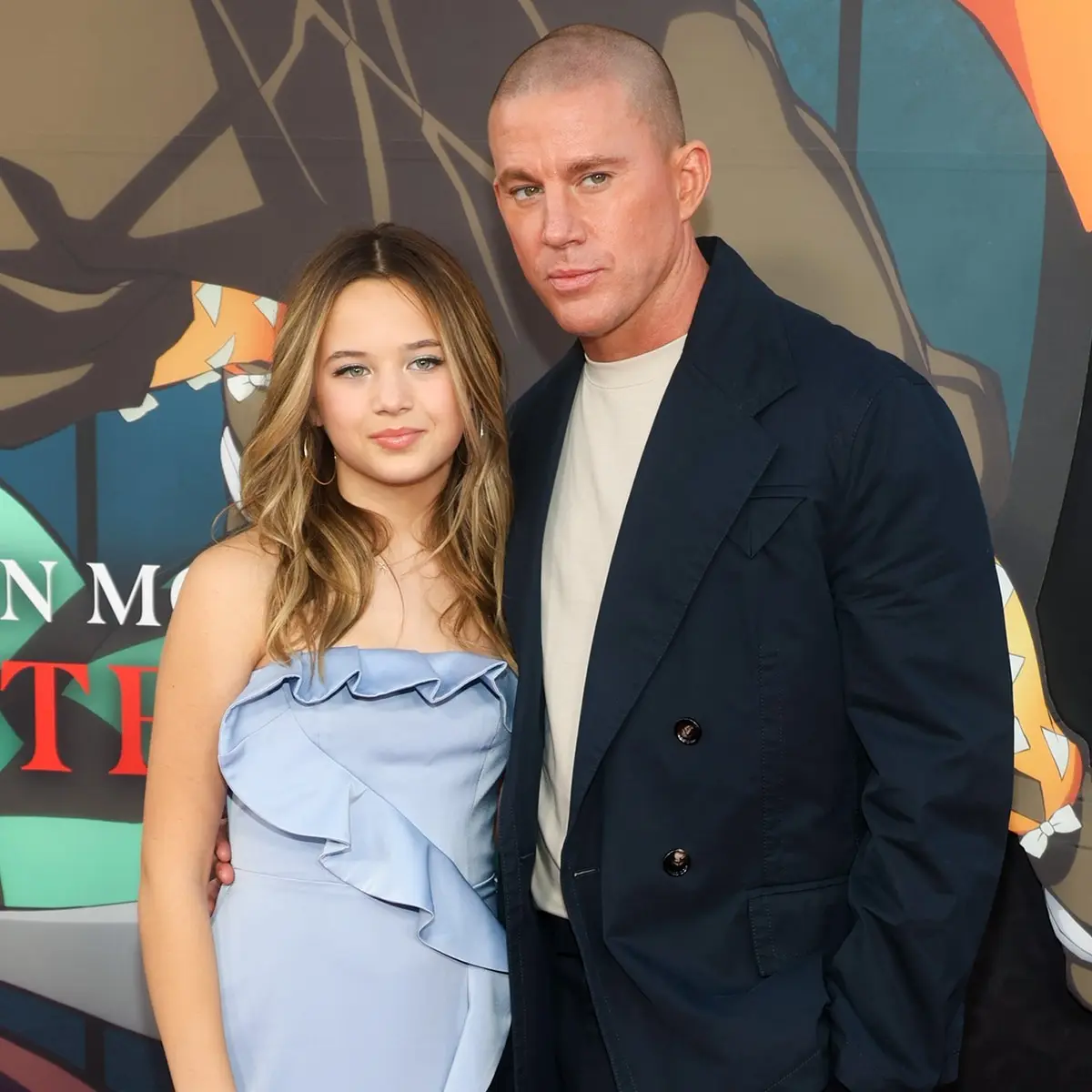
In the dynamic and often relentless world of Hollywood, maintaining a grounded perspective on family life remains one of the greatest challenges for high-profile celebrities. For actor, producer, and dancer Channing Tatum, the intersection of international stardom and everyday fatherhood has yielded a delicate, often humorous balancing act. In a recent, candid interview with E! News correspondent Will Marfuggi, the 46-year-old Step Up star opened up about a surprising revelation regarding his relationship with his 13-year-old daughter, Everly, whom he shares with his ex-wife, actress Jenna Dewan.
Despite an expansive filmography defined by physically demanding dance sequences, breathtaking acrobatic feats, and rhythm-centric blockbusters, Tatum admits that his years of athletic training and cinematic choreography have proven entirely inadequate when attempting to connect with his teenage daughter’s chosen passion: Irish Celtic dancing. While Tatum’s extensive background in sports and commercial dance made him a household name in the late 2000s, it has left him feeling entirely out of his depth on the sidelines of Everly’s competitive dance recitals.
Beyond the domestic humor of parenting a teenager who remains steadfastly unimpressed by his cinematic legacy, Tatum continues to navigate a demanding professional schedule. As he prepares for the theatrical release of his upcoming dramatic feature film Josephine—co-starring Gemma Chan and directed by Beth de Araújo—the actor reflects on how fatherhood has fundamentally reshaped his creative instincts. This deep dive explores Tatum’s humorous domestic dynamic with Everly, his transition into more psychologically complex cinematic roles, and the broader cultural phenomenon of celebrity parent-child dynamics in modern Hollywood.
Detailed Chronology
The evolution of Channing Tatum’s public journey as a father mirrors the accelerated pace of his daughter’s upbringing. To understand the current landscape of their relationship, it is essential to examine the chronological progression of Tatum’s parenting milestones alongside his professional trajectory.
The Early Years: Balancing Stardom and Diapers
When Everly Tatum was born in May 2013, Channing Tatum was at the absolute peak of his commercial viability as a leading man, fresh off the massive financial and cultural success of Magic Mike and 21 Jump Street. During her early childhood, Tatum openly embraced the chaotic transition into fatherhood, frequently sharing lighthearted anecdotes about the humbling realities of changing diapers and navigating toddler tantrums while maintaining an active presence on international movie sets.
Following his separation from Jenna Dewan in 2018, both parents publicly committed to a co-parenting framework centered entirely on Everly’s well-being and privacy. During this period, Tatum stepped back from high-profile studio tentpoles to spend dedicated, uninterrupted time with his daughter, even venturing into children’s literature by writing the The One and Only Sparkella book series inspired by his bond with Everly.
The Teenage Transition and the "Dance" Paradox
As Everly entered her adolescent years, the dynamics of communication and shared interests naturally shifted. Known colloquially in Hollywood as a "dance royalty" child due to the combined backgrounds of both her mother (a classically trained dancer and host) and her father (a breakout star of the dance-film genre), expectations were naturally high that Everly would follow in their footsteps with traditional hip-hop or contemporary styles.
Instead, Everly gravitated toward the highly technical, rigorous discipline of Irish Celtic step dancing. This unexpected artistic choice set the stage for the comedic disconnect Tatum recently detailed in his exclusive interview with E! News. While Tatum spent years perfecting street dance and cinematic choreography, Irish step dance relies on an entirely different biomechanical framework—one characterized by rigid upper bodies, rapid footwork, and precise rhythmic timing—leaving the veteran actor feeling thoroughly unequipped to offer coaching or technical critique.
The Professional Intersection: Josephine
Simultaneously, Tatum’s career entered a mature phase. After spending several years developing passion projects and navigating industry shifts, Tatum accepted a deeply challenging role in the upcoming psychological drama Josephine. Scheduled for a selective theatrical release on November 20 before expanding nationwide on December 4, the film casts Tatum and Gemma Chan as parents attempting to comfort and console their young daughter (played by Mason Reeves) in the harrowing aftermath of witnessing a violent crime.
Tatum noted that preparing for the intense emotional demands of Josephine required tapping directly into his instincts as a father. Rather than relying solely on technical acting methodologies, Tatum channeled the genuine protective instincts and vulnerability he experiences daily as a parent, working closely with director Beth de Araújo to deliver an authentic, raw performance.
Supporting Context & Metrics
To contextualize Channing Tatum’s current standing in both popular culture and the entertainment industry, it is helpful to examine the financial, demographic, and sociological metrics surrounding his career and family life.
Box Office and Career Metrics
- Career Box Office Legacy: Over a career spanning more than two decades, Tatum’s films have grossed well over $4 billion globally at the box office.
- Breakout Success: His defining early vehicle, Step Up (2006), was made on a modest production budget of approximately $12 million and went on to gross over $115 million worldwide, instantly catapulting him into international stardom and establishing his credentials as a cinematic dancer.
- Critical Acclaim: Beyond commercial blockbusters, Tatum has earned critical praise for dramatic and auteur-driven works, including Steven Soderbergh’s Logan Lucky and Magic Mike trilogy, as well as Bennett Miller’s critically acclaimed Foxcatcher, which showcased his dramatic range outside of traditional romantic comedies and action films.
The Changing Face of Celebrity Parenting
Sociological studies on modern celebrity culture indicate a distinct shift in how high-profile figures share their family lives. Unlike previous generations where children were entirely shielded or aggressively monetized through exclusive magazine spreads, contemporary stars like Tatum utilize digital platforms and controlled media appearances to project an image of hyper-relatability.
- The "Unimpressed Teen" Phenomenon: Market research and media analysis consistently show that teenagers of A-list celebrities—much like Everly Tatum—rarely view their parents through the lens of box office success. Tatum’s admission that he will "never be cool" to his 13-year-old daughter aligns with psychological norms of adolescent development, where parental authority and fame are routinely minimized by teenagers seeking autonomous identities.
- Co-Parenting Stability: Despite the intense public scrutiny surrounding high-profile divorces, Tatum and Jenna Dewan have maintained a remarkably stable public front regarding co-parenting responsibilities, ensuring that Everly’s upbringing remains centered around stability, creative expression, and education.
Official Statements & Direct Quotations
The candid nature of Tatum’s recent media appearances provides invaluable insight into his private life. Below are key excerpts and contextual breakdowns of statements made by the actor during his interview with E! News correspondent Will Marfuggi, as well as reflections from previous media touchpoints:
"All my years of sports are absolutely useless. I can help a little dance, but she picked a certain style of dance that I also cannot help with: Irish Celtic dancing. So, I’m useless to her."
— Channing Tatum, explaining the comedic mismatch between his athletic background and his daughter’s chosen discipline.
Tatum elaborated on his role as a spectator during high-stakes adolescent competitions, highlighting his complete reliance on professional instructors to gauge his daughter’s performance:
"I have to look at her instructor when she comes off and I’m like, ‘Was it good? It looked good to me.’"
— Channing Tatum, describing his attendance at Everly’s Irish step dance recitals.
Recognizing that paternal value extends far beyond the dance studio, Tatum humorously highlighted his fallback zone of expertise:
"I’m like, ‘If you ever want to throw a football 100 yards, let me know.’"
— Channing Tatum, on leaning into his athletic strengths when dance instruction fails.
Discussing his creative process for the upcoming dramatic film Josephine, directed by Beth de Araújo, Tatum emphasized the seamless crossover between his real-life paternal instincts and his character work:
"There was a lot of the character that was my instincts. I just wanted to be able to have given her [Beth de Araújo] as much to work with inside of that because sometimes pushing really hard is what really works."
— Channing Tatum, on utilizing his parental emotions to anchor his performance in Josephine.
Addressing his daughter’s perception of his extensive filmography, Tatum previously remarked on the humbling reality of raising a media-literate teenager:
"She has seen tons of them. She’s like, ‘Whatever, I don’t wanna see those.’ She acts like she doesn’t care."
— Channing Tatum, speaking to E! News regarding Everly’s indifference toward his cinematic achievements.
Future Outlook
As Channing Tatum steps into the latter half of the 2020s, his trajectory both professionally and personally points toward a period of deliberate consolidation and creative maturation.
Professional Horizons
With the impending release of Josephine—hitting select theaters on November 20 before expanding nationwide on December 4—Tatum is signaling a distinct pivot toward more grounded, character-driven dramatic storytelling. While audiences have long associated him with high-energy physical comedies, action franchises (21 Jump Street, G.I. Joe), and dance spectaculars (Step Up, Magic Mike), his willingness to tackle dark, emotionally demanding material like Beth de Araújo’s project demonstrates an ongoing evolution as an artist. Industry analysts predict that this strategic diversification will grant Tatum greater longevity in Hollywood, allowing him to transition smoothly from leading-man action hero to respected character actor and producer.
Personal Growth and Fatherhood
On the domestic front, Tatum faces the universal trials and triumphs of parenting a teenager. As Everly continues to develop her individuality through pursuits far outside her father’s professional wheelhouse—such as competitive Irish step dancing—Tatum’s self-deprecating humor and grounded approach suggest a healthy, secure father-daughter bond. By embracing his limitations as a dance coach while proudly championing his credentials as a football-throwing companion, Tatum proves that authenticity remains the most effective parenting tool of all.
Ultimately, whether he is navigating the complex emotional terrain of independent cinema or sitting nervously in an auditorium waiting for an instructor’s nod of approval, Channing Tatum continues to balance the demands of global stardom with the grounding reality of being, above all else, Everly’s dad.
