

Executive Overview
In the relentless global search for viable therapies against Alzheimer’s disease and related neurodegenerative dementias, a team of researchers at the Sanford Burnham Prebjus Medical Discovery Institute has illuminated a compelling new pathway. Published in the prestigious journal Science Advances, their recent breakthrough centers on a multitasking brain protein known as SORLA (sorting-related receptor with A-type repeats). For over a decade, scientific consensus has recognized SORLA primarily for its ability to suppress the production and aggregation of amyloid-beta—one of the two principal pathological hallmarks of Alzheimer’s.
However, this new study shifts the paradigm by revealing that SORLA’s defensive capabilities extend far beyond amyloid-beta. Crucially, it serves as a powerful shield against tau tangles, the toxic protein aggregates that constitute the other side of the Alzheimer’s pathological coin.
Through rigorous experimentation utilizing advanced murine models, the Sanford Burnham Prebys team demonstrated that artificially elevating or upregulating SORLA levels in the brain substantially reduced tau hyperphosphorylation, halted the spread of misfolded tau "seeds," minimized brain atrophy, and preserved vital synaptic connections. Conversely, deleting the Sorl1 gene—which encodes the SORLA protein—accelerated neurodegeneration and exacerbated the severity of tau-related damage.
These findings not only redefine our understanding of how the brain manages neurotoxic waste, but they also open unprecedented therapeutic avenues. By identifying downstream molecular mechanisms, such as the overactivation of plexin-B receptors in the absence of SORLA, researchers have pinpointed potential targets for existing pharmacological agents. While these discoveries currently reside in the preclinical realm of animal models, they offer a formidable beacon of hope for the future management of human tauopathies.
Detailed Chronology: The Evolution of the Discovery
To appreciate the significance of the Sanford Burnham Prebys breakthrough, it is essential to trace the scientific timeline that led to this pivotal investigation into tau pathology.
Phase One: The Amyloid-Beta Paradigm
For nearly twenty years, the prevailing frameworks of Alzheimer’s research focused heavily on amyloid-beta plaques. During this period, Timothy Huang, PhD, assistant professor in the Center for Neurologic Diseases at Sanford Burnham Prebys, alongside other global research groups, amassed considerable data establishing SORLA as a critical suppressor of amyloid-beta generation and accumulation.
While these studies successfully positioned SORLA as an endogenous guardian against plaque formation, a major knowledge gap persisted. Scientists remained largely in the dark regarding whether SORLA possessed any regulatory influence over tau proteins—the microtubule-stabilizing structures that undergo pathological transformation in Alzheimer’s and related dementias.
Phase Two: Designing the Murine Investigation
To address this critical knowledge gap, the research team engineered a targeted experimental design. They crossed mice genetically modified to overexpress human SORLA with a well-established mouse model that naturally develops tau tangles, severe brain atrophy, and progressive cognitive deficits. This dual-action murine model allowed investigators to observe, in real-time, whether elevating SORLA could successfully alter the trajectory of tau-driven pathology.
Phase Three: Uncovering the Protective Mechanisms
When the data from the engineered mice was analyzed, the results exceeded expectations. The presence of additional SORLA exerted a multi-pronged defensive effect on the central nervous system:
- Suppression of Hyperphosphorylation: SORLA successfully interfered with hyperphosphorylation, a biochemical mishap wherein an excess of phosphate groups attaches to tau proteins, fundamentally altering their structure and driving them toward toxic aggregation.
- Inhibition of "Seeding": The protein limited the capacity of misfolded tau to act as pathological "seeds"—catalytic agents that recruit healthy tau proteins into destructive, self-perpetuating clumps.
- Synaptic Preservation: Beyond molecular cleanup, elevated SORLA actively protected synapses, safeguarding the intricate neuronal networks responsible for cognitive processing, learning, and memory retention.
Phase Four: The Knockout Consequence
To confirm that these protective traits were genuinely dependent on SORLA, the researchers executed the inverse experiment: they studied transgenic mice completely lacking the Sorl1 gene.
The consequences were immediate and severe. Without SORLA, the pathological symptoms of tauopathy accelerated dramatically. Brain shrinkage worsened, tau accumulation intensified, and synaptic degradation outpaced that of standard disease models. This stark contrast provided definitive proof that SORLA is not merely a passive bystander, but an active, non-negotiable component of the brain’s defense infrastructure.
Supporting Context & Metrics: The Cellular and Molecular Landscape
To understand why modulating SORLA yields such profound physiological changes, the Sanford Burnham Prebys team deployed cutting-edge multi-omics technologies. By combining single-cell RNA sequencing with spatial transcriptomics, they mapped gene expression and protein distributions down to the individual cellular level within complex brain tissue.
The Role of Tau in Health and Disease
Under normal physiological conditions, tau is an indispensable asset to the central nervous system. It binds to and stabilizes microtubules—microscopic scaffolding tubes that maintain the structural integrity of neurons and facilitate intracellular transport.
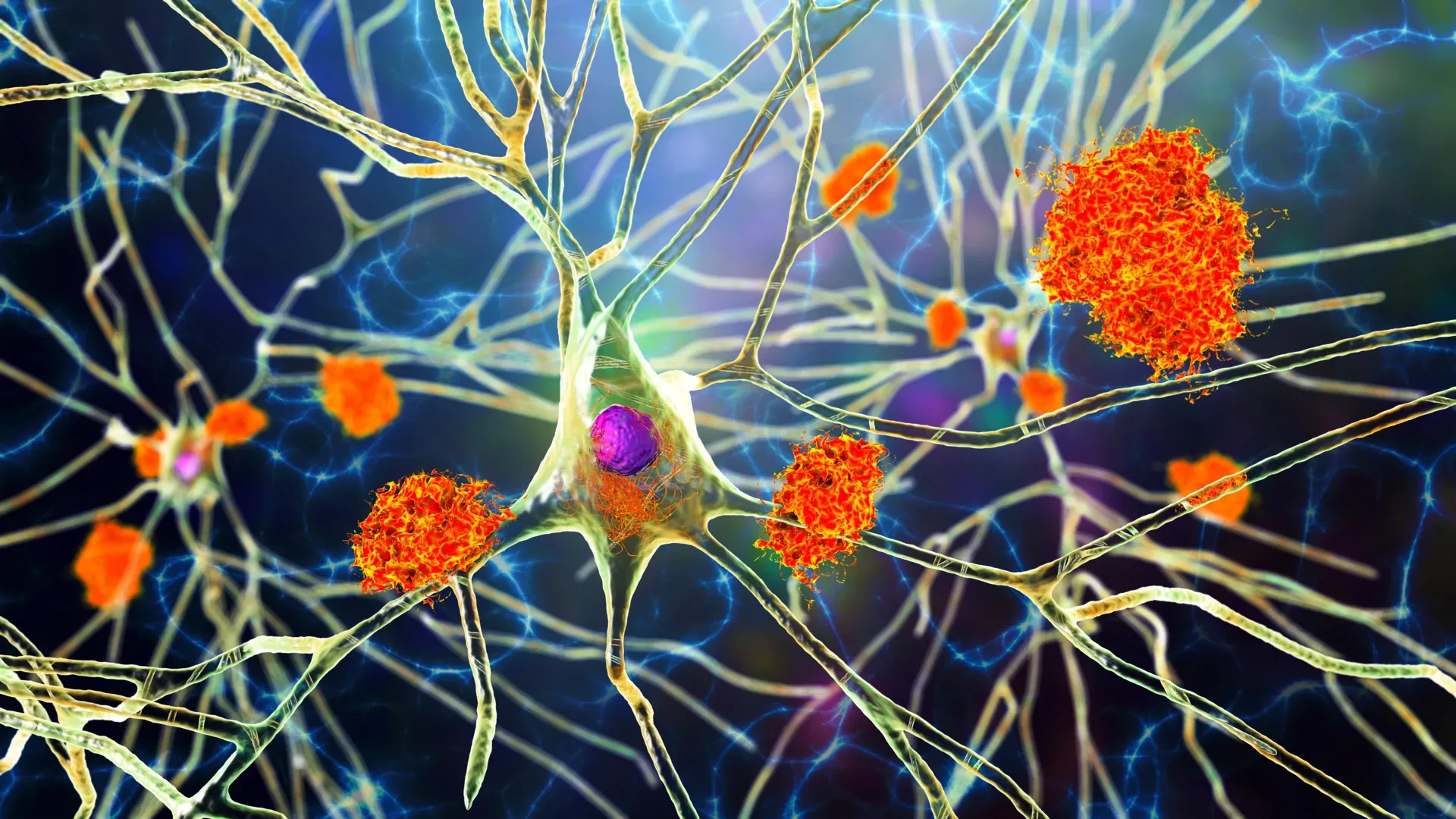
However, in Alzheimer’s disease, frontotemporal dementia, and other tauopathies, this balance breaks down. Tau detaches from microtubules, misfolds, and aggregates into insoluble neurofibrillary tangles. These tangles physically obstruct cellular transport, induce chronic neuroinflammation, and eventually trigger programmed cell death (apoptosis).
Glial Cells and the Plexin-B Connection
The high-resolution cellular analysis revealed that SORLA’s influence extends past neurons to glial cells—the supportive cells of the nervous system responsible for maintaining homeostasis, supplying nutrients, and cleaning up cellular debris. In neurodegenerative states, glial cells often become chronically overactivated, driving harmful neuroinflammation. Higher SORLA levels successfully suppressed this aberrant glial reactivity.
Most intriguingly, the team discovered that the complete absence of SORLA triggered a significant upregulation of plexin-B receptors. These proteins govern cellular signaling and help cells interpret environmental cues. Their abnormal overactivity in the absence of SORLA strongly implicates this signaling pathway in the progression of tauopathies. Because pharmacology has already developed targeted molecules capable of interacting with plexin-B receptors, this discovery bridges basic molecular biology with actionable drug discovery.
| Biological Pathway | Effect of Upregulating SORLA | Effect of Deleting Sorl1 (No SORLA) |
|---|---|---|
| Amyloid-Beta Accumulation | Suppressed / Reduced | Accelerated / Increased |
| Tau Hyperphosphorylation | Decreased | Exacerbated |
| Tau "Seeding" & Spread | Inhibited | Promoted / Amplified |
| Synaptic Plasticity & Health | Preserved | Degraded / Compromised |
| Glial Cell Overactivation | Suppressed | Heightened Neuroinflammation |
| Plexin-B Receptor Activity | Regulated / Baseline | Abnormally Upregulated |
Official Statements and Expert Perspectives
The implications of this study have resonated strongly within the international neuroscientific community, drawing enthusiastic commentary from the study’s primary investigators.
"In the last 15 or 20 years, considerable data has come out from our lab and other groups showing that SORLA can suppress one of the hallmarks of Alzheimer’s disease—amyloid-beta generation and accumulation," noted Timothy Huang, PhD, assistant professor in the Center for Neurologic Diseases at Sanford Burnham Prebys and senior author of the study.
He added, "Very little was known, however, about whether SORLA affected the tau tangles reflected on the other side of the coin in Alzheimer’s disease."
The transition from amyloid research to addressing the tau pathology through this newfound mechanism represents a major conceptual evolution for the laboratory. Lead author Huijie Huang, PhD, a staff scientist in the Huang lab, elaborated on the physical observations gathered during the murine trials:
"When you upregulate SORLA, you can suppress the negative effects found in tauopathies. We found there was less brain atrophy and less tau accumulation, which was very exciting to see."
Discussing the translational potential of identifying the plexin-B receptor pathway, Tim Huang emphasized the possibility of drug repurposing:
"There are unique drugs that can target this class of receptors that we may be able to apply to tau-related dementia disorders. One potential future direction is to repurpose these drugs to target overactivation of glial cells and perhaps reverse some of the phenotypes in tauopathies."
Future Outlook and Clinical Horizons
While the findings published in Science Advances represent a major milestone in neurobiology, the scientific team maintains a rigorous, measured approach regarding the transition from bench to bedside.
Bridging the Murine-Human Divide
Animal models, while extraordinarily valuable for mapping broad biological pathways, do not completely replicate the intricate landscape of the human brain. Recognizing this limitation, the Sanford Burnham Prebys research group is already charting the next phase of their investigations.
Their upcoming experimental models will involve xenotransplantation—introducing human neurons and glial cells into living mouse brains affected by neurodegeneration. This technique will allow researchers to observe how human cells carrying specific Sorl1 mutations behave within a diseased microenvironment.
"Mouse cells and human cells are different," Tim Huang explained. "Because we’re looking at human disease, it’s more informative if we can observe the modulation and dysfunction of SORLA in the context of a human cell inside of a diseased brain environment."
Two Paths to Therapeutics
Looking toward the long-term clinical horizon, the modulation of SORLA points toward two distinct pharmacological strategies for combating Alzheimer’s and related dementias:
- Enhancement Strategies: Developing novel therapeutics designed to boost the expression, stability, or efficiency of endogenous SORLA proteins within the central nervous system, thereby fortifying the brain’s innate capacity to clear both amyloid-beta and toxic tau.
- Repurposing Existing Therapeutics: Leveraging pre-existing drugs capable of blocking downstream pathological pathways—such as the overactive plexin-B receptor signaling cascades identified in the absence of SORLA—to rapidly mitigate neuroinflammation and glial overactivation in human patients.
As funding bodies, including the National Institutes of Health, the National Cancer Institute, and the National Institute on Aging, continue to support these foundational studies, the medical community draws closer to untangling the complex web of neurodegeneration. By turning the brain’s own protective mechanisms against its most destructive pathologies, science is charting a credible, innovative course toward effective treatments for Alzheimer’s disease.
