

Executive Overview
The wait is nearly over, yet the shockwaves of its impending arrival are already deeply felt across the global economy. After a decade of unprecedented anticipation, countless release-window speculations, and a cultural meme phenomenon that immortalized the phrase "We got X before Grand Theft Auto VI," Rockstar Games’ magnum opus is finally set to launch.
November 19 stands as a watershed moment not just for the interactive entertainment sector, but for global commerce, corporate productivity, and digital culture at large.
To call Grand Theft Auto VI a video game is to drastically understate its footprint. It is a multi-billion-dollar cultural event, a masterclass in modern marketing through prolonged scarcity, and an economic juggernaut capable of moving financial markets and altering workplace dynamics on launch day. According to preliminary data analytics from Sensor Tower, pre-orders for the title have already crossed an astonishing $1.5 billion threshold, translating to nearly 17 million physical and digital copies sold before a single player has even booted up the software.
Simultaneously, the title’s release has sparked anxious discussions among economists and business leaders. Labor analysts estimate that upwards of $1 billion in economic productivity is at immediate risk on launch day alone, as an unprecedented wave of employees prepares to call out sick, take personal days, or simply log in with fractured attention spans.
Beneath these staggering financial metrics lies a fascinating paradox: while major consumer brands spend millions attempting to secure authentic product placements within blockbuster media, Rockstar Games steadfastly refuses traditional in-game brand integrations. Instead, Grand Theft Auto VI doubles down on its signature satirical universe—populated by fictional restaurant chains, parodied automotive manufacturers, and a relentlessly sharp mirror held up to contemporary digital and social media culture.
As the gaming world holds its collective breath for tomorrow’s launch, this report provides a comprehensive investigative overview of the road to GTA VI, the economic realities surrounding its debut, its unique approach to corporate satire, and what its historic rollout signals for the future of the entertainment industry.
Detailed Chronology: The Decade-Long Road to Vice City
To understand the magnitude of the Grand Theft Auto VI launch, one must retrace a development cycle that has spanned three distinct console generations and transformed the video game industry entirely.
The GTA V Era and the Endless Horizon (2013–2018)
When Rockstar Games released Grand Theft Auto V in September 2013, the PlayStation 4 and Xbox One had not yet hit store shelves. The game was an immediate, earth-shattering success, grossing $800 million in its first 24 hours and $1 billion within three days, setting records that stood for years. Few could have predicted, however, that GTA V would become a permanent fixture of the gaming landscape, eventually selling over 200 million copies across three generations of hardware—largely propelled by the enduring, live-service success of Grand Theft Auto Online.
For years following the 2018 release of Rockstar’s western epic Red Dead Redemption 2, rumors regarding the studio’s next project swirled within gaming forums, financial boardrooms, and media outlets. Yet, Rockstar maintained an uncharacteristic silence. Fans waited anxiously for confirmation, giving birth to an internet culture centered on desperation. Every major gaming showcase—from Gamescom to The Game Awards—was met with frantic speculation, only for fans to be routinely disappointed.
The Birth of a Meme (2019–2021)
As years bled into a decade without a mainline Grand Theft Auto sequel, the gaming community coped through humor. This gave rise to one of the most resilient meme formats of the digital age: "We got X before Grand Theft Auto VI."
Whenever a monumental real-world event occurred—the discovery of water on Mars, the James Webb Space Telescope capturing deep-space imagery, major historical political shifts, or the launch of entirely new technological frameworks—internet users would juxtapose it against the absence of Rockstar’s next title. The meme transcended gaming culture, entering mainstream vernacular as shorthand for an event taking an eternity to materialize. It highlighted a unique cultural anxiety: the entertainment industry was moving faster than ever, yet the gold standard of open-world development remained locked behind closed doors at Rockstar’s Scottish and North American studios.
The Leak and the Official Unveiling (2022–2023)
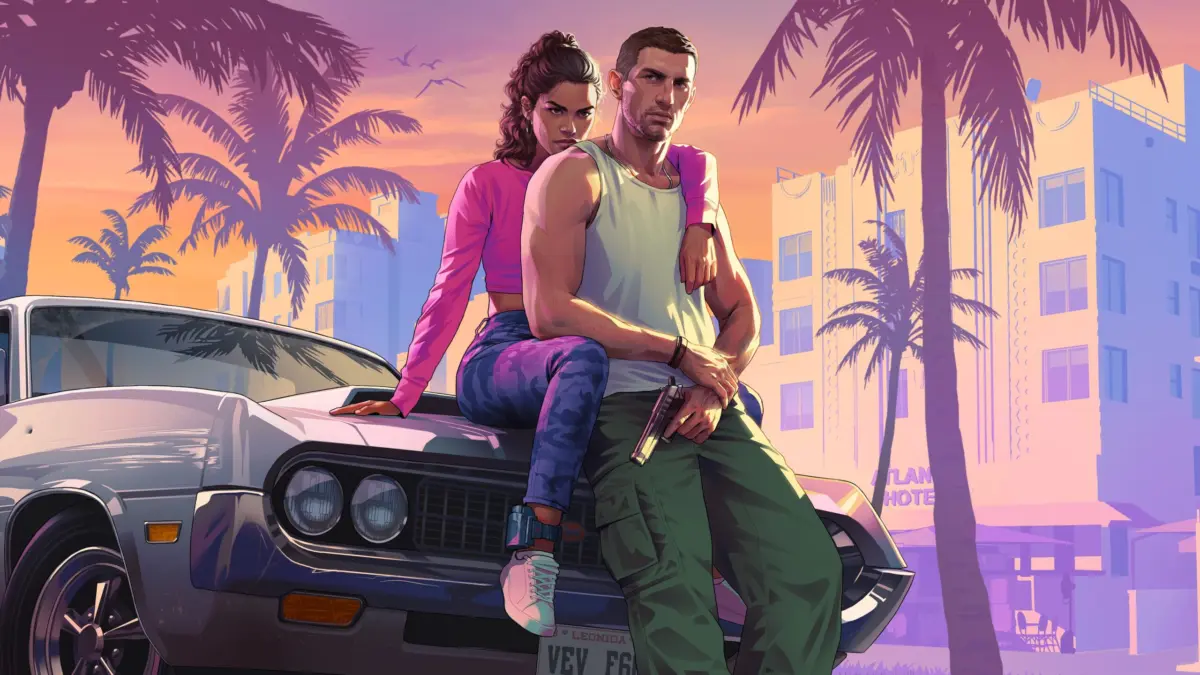
The dam finally broke in September 2022, though not on Rockstar’s terms. In one of the most devastating security breaches in video game history, an unauthorized hacker leaked nearly an hour of early-development footage from GTA VI, revealing the return to a modern-day, neon-drenched Vice City and the franchise’s first modern female protagonist, Lucia, alongside her male counterpart. The leak triggered a massive corporate response, forced Rockstar to acknowledge the game’s existence prematurely, and reignited global interest.
The official reckoning arrived in December 2023. Rockstar released the first official trailer for Grand Theft Auto VI ahead of schedule following another online leak. The trailer shattered YouTube records, accumulating over 100 million views in less than 24 hours and sparking widespread cultural analysis of its hyper-detailed depiction of Florida-inspired absurdity, social media obsession, and chaotic open-world life.
The Final Stretch to Launch (2024–2025)
The months leading up to the November 19 release date have been characterized by calculated scarcity. Unlike modern live-service games that rely on endless alpha tests, public roadmaps, and continuous developer blogs, Rockstar leaned into classic Hollywood-style mystique. Cinematic trailers were doled out sparingly, media previews were tightly controlled, and the gaming public was left to speculate wildly on gameplay mechanics, map size, and technological leaps.
Now, as the eve of launch arrives, the multi-year drought is officially over. The memes have served their purpose, and the entertainment world stands on the precipice of a new era.
Supporting Context & Metrics: The Financial and Economic Footprint
The launch of Grand Theft Auto VI is not merely an artistic milestone; it is a macroeconomic event. The numbers surrounding the game’s release paint a picture of an entertainment product that rivals—and often surpasses—the financial heft of Hollywood’s biggest cinematic blockbusters.
Pre-Order Dominance and Revenue Projections
According to recent market intelligence data from Sensor Tower, GTA VI pre-orders have already surged past the $1.5 billion mark globally. This equates to nearly 17 million copies sold before the game is even accessible to download or play. To put this figure into perspective, it eclipses the lifetime box office grosses of many major motion pictures within a matter of weeks, achieved entirely through consumer anticipation and digital pre-purchases across PlayStation 5 and Xbox Series X/S platforms.
Wall Street financial analysts project that within its first week on the market, Grand Theft Auto VI is expected to comfortably cross the $3 billion revenue threshold, potentially breaking the previous industry records set by its predecessor and major multi-platform competitors like Cyberpunk 2077 or Call of Duty franchise tentpoles. Parent company Take-Two Interactive has positioned the game as the cornerstone of its fiscal strategy, anticipating that the title will sustain multi-year revenue streams through both initial software sales and the inevitable launch of GTA Online II.
The Productivity Paradox: Billions at Risk
While investors celebrate the impending revenue windfall, corporate human resources departments are sounding the alarm. Economists and labor market researchers have released startling estimates regarding the societal cost of the game’s release.
Data compiled by economic analysts indicates that upwards of $1 billion in workplace productivity is at risk on launch day (Nov. 19) and the days immediately following. The projections are derived from anticipated absenteeism, where hundreds of thousands of employees across corporate offices, tech firms, and service industries are expected to call in sick, request sudden paid time off, or simply suffer from severe productivity drops due to late-night gaming sessions.
Surveys conducted among office workers reveal that a significant percentage of respondents admit to planning around the release, creating a unique corporate challenge. Much like the cultural phenomenon surrounding the Super Bowl Monday hangover, the "GTA Launch Slump" has forced companies to quietly factor video game entertainment into their fourth-quarter operational risk assessments.
Official Statements & Industry Perspectives
The monumental gravity of Grand Theft Auto VI has elicited commentary from across the business, creative, and financial sectors.
Take-Two Interactive CEO Strauss Zelnick has repeatedly emphasized the company’s commitment to perfection over speed, noting in past investor calls that the studio’s objective is nothing short of "perfection" and creating an entertainment experience that defies expectations.
"Our creative teams are driven by a desire to not just match what came before, but to fundamentally redefine what open-world entertainment can achieve," Zelnick noted in a recent financial briefing. "When you look at the scale of engagement, the fidelity of the world, and the cultural resonance of the franchise, Grand Theft Auto stands alone."
Meanwhile, industry analysts point out the unique positioning of Rockstar Games within the contemporary media landscape. Unlike competitors who rely on aggressive brand partnerships, product placement deals, and cross-promotional tie-ins, Rockstar maintains a fiercely independent stance regarding its in-game universe.
In a departure from industry norms where luxury car brands, clothing labels, and fast-food conglomerates pay millions to feature their logos within virtual environments, Rockstar deliberately avoids real-world corporate integrations. Industry insiders note that this decision protects the satirical integrity of the franchise. By populating Vice City with fictional entities—such as Cluckin’ Bell, iFruit, and parody vehicle manufacturers—Rockstar retains complete artistic control, allowing the game to mock consumer culture without becoming a billboard for it.
Cultural critics have also weighed in on the societal impact of the franchise. Media sociologists argue that the Grand Theft Auto series serves as an essential, albeit deeply cynical, archive of modern American history. Each installment captures the cultural zeitgeist of its era—from the neon-soaked excess of the 1980s original iterations to the post-recession cynicism of GTA V and, now, the chaotic, algorithm-driven social media obsession reflected in GTA VI.
Future Outlook: What GTA VI Means for the Next Decade of Entertainment
As the clock ticks down to the November 19 release, industry stakeholders are already looking past launch day to analyze the long-term implications of Grand Theft Auto VI on the broader entertainment ecosystem.
Technological Benchmarks for Next-Gen Hardware
GTA VI arrives late in the current console generation lifecycle, serving as a stress test for the absolute limits of current hardware capabilities. Industry engineers are watching closely to see how Rockstar handles physics simulation, artificial intelligence density, ray-traced lighting, and seamless open-world streaming without loading screens. The technical solutions pioneered by Rockstar in this title are expected to influence game development methodologies for the next decade, much in the same way Red Dead Redemption 2 set new standards for environmental detail and character animation.
The Evolution of Online Ecosystems
While the single-player narrative campaign will dominate headlines on launch day, the long-term financial viability of the project rests upon the evolution of its online component. Grand Theft Auto Online proved to be a perpetual money machine, generating billions of dollars in recurring consumer spending through microtransactions over a decade. Analysts expect GTA Online II to revolutionize virtual economies, potentially integrating advanced social spaces, user-generated content toolkits, and immersive digital real estate markets that could blur the lines between gaming and social networking platforms.
Setting a New High-Water Mark
Ultimately, Grand Theft Auto VI represents the pinnacle of traditional AAA game development during a time of immense industry turbulence, mass layoffs, and rising production costs. With development budgets rumored to have soared past historical records, the game must not only be a critical and commercial success—it must carry the financial weight of an entire industry on its shoulders.
As millions of players prepare to step back onto the sun-drenched, satirical streets of Vice City tomorrow, one reality is indisputable: the entertainment landscape will never be the same. The memes are finally over, the economic countdown has reached its final hours, and a new chapter in interactive history is about to begin.
