

Executive Overview
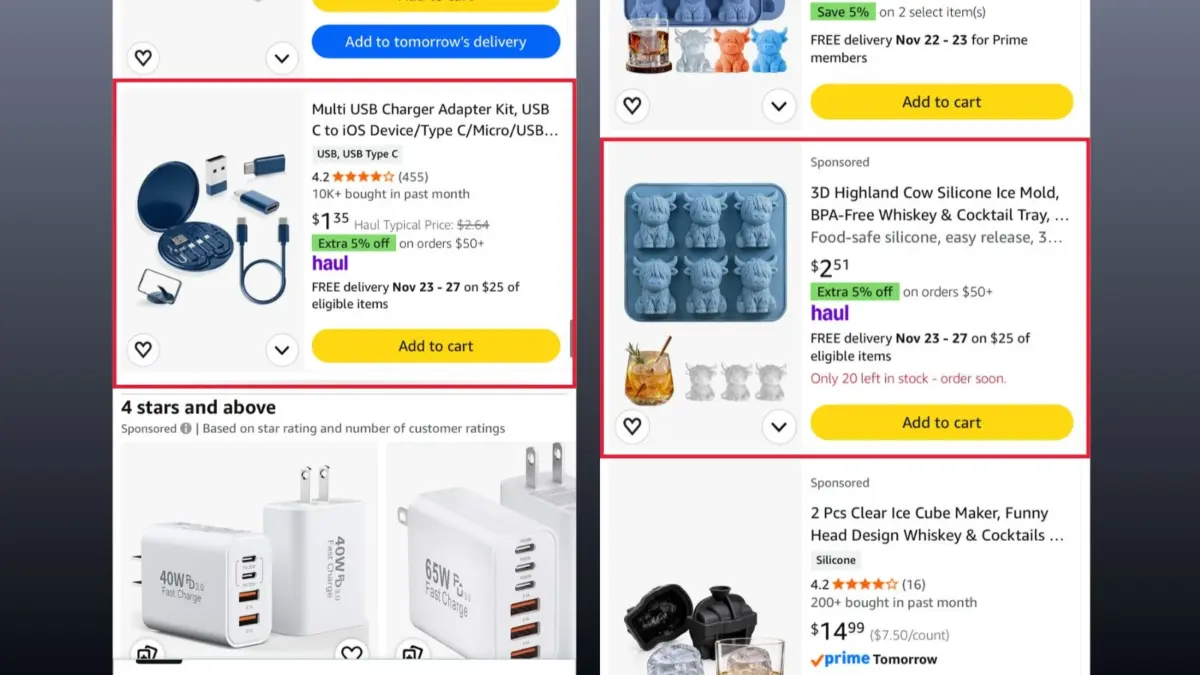
In a strategic shift that could fundamentally alter the consumer e-commerce landscape, Amazon is quietly testing the integration of listings from its ultra-low-cost storefront, Amazon Haul, directly into its primary search results. This development marks a significant escalation in Amazon’s aggressive maneuvers to counter the meteoric rise of low-priced cross-border competitors like Temu, Shein, and AliExpress.
Launched in late 2024, Amazon Haul was initially introduced as a distinct, quarantined shopping destination housed within the broader Amazon ecosystem. Designed to capture price-sensitive shoppers, Haul specialized in ultra-cheap goods—mostly priced under $20, with shipping times stretching to one or two weeks as items are shipped directly from manufacturers, predominantly in China. Until now, users had to consciously navigate to the Haul section to unearth these heavily discounted, bargain-basement finds.
By testing the appearance of Haul listings inside mainstream search queries alongside traditional Prime-eligible merchandise, Amazon is tearing down the digital wall separating its premium logistics experience from budget-tier manufacturing. For the e-commerce titan, this integration represents a calculated gamble: leveraging its unmatched consumer traffic to supercharge growth for a fledgling discount arm while risking the potential "cheapening" of its core brand identity.
For industry watchers, merchants, and competitors, the move signals that Amazon is no longer content to let Temu and Shein dominate the ultra-budget segment from a separate corner of the internet. Instead, Amazon is bringing the discount battlefront directly to the front door of its primary search engine, setting the stage for a high-stakes clash over consumer attention, pricing dominance, and the future of global retail logistics.
Detailed Chronology: From Concept to Core Integration
The Genesis of Amazon Haul (2024)
The groundwork for Amazon’s current strategy was laid amidst mounting pressure from Chinese-founded e-commerce platforms that captured the imagination—and wallets—of global shoppers with rock-bottom prices. Temu and Shein successfully gamified digital retail, offering everything from apparel to electronics at fractions of traditional retail costs.
Recognizing an existential threat to its lower-margin product categories, Amazon developed and subsequently launched Amazon Haul. Positioned as a dedicated storefront accessible via the Amazon mobile app and website, Haul was engineered around a specific value proposition: extreme affordability paired with extended shipping windows. By bypassing domestic fulfillment centers for these specific items and shipping directly from international hubs, Amazon could drastically slash overhead costs, passing those savings directly to the consumer.
Rapid Scaling and Catalog Expansion
Following its rollout, Amazon Haul experienced an explosive growth trajectory that caught even industry insiders by surprise. Within a remarkably short window, the platform’s inventory expanded exponentially:
- Catalog Explosion: Haul’s product selection scaled by more than 25 times its initial size, ballooning to encompass over 10 million distinct products.
- Surging Engagement: According to internal metrics released by Amazon, the volume of active customers making purchases on the Haul platform skyrocketed by nearly 350% year-over-year.
- Hyper-Competitive Pricing Structures: The vast majority of items listed under the Haul banner were priced below $10, with a staggering milestone of over one million products priced at under $5.
Despite this rapid adoption, Haul initially operated as a siloed ecosystem. Shoppers had to seek it out intentionally, creating a two-tiered shopping experience on Amazon: the fast, reliable, Prime-centric main catalog, and the slower, ultra-cheap Haul experience.
The Pivot to Mainstream Search (Current Trials)
The current testing phase represents the logical next step in Haul’s lifecycle. By injecting Haul listings into standard search results, Amazon is removing friction for consumers. A shopper searching for a generic phone case, kitchen gadget, or piece of costume jewelry may now see a Haul-fulfilled item sitting side-by-side with a traditional Fulfilled-by-Amazon (FBA) or Prime listing.
This integration forces consumers to weigh value against fulfillment speed in real-time, right at the point of initial product discovery. While the feature is currently undergoing limited testing, its potential rollout across the entire platform threatens to rewrite the rules of digital shelf-space visibility.
Supporting Context & Metrics: The Low-Cost Retail Wars
To understand the weight of Amazon’s decision to integrate Haul listings into its primary search architecture, one must examine the macroeconomic climate and competitive pressures defining the contemporary retail sector.
The Rise of the Ultra-Budget Cross-Border Paradigm
For over two decades, Amazon defined the standard for e-commerce efficiency, anchored by its revolutionary Prime membership program, two-day (and increasingly same-day) shipping, and customer-centric return policies. However, structural shifts in consumer spending behaviors—accelerated by persistent inflationary pressures—have cultivated a massive, highly price-elastic consumer base.
Enter Temu (owned by PDD Holdings) and Shein. These platforms bypassed traditional Western wholesale and retail intermediaries, connecting consumers directly to factories in manufacturing hubs like Yiwu and Guangzhou. By utilizing direct-to-consumer air freight and leveraging customs loopholes (such as the de minimis exemption in the United States, which allows duty-free entry for shipments valued under a certain threshold), these companies undercut traditional retailers on price by staggering margins.
+-------------------------------------------------------------------+
|               THE EVOLUTION OF AMAZON'S VALUE PROPOSITION         |
+-------------------------------------------------------------------+
|  Traditional Amazon       │ Prime speed, trusted customer service |
|                           │ & standard third-party fulfillment.   |
+---------------------------+---------------------------------------+
|  Amazon Haul (2024)       │ Siloed, ultra-low-cost storefront,    |
|                           │ 1-2 week shipping from overseas.      |
+---------------------------+---------------------------------------+
|  Integrated Search (Now)  │ Blended discovery: Budget items       |
|                           │ competing directly with Prime goods.  |
+-------------------------------------------------------------------+
Navigating the Logistics and Margin Dilemma
Amazon’s core business model relies heavily on speed, predictability, and high customer satisfaction scores. Integrating items that require one-to-two weeks for delivery introduces potential friction points for consumers accustomed to lightning-fast Prime logistics.
Yet, the financial incentives are undeniable. The sheer volume of transactions moving through low-cost channels indicates that a massive segment of the market prioritizes price over speed. By capturing these transactions within its own ecosystem rather than losing them to competitors, Amazon protects its overarching market share.
Furthermore, integrating Haul into main search results addresses a fundamental discovery problem. Dedicated discount tabs often suffer from lower initial discovery rates compared to the universal search bar. By placing Haul products where the vast majority of Amazon shopping journeys begin—the search query box—Amazon dramatically increases conversion probabilities for low-cost goods.
Official Statements and Industry Reactions
Amazon has historically maintained a measured, iterative approach to rolling out experimental features, frequently utilizing closed or regional tests to gauge consumer sentiment and technical performance before executing a wider launch.
Corporate Positioning
In communications regarding the launch and expansion of Amazon Haul, corporate representatives have emphasized consumer choice and affordability. Amazon has consistently framed Haul as an extension of its commitment to offering customers every possible option to find the products they need at prices that fit their budgets.
However, company executives have been notably deliberate regarding the current search integration test. Observers note that Amazon is walking a tightrope: balancing the enthusiastic adoption of its budget tier against the expectations of brand-conscious merchants who pay top dollar for sponsored placement and Prime-eligible badges within the main search engine.
Merchant and Third-Party Seller Concerns
The reaction from Amazon’s vast ecosystem of third-party marketplace sellers has been mixed, leaning toward cautious apprehension. Independent sellers, many of whom rely on domestic warehousing and FBA infrastructure to compete, have expressed worries regarding search result dilution.
- Algorithmic Competition: Sellers investing in Amazon’s traditional advertising infrastructure (Sponsored Products) now face the prospect of competing for screen real estate with ultra-cheap, factory-direct alternatives boasting price tags that domestic sellers simply cannot match due to higher labor, shipping, and regulatory overhead.
- Brand Perception: Some long-standing merchants worry that interspersing unbranded, ultra-cheap items into mainstream queries could degrade the perceived quality of the broader Amazon marketplace, potentially eroding consumer trust in search result relevancy.
Industry Analyst Perspectives
Retail analysts view the move as an aggressive, defensive masterstroke.
"Amazon cannot afford to cede the bottom of the market to Temu and Shein," notes one retail technology strategist. "By testing Haul integration in search, Amazon is effectively saying: ‘If you want cheap, we have it right here—no need to open another app.’ It’s an attention-retention strategy designed to choke off competitor acquisition funnels."
Future Outlook: What This Means for the Future of E-Commerce
As Amazon continues to evaluate the performance metrics of this search integration test, several crucial trends and potential outcomes emerge for the broader retail ecosystem.
1. The Normalization of Extended Delivery Windows
For years, Amazon trained consumers to expect instant gratification. The mainstreaming of Amazon Haul—alongside its cross-border rivals—signals a cultural pivot in digital retail: consumers are increasingly willing to wait 7 to 14 days for delivery if the financial discount is steep enough. This shift forces all major retailers to reconsider how they segment their supply chains, potentially offering tiered shipping speeds tied directly to manufacturing origin rather than local warehouse availability.
2. Intensified Regulatory and Compliance Scrutiny
As cross-border and ultra-low-cost commerce scales exponentially, it inevitably attracts regulatory attention. Lawmakers and trade bodies in Western markets are closely scrutinizing platforms utilizing direct-from-factory shipping models, focusing on issues ranging from product safety and intellectual property enforcement to the exploitation of trade exemptions like de minimis rules. How Amazon navigates these regulatory crosscurrents while scaling Haul will heavily influence its long-term viability.
3. The Re-Definition of Marketplace Search Algorithms
If Amazon elects to permanently roll out Haul listings within its main search architecture, the underlying recommendation and ranking algorithms will need to undergo a sophisticated evolution. The system will likely need to dynamically predict whether a specific user values price over speed for a given query, serving Haul items primarily to price-sensitive searchers while filtering them out for consumers signaling urgent intent (e.g., searching for replacement household necessities).
Conclusion
Amazon’s experiment to interleave low-cost Haul listings into its primary search results is far more than a minor user interface tweak; it is a profound strategic realignment. By weaponizing its dominant search engine to funnel traffic toward factory-direct, budget-tier goods, Amazon is directly challenging the business models of international discount competitors while testing the limits of consumer brand tolerance.
Whether this integration becomes a permanent pillar of the Amazon experience will depend on how successfully the company can manage the friction between speed and savings. One reality, however, is undisputed: the battle lines for the future of global e-commerce have been redrawn, and the center of the battlefield is the Amazon search bar.
