

Executive Overview
Beneath the unforgiving, sun
-baked dunes of southern Saudi Arabia lies a astonishing testament to a forgotten epoch. Modern archaeological and geological investigations at the ancient lakeside site of Uruq al-Julaybah, situated within the Mundafan region, have illuminated a dramatically different prehistoric landscape. Some 125,000 years ago—during the last Interglacial period—the now-arid expanse of the Arabian Peninsula was a thriving mosaic of freshwater lakes, sweeping grasslands, and dense woodlands. This lush ecosystem, long referred to by scientists as "Green Arabia," served as a crucial ecological corridor and a vibrant habitat for early human populations and diverse megafauna.
Announced jointly by the Saudi Heritage Commission, the King Abdullah University of Science and Technology (KAUST), and Australia’s Griffith University, this landmark research has been published in the prestigious journal Science. By assembling a multidisciplinary coalition of geologists, archaeologists, botanists, and micropaleontologists, the investigative team has successfully reconstructed a uniquely preserved prehistoric ecosystem. Their discoveries include thousands of meticulously crafted stone tools, hundreds of fossilized animal and plant specimens, and groundbreaking microscopic evidence of early human ingenuity.
Uruq al-Julaybah is not merely another fossil site; it is a rare, perfectly preserved time capsule. The simultaneous recovery of manufactured stone implements, butchered or naturally deceased fauna, and fragile botanical residues from a single, precisely dated stratigraphic context provides an unprecedented lens into everyday life during the Late Pleistocene. These findings challenge traditional narratives of human migration and adaptation, proving that early Homo sapiens were remarkably adaptable, capable of thriving in—and exploiting—complex, dynamic environments far removed from the stereotypical arid wastelands of modern Arabia.
Detailed Chronology and Archaeological Findings
The narrative of Uruq al-Julaybah is fundamentally a story of environmental transformation and human resilience. To truly grasp the significance of the discoveries published in Science, one must trace the methodological steps and physical evidence recovered from this remote corner of the Empty Quarter (Rub’ al-Khali).
Reconstructing Green Arabia: The Ancient Lake of Mundafan
Today, the Mundafan region is characterized by hyper-arid sand seas where temperatures soar and moisture is virtually non-existent. However, utilizing advanced satellite-based terrain modeling combined with rigorous sedimentological analysis, scientists have mapped a prehistoric reality that defies modern geography.
During the last Interglacial period—a time of global warmth and heightened monsoonal activity—a vast freshwater lake covered approximately 340 square kilometers of the southern Arabian landscape. Geological profiles indicate that this body of water reached depths of up to 29 meters. Sediment cores and micro-fossil assemblages reveal a stable, long-standing freshwater lake bordered by rich aquatic vegetation, open grasslands, and sprawling bushlands.
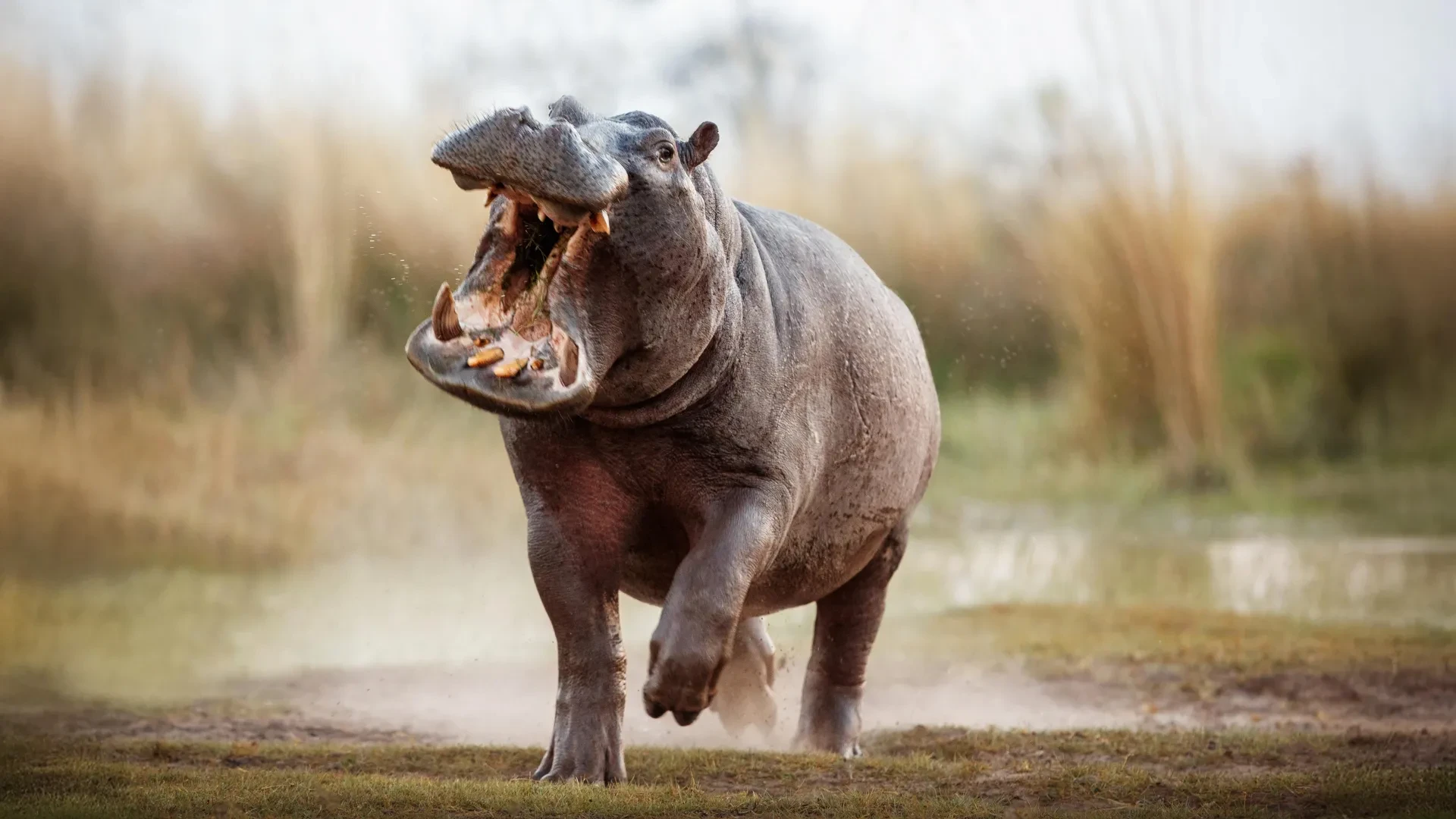
This inland oasis acted as a magnetic pull for life. Over 500 plant and animal fossil specimens, spanning more than 130 distinct locations across the site, paint a picture of a flourishing ecosystem. Among the recovered fauna are the bones of hippopotamuses, extinct long-horned buffaloes, camels, Arabian oryx, gazelles, and ostriches. The presence of hippos and water-dependent species is particularly telling; these animals require permanent, deep freshwater bodies to survive, confirming that southern Arabia possessed a climate and hydrological network radically different from its current state.
Lithic Technology and Human Ingenuity
Intertwined with these fossil beds is an extraordinary accumulation of material culture. Archaeologists recovered 5,511 stone tools measuring greater than 2 centimeters from the main excavation sector. An overwhelming majority of these artifacts—more than 98%—were fashioned from high-quality flint sourced from the surrounding landscape.
Systematic surveys employing rigid grid systems allowed researchers to map and collect every fragment meticulously. Subsequent technological analysis revealed that the inhabitants of Uruq al-Julaybah practiced sophisticated knapping strategies, most notably the Levallois technique. This advanced method required meticulous core preparation to produce predetermined, highly symmetrical flakes and points, demonstrating a high degree of cognitive planning, abstract thought, and transmitted cultural knowledge.
To extract maximum historical value from these lithics, the research team deployed a battery of cutting-edge analytical techniques. Three-dimensional refitting analyses—the archaeological equivalent of putting a three-dimensional puzzle together—allowed scientists to reconstruct the exact sequence of stone-working events at specific manufacturing floors. Furthermore, microscopic and chemical analyses of tool surfaces unveiled a hidden layer of data: organic residues left behind by the materials these tools were used to process.
Botanical Exploitation and Early Poison Technology
Perhaps the most captivating revelations from Uruq al-Julaybah pertain to how these early humans interacted with the local flora. Botanical residues preserved on the edges of stone implements offered direct clues to daily survival strategies.
Traces of resin and woody material discovered on specific stone tips strongly suggest that these implements were hafted—attached to wooden handles or shafts—to manufacture compound hunting weapons, such as spears. This technological leap increased hunting efficiency and safety when engaging large, dangerous game like hippos and extinct buffaloes.
Other residues pointed toward the intensive processing of tubers, bush vegetation, and palm leaves. These findings represent some of the earliest direct evidence of palm-related vegetation utilization in the region. The inhabitants relied heavily on local flora not merely for sustenance, but for a broad spectrum of domestic and technological needs, including fiber processing and tool maintenance.
Most intriguingly, chemical and microscopic evaluations of certain plant residues hinted at the presence of toxic compounds derived from specific local vegetation. While researchers urge caution and note that interpretations remain tentative, these traces raise the fascinating possibility that prehistoric hunters at Mundafan incorporated poisonous plant extracts into their hunting technology—perhaps to tip their projectile weapons. If substantiated, this would constitute some of the earliest direct evidence of chemical hunting aids in Saudi Arabia, underscoring a deep, empirical understanding of local toxicology by early human populations.
Supporting Context and Metrics
To appreciate the scale and rigor of the Uruq al-Julaybah project, one must examine the quantitative parameters and scientific frameworks that underpin the research.
Quantitative Breakdown of the Uruq al-Julaybah Assemblage
- Age of the Site: Approximately 125,000 years old (dating to the last Interglacial period).
- Ancient Lake Dimensions: Covered an area of roughly 340 square kilometers, with maximum depths reaching 29 meters.
- Lithic Artifact Count: 5,511 stone tools measuring >2 cm recovered from the primary excavation zone.
- Material Composition: Over 98% of the recovered stone tools were manufactured from local flint using Levallois reduction techniques.
- Fossil Specimen Volume: More than 500 distinct plant and animal fossil specimens cataloged across over 130 discrete localities.
- Faunal Diversity: Includes hippopotamuses, extinct long-horned buffaloes, camels, Arabian oryx, gazelles, and ostriches.
- Dating Methodologies: Multi-method chronometric dating applied to sediment grains (Optically Stimulated Luminescence / OSL) and mammalian tooth enamel (Electron Spin Resonance / ESR).
Methodological Synergy: The Multidisciplinary Approach
The success of the Mundafan project hinges on convergence. By bridging traditional field archaeology with archaeometry, the project team bypassed the limitations that typically plague single-discipline investigations.
- Geochronology and Stratigraphy: High-precision dating techniques allowed scientists to lock the archaeological layer into a tight temporal window, proving contemporaneity between the human artifacts, animal bones, and plant remains.
- Micropaleontology and Palynology: The analysis of microscopic pollens, diatoms, and ostracods preserved in lake sediments provided high-resolution climatic data, tracking shifts in temperature, humidity, and water chemistry over millennia.
- Use-Wear and Residue Analysis: By combining high-powered microscopy with biochemical testing (such as gas chromatography-mass spectrometry), specialists moved beyond typological classification to reveal the actual functional biography of each stone tool—what it cut, scraped, or pierced.
Official Statements and Academic Perspectives
The publication of this research in Science has drawn international acclaim, spotlighting the rapid evolution of heritage science and archaeological infrastructure within the Kingdom of Saudi Arabia.
Professor Frans van Buchem, KAUST Professor of Geology and co-lead scientist on the project, underscored the power of collaborative research in breathing life back into ancient landscapes:
"It is very exciting to see how the collaboration of so many different specialists allows us to reconstruct this uniquely complete picture of life, behavior, and the environment in the distant past. The integration of geological data with high-resolution archaeological recovery changes how we view the history of human migration out of Africa."
Dr. Faisal Al-Jibreen, a senior researcher at the Saudi Heritage Commission and professor of Paleolithic archaeology who played an active role in the excavations, emphasized the local and regional significance of the Mundafan discoveries:
"This is a milestone archaeological find that fundamentally helps explain how ancient environmental fluctuations shaped the survival strategies of both humans and animals in southern Saudi Arabia during early prehistory. It demonstrates that the Empty Quarter was not an impassable barrier, but a cradle of life during favorable climatic windows."
Echoing these sentiments, Professor Chris Clarkson, co-lead scientist and Professor of Archaeology at Griffith University’s Australian Research Centre for Human Evolution, highlighted the rarity of the site’s preservation:
"This site gives us a rare and richly detailed view of how people lived in a landscape that looks nothing like Arabia today. The unique combination of well-preserved animal remains, advanced stone tools, and fragile plant material in a single, securely dated context is what makes this discovery so globally significant."
Professor Laurence Hapiot, co-author and Head of Heritage Research at KAUST, pointed toward the broader institutional transformation occurring within the Kingdom:
"Saudi Arabia possesses an exceptional and largely untapped archaeological heritage. By systematically building advanced Heritage Science capabilities right here in the Kingdom, we are empowering local and international researchers to transform the smallest, most fragile traces into the biggest historical narratives."
Future Outlook and Ongoing Research
The revelations at Uruq al-Julaybah mark the beginning, rather than the culmination, of a new chapter in Arabian prehistoric studies. As climate change continues to drive modern environmental shifts, understanding how ancient populations adapted to drastic ecological transformations carries profound contemporary relevance.
Expanding the Search Across Green Arabia
Building on the success of the 2023 field season, the Saudi Heritage Commission, alongside KAUST, Griffith University, King Saud University, and other international partners, is drafting expansive plans for future excavations across the Mundafan region and wider expanses of the Rub’ al-Khali. Survey teams are currently utilizing satellite radar and predictive modeling to identify other submerged paleolakes that may hold similar organic and lithic preservation.
Technological Frontiers in Heritage Science
Future research phases will place heavy emphasis on non-destructive analytical techniques. Advanced proteomic analysis of ancient dental enamel and microscopic sediment DNA (sedimentary aDNA) are slated for deployment. These methods promise to extract genetic signatures of both the ancient fauna and the human populations themselves, even in the absence of skeletal remains, shedding light on hominin taxonomy (whether these toolmakers were Homo sapiens or contemporaneous archaic humans moving through the peninsula).
Preservation, Education, and Tourism
Beyond academic publication, the Saudi Heritage Commission is actively formulating conservation frameworks to protect fragile paleo-environmental sites from modern degradation. Plans are underway to integrate these discoveries into the Kingdom’s broader cultural tourism and educational initiatives—exemplified by visions tied to Vision 2030—ensuring that the public can engage with the deep history of Green Arabia.
Ultimately, the ancient lakeshore of Uruq al-Julaybah serves as a profound reminder of the earth’s dynamic nature. It stands as a testament to human adaptability, proving that 125,000 years ago, resilient groups of early humans successfully mastered a lush, vibrant, and now-vanished Arabian paradise.
