

By Global Business & Media Correspondent
Published: November 20
Executive Overview
For decades, the golden rule of corporate advertising was straightforward, almost immutable: steer clear of controversy. Brands spent billions of dollars meticulously engineering corporate identities defined by wholesomeness, predictability, and safety. For traditional marketers, controversy was a toxic asset—a liability that could trigger consumer boycotts, alienate stakeholders, and erase shareholder value overnight. At the absolute apex of this corporate aversion stood Take-Two Interactive’s Grand Theft Auto (GTA) franchise. For nearly thirty years, Grand Theft Auto served as the ultimate industry pariah. It was a digital embodiment of everything risk-averse marketing departments feared most: unvarnished violence, illicit drug trafficking, sexual deviance, and an aggressive, satirical disregard for civic authority and corporate power.
Yet, as the global clock struck midnight on Thursday, November 19, the corporate world collectively tore up its own rulebooks.
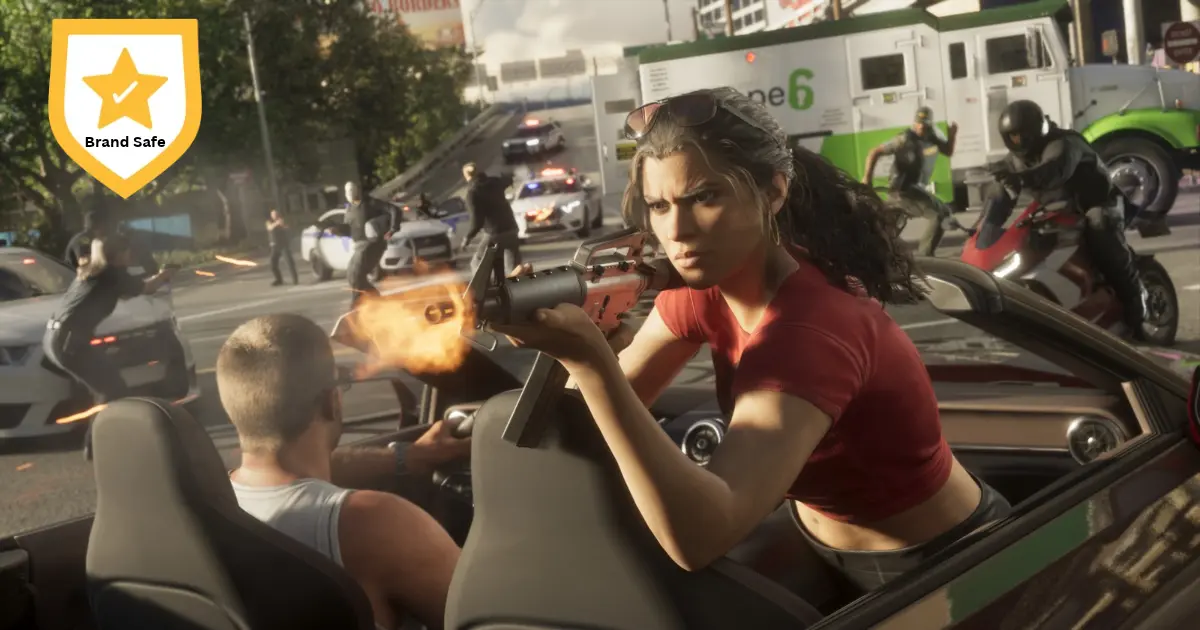
With the monumental release of Grand Theft Auto VI—a cultural watershed projected by industry analysts to generate an unprecedented $2.3 billion in opening-week sales—the concept of "brand safety" underwent a radical, overnight renegotiation. Dozens of blue-chip corporations, fast-food giants, hardware manufacturers, and tech platforms did not merely tolerate the release; they actively scrambled for association, launching high-profile, multi-million-dollar campaigns designed to capture the slipstream of the game’s historic cultural momentum.
From fast-food chains crafting in-game homages to corporate executives quietly sanctioning paid leave for their workforces, the launch of GTA VI marked the definitive death of traditional brand safety orthodoxy. This report investigates the mechanics of this massive shift, detailing how commerce and counterculture collided, the staggering metrics driving the phenomenon, and what this seismic event signals for the future of entertainment marketing.
Detailed Chronology: From Moral Panic to Corporate Embrace
To understand the magnitude of the marketing stampede surrounding GTA VI, one must first examine the rocky, adversarial history between the franchise and corporate America.
The Wilderness Years: 1997–2013
When DMA Design (now Rockstar North) released the original top-down Grand Theft Auto in 1997, it was met with immediate, visceral condemnation. U.S. and European politicians queued up to denounce its glorification of criminal enterprise. As the franchise evolved into fully realized three-dimensional worlds with GTA III (2001) and San Andreas (2004), the moral panics intensified. Lawmakers introduced legislation to ban the sale of mature games to minors, and conservative advocacy groups targeted corporate sponsors who dared to advertise in proximity to gaming culture generally, let alone Rockstar’s flagship title.
When Grand Theft Auto V launched in 2013, shattering industry records by clearing $1 billion in its first three days, brands were largely relegated to the sidelines. While the game was an undisputed cultural titan, corporate legal and public relations departments viewed it as radioactive. Advertising within or adjacent to the game was virtually nonexistent unless executed through independent third-party guerrilla marketing—often risking swift legal pushback from Rockstar Games, a studio famously protective of its intellectual property.
The Run-Up to the Release: 2023–2025
The rehabilitation of Grand Theft Auto in the eyes of Madison Avenue did not happen overnight; it was a slow, calculated evolution driven by changing media consumption habits and generational shifts within corporate leadership. As millennials and older digital natives ascended to Chief Marketing Officer (CMO) roles, the cultural stigma attached to video games dissolved.
The turning point for GTA VI began in earnest with the release of Rockstar’s initial teaser trailer, which broke YouTube viewership records within 24 hours. Brands watched as billions of eyes locked onto a single piece of digital media. Slowly, the conversation in corporate boardrooms shifted from "How do we protect our brand from this controversial game?" to "How can our brand survive being culturally invisible while the entire planet is playing it?"
Thursday, November 19: The Day the Rules Changed
On launch day, the dam broke entirely. The release transformed from a traditional product launch into a global civic event. Public transit systems in major metropolitan areas reported dips in ridership; stock brokerages anticipated productivity lulls; and global social media feeds were entirely consumed by the neon-drenched aesthetics of Rockstar’s fictionalized Miami (Vice City).
Marketers who had spent decades drafting strict compliance parameters around violence and adult themes suddenly found themselves greenlighting campaigns that leaned directly into the anarchic spirit of the franchise. The message from the market was clear: when an audience reaches a critical mass of global totality, safety becomes secondary to relevance.
Supporting Context & Metrics: The Scale of the Phenomenon
The willingness of major brands to abandon their conservative playbooks was not born of artistic appreciation; it was calculated cold math driven by staggering economic projections and audience demographics.
The $2.3 Billion Opening Weekend
Financial analysts tracking the entertainment sector have projected that Grand Theft Auto VI will comfortably clear $2.3 billion in global sales within its first seven days of release. To put this in perspective, this dwarfs the opening weekends of the highest-grossing cinematic releases in history, including Avengers: Endgame and Star Wars: The Force Awakens. In the modern attention economy, capital flows where eyeballs congregate. For a consumer brand seeking maximum demographic penetration—particularly among elusive Gen Z and Millennial cohorts—ignoring an event of this magnitude is no longer an option.
Demographic Realities
The modern gaming demographic bears little resemblance to the stereotypical basement-dwelling teenager of 1990s media lore. The average Grand Theft Auto player today is a financially autonomous adult with disposable income, often belonging to demographic segments that traditional television and print media no longer reach.
[Traditional Media Consumption] ---> Rapidly Declining Among Ages 18-49
[Streaming & Social Media]        ---> Fragmented & Ad-Resistant
[AAA Gaming (GTA VI)]             ---> High Engagement, Captive, Global Audience
Marketers realized that if they wanted to reach working professionals, cultural tastemakers, and digital natives, they had to meet them inside the ecosystems where they chose to spend their leisure time. GTA VI offered an unprecedented concentration of those desirable demographics.
Case Studies: How Brands Infiltrated GTA VI
The execution of brand participation varied wildly, showcasing the creativity—and occasional desperation—of modern marketing departments looking to capture a slice of the GTA zeitgeist.
1. Popeyes and the "Spice City" Integration
Fast-food giant Popeyes executed one of the most culturally attuned activations surrounding the release. Recognizing the game’s satirical, sun-bleached depiction of modern Florida culture, the chain rolled out a limited-time marketing campaign centered around a fictionalized "Spice City" menu item. By cleverly mirroring the visual aesthetic of the game’s marketing materials without explicitly infringing on Rockstar’s trademarks, Popeyes captured millions of organic impressions across social media, proving that quick-service restaurants could successfully tap into gaming subcultures through tone-matching and self-aware humor.
2. Lenovo’s "Gaming Holiday"
Hardware manufacturer Lenovo took a structural approach to the launch. Rather than running traditional ad placements, the company recognized that a significant portion of its global workforce would either be unproductive, distracted, or calling in sick on launch day. In a brilliant stroke of corporate PR, Lenovo officially sanctioned a floating "gaming holiday" for thousands of its employees, effectively aligning its corporate identity with the cultural moment. The move generated massive earned media coverage, positioning Lenovo as a progressive, employee-centric brand that understands the modern work-life balance—all while subtly reminding consumers of its high-performance gaming hardware lineup.
3. Twitch’s Technological Safeguards
Perhaps the most sophisticated response came from streaming giant Twitch, which anticipated the inevitable friction between Rockstar’s unfiltered narrative content and strict platform monetization guidelines. Twitch engineered proprietary contextual technology designed to help creators and advertisers navigate the release safely. This tech dynamically identified mature, high-risk scenes within playthroughs, allowing brands to monetize live streams safely without triggering automated advertiser boycotts. It was a clear indication that the infrastructure of the internet is rapidly evolving to accommodate the unique challenges of massive gaming events.
Official Statements and Industry Perspectives
The rapid pivot by corporate entities has sparked a fierce debate among marketing ethicists, cultural critics, and veteran advertisers.
Jane Henderson, Senior Vice President of Brand Strategy at Omnicom Group, noted in an interview that the GTA VI phenomenon represents a permanent paradigm shift in risk management:
"For years, brand safety was treated as a zero-sum game: if there was blood, profanity, or controversy, you walked away. But what we are seeing with GTA VI is a sophisticated recalibration of risk versus reward. Brands are realizing that in a fragmented media landscape, absolute safety equals absolute invisibility. When a cultural event achieves this level of gravity, irrelevance is a far greater risk to a brand’s long-term survival than temporary association with edgy art."
Conversely, cultural watchdog groups have expressed alarm at the normalization of corporate partnerships with products historically criticized for their depictions of crime and violence. Marcus Vance, director of the media advocacy coalition Responsible Media Watch, released a stern critique following launch day:
"It is deeply troubling to watch multinational corporations—companies that pride themselves on rigorous ESG [Environmental, Social, and Governance] standards and family-friendly values—trip over themselves to endorse a product that serializes sexual violence, criminal enterprise, and systemic corruption. The rush to profit off GTA VI proves that corporate ethics are entirely conditional, easily discarded the moment a multibillion-dollar profit machine begins to roll."
Rockstar Games, true to form, has maintained its characteristically cryptic silence, offering no official commentary on the corporate stampede surrounding its intellectual property, leaving brands to navigate the cultural slipstream entirely on their own terms.
Future Outlook: What GTA VI Means for the Future of Advertising
The normalization of brand participation in Grand Theft Auto VI is not an isolated anomaly; it is the blueprint for the future of entertainment marketing. As interactive media continues to eclipse traditional cinema and television as the dominant cultural medium, the traditional boundaries separating "safe" corporate spaces from "dangerous" countercultural art will continue to erode.
1. The Death of Rigid Brand Safety Filters
Keyword-blocking technologies and rigid brand-safety blacklists—which historically crippled digital advertising by automatically flagging any content containing words like "kill," "crime," or "mature"—are proving structurally inadequate for the modern internet. Platforms and agencies will be forced to develop nuanced, context-aware artificial intelligence systems capable of distinguishing between malicious content and satirical art, allowing brands to safely participate in complex cultural narratives.
2. The Rise of Native Subcultural Integration
Future entertainment blockbusters will not rely on traditional interruption advertising (such as pre-roll video ads or banner placements). Instead, brands will increasingly invest in deep, native integrations—collaborating with developers to build authentic in-game worlds, limited-edition real-world merchandise, and ecosystem-wide promotional campaigns that treat the underlying art form with respect rather than utilizing it as a mere billboard.
3. The Maturation of the Consumer Base
Ultimately, the GTA VI phenomenon highlights a generational truth that corporate boards can no longer ignore: the consumers buying luxury goods, driving electric vehicles, and investing in blue-chip equities are the same individuals who grew up playing Grand Theft Auto on CRT televisions in the early 2000s. They do not view video games as corruptive moral hazards; they view them as the defining literary and artistic masterpieces of their generation.
As brands look to the horizon, the lesson of November 19 is unmistakable. In an era defined by splintered attention spans and hyper-saturated markets, the greatest danger a brand faces is not crossing the line into controversy—it is standing safely on the sidelines while the rest of the world is having fun.
