

Executive Overview
In a landmark verdict that brings a measure of closure to one of the darkest chapters in modern Southern California history, a federal jury has found 30-year-old Jonathan Rinderknecht guilty of intentionally starting the catastrophic Palisades Fire of January 2025. The fire stands as the most destructive and devastating wildfire ever recorded within the municipal boundaries of Los Angeles.
Rinderknecht was convicted on two felony counts: destruction of property by means of fire and arson affecting property used in interstate commerce. The verdict concludes a grueling legal process, following a mistrial in June 2025 where a federal jury deadlocked 10 to 2 in favor of acquittal, prompting federal prosecutors to refine and narrow their strategy for the retrial.
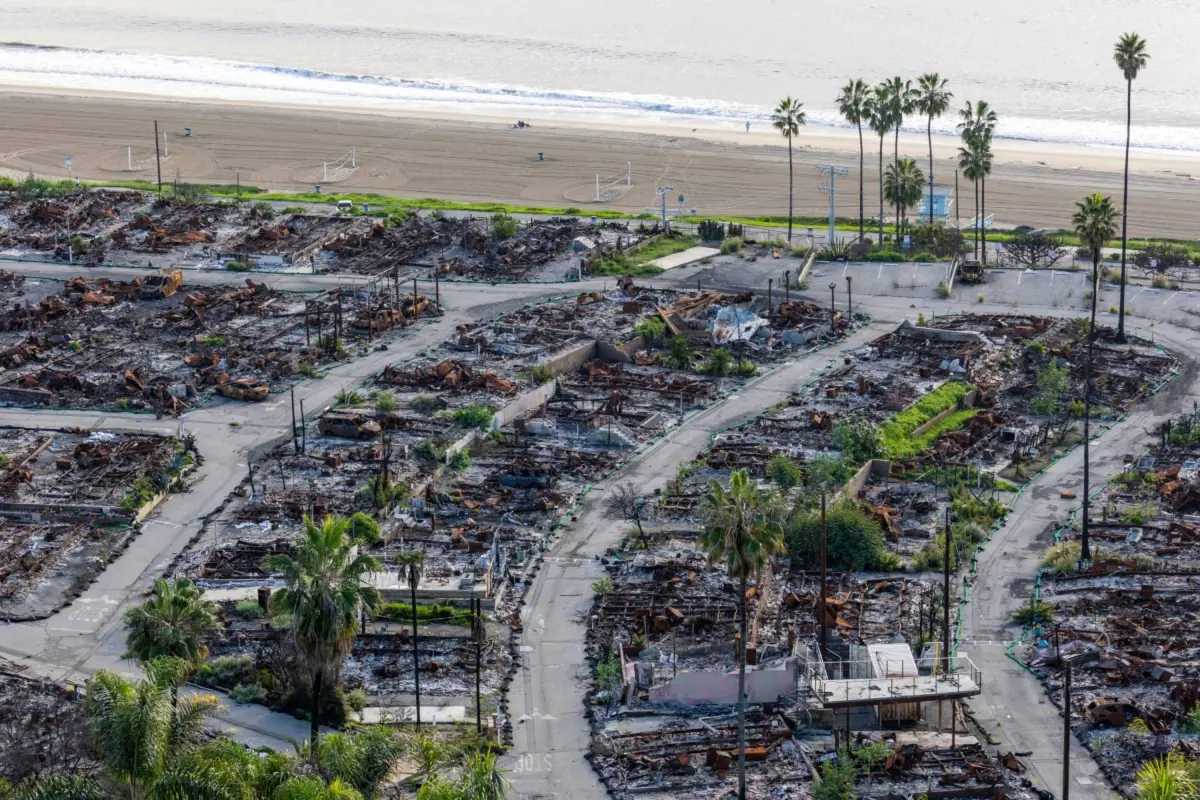
The human and physical toll of Rinderknecht’s actions cannot be overstated. The blaze claimed 12 lives, scorched an astonishing 23,400 acres of pristine and residential land, and decimated nearly 7,000 homes across the wealthy and picturesque Pacific Palisades region. Entire neighborhoods were reduced to ash, leaving multi-generational memories, priceless possessions, and irreplaceable community structures wiped out in a matter of hours.
While defense attorneys have maintained their client’s innocence and vowed to appeal the verdict, federal authorities have hailed the outcome as a monumental victory for justice. The successful prosecution underscores the unyielding commitment of federal and local law enforcement agencies to track down, indict, and hold accountable those whose malicious or reckless acts ignite environmental Armageddon. This comprehensive report explores the timeline of the tragedy, the mounting digital and circumstantial evidence presented in court, the human cost of the disaster, and the broader implications for wildfire safety and prosecution in an era of unprecedented climate vulnerability.
Detailed Chronology: From a Lonely New Year’s Eve to Catastrophe
The Boiling Point: December 31, 2024
The sequence of events that culminated in a historic tragedy began as a night of professional obligation and personal frustration. On New Year’s Eve, December 31, 2024, Jonathan Rinderknecht was working as an Uber driver in the sprawling Los Angeles metropolitan area. Beneath the surface of his routine fares, however, a volatile cocktail of anger, isolation, and despair was brewing.
According to court documents, including a damning affidavit filed by an investigator with the Bureau of Alcohol, Tobacco, Firearms and Explosives (ATF), Rinderknecht grew increasingly agitated throughout the evening. Passengers who shared rides with him that night later told federal investigators that he appeared deeply distressed, frustrated, and angry. The root of his agitation appeared to stem from personal loneliness; Rinderknecht was reportedly upset and despondent over his inability to find companionship or connect with anyone as the calendar prepared to flip to 2025.
As midnight approached, Rinderknecht’s emotional state deteriorated further. Phone records and witness testimony established that he drove up into the Pacific Palisades area, parking near a remote trailhead. Isolated in the dark, he repeatedly watched and listened to a French rap music video titled "Un Zder, Un Thé"—a song heavily themed around despair, isolation, and existential weariness. He attempted to contact an old friend to bridge the emotional gap, but the call failed to connect, compounding his sense of rejection and alienation.
The Spark: The Lachman Fire is Born
Prosecutors argued that this psychological breaking point catalyzed a reckless and ultimately fatal decision. Just after midnight, as celebrations erupted across the globe for the arrival of 2025, Rinderknecht ignited what would become known as the Lachman Fire. Environmental sensing platforms and regional atmospheric monitors later pinpointed the exact moment of ignition at approximately 12:12 a.m. on January 1, 2025.
Realizing perhaps too late the immediate magnitude of what he had done, Rinderknecht attempted to dial 911 several times from his smartphone. However, due to his remote location near the trailhead, his iPhone was out of cellular range, and the emergency calls failed to go through. By the time he finally moved to a location with sufficient reception to reach emergency services, the fire had already been spotted and reported by vigilant local residents in the neighborhood below.
It was during this frantic window of realization that Rinderknecht turned to modern technology for answers. According to digital forensics presented by federal prosecutors, while on the phone with emergency dispatchers, Rinderknecht typed a deeply incriminating query into the artificial intelligence chatbot ChatGPT:
"Are you at fault if a fire is lift [sic] because of your cigarette?"
The chatbot’s response was immediate and unequivocal: "Yes."
The Smoldering Threat and the January 7 Re-ignition
In the immediate aftermath of the New Year’s Day ignition, local fire departments responded with speed and efficiency. Firefighters successfully suppressed the visible flames of the Lachman Fire, leading many to believe the crisis had been averted without major structural damage or loss of life.
However, an invisible and lethal danger remained hidden beneath the surface. Unbeknownst to firefighters, environmental agencies, or local residents, hot embers from the initial Lachman Fire continued to burn deep underground, smoldering in the dry root systems and organic soil layers of the Pacific Palisades terrain.
For nearly a week, the subterranean fire lay dormant. Then, on January 7, 2025, nature dealt Los Angeles a catastrophic hand. A ferocious, sustained wind event—classic, bone-dry Santa Ana winds packing hurricane-force gusts—swept down from the mountains and through the canyons of Southern California.
The violent gusts forced the underground embers back to the surface. The moment the oxygen-rich winds hit the smoldering pockets, the fire reignited with terrifying explosive velocity. Fed by years of severe drought, brittle brush, and unrelenting winds, the blaze transformed overnight into the unstoppable monster known officially as the Palisades Fire.
Supporting Context & Metrics: The Scale of the Devastation
The Palisades Fire quickly outstripped the capacity of traditional firefighting tactics, turning the affluent Pacific Palisades community and surrounding hillsides into a war zone of flame and ash. The statistics compiled in the wake of the disaster paint a sobering picture of historic destruction:
- The Death Toll: Twelve individuals tragically lost their lives, either trapped by the blinding, fast-moving walls of smoke and flame or overcome while attempting to evacuate their homes.
- Geographic Impact: The fire consumed an astonishing 23,400 acres of land, jumping containment lines, leaping across major thoroughfares, and marching relentlessly toward residential enclaves and commercial centers.
- Structural Loss: Nearly 7,000 homes and structures were entirely reduced to rubble. Multi-million-dollar estates, modest family dwellings, historic properties, and local businesses were obliterated in a matter of hours.
- Displacement and Economic Shock: Tens of thousands of residents were forced into chaotic emergency evacuations. The economic fallout reached billions of dollars in insured and uninsured losses, dealing a severe blow to the regional housing market, municipal infrastructure, and local businesses.
- Environmental Degradation: The loss of 23,400 acres of mature chaparral and canyon ecosystems triggered severe subsequent risks, including catastrophic mudslides and debris flows during the rainy seasons that followed, compounding the misery of surviving homeowners.
Official Statements and Legal Reactions
The gravity of the verdict drew immediate and powerful responses from top-tier federal law enforcement officials, highlighting the seriousness with which the federal government treats catastrophic environmental arson.
Attorney General Todd Blanche released a formal statement emphasizing the direct causal link between the defendant’s actions and the immense loss of life:
"Twelve people lost their lives and thousands lost their homes because of Jonathan Rinderknecht’s malicious conduct. Thanks to the persistence and hard work of our prosecutors in the Central District of California, he will be held accountable."
Echoing these sentiments, First Assistant United States Attorney Bill Essayli underscored the emotional closure the verdict aims to provide to grieving families and upended communities:
"Jonathan Rinderknecht deliberately ignited a fire that killed 12 people and devastated an entire community. We were determined to hold him accountable, and today’s guilty verdict delivers a measure of justice for the families who lost loved ones and the thousands whose lives were upended."
Conversely, the defense team expressed profound disappointment while maintaining professional decorum regarding the judicial process. Steve Haney, who served as Rinderknecht’s defense attorney through both the initial mistrial and the successful retrial, spoke with the Los Angeles Times shortly after the verdict was read.
"We are disappointed in the verdict, but respect the jury process," Haney stated. "After a lengthy deliberation, they clearly gave this case a great deal of consideration."
Haney confirmed that the defense team plans to file an immediate appeal, setting the stage for appellate battles over evidentiary rulings, digital forensics—specifically the admissibility and interpretation of the ChatGPT search query—and the complex scientific testimony regarding the subterranean persistence of the Lachman Fire.
Future Outlook: Implications for Wildfire Prosecution and Climate Resilience
The conviction of Jonathan Rinderknecht marks a watershed moment in American legal history regarding how prosecutors approach human-caused wildfires. As climate change exacerbates drought conditions and intensifies seasonal wind patterns across the American West, the margin for human error—let alone malicious intent—has shrunk to zero.
The Evolution of Wildfire Forensics and Digital Evidence
This trial highlights a new frontier in forensic investigations: the integration of digital footprints with physical fire science. Prosecutors successfully wove together cell tower pings, environmental sensing platform data, eyewitness accounts of agitated behavior, and artificial intelligence query histories (the ChatGPT search regarding cigarette-induced fires) to build an airtight circumstantial narrative. Legal scholars anticipate that future wildfire prosecutions will increasingly rely on digital metadata, algorithmic tracking, and real-time electronic communications to establish intent and timeline mechanics.
Heightened Legal Penalties and Deterrence
By successfully prosecuting Rinderknecht under federal statutes governing property destruction and interstate commerce via fire, the Department of Justice has signaled that environmental destruction resulting from arson will face the maximum weight of federal sentencing guidelines. Facing decades behind bars, Rinderknecht’s case serves as a severe deterrent to individuals who might otherwise act with reckless disregard in fire-prone wilderness and urban-interface zones.
Community Healing and Structural Rebuilding
For the residents of Pacific Palisades and the broader Los Angeles community, the guilty verdict represents an essential psychological milestone. While no judicial outcome can resurrect the 12 lives lost or restore the thousands of homes turned to ash, the knowledge that the person responsible has been formally judged and found guilty provides a vital pillar for community healing.
As rebuilding efforts slowly reshape the scarred canyons of the Pacific Palisades—incorporating modern fire-resistant architecture, advanced early-warning sensors, and hardened defensible spaces—the ghost of the January 2025 disaster will forever serve as a reminder of how quickly a moment of personal despair can fracture an entire society. The verdict ensures that Jonathan Rinderknecht will spend his future paying the debt demanded by a community that refused to let the victims of the Palisades Fire be forgotten.
