

Executive Overview
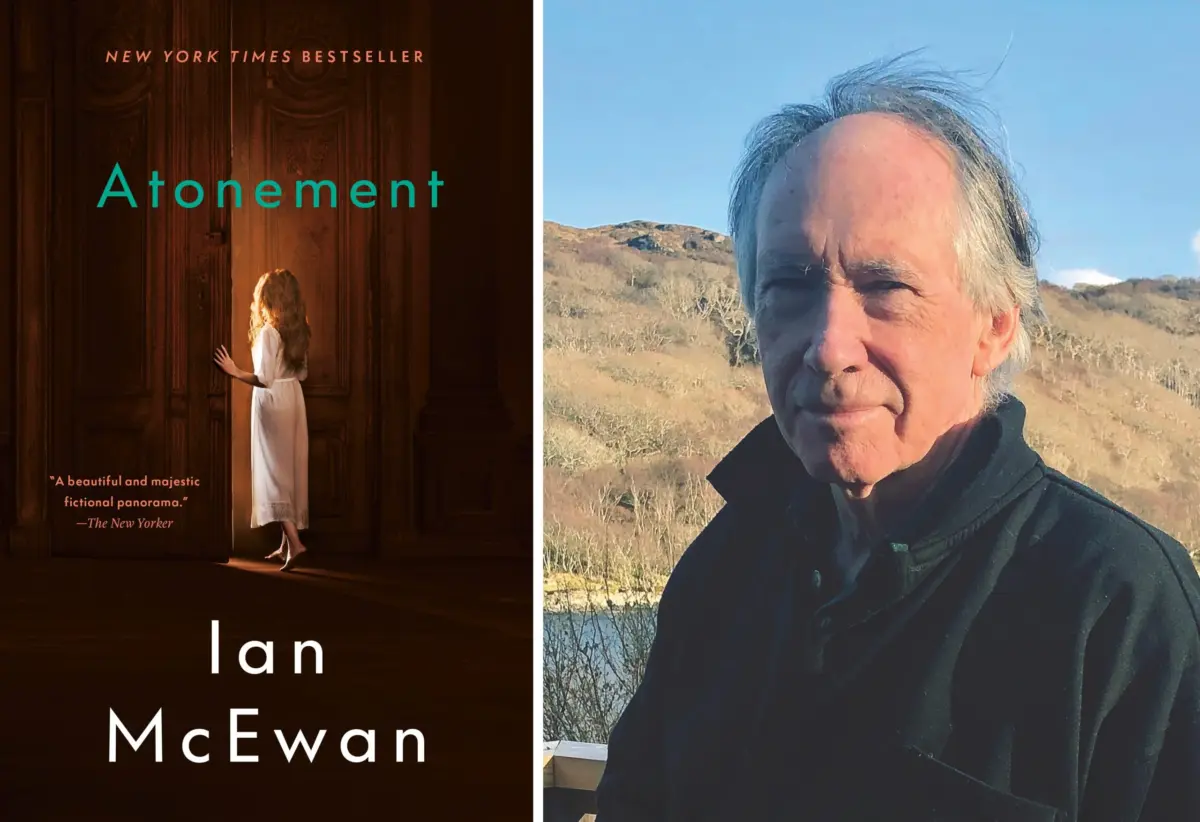
For over five decades, Ian McEwan has stood as one of the preeminent architects of contemporary English fiction. At age 78, with a canon spanning 20 novels, the British author continues to push the boundaries of narrative form, shifting seamlessly between intimate psychological realism and sweeping, civilization-scale speculation. His latest work, What We Can Know—published by Knopf—transports readers to a grim, imagined future where Western civilization has been shattered by nuclear disaster and catastrophic sea-level rise. While much of McEwan’s historical output, such as his 2001 masterpiece Atonement, probed the complex ethical transgressions of the past, his recent trajectory directly confronts the existential crises shaping the human future.
+-----------------------------------------------------------------------------------+
|                        IAN MCEWAN: LITERARY TIMELINE & BACKLIST                   |
+-----------------------------------------------------------------------------------+
| 1981 | The Comfort of Strangers  - Early psychological drama (Dir. Paul Schrader) |
| 1998 | Amsterdam                 - Booker Prize Winner                            |
| 2001 | Atonement                 - Booker Shortlisted; 25th Anniversary Milestone  |
| 2005 | Saturday                  - Geopolitical critique of post-9/11 conflict     |
| 2019 | Machines Like Me          - Exploration of AI & synthetic consciousness    |
| Recent| What We Can Know         - Climate catastrophe & nuclear post-apocalypse  |
+-----------------------------------------------------------------------------------+
To mark the approaching 25th anniversary of Atonement—first released by Jonathan Cape in the United Kingdom in 2001 and Doubleday in the United States in 2002—publishing house Vintage is undertaking a major retrospective initiative. Vintage, McEwan’s long-standing U.S. paperback publisher, has initiated a comprehensive reissue of his backlist, complete with sleek, unified cover designs by renowned designer Evan Gaffney. This push coincides with a broader cultural re-evaluation of McEwan’s work, positioning his "novels of ideas" for a rising generation of readers who are grappling with the moral and technological dilemmas of the 21st century.
Detailed Chronology
McEwan’s publishing journey mirrors the shifting geopolitical and intellectual preoccupations of the past half-century. His trajectory reveals an author constantly re-inventing his canvas while maintaining a relentless focus on moral philosophy.
                    MCEWAN'S FIVE DECADES OF LITERARY EVOLUTION

   1970s - 1980s              1990s - 2000s              2010s - PRESENT
  Psychological Realism     Historical & Political     Speculative & Existential
 -----------------------   ------------------------   ---------------------------
 • Dark, intimate focus    • Narrative structuralism  • AI & synthetic life
 • Macabre relationships   • Geopolitical critique    • Climate catastrophe
 • Ex: The Comfort of      • Ex: Amsterdam,           • Ex: Machines Like Me,
   Strangers (1981)          Atonement, Saturday        What We Can Know
1. The Early Years: Dark Psychological Realism (1970s–1980s)
- 1981: McEwan publishes The Comfort of Strangers, a tense, haunting psychological drama set in Venice. The novel cements his early reputation as a master of atmospheric dread and moral ambiguity, later adapted into a notable feature film directed by Paul Schrader from a screenplay by Harold Pinter.
2. High Literary Acclaim and Historical Structuralism (1990s–2000s)
- 1998–1999: Amsterdam is published (Cape 1998 / Vintage 1999), capturing the Booker Prize for its biting satyrical exploration of euthanasia, morality, and personal rivalry at the turn of the millennium.
- 2001–2002: Jonathan Cape releases Atonement in the U.K. (2001), followed by Doubleday’s U.S. release (2002). The novel—a dual-timeline bildungsroman tracking the life of young Briony Tallis from World War II into old age—earns a Booker Prize shortlisting and global critical acclaim for its meta-fictional brilliance.
- 2005–2006: Saturday (Jonathan Cape 2005 / Vintage 2006) captures a single day in the life of a London neurosurgeon against the backdrop of massive anti-war protests opposing the 2003 U.S.-led invasion of Iraq.
3. The Turn to AI and Speculative Futures (2010s–Present)
- 2019: McEwan releases Machines Like Me, an alternative-history novel set in 1980s London exploring synthetic human consciousness, artificial intelligence, and the ethical boundaries of machine morality through the android Adam.
- Recent Period: Knopf publishes What We Can Know, a stark departure into post-apocalyptic speculative fiction that examines human knowledge, memory, and survival following environmental collapse and nuclear catastrophe.
- Current Day: Vintage launches its multi-volume U.S. reissue campaign featuring original cover designs by Evan Gaffney, mirroring parallel U.K. archive redesigns.
Supporting Context & Metrics
The decision by Vintage to systematically package and reissue McEwan’s catalog underscores the commercial resilience of high-concept literary backlists. In contemporary publishing, backlist sales—titles older than one year—frequently account for over 60% of top-tier trade publisher revenues. For an author of McEwan’s stature, maintaining visual and thematic coherence across two decades of paperback publications is a strategic priority.
+------------------------------------------------------------------------------------+
|                         REISSUE CAMPAIGN: U.S. VS. U.K. SCOPE                      |
+------------------------------------------------------------------------------------+
| METRIC                          | UNITED STATES (VINTAGE) | UNITED KINGDOM (VINTAGE) |
+---------------------------------+-------------------------+------------------------+
| Initial Reissue Volume          | 10 Titles               | 18 Titles              |
| Lead Cover Designer             | Evan Gaffney            | In-House / Custom      |
| Anchor Anniversary Title        | Atonement (25th)        | Atonement (Curriculum) |
| Target Demographics             | Higher Ed & Gen-Z/Gen-Y | A-Level High School    |
+---------------------------------+-------------------------+------------------------+
The Visual Redesign Strategy
Designer Evan Gaffney was tasked with creating a cohesive visual vocabulary across McEwan’s disparate genres—from post-apocalyptic sci-fi to WWII-era historical fiction. Vintage has already deployed the new design across 10 seminal works, including:
- Amsterdam (1999)
- Atonement (2001/2002)
- Saturday (2006)
The remaining catalog titles are scheduled for release in the coming months, aiming to build a uniform physical presence on bookstore shelves nationwide.
Institutional Integration and Reading Metrics
In the U.K., Atonement has long transcended simple trade popularity to become a permanent fixture of the educational curriculum. The book is required reading for thousands of secondary school students preparing for A-level examinations.
This educational footprint has created a self-renewing audience for McEwan’s backlist:
- Academic Adoption: Millions of high schoolers and university undergraduates encounter Atonement as a canonical text on narrative reliability and trauma.
- Marginalia Culture: Copies of McEwan’s books across secondary school classrooms are routinely filled with notes, sticky flags, and dense critical commentary, representing an active, participatory engagement with high literature.
Official Statements
The core of McEwan’s enduring appeal lies in his refusal to reduce complex human actions to simple moral lessons. Industry figures and the author himself offer distinct perspectives on why these works remain vital today.
+-----------------------------------------------------------------------------------+
|                              KEY INSIGHTS & QUOTATIONS                            |
+-----------------------------------------------------------------------------------+
| JOHN FREEMAN (Executive Editor, Knopf):                                           |
| "McEwan possesses an uncanny ability to write through civilization-scale         |
| questions while building novels on the same depths of character that 20th- and    |
| 19th-century classics were built upon."                                          |
|                                                                                   |
| IAN MCEWAN (Author):                                                              |
| "Having one's books re-read is the most fundamental desire of writers... For      |
| most novels over a certain length, you don't appreciate their structure in a      |
| single reading."                                                                  |
+-----------------------------------------------------------------------------------+
John Freeman on the Evolution of McEwan’s Craft
John Freeman, Executive Editor at Knopf, emphasizes McEwan’s unique position as a bridge between classic novelistic depth and modern thematic urgency:
"Ian has this uncanny ability to identify and write through civilization-scale questions. What distinguishes and unites each of his books is that they are ‘novels of ideas’ that simultaneously contain the same depths of character that 20th- and 19th-century novels were built on."
Freeman points specifically to The Comfort of Strangers (1981) as an underrated masterpiece deserving wider rediscovery during this reissue push. He also highlights Saturday (2006) as profoundly prescient:
"Saturday feels incredibly contemporary in what it says about our ability to live in societies that are made from violence. Over 50 years of publishing, McEwan has mined one genre after another and opened it up."
Ian McEwan on Machine Consciousness and Narrative Form
When considering which of his past works might speak most directly to today’s emerging generation, McEwan points to his 2019 exploration of synthetic intelligence, Machines Like Me:
"I want to see how the generation coming of age with AI responds to the fundamental questions of machine consciousness that the book addresses. Pulled, as always, to that region where fiction and moral philosophy overlap, I find those questions more pressing now than ever."
Reflecting on his relationship with younger readers—particularly teenagers studying his annotated texts—McEwan expresses gratitude for the rigor of student engagement:
"Seeing books belonging to 16- and 17-year-olds that are absolutely impacted with marginalia, a little bit of Post-it notes, and scrawls in every corner… I think this is wonderful. Having one’s books re-read is, I think, the most fundamental desire of writers. Because, for most novels over a certain length, you don’t appreciate their structure in a single reading."
A Critique of Contemporary Subjectivity
Addressing the broader direction of contemporary literature, McEwan offers a defense of the expansive, outward-looking novel against the modern trend toward auto-fiction and hyper-subjective memoirs:
"I take issue with the endlessly subjective nature of some contemporary fiction. Today’s writers would do good to try and name the world and take a position on it, with a view to—not quite persuading—but just opening up the major moral questions of our time."
Future Outlook
As Vintage completes its multi-phase reissue program across North America and Europe, Ian McEwan’s body of work stands poised to engage a literary world increasingly defined by rapid technological change and existential environmental threats.
+-----------------------------------------------------------------------------------+
|                        MCEWAN'S LITERARY LEGACY: THE DUAL PIL-LARS                |
+-----------------------------------------------------------------------------------+
| ARCHIVAL HISTORICAL REALISM              | SPECULATIVE MORAL PHILOSOPHY           |
| (e.g., Atonement, The Innocent)          | (e.g., Machines Like Me, What We Can Know)|
+------------------------------------------+----------------------------------------+
| • Examines narrative truth & guilt       | • Examines machine ethics & AI         |
| • Focuses on mid-20th-century history    | • Focuses on climate collapse futures  |
| • Required reading in global academia    | • Resonates with digital-native youth  |
+------------------------------------------+----------------------------------------+
The Convergence of Past and Future Themes
The trajectory from Atonement (1940s wartime guilt) to Machines Like Me (synthetic morality) and What We Can Know (post-apocalyptic climate futures) demonstrates an author who refuses to settle into nostalgic retrospection. McEwan’s late-career pivot into speculative fiction positions his work at the center of modern cultural debates:
- AI and Synthetic Life: As artificial intelligence shifts from theoretical computer science into daily life, Machines Like Me serves as a critical philosophical primer for digital natives wrestling with synthetic consciousness.
- Climate Anxieties: What We Can Know offers a literary lens for a generation confronting climate collapse, giving voice to systemic risks that traditional fiction often struggles to frame.
- The Preservation of Narrative Truth: In an era dominated by digital misinformation, Atonement’s core inquiry—how stories can distort or rehabilitate historical truth—remains more relevant than when it was penned 25 years ago.
By repackaging these twenty titles into a visually unified legacy series, Vintage and Knopf are doing more than celebrating a distinguished career. They are asserting that the "novel of ideas"—grounded in rich characterization and bold engagement with global crises—remains an irreplaceable tool for making sense of an uncertain world.