In the high-stakes landscape of digital marketing, organic search visibility remains one of the most lucrative and sustainable channels for customer acquisition. However, as search engines evolve through algorithmic updates and integrate artificial intelligence into their core architectures, the methodology of keyword research must mature in tandem. Gone are the days of stuffing exact-match terms into meta tags and thin content blocks. Today, modern Search Engine Optimization (SEO) demands a surgical, data-driven approach to uncovering user intent, identifying content gaps, and organizing topical authority at scale.
Enter Semrush, an industry-leading platform that has evolved into an indispensable all-in-one marketing suite. With a massive database boasting over 24 billion keywords, Semrush provides digital marketers, enterprise SEO teams, and ecommerce operators with the analytical horsepower required to dominate search engine results pages (SERPs).
This comprehensive guide serves as an authoritative walkthrough of how to leverage Semrush’s powerful ecosystem—specifically its Keyword Manager, Keyword Magic Tool, and Keyword Gap reports. Whether you are aiming to capture quick organic traffic wins from your existing content footprint, reverse-engineer high-converting competitor strategies, or build comprehensive topical authority clusters from scratch, this blueprint details the exact frameworks needed to maximize your return on investment (ROI).
To successfully execute an enterprise-grade keyword strategy, marketers must progress through a structured, multi-phase workflow. Each phase utilizes distinct features within the Semrush toolkit to isolate high-intent opportunities and eliminate guesswork.
Phase 1: Unearthing Quick-Win Opportunities in Existing Rankings
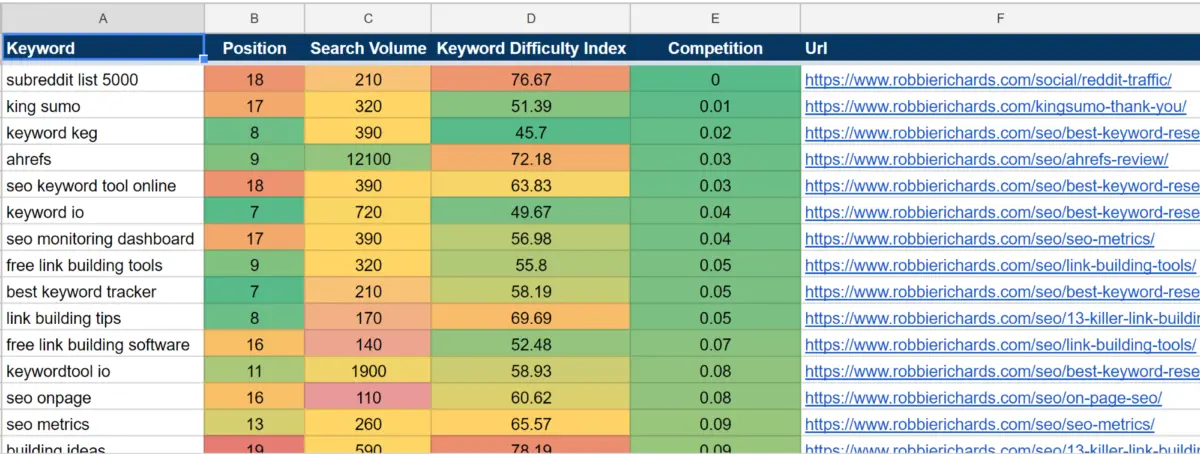
When working with an established website that already boasts an indexed content footprint, the most efficient path to revenue growth does not start with brand-new content. Instead, it begins by optimizing the "striking distance" keywords—terms for which your website is currently ranking in positions 4 through 15.
Access the Organic Research Report: Navigate to the Semrush SEO Toolkit, select Organic Research, and open the Positions report. This will output a comprehensive list of every keyword your domain currently ranks for within the top 100 positions.
Apply Granular Filters: To isolate the highest-leverage opportunities, apply advanced filters based on your specific business parameters:
Position: Filter for ranks 4–15 to pinpoint pages teetering on the edge of page one.
Volume: Set a minimum search volume threshold to ensure the traffic potential justifies the effort.
Keyword Difficulty (KD): Filter out hyper-competitive terms to focus on accessible rankings.
Segment and Build Lists: Move the filtered keywords into a dedicated list inside Semrush (segmented as Existing vs. New). Alternatively, export the data into a specialized spreadsheet template to automatically sort opportunities by descending search volume and low SERP competition.
One of the fastest routes to market intelligence is analyzing what is already working for your top competitors. Semrush facilitates this through granular subfolder analysis and keyword modifier filtering.
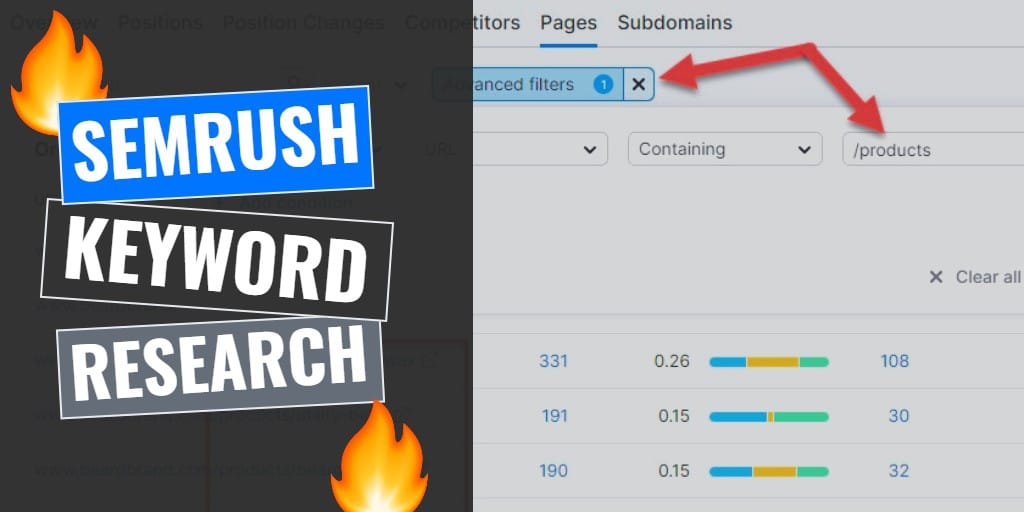
Top Pages & Subfolder Analysis: Enter a competitor’s domain into the SEO Toolkit and navigate to the Organic Research >> Pages report. By applying a URL filter (such as /products/ for ecommerce or /legal-services/ for a law firm), you can isolate the exact revenue-driving pages on your competitor’s site. This allows you to audit whether your own digital property is capturing those same high-intent queries.
Keyword Modifier Filtering: If competitors do not use clean subfolder structures, apply keyword modifiers (e.g., "best," "software," "pricing") to surface immediate affiliate or transactional monetization targets.
Phase 3: Executing Advanced Keyword Gap Analysis
The Semrush Keyword Gap Tool allows digital strategists to cross-reference their domain against multiple competitors simultaneously, exposing critical blind spots in their content and advertising strategies.
Missing Keywords Report: Identifies valuable search terms that your competitors rank for, but your domain does not touch.
Weak Keywords Report: Highlights terms where your domain currently ranks lower than your competitors, signalling an urgent need for content optimization or architectural enhancement.
PPC-Organic Gap Integration: A unique capability of Semrush allows marketers to evaluate paid versus organic gaps. By identifying keywords where you rank outside the top 3 organically and are not bidding on via paid search, you can deploy targeted Paid Per Click (PPC) campaigns to establish immediate visibility ("air cover") while your long-term organic content gains traction.
Supporting Context & Metrics: The Power of Intent and Scale
A common pitfall in keyword research is prioritizing raw search volume over actual user intent. A keyword with 50,000 monthly searches is virtually worthless if the searcher’s intent does not align with your business model.
Leveraging the Keyword Magic Tool for Funnel Alignment
Semrush’s Keyword Magic Tool allows users to input a seed term and instantly access thousands of variations. However, the true value lies in the platform’s advanced Intent Filtering (Navigational, Informational, Commercial, and Transactional) and Grouping features.
For instance, an affiliate marketer operating in the B2B SaaS space should target mid-funnel, consideration-stage keywords. By combining the seed term with comparison modifiers—such as "Ahrefs vs. Semrush" or "Moz vs. Semrush"—marketers can capture high-intent traffic actively evaluating solutions. These users are primed to convert, resulting in higher referral commissions and customer acquisition rates.
Modern search engines reward topical authority—the depth and breadth of coverage a website demonstrates on a specific subject. Semrush’s Keyword Manager and clustering algorithms simplify this complex process:
Input up to five seed keywords along with your domain context.
The tool automatically groups hundreds of related terms into cohesive topical clusters, complete with aggregate search volume, average Keyword Difficulty (KD%), and search intent metrics.
Content Reference Analysis: Before writing, check the content references within each cluster to see what existing pages your competitors use to rank. If competitors maintain dedicated sub-service landing pages for specific clusters (e.g., a dedicated page for "hit and run attorney" rather than bundling it into a general personal injury page), you must build a dedicated URL to effectively compete.
Official Statements and Industry Insights
Digital marketing thought leaders continually emphasize the necessity of unified, integrated workflows in modern SEO operations. According to leading SEO strategists, the primary bottleneck in organic growth is not a lack of data, but rather friction in execution.
"One of the greatest advantages of modern SEO platforms is deep tool integration. When you can seamlessly transition from keyword discovery to rank tracking and on-page content optimization without exporting endless CSV files or jumping between disparate software suites, the efficiency gains compound rapidly across your entire marketing organization."
By collapsing the distance between research and deployment, platforms like Semrush enable lean marketing teams to scale content production without sacrificing strategic rigor or data accuracy.
Future Outlook: The Evolution of Search and Semrush
As search engines increasingly incorporate generative AI experiences (such as Google’s Search Generative Experience) and focus heavily on user engagement metrics, the definition of a successful keyword strategy will continue to shift. Success will no longer be measured purely by ranking #1 for a high-volume head term, but by capturing holistic topical mindshare across the entire customer journey.
Future iterations of keyword research platforms will likely rely even more heavily on predictive analytics, automated intent modeling, and real-time SERP volatility tracking. Marketers who master foundational tools like Semrush today—leveraging its integrated keyword gaps, advanced intent filters, and automated clustering mechanisms—will be uniquely positioned to adapt to these algorithmic shifts.
By grounding your content strategy in robust data, targeted gap analysis, and structured topical architecture, you ensure long-term organic resilience and continuous revenue growth in an increasingly competitive digital marketplace.