In the high-stakes arena of Search Engine Optimization (SEO), few questions elicit as much speculation, anxiety, and wasted capital as: “How many backlinks do I actually need to rank?”
For decades, digital marketers and website owners have operated under the assumption that SEO is a numbers game—a race to accumulate the highest volume of inbound links possible. However, seasoned industry practitioners understand a more nuanced truth: achieving top-tier visibility on Search Engine Result Pages (SERPs) is rarely about brute-force link accumulation. More often than not, the answer to the age-old question is deceptively simple—you do not need nearly as many backlinks as you think.
Blindly purchasing or building links without a data-driven strategy not only drains financial resources but can also trigger algorithmic penalties. To maximize return on investment (ROI) and allocate link-building budgets efficiently, modern SEO campaigns demand surgical precision.
This comprehensive guide breaks down a battle-tested, 5-step framework designed to accurately calculate both the quantitative and qualitative backlink thresholds required to lift content into the top positions of Google’s page one. By analyzing competitor benchmarks, filtering out vanity metrics, and assessing ongoing link velocity, digital strategists can transform guesswork into a predictable, high-yield growth engine.
Detailed Chronology: The 5-Step Backlink Calculation Framework
To determine the exact recipe for ranking success, SEO professionals must move away from generalized domain-wide metrics and analyze target URLs through a rigorous, step-by-step auditing process.
Step 1: Identify Your Highest-Priority Backlink Targets
Before calculating how many links you need, you must decide where those links will generate the highest financial return. Rather than spreading link equity thin across low-value blog posts, focus your resources on high-converting assets currently languishing on the bottom half of page one (positions 4 through 10). Moving these pages into the top three positions yields an exponential increase in organic traffic and revenue.
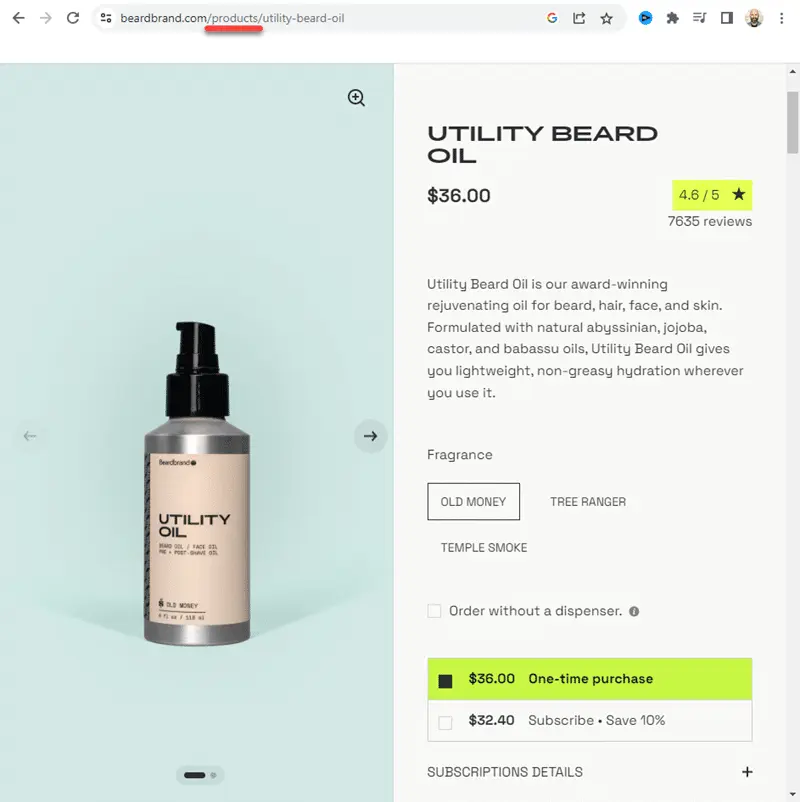
Analyzing Subfolders: E-commerce sites and SaaS platforms typically organize critical commercial pages inside specific subfolders (e.g., /products/, /features/, /solutions/, or /services/). By plugging your domain into tools like Ahrefs Site Explorer and navigating to the Subfolders and Top Pages reports, you can isolate these high-intent URLs. Applying a position filter for ranks 4–10 instantly reveals your most lucrative optimization targets.
Using Keyword Modifiers: For content-heavy sites that do not rely on strict subfolder architecture, leverage keyword modifiers to surface commercial or transactional assets. Filtering your Top Pages report for terms like “best,” “software,” “tools,” “alternatives,” or “vs” highlights money pages prime for a rankings push.
Step 2: Review SERP Data and Benchmark Competitors
Once you have selected a target URL, examine the competitive landscape. By navigating to the Keyword Overview and SERP Overview reports for your primary keyword, you can evaluate the top-ranking pages.
The primary metric of interest here is Referring Domains (RDs). However, raw numbers can be dangerously misleading. A competitor might boast 200 referring domains, but if their site authority (Domain Rating) vastly outstrips yours, comparing them directly is a recipe for frustration.
Instead, look for a competitor with a similar Domain Rating (DR) profile and an identical content format (e.g., comparing a listicle-style blog post to another listicle). Select the peer with the lowest referring domain count to establish a realistic, "apples-to-apples" baseline.
Step 3: Deep-Dive into Competitor Backlink Profiles
Raw referring domain counts often include low-quality, spammy, or irrelevant links that do not contribute to a page’s actual ranking power. To uncover the true benchmark, open the competitor’s Referring Domains report and apply strict filters:
Exclude low-authority domains.
Filter out topically irrelevant niches.
Remove sitewide footer or sidebar links that carry minimal weight.
By stripping away the noise, you will often find that a competitor’s inflated number of 85 referring domains drops down to a manageable core of 20 to 25 genuinely influential links. Subtracting your page’s current relevant links reveals the true gap you need to close.
Step 4: Assess Domain Rating Distributions for Quality
Quantity is only half the equation; link quality dictates whether Google will trust your content enough to award it a top-three spot. Reviewing the Domain Rating (DR) distribution of your competitor’s backlink profile clarifies the caliber of links required.
If a competitor ranks well primarily due to a handful of ultra-high-authority links (e.g., multiple DR 80+ placements secured via guest posting or industry collaborations), closing that gap will require a targeted outreach campaign aimed at high-tier publications. Understanding this distribution prevents you from wasting time acquiring dozens of low-tier directory links that will fail to move the needle.
Step 5: Determine Link Velocity Targets
Ranking on page one is not a static achievement; competitors will actively defend their positions. To maintain momentum, you must calculate link velocity—the rate at which competitors acquire new links over time.
By filtering a competitor’s backlink report to display New Backlinks over the last 30, 90, and 180 days, you can gauge ongoing market aggression. For many keywords, you may find that competitors acquire zero new links month-over-month. In such cases, your strategy shifts from an aggressive, high-volume outreach campaign to a measured maintenance schedule—building the necessary links to close the initial gap, followed by one or two strategic links per quarter to retain dominance.
Supporting Context & Metrics: Case Studies in Practical Application
To illustrate how this framework operates in the real world, let us examine two distinct content audits executed on an established authority site.
Case Study A: The Affiliate Listicle ("Best SERP Tracking Tools")
Current State: Ranking in the lower half of page one for a high-intent affiliate keyword. The article has not been updated in nearly a year and holds only 9 referring domains.
Competitor Benchmark: A peer site (Domain Rating 56, compared to the author’s DR 70) ranks near the top with 85 raw referring domains.
The Filtered Reality: Upon closer inspection and applying quality filters, the competitor’s effective backlink count drops to 22 relevant domains.
Velocity Check: The competitor has generated zero new referring domains in the past 30 days.
Action Plan: The analysis reveals that a comprehensive content refresh combined with acquiring approximately 13 to 22 targeted backlinks will successfully close the gap, positioning the asset to capture top-three rankings and triple its organic affiliate revenue.
Case Study B: The Commercial Resource ("Enterprise SEO Tools")
Current State: Ranking at position nine, generating roughly 96 organic visits per month with virtually no proactive link building.
Competitor Benchmark: A competing domain (DR 71) occupies position five with just 3 referring domains.
The Filtered Reality: The existing links pointing to the author’s page are low-quality and topically irrelevant. Replicating the competitor’s lean, high-authority profile requires only a couple of DR 70+ links.
Action Plan: Updating the content and securing two or three authoritative, contextually relevant backlinks is projected to thrust the article into the top five positions, potentially quadrupling its monthly organic traffic.
Official Statements and Industry Consensus
Search engine optimization thought leaders and search engine representatives have consistently emphasized relevance and user intent over raw link counts. While Google’s algorithms continue to rely on PageRank to evaluate authority, the weighting of individual links has evolved significantly.
"Links remain a critical signal for discovery and ranking, but the context, topical relevance, and editorial integrity of those links far outweigh sheer volume. A single contextual link from an authoritative, trusted industry publication can outperform hundreds of low-quality directory submissions."
Industry analysts point out that modern algorithms are increasingly adept at devaluing manipulative link schemes. Consequently, the methodology of auditing top-ranking competitors—filtering out the noise and matching only the high-quality, relevant links that truly drive authority—aligns perfectly with how modern search engines evaluate trust.
Future Outlook: The Evolution of Link Building and SERP Competitiveness
As artificial intelligence reshapes search engines through features like Google’s Search Generative Experience (SGE) and conversational search interfaces, the nature of organic visibility is shifting. However, the foundational mechanics of trust and authority remain anchored in link equity.
In the coming years, we can expect the following trends to define the backlink landscape:
Hyper-Targeted Efficiency: As organic real estate on traditional search pages shrinks due to AI-driven summaries, ranking in the top three positions will become an absolute necessity for survival. Data-driven link allocation frameworks will transition from a "nice-to-have" tactic to an essential operational standard.
Quality Over Scale: Algorithms will continue to deprecate mass outreach and guest-post networks in favor of deeply integrated digital PR, brand mentions, and contextual partnerships.
Holistic Optimization: Backlink calculations will increasingly be paired with real-time user engagement metrics and content freshness signals. Securing links without simultaneously updating and improving the underlying content will yield diminishing returns.
By mastering the 5-step framework outlined above, SEO professionals can cut through the industry noise, eliminate wasted expenditure, and execute precise, high-ROI link-building campaigns that secure sustainable first-page dominance.


![How Many Backlinks Do I Need To Rank? [Answered]](https://www.robbierichards.com/wp-content/uploads/2023/07/How-many-backlinks-are-needed-to-rank.jpg)
![How Many Backlinks Do I Need To Rank? [Answered]](https://www.robbierichards.com/wp-content/uploads/2023/07/image19.png)
![How Many Backlinks Do I Need To Rank? [Answered]](https://www.robbierichards.com/wp-content/uploads/2023/07/image6.png)
![How Many Backlinks Do I Need To Rank? [Answered]](https://www.robbierichards.com/wp-content/uploads/2023/07/image24.png)
![How Many Backlinks Do I Need To Rank? [Answered]](https://www.robbierichards.com/wp-content/uploads/2023/07/image10.png)
![How Many Backlinks Do I Need To Rank? [Answered]](https://www.robbierichards.com/wp-content/uploads/2023/07/image5.png)
![How Many Backlinks Do I Need To Rank? [Answered]](https://www.robbierichards.com/wp-content/uploads/2023/07/image16.png)
![How Many Backlinks Do I Need To Rank? [Answered]](https://www.robbierichards.com/wp-content/uploads/2023/07/TSP-Banner.jpg)
![How Many Backlinks Do I Need To Rank? [Answered]](https://www.robbierichards.com/wp-content/uploads/2023/07/image2.png)
![How Many Backlinks Do I Need To Rank? [Answered]](https://www.robbierichards.com/wp-content/uploads/2023/07/image8.png)
![How Many Backlinks Do I Need To Rank? [Answered]](https://www.robbierichards.com/wp-content/uploads/2023/07/image9.png)
![How Many Backlinks Do I Need To Rank? [Answered]](https://www.robbierichards.com/wp-content/uploads/2023/07/image3.png)
![How Many Backlinks Do I Need To Rank? [Answered]](https://www.robbierichards.com/wp-content/uploads/2023/07/image4.png)
![How Many Backlinks Do I Need To Rank? [Answered]](https://www.robbierichards.com/wp-content/uploads/2023/07/image20.png)
![How Many Backlinks Do I Need To Rank? [Answered]](https://www.robbierichards.com/wp-content/uploads/2023/07/image13.png)
![How Many Backlinks Do I Need To Rank? [Answered]](https://www.robbierichards.com/wp-content/uploads/2023/07/image11.png)
![How Many Backlinks Do I Need To Rank? [Answered]](https://www.robbierichards.com/wp-content/uploads/2023/07/image18.png)
![How Many Backlinks Do I Need To Rank? [Answered]](https://www.robbierichards.com/wp-content/uploads/2023/07/image23.png)
![How Many Backlinks Do I Need To Rank? [Answered]](https://www.robbierichards.com/wp-content/uploads/2023/07/image14.png)
![How Many Backlinks Do I Need To Rank? [Answered]](https://www.robbierichards.com/wp-content/uploads/2023/07/image15.png)
![How Many Backlinks Do I Need To Rank? [Answered]](https://www.robbierichards.com/wp-content/uploads/2023/07/image21.png)