

Executive Overview
In what political scientists are already calling the most consequential electoral earthquake in modern American political history, the state of Texas has broken a three-decade drought to deliver a stunning sweep for the Democratic Party. On Tuesday, November 3, 2026, Texas voters upended conventional wisdom, shattering historical boundaries and reshaping the national political map during a fierce midterm cycle.
State Representative James Talarico, a charismatic progressive who campaigned heavily on his Christian faith and working-class populism, defeated Donald Trump’s hand-picked candidate, embattled State Attorney General Ken Paxton, in a fiercely contested, billion-dollar U.S. Senate showdown. By late Tuesday evening, the Associated Press called the race as Talarico surged ahead by a margin exceeding one million votes.
In an almost simultaneous shockwave, State Representative Gina Hinojosa stunned the political establishment by defeating incumbent Republican Governor Greg Abbott in the gubernatorial race, winning by a decisive margin of more than 700,000 votes. This dual victory marks the first time a Democrat has won a statewide race in Texas since 1994, sending tremors through Washington, DC, and signaling that the long-sought dream of a "Blue Texas" has finally materialized.
The ramifications of these wins stretch far beyond the borders of the Lone Star State. Coming on the heels of other shocking Democratic pickups—such as Annie Andrews’ upset victory over Senator Darline Graham in South Carolina and former Governor Roy Cooper’s victory in North Carolina—the 2026 midterms have fundamentally altered the balance of power in Washington. Texas, long considered an impregnable fortress for the modern Republican Party, is now the crown jewel of a burgeoning national Democratic wave driven by voter frustration, massive grassroots mobilization, and an electorate increasingly weary of culture-war politics and billionaire-backed political spending.
Detailed Chronology of Election Night 2026
The trajectory of election night in Texas defied every pre-election model, pivoting from cautious optimism among Democrats to an undeniable, historic avalanche of blue votes as precincts reported across the state’s urban and suburban centers.
The Early Returns and Urban Surges
As polls closed across Texas at 7:00 p.m. Central Time on November 3, early voting totals—which had broken turnout records across Harris, Dallas, Travis, and Bexar counties—hinted at extraordinary engagement. However, the initial caution among Democratic strategists quickly evaporated as election-day turnout in traditionally Republican suburban strongholds, such as Collin, Denton, and Williamson counties, showed a dramatic erosion of the conservative base.
By 9:30 p.m., internal campaign trackers indicated that Talarico was outperforming traditional Democratic benchmarks in the Dallas-Fort Worth metroplex and the Houston suburbs. Concurrently, returns for the gubernatorial contest revealed that Gina Hinojosa was running neck-and-neck with Governor Greg Abbott before pulling ahead decisively as urban and inner-ring suburban districts reported their totals.
The Associated Press Race Calls
The inflection point of the night arrived shortly before 11:00 p.m. Eastern Time. With more than 70% of the expected vote tallied, the Associated Press officially called the U.S. Senate race for James Talarico, who held a commanding lead of over one million votes against Ken Paxton.
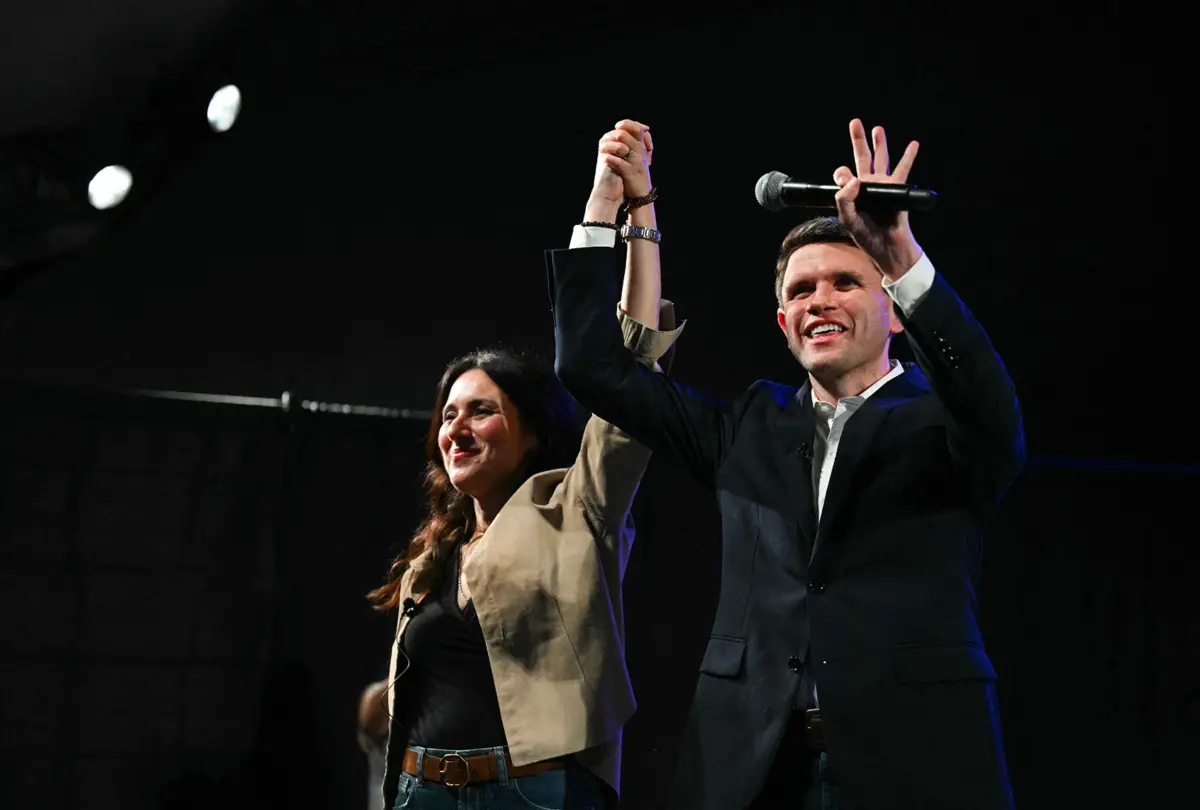
Minutes later, as the scale of the statewide realignment became mathematically indisputable, the AP projected Gina Hinojosa as the winner of the gubernatorial contest, defeating Governor Abbott by over 700,000 votes. The back-to-back race calls electrified watch parties in Austin, where Talarico and Hinojosa had appeared together just days prior. The historic nature of the evening set off wild celebrations among exhausted campaign staffers, progressive organizers, and national Democrats who had poured unprecedented resources into the state.
Supporting Context & Metrics: A Billion-Dollar Battleground
The road to this historic night was paved by an unprecedented deluge of financial capital, modern messaging strategies, and fierce ideological warfare that made the 2026 Texas midterms the most expensive state-level political campaign in United States history.
Financial Megatons and Elon Musk’s Record Spending
Over the course of the cycle, a combined total of $573 million was poured into the Talarico-Paxton Senate race alone, encompassing spending by the primary contenders, their defeated primary opponents, and outside political action committees.
The primary driver of this astronomical price tag was billionaire Elon Musk. The world’s richest individual and the CEO of SpaceX and Tesla pumped an estimated $474 million into the election cycle, virtually all of it dedicated to bolstering Ken Paxton and preventing a Democratic breakthrough. This figure sets a new all-time record for political spending by a single individual in a single election cycle.
Musk’s financial strategy was executed through a multi-tiered approach:
- Personal Super PACs: The vast majority of Musk’s funding was funneled through his personal super PAC network to execute aggressive media buys.
- Senate Leadership Fund: Approximately $168 million was directed to this national Republican vehicle to support down-ballot infrastructure.
- Lone Star Liberty PAC: A targeted $10 million was channeled into this pro-Paxton entity, which infamously flooded Texas mobile phones with AI-generated robocalls attacking Talarico.
In stark contrast, the Talarico campaign, supported by a coalition of grassroots donors and national Democratic PACs, raised and spent approximately $133 million. Governor Greg Abbott likewise enjoyed a massive financial advantage, reportedly outspending challenger Gina Hinojosa by a staggering 10-to-1 ratio, according to CNN analyst David Axelrod. Despite this staggering financial asymmetry, grassroots volunteer mobilization and digital organizing proved more potent than sheer ad-buy volume.
Ideological Battles and Viral Misinformation
Talarico’s campaign strategy broke traditional mold by leaning heavily into his Christian faith. As a former seminary student and state representative, Talarico directly challenged the long-standing Republican monopoly on religious values in politics, framing progressive economic policies, public education funding, and healthcare access as moral imperatives rooted in his faith.
This strategy deeply unsettled Republican strategists, leading to a vicious counter-offensive characterized by bizarre right-wing conspiracy theories. Throughout the fall, Paxton and his allies amplified viral misinformation campaigns, branding Talarico as an emasculated "secret vegan" and floating unfounded claims regarding his mental health.
Democratic leadership initially worried that this coordinated digital misinformation might overshadow legitimate reporting regarding Ken Paxton’s ethical vulnerabilities. These included explosive investigative reports, such as a high-profile Wall Street Journal exposé detailing Paxton’s luxury trip to Dubai in the company of federal fugitives and a woman other than his wife. Ultimately, however, Texas voters demonstrated a clear appetite to move past cultural distractions in favor of substantive debates on governance, corruption, and economic relief.
Official Statements and Reactions
The political shockwaves generated by the Texas results instantly reverberated across the national stage, prompting sharp contrasts in tone between the victorious Democrats and a stunned, recalibrating Republican apparatus.
The Democratic Response
Speaking before a rapturous crowd at his Austin headquarters late Tuesday night, Senator-elect James Talarico framed his victory as a triumph of moral clarity and community over division:
"Tonight, the people of Texas sent a message not just to Austin, but to the entire country. We proved that fear, corruption, and dark money cannot permanently silence a populace yearning for dignity, honesty, and grace. We ran a campaign rooted in our shared values—in the radical idea that government should lift people up rather than tear them down. To every Texan who knocked on a door, made a phone call, or simply believed that change was possible: this historic victory belongs to you."
Governor-elect Gina Hinojosa echoed these sentiments, emphasizing the economic and social hurdles her campaign overcame against a deeply entrenched incumbent:
"They outspent us ten to one, but we out-organized them ten to thousand. For thirty years, working families in Texas have been told that their voices don’t matter, that the system is rigged, and that change is impossible. Tonight, Texas wrote a brand-new chapter. We are going to fully fund our public schools, protect our healthcare rights, and build an economy that works for every single family, not just the billionaires at the top."
The Republican Posture and National Fallout
National Republican campaign committees issued subdued statements acknowledging the devastating losses, while local surrogates pointed to the unprecedented financial resources deployed by national Democrats and external billionaires as the decisive factor. Conservative analysts warned that the party’s continued reliance on culture-war distractions and polarizing personalities had alienated vital suburban voting blocks that once served as the bedrock of the Texas conservative coalition.
On Capitol Hill, the loss of Texas fundamentally alters the mathematical realities of the United States Senate. With additional Democratic pickups confirmed in South Carolina—where Annie Andrews defeated incumbent Senator Darline Graham—and North Carolina, alongside competitive leads in Iowa, Maine, and Ohio, the Democratic Party has seized firm control of the legislative agenda, fundamentally altering the trajectory of federal governance for the remainder of the decade.
Future Outlook: Governing a Transformed Lone Star State
As the dust settles on the 2026 midterms, the immediate future for Texas politics presents a fascinating experiment in divided, or newly empowered, governance.
Legislative Agendas and Policy Shifts
With Gina Hinojosa stepping into the governor’s mansion and James Talarico heading to Washington to assume a high-profile seat in the United States Senate, the political infrastructure of Texas faces a rapid transition. Hinojosa will face the immediate challenge of working with a heavily entrenched, albeit shaken, state legislature. Key priorities for the incoming administration are expected to include:
- Public Education Reform: Restoring robust state funding to public schools and halting ongoing voucher expansion initiatives.
- Healthcare Expansion: Addressing rural hospital closures and expanding healthcare access for low-income Texans.
- Ethics and Accountability: Overhauling state-level ethics laws to restore public trust following years of high-profile political scandals.
National Political Ramifications
For the national Democratic Party, the 2026 cycle in Texas serves as a blueprint for future Sun Belt operations. The success of candidates who successfully neutralize the culture war by appealing to working-class economics and personal values—while withstanding hundreds of millions of dollars in hostile super PAC spending—proves that no state is permanently out of reach.
As James Talarico prepares to take the oath of office in Washington and Gina Hinojosa prepares to assume executive power in Austin, the political landscape of America has been permanently rewritten. The myth of the permanent red firewall in Texas has been shattered, ushering in a volatile, highly competitive, and transformative era in American democracy.
